Why Is It Called a T-Shirt? The Surprisingly Simple Answer
A Simple Question With a Surprisingly Interesting Answer
Sometimes, the simplest questions are the ones that make us pause and think. A child might ask something completely ordinary, yet suddenly we realize we have never considered the answer ourselves.
One parent shared this amusing question from their daughter:
“My daughter asked me today what the ‘T’ in ‘T-shirt’ stands for. I had no answer! I’ve never thought about it. Any ideas?”
It is such a relatable moment because almost everyone wears T-shirts regularly, yet very few people ever stop to wonder where the name actually comes from. We buy them, wear them, fold them after laundry, and see them everywhere in daily life. The word “T-shirt” feels so familiar that most of us never question it.
But once someone asks, the curiosity suddenly appears.

The “T” Refers to the Shape
The explanation is actually very simple.
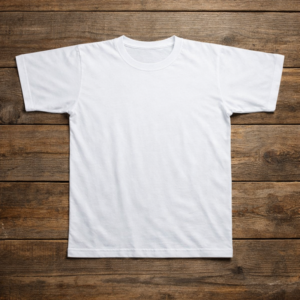
The “T” in “T-shirt” comes from the shape of the garment itself.
When a T-shirt is laid flat on a surface, the main body forms a straight vertical line while the sleeves extend outward horizontally. Together, they resemble the shape of a capital letter “T.”
That visual resemblance is exactly how the item got its name.
The letter does not stand for a hidden word or abbreviation. It is not short for “training,” “textile,” “top,” or anything else. The name simply describes the appearance of the shirt when viewed flat.
Why the Name Makes Perfect Sense
The term “T-shirt” became popular because it was simple, practical, and easy for people to understand.
Unlike dress shirts or button-up shirts, a traditional T-shirt has a very basic design. It usually features:
A round neckline
Short sleeves
No buttons
A soft, lightweight fabric
Because of this uncomplicated structure, its “T” shape is instantly recognizable.
The name is visual and straightforward. Even someone hearing the word for the first time could probably imagine what the clothing looked like.
From Undershirt to Everyday Fashion
Interestingly, T-shirts were not originally designed to be worn as outerwear.
In the early days, they were mainly used as undershirts. Workers, sailors, factory employees, and soldiers wore them underneath uniforms because they were lightweight, breathable, comfortable, and easy to wash.
Over time, people began wearing T-shirts by themselves rather than under other clothing. Their comfort and practicality made them increasingly popular for casual everyday use.
A T-shirt could be worn while:
Working
Exercising
Relaxing at home
Spending time outdoors
Playing sports
By the middle of the 20th century, the T-shirt had evolved from simple underwear into one of the most common casual clothing items in the world.

How T-Shirts Became a Cultural Icon
Movies, music, and youth culture played a huge role in turning the T-shirt into a fashion symbol.
Classic plain white T-shirts became associated with confidence, rebellion, and effortless style after being worn by famous movie stars and musicians. Later, printed T-shirts became even more popular because they allowed people to express their personality and interests.
Today, T-shirts can display:
Favorite bands
Sports teams
Brand logos
Funny quotes
Artwork
Social messages
Personal opinions
For some people, T-shirts are simply comfortable clothing. For others, they are a way to communicate identity and self-expression.
Why T-Shirts Remain So Popular
One reason T-shirts have remained popular for generations is their incredible versatility.
They can be:
Simple or fashionable
Cheap or expensive
Plain or colorful
Casual or stylish
People wear them almost everywhere:
At home
At school
At the gym
While traveling
At casual events
Even under blazers for a modern smart-casual look
Very few clothing items are as universal as the T-shirt. Children, teenagers, adults, and elderly people all wear them. They exist in nearly every culture and fit almost every lifestyle.

Final Answer
So, what does the “T” in “T-shirt” stand for?
It refers to the shape of the shirt. When laid flat, the body and sleeves create the form of the letter “T.”
It may seem like a tiny detail, but it reminds us that many ordinary things around us have surprisingly interesting stories behind them. Sometimes, all it takes is a child’s simple question to make us see something familiar in a completely different way.