If you have these lines on your nails after the age of 40, it is a clear sign that…
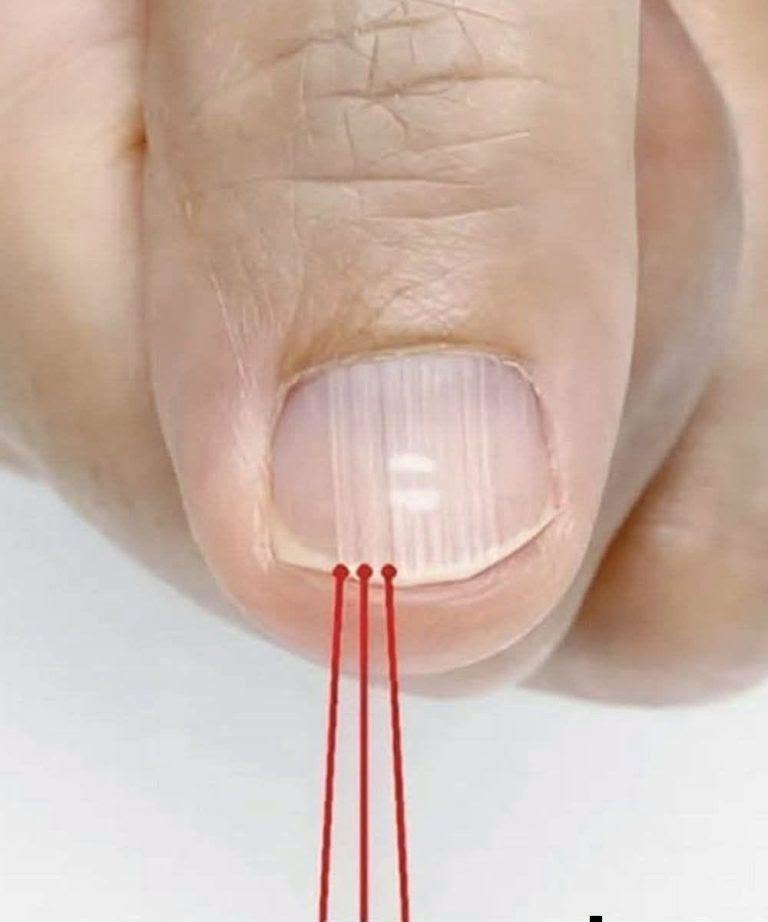
… in most cases it is a completely natural manifestation of aging of the body, known as longitudinal grooves on the nails (trachyonychia or vertical striation).
After forty, changes occur in the body that directly affect the appearance of the nails:
Slowing down of cell renewal: The nail matrix (the place where the nail is formed) produces new cells more slowly, which leads to uneven growth and the formation of “wrinkles” on the nails.
Loss of hydration and natural oils: Nails lose their ability to retain moisture, becoming drier and more brittle.
Impaired blood microcirculation: Reduced blood flow to the nail beds limits the supply of nutrients.
When are vertical lines okay and when should you be concerned?
Vertical lines from the cuticle to the tip of the nail: This is a common physiological condition that resembles wrinkles on the skin. They usually do not require medical attention.
Causes that you can control: Lack of hydration, vitamin deficiency (especially B-complex, zinc or iron), or frequent exposure to aggressive chemicals and water.
When to see a doctor (dermatologist):
Horizontal grooves (so-called Beau’s lines): Lines running across the nail across the width can signal an interruption in nail growth due to a serious illness, high fever, infection, severe stress or nutrient deficiency.
Dark (brown or black) stripe: A vertical dark stripe on one nail can be a sign of a pigmented mole, but in the worst case, subungual melanoma (skin cancer).
Associated changes: If the nail begins to significantly split, change color (yellow, green), separate from the bed or cause pain.
How to improve the condition of your nails?
Adequate hydration: Regularly use cuticle oils (e.g. almond or argan) and moisturizing hand cream.
Balanced diet: Focus on foods rich in biotin (vitamin B7), zinc, iron, omega-3 fatty acids and proteins.
Protection: Wear protective gloves when washing dishes and working with cleaning products.
Gentle care: Avoid rough filing of the nail surface, which weakens it.