My toddler woke up with these flat red spots all over his palms and the soles of his feet. We are hours from urgent care. What is this?
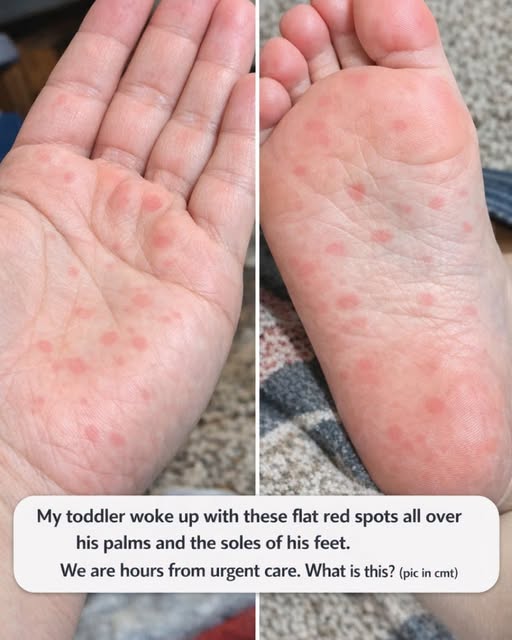
If a toddler suddenly wakes up with flat red spots on the palms and soles, most parents think the same thing first: either this is nothing, or this is something I should already have driven two hours for. I’ve been the family cook, not the family pediatrician, for most of my adult life, but after years of raising kids, babysitting nieces and nephews, and fielding panicked early-morning calls from friends, I can tell you this particular pattern often points to one very common childhood virus: hand, foot, and mouth disease.
That said, “often” is not the same as “always,” and when you’re far from urgent care, knowing what to watch for matters. I want to walk you through what hand, foot, and mouth disease usually looks like, what symptoms tend to show up over the next 24 to 72 hours, what you can do at home to keep a child comfortable, and which warning signs mean you should call a nurse line, pediatrician, telehealth service, or head out for in-person care sooner rather than later.
1. What this rash most commonly is
Flat red spots on the palms of the hands and soles of the feet in a toddler are very commonly caused by hand, foot, and mouth disease, often shortened to HFMD. Despite the dramatic name, it is usually a viral illness that clears on its own in about 7 to 10 days.
It is most often caused by coxsackievirus or another enterovirus. In many children, the first visible clue is exactly what you described: small pink, red, or reddish-brown flat spots, usually about 2 to 10 millimeters across, on the hands and feet. Over the next day or two, some spots may become tiny blisters. Mouth sores often follow or may already be there but easy to miss if your child has not wanted breakfast yet.
2. Why the palms and soles matter
Lots of childhood rashes show up on the trunk, cheeks, or diaper area. A rash that clearly involves the palms and the soles narrows the list. Hand, foot, and mouth disease is well known for showing up in these exact places.

In my experience, parents sometimes expect a raised, bumpy rash, and HFMD does not always start that way. The spots can be flat at first, almost like little paint dabs under the skin. On the soles, they may be tender enough that a toddler wants to be carried. On the palms, they may not itch much at all, but children may fuss when gripping a cup or toy.
3. Other symptoms that often appear within 24 to 48 hours
If this is hand, foot, and mouth disease, there are a few symptoms that commonly travel with it. Fever often comes first or appears around the same time as the rash. It may be low-grade, around 99.5 to 101.5°F, or it may run higher, around 102 to 103°F.
Many toddlers also develop:
painful mouth sores on the tongue, gums, inner cheeks, or back of the throat
drooling because swallowing hurts
reduced appetite, especially refusal of crunchy, salty, or acidic foods
fussiness or unusual clinginess
poor sleep
Sometimes the rash also appears on the buttocks, legs, arms, or around the mouth. I’ve seen children who barely notice the spots on their feet but act miserable because the mouth ulcers make every sip sting.
4. What the spots usually look like
Classic HFMD spots are usually small, round to oval, and pink to red. They may stay flat, or they may develop a pale center with a small blister. On darker skin tones, the rash may look deep pink, reddish-brown, or simply darker than the surrounding skin.
The number can vary a lot. One child may have 8 or 10 visible spots on each palm and a scattering on the soles, while another may have dozens. The spots are usually not large welts, and they are not typically the same as hives, which tend to be raised, itchy, and move around.
5. What you can check right now at home
If you are hours from urgent care, do a calm head-to-toe check in good light. You are looking less for a diagnosis-by-yourself and more for whether your child seems stable.
Check these things:
temperature with a thermometer, not just by touch
whether your toddler is drinking at least small sips every 10 to 15 minutes
whether there are sores inside the mouth
whether your child is making tears when crying
whether the lips look moist or dry
how many wet diapers or bathroom trips there have been in the last 8 to 12 hours
whether your child is alert between fussy periods
whether the rash blanches, meaning it fades briefly when you press it
If a glass is handy, parents sometimes do the “press test” with the side of a clear drinking glass over a spot. Many viral rashes lighten with pressure. A rash that does not fade with pressure, especially along with fever and a very ill-looking child, is more concerning and should prompt immediate medical advice.
6. How to keep your toddler comfortable over the next several hours
The big goals are hydration, fever control if needed, and reducing mouth pain enough that your child will drink. Offer cold fluids in tiny, frequent amounts rather than expecting a full cup at once. A tablespoon every few minutes can work better than handing over 6 ounces all at once.
Good options include cold water, milk, oral rehydration solution, or ice pops. Avoid orange juice, lemonade, pineapple, tomato soup, or anything salty and sharp-edged like crackers, because mouth sores can make those feel miserable. Cool yogurt, applesauce, pudding, oatmeal, and mashed potatoes are often better tolerated than toast or chips.
If your child seems uncomfortable or has fever, use an age-appropriate dose of acetaminophen or ibuprofen if your pediatrician has said those are safe for your child. Dose by weight, not by guesswork. If you do not know the correct dose, call a pharmacist, pediatrician’s on-call line, or telehealth service before giving medicine.
7. The biggest home concern is dehydration
Most cases of hand, foot, and mouth disease are not dangerous, but toddlers can get dehydrated quickly if mouth pain keeps them from drinking. This is the complication I’d watch most closely when you are far from care.
Concerning signs of dehydration include fewer than 3 wet diapers in 24 hours, no urine for 8 hours or more, very dry mouth, crying without tears, sunken eyes, unusual sleepiness, or a child who is too lethargic to sip. A toddler who spits out one cup but will take a spoonful every few minutes is still workable; a toddler who refuses all liquids for several hours is more concerning.
8. When this might be something other than hand, foot, and mouth disease
There are other causes of rashes on the hands and feet, though they are less common than HFMD in toddlers. Contact reactions, eczema flares, strep-related rashes, viral exanthems, and, more rarely, more serious infections can sometimes enter the conversation.