Rub this 1 mixture on your legs and get rid of purple spider veins and broken capillaries
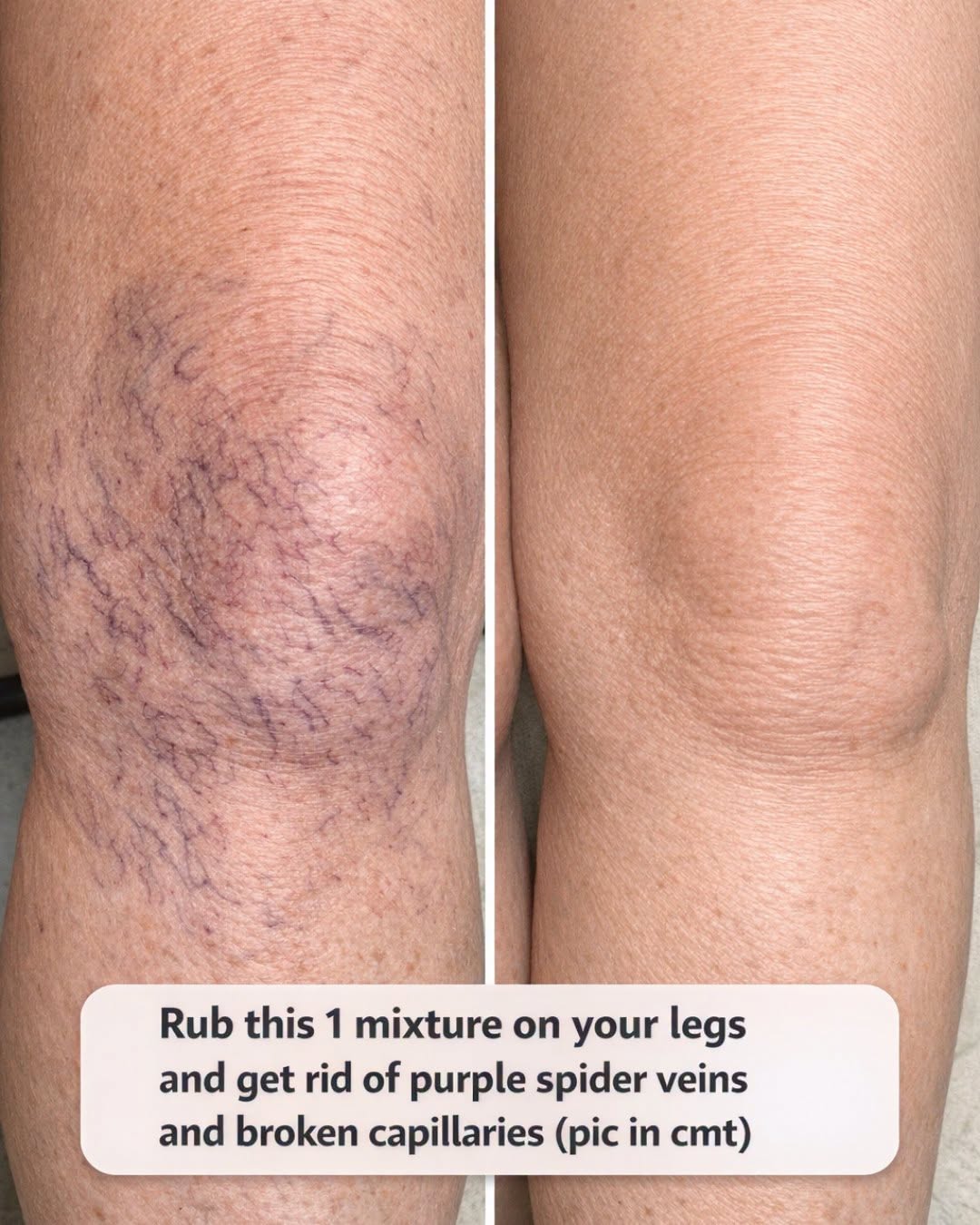
If you’ve ever looked down at your legs in bright bathroom lighting and noticed those thin purple, blue, or red lines showing up more than they used to, you are definitely not alone. I’ve had phases where I noticed little clusters around my calves after long workdays, and while they usually aren’t dangerous, they can be frustrating if you want your skin to look more even. The internet loves dramatic promises about “erasing” spider veins overnight, but in real life, this topic needs a little more honesty and a lot more practicality.
So instead of pretending one miracle rub can permanently remove visible veins, I want to walk you through a soothing leg massage mixture that can help support circulation, reduce the look of dryness and temporary puffiness, and make your legs feel better overall. I’ll also explain what spider veins and broken capillaries actually are, what a topical mixture can and cannot do, and when it’s time to skip the DIY route and talk to a doctor.
1. What spider veins and broken capillaries really are
Spider veins are tiny damaged or widened blood vessels that show near the surface of the skin, often in purple, red, or blue web-like patterns. Broken capillaries are similar in the sense that they’re small visible vessels, though people often use the terms loosely. On the legs, these can show up on the thighs, behind the knees, around the ankles, and across the calves.
They’re common with age, genetics, pregnancy, standing for long periods, hormone shifts, and pressure in the veins. In my case, long stretches of sitting during the workday followed by cooking dinner on my feet for an hour didn’t exactly help. The most important thing to know is that once a vein is visibly stretched or damaged, a skin rub usually won’t make it disappear completely.
2. The mixture I recommend for leg massage
If your goal is to care for the skin on your legs and support comfort, the simplest mixture I like is 2 tablespoons aloe vera gel, 1 tablespoon witch hazel, and 1 tablespoon fragrance-free body oil such as jojoba oil, sweet almond oil, or squalane oil. Stir it in a small bowl or shake it in a 4-ounce clean bottle until it blends as smoothly as possible.

This isn’t a medical treatment for spider veins, but it can be a helpful massage blend. Aloe vera feels cooling, witch hazel can feel toning on the skin, and the oil gives enough slip that you can massage without tugging. If I’m doing this at night, I usually make a small batch that lasts 3 to 5 days and keep it in the refrigerator for a little extra cooling effect.
3. Exact recipe and storage details
Here is a practical batch size that works well for a week of use:
Ingredients: 4 tablespoons aloe vera gel, 2 tablespoons witch hazel, 2 tablespoons jojoba oil.
Optional: 1 vitamin E capsule, pierced and squeezed in, mainly to add richness to the mixture.
Add everything to a sterilized glass jar or BPA-free bottle with a tight lid. Shake before each use because it may separate a little. Store it in the fridge and use it within 5 to 7 days if your aloe is preservative-free, or within 10 to 14 days if you’re using a commercially preserved gel and handling it with clean hands.
4. How to apply it the right way
Start with clean, dry skin. Use about 1 to 2 teaspoons per leg, depending on how much area you’re covering. Rub a small amount between your palms first, then apply with gentle upward strokes from the ankles toward the knees, and from the knees toward the thighs.
Keep the pressure light to moderate. You’re not trying to mash the veins flat. I usually spend about 3 minutes on each lower leg and another 2 to 3 minutes on each thigh. If an area feels tender, skip direct pressure there and work around it instead.
5. What this mixture can realistically do
The most realistic benefits are comfort and appearance support. A cooling mixture plus massage may temporarily reduce that heavy-leg feeling after a long day. Skin can also look smoother and less ashy, which sometimes makes visible veins seem a little less noticeable in regular lighting.
Massage may also encourage fluid movement in the legs, especially if you’ve been sitting or standing for hours. That said, this is a short-term cosmetic and comfort routine, not a cure. If a website promises a homemade rub will “dissolve” spider veins in 48 hours, I would be very skeptical.
6. What this mixture cannot do
It cannot permanently close damaged veins. It cannot replace medical treatment such as sclerotherapy, laser therapy, or other vein procedures. And it shouldn’t be used as a substitute for an evaluation if you have pain, swelling, warmth, skin discoloration, or ulcers.
I think this distinction matters because a lot of us just want honest advice. A leg mixture can be part of a self-care routine, but if the vein walls are already stretched, a topical product usually won’t reverse that structure. It’s more like improving the overall canvas than deleting the lines.
7. A simple 10-minute leg routine that works better than rubbing alone
If you want the mixture to feel more effective, pair it with a short routine. Here’s one I actually find realistic on a busy weeknight:
Minute 1 to 2: Lie down and elevate your legs on 2 pillows or against the couch arm.