Forget store-bought rooting hormones… These 4 homemade mixes root cuttings naturally!
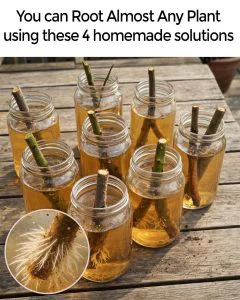
Growing plants from root cuttings is one of the easiest and most rewarding ways to multiply your favorite plants—without expensive tools or chemicals. With the right timing, gentle care, and a few natural rooting helpers you can make at home, root cuttings can grow into strong, healthy plants.
Below is a simple, natural guide to help your cuttings succeed.
What Are Root Cuttings?
Root cuttings are sections taken from a plant’s root system that can grow into a new plant. Unlike stem cuttings, these don’t rely on leaves or nodes. Many perennials and woody plants store enough energy in their roots to regenerate on their own.
Plants that respond well to root cuttings include:
Roses

Blackberries and raspberries
Figs
Phlox
Horseradish
Mint
When Is the Best Time to Take Root Cuttings?
Late fall to early spring is ideal, especially when the plant is dormant. During this time, energy is stored in the roots rather than leaves, increasing success rates.
Avoid taking cuttings during extreme heat or active flowering periods.
How to Take Root Cuttings Properly
Choose a healthy parent plant
Select a disease-free, mature plant with strong growth.
Expose the roots gently
Dig carefully around the base to reveal thick, healthy roots.
Cut into sections
Cut roots into pieces about 2–4 inches (5–10 cm) long.
Mark the top end if needed—roots grow in one direction.
Let them rest briefly
Allow cuttings to air-dry for an hour to prevent rot.
Simple Homemade Rooting Helpers
You don’t need commercial rooting hormone. These natural alternatives can encourage root development just as effectively.
1. Honey Solution
Honey has natural antibacterial properties.
Mix 1 tablespoon of raw honey with 2 cups of warm water
Dip the cut end of the root before planting
2. Cinnamon Powder
Cinnamon helps prevent fungal infections.
Lightly coat the cut end with ground cinnamon
3. Aloe Vera Gel
Aloe contains natural growth compounds.
Dip the cutting into fresh aloe gel before planting
4. Willow Water (Optional)
Willow branches release natural rooting hormones.
Soak young willow stems in water for 24 hours
Use the water to soak root cuttings before planting
Planting the Root Cuttings
Use loose, well-draining soil
Lay cuttings horizontally or vertically depending on plant type
Cover lightly with soil
Water gently until moist, not soggy
Keep the soil slightly damp and place the container in a cool, shaded area.
Caring for Cuttings After Planting
Avoid overwatering
Protect from direct sunlight
Be patient—some roots take weeks to sprout
New shoots may appear before roots fully develop. This is normal.
Common Mistakes to Avoid
Cutting roots too thin
Planting upside down
Overwatering
Using poor-quality soil
Final Thoughts
Root cuttings are proof that plants are incredibly resilient. With minimal effort and simple household ingredients, you can grow new plants naturally and sustainably.
Patience is key. When done right, root cuttings reward you with strong plants that are genetically identical to the parent—and completely free.