Why a Purple Fence or Tree Paint Could Be a Silent Warning and What That Color Means for Anyone Passing By
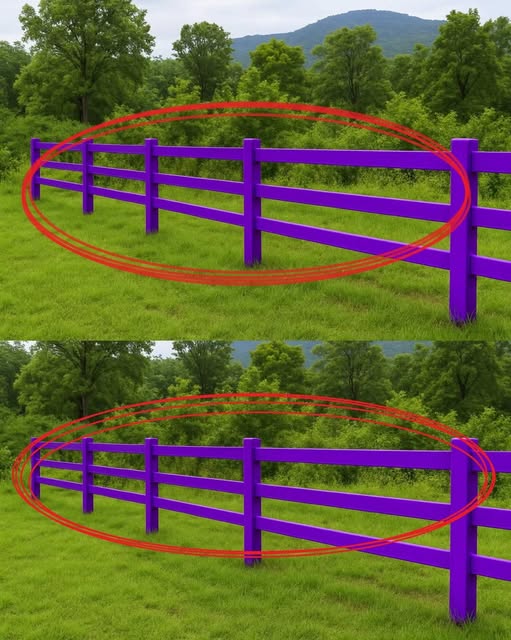
Walking along a quiet country road, wooded trail, or rural edge of town, you might notice something unexpected on a fencepost or tree trunk: a bold stripe of purple paint. It can look decorative at first glance, almost artistic against the natural landscape. But that color is not random, and it is not meant to be admired. In many parts of the United States, purple paint serves as a clear legal warning that you are approaching private property. It carries the same authority as a posted “No Trespassing” sign, quietly communicating a boundary without words. For hikers, hunters, and casual explorers, understanding this signal can prevent uncomfortable encounters or serious legal trouble.
The use of purple paint comes from practical necessity rather than symbolism alone. Traditional signs can fade, fall, be removed, or even stolen, leaving landowners vulnerable to repeated trespassing claims. Purple paint, by contrast, lasts for years, remains visible in all seasons, and cannot be easily ignored once you know what it means. Laws governing its use are specific. The paint must appear as vertical stripes, at least one inch wide and eight inches long, positioned three to five feet above the ground. These markings must be placed at regular intervals, often every 100 feet, along the property line to ensure that no one can reasonably claim they missed the warning. When applied correctly, the paint removes ambiguity and establishes a clear, legally recognized boundary.
Several states have formally adopted what are commonly called “Purple Paint Laws.” Among them are Texas, North Carolina, Illinois, Kansas, Missouri, Indiana, Florida, Pennsylvania, and Arkansas, with others recognizing similar standards. While the details vary slightly from state to state, the meaning remains consistent: purple paint means do not enter. The color was chosen in part because it stands out clearly against natural surroundings and is rarely used for other purposes in outdoor settings. Over time, it has become an efficient, low-maintenance solution for property owners who want to protect their land while avoiding visual clutter or constant replacement of signage.
For landowners, purple paint offers a respectful way to assert boundaries without confrontation. For passersby, it serves as a reminder that not all open land is public, even if it looks inviting or untouched. Seeing purple paint should prompt you to stop, reassess your route, and stay on your side of the line. It is not an aggressive message, nor an unfriendly one. It is a quiet assertion of care and responsibility, signaling that someone is actively watching over that land. Every fence, tree line, and field marked in purple represents a space with a caretaker, a history, and a boundary that deserves respect. Knowing what that color means helps ensure that shared landscapes remain peaceful, lawful, and understood by everyone who moves through them.