A Miracle in the Dust: When Rare Elephant Twins Reminded the World What Protection Looks Like.
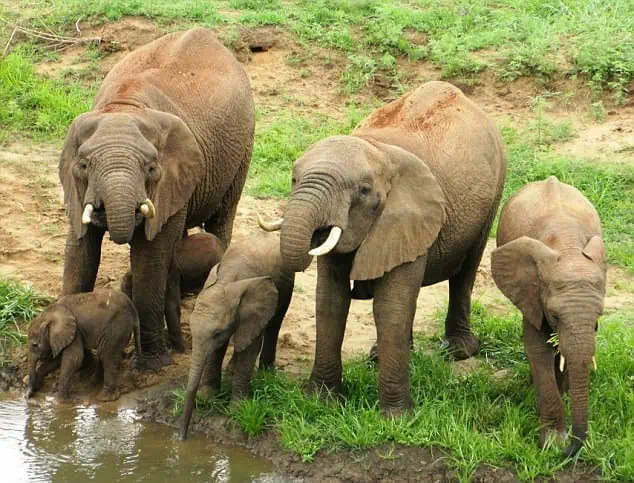
In the wild, miracles do not announce themselves with fanfare.
They arrive quietly—on padded feet, beneath open skies, carried on patience rather than promise. And if you are not paying attention, you might miss them entirely.
That is why what happened at Pongola Game Reserve felt so extraordinary.
Because for the first time in more than a decade, the land witnessed something almost unheard of.
Elephant twins.

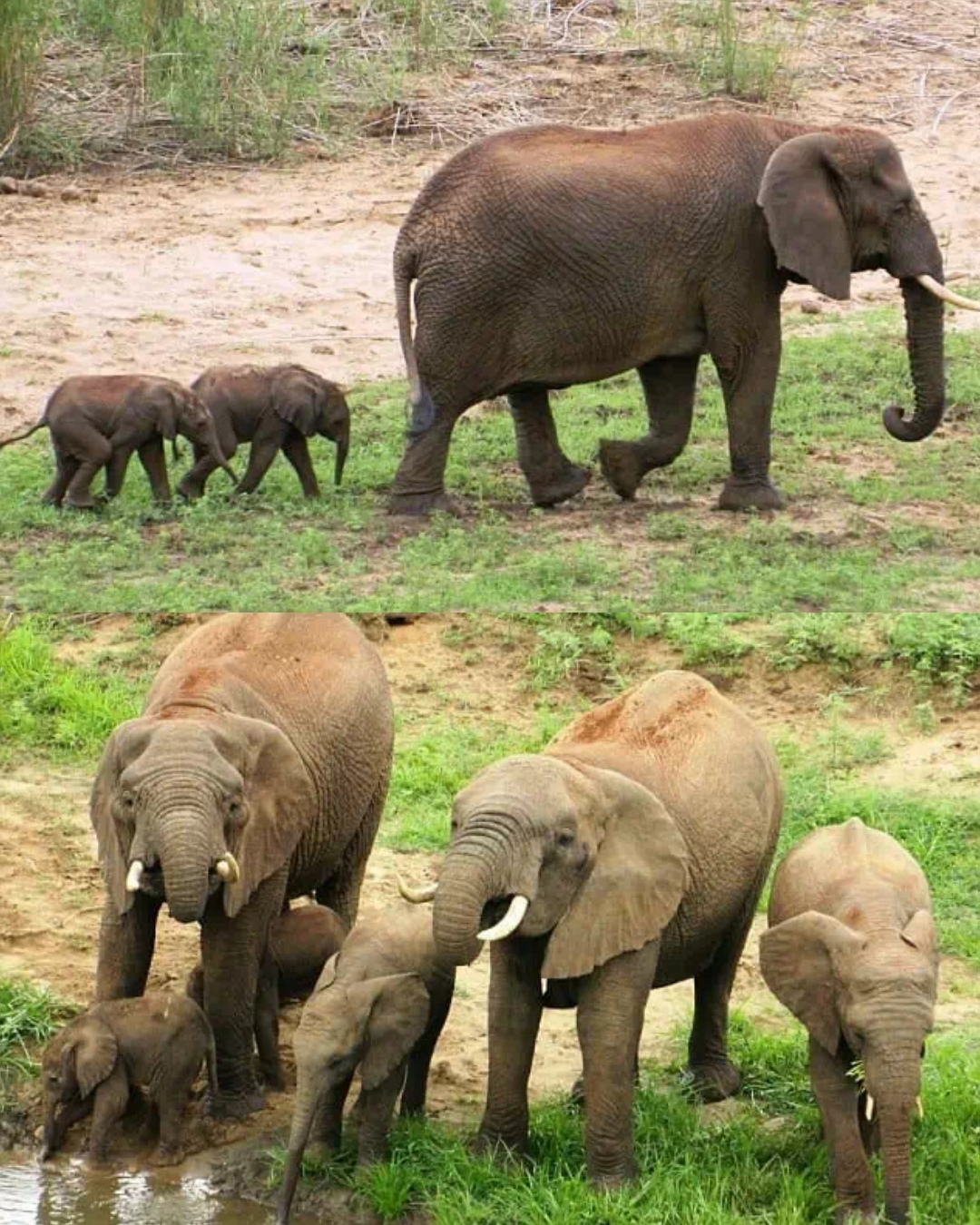
A Birth That Nature Rarely Allows
Elephants are known for many remarkable things—their memory, their intelligence, their emotional depth. But twins are not one of the things nature gives them easily.
Less than one percent of elephant births result in twins.
And even then, survival is uncertain.
In the wild, a single calf already demands immense energy. Two newborns place an almost impossible strain on a mother’s body. Most elephant mothers cannot produce enough milk for both. Historically, one calf is often lost within weeks.
Which is why, when the herd at Pongola slowed its movement and began to gather closely around one cow, the moment carried weight long before anyone understood why.
Her name was Curve.
She was thirty-one years old—experienced, steady, respected within the herd. When she went into labor, she did not do so alone. Like all elephant mothers, she was surrounded by family. Sisters. Aunts. Older females who had walked this path before.
But this time, the outcome would be different
Two Lives, One Breath Apart
When the first calf emerged, there was movement—but not surprise.
Birth is familiar to elephants.
What followed was not.
Moments later, another tiny body appeared.
Another trunk.
Another set of unsteady legs.
Another heartbeat entering the world.
Elephant twins.
The herd did not scatter.
They did not panic.
They closed in.
Large bodies formed a living wall around Curve and her newborns, shielding them from danger, noise, and intrusion. Tusks angled outward. Ears lifted. The message was unmistakable:
These lives are protected.
For reserve staff and wildlife experts watching from a careful distance, the significance was immediate. The last known case of elephant twins in the region had been recorded in 2006—nearly twenty years earlier.
Many conservationists go their entire careers without witnessing such a moment.
And here it was.
Two calves, pressed close to their mother, their skins still creased from birth, their movements uncertain but determined.
A Mother Named Curve
Curve did not hesitate.
She adjusted her stance, her body language shifting as instinct and experience took over. She lowered her massive head, guiding the twins with her trunk, encouraging them to stand, to nurse, to breathe.
Nearby, other cows remained close.
Not interfering.
Not overwhelming.
Just present.
Elephants understand something deeply: survival is communal.
Curve’s mate, Ingani—the bull believed to be the twins’ father—had passed away more than a year earlier. But absence did not mean abandonment. In elephant society, fathers may come and go, but family endures.
The herd stepped into the space Ingani left behind.
The Weight of What Comes Next
As the days passed, the twins stayed close—so close they were often partially hidden beneath Curve’s body, their small frames tucked behind her legs, their trunks occasionally brushing against one another as if seeking reassurance.
Experts watched carefully.
Dr. Ian Whyte, an elephant specialist with decades of experience, explained the challenge plainly: the odds are never in favor of both twins surviving. Milk production is finite. Energy is limited. Nature is unforgiving.
And yet, something about this moment felt different.
The reserve made a conscious decision—to give Curve space. No interference. No pressure. No disruption. Just privacy, calm, and trust in the herd’s natural intelligence.
Curve was allowed to nurse uninterrupted.
The twins were allowed to bond.
The family was allowed to do what elephants have done for generations—protect their own.
The Herd Steps In
When Curve led the twins to water, she was not alone.
Another cow walked alongside her, positioning her body carefully, creating a corridor of safety. When the calves struggled with their footing, trunks reached out—not to lift, but to guide. When the twins tired, the herd slowed.
Every step was adjusted to the weakest members.
This is not sentiment.
This is elephant society.
Elephants do not leave the vulnerable behind. They adapt the entire group to protect them.