Found this hard, foam-like brown structure attached to a fence post in the backyard. I was about to scrape it off but hesitated. What is it?
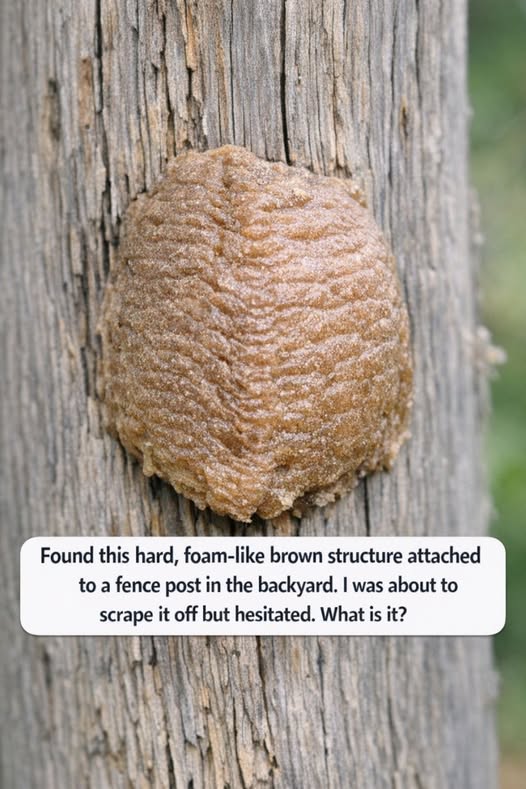
Coming across a strange structure in your backyard can spark both curiosity and concern. Maybe you’ve noticed a firm, brown, foam-like mass clinging to a fence post or tree branch. At first glance, it might seem suspicious—something harmful or invasive. But before you rush to remove it, it’s worth understanding what it actually is.
In a thriving backyard ecosystem, insects use surprisingly inventive strategies to survive and reproduce. That odd-looking structure is most likely a praying mantis egg case, known as an ootheca. Though small and easily overlooked, it plays a vital role in the life cycle of one of nature’s most fascinating predators. Here’s why this discovery matters—and why you may want to leave it exactly where it is.
1. The Curious “Foam” That Makes People Pause
A praying mantis egg case often surprises people because of its unusual appearance. Typically tan to light brown, it has a rough, foamy texture that can resemble a small wasp nest or even a fungal growth. About 1–2 inches long and roughly half an inch wide, it’s usually attached to twigs, stems, fence posts, or other sturdy surfaces.
Its odd texture and placement are no accident. The structure is carefully engineered to shield developing eggs from predators and harsh weather. What looks strange at first is actually a remarkable example of natural design.
2. The Hunter Behind the Brown Case
Praying mantises are well-known for their elongated bodies and folded forelegs, which are perfectly adapted for catching prey. As skilled predators, they feed on flies, crickets, caterpillars, and many other insects that might otherwise damage plants.
Belonging to the order Mantodea, mantises are found in many parts of the world and are especially appreciated in gardens. Recognizing their egg cases is the first step in understanding how each new generation begins—with hundreds of tiny mantises developing inside a single protective shell.

3. What an Ootheca Looks and Feels Like
An ootheca is created in late summer or fall after mating. The female mantis secretes a frothy substance that quickly hardens into a durable casing around her eggs. The finished structure looks oblong and slightly ridged, with compartments inside that hold multiple eggs.
It feels firm yet faintly spongy, strong enough to endure winter conditions. This clever construction keeps the eggs insulated and secure until warmer weather signals it’s time to hatch.
4. Where You’ll Spot Them in the Yard
You’ll typically find mantis egg cases in places that provide both camouflage and protection—on shrub branches, within thick vegetation, or attached to solid surfaces like garden furniture and fence posts.
Their positioning isn’t random. When the young hatch, they need quick access to food sources such as small insects. By choosing sheltered but open areas, the female improves her offspring’s chances of survival.
5. Is It Dangerous? Why You Should Leave It Alone
Although it might look strange, a mantis egg case is harmless to people and pets. In fact, its presence is often a sign of a healthy garden ecosystem.
Removing or destroying it interrupts the life cycle of a beneficial insect. Since mantises help control pest populations naturally, allowing them to hatch supports the overall health of your yard. Unless the egg case is in a location where it will be damaged, it’s best not to disturb it.
6. Inside the Case: A Generation in Waiting
Within that small structure, hundreds of eggs develop through the winter. The casing protects them from cold temperatures and predators.
When spring arrives, tiny mantises emerge—miniature versions of the adults, complete with grasping forelegs and instinctive hunting skills. They quickly scatter into nearby plants, beginning their role as natural pest managers.
7. Hatching Season: What to Expect
Mantis eggs usually hatch in spring, once temperatures remain consistently warm. This timing ensures an abundance of prey, like aphids and other small insects, for the newly emerged young.
You might see dozens—sometimes hundreds—of delicate, pale mantises climbing out and dispersing into the garden. It’s a brief but remarkable moment that highlights the rhythm of seasonal life.
8. Relocating an Egg Case Safely
If an egg case is in a high-traffic area where it could be damaged, you can move it carefully. Choose a protected spot, such as a dense shrub or sheltered garden corner.
Instead of scraping it off, gently cut the twig or branch it’s attached to. Secure it upright in its new location using soft ties or string. This preserves the integrity of the casing and ensures the eggs can hatch safely.
9. Why Gardeners Appreciate Mantises
Gardeners often welcome mantises for their pest-control benefits. They help manage aphids, caterpillars, and other plant-damaging insects, reducing the need for chemical pesticides.
Beyond practicality, mantises are captivating to watch. Their slow swaying movements mimic leaves in the wind, making them both effective hunters and fascinating garden residents.
10. Avoiding Common Misidentifications
Mantis egg cases are sometimes confused with wasp nests or fungal growths. Wasp nests are papery with visible honeycomb cells, while fungi tend to have softer, irregular textures.
An ootheca, by contrast, has a firm, foam-like surface, an elongated shape, and subtle ridges. Recognizing these features helps prevent accidental removal of something beneficial.
11. Turning Surprise Into a Science Lesson
What might initially seem unpleasant can become a valuable learning opportunity. Observing an egg case and researching the mantis life cycle can spark curiosity—especially in children.
Consider documenting its development or noting when hatching occurs. Transforming this backyard discovery into a hands-on science experience deepens appreciation for nature and encourages future generations to respect and protect the ecosystems around them.