Further Information Released on Catherine O’Hara’s Death, Aged 71
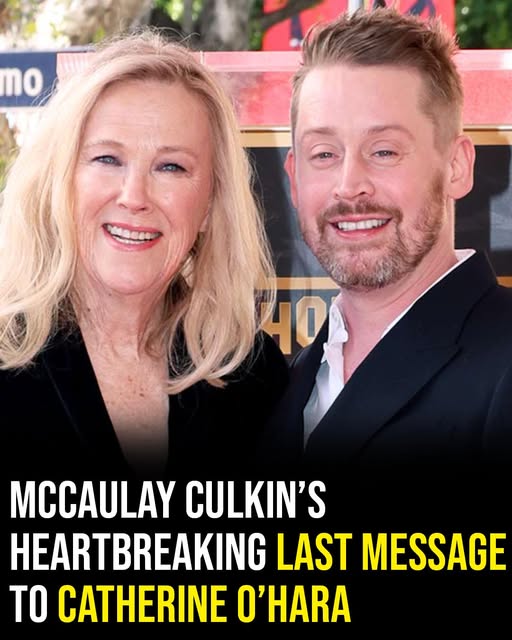
The landscape of modern comedy has lost one of its most brilliant architects. Catherine O’Hara, the Emmy-winning virtuoso whose chameleonic performances bridged the gap between biting satire and heartfelt humanity, passed away on January 30, 2026. She was 71. Her representatives confirmed that her death followed a brief illness, a loss that has triggered a global outpouring of grief. From the streets of her native Toronto to the soundstages of Hollywood, tributes are flooding in for a woman who didn’t just play characters; she redefined the very boundaries of the craft across five decades of sketch comedy, film, and television. O’Hara was a rare generational talent, a performer who could anchor a global holiday blockbuster like Home Alone, inhabit the gothic whimsy of Beetlejuice, and improvise through the nuanced “mockumentaries” of Christopher Guest. In her final act, she reinvented herself for a new era as the inimitable Moira Rose on Schitt’s Creek, proving that her comedic edge remained as sharp and relevant as ever.
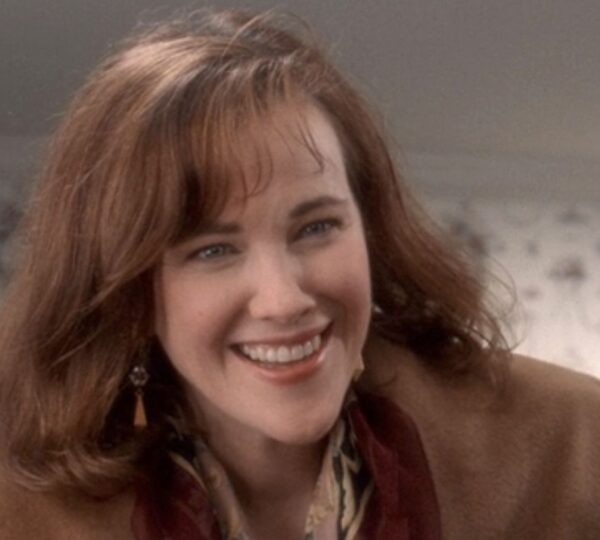
The Toronto Crucible: SCTV and the Birth of a Legend
Catherine O’Hara’s journey began on March 4, 1954, in Toronto, Ontario. Raised in an Irish-Canadian household, she was a natural mimic from the start, a child who viewed the world through a lens of sharp observation and playful wit. It was this innate drive that led her to The Second City, Toronto’s hallowed improvisational troupe.
It was there, in the trenches of live improv, that O’Hara forged her legend alongside a “who’s who” of comedic royalty, including Martin Short, Rick Moranis, John Candy, and her lifelong creative foil, Eugene Levy. This cohort would go on to create Second City Television (SCTV), a groundbreaking series that exported a uniquely Canadian brand of sophisticated absurdity to the world. O’Hara’s work on SCTV revealed her staggering versatility; she could pivot from a devastatingly accurate satire to a moment of genuine emotional resonance within a single sketch, setting a gold standard for the industry.
Cinematic Breakthroughs: The Mother and the Muse
In the late 1980s and early 90s, O’Hara transitioned to the silver screen with a series of roles that became cultural touchstones.
The Heart of ‘Home Alone’
As Kate McCallister in Home Alone (1990) and its 1992 sequel, O’Hara achieved a level of international fame that few character actresses ever reach. Her portrayal of a mother caught in a frantic, high-stakes race to reunite with her son was a masterclass in balancing comedic high-tension with maternal warmth.
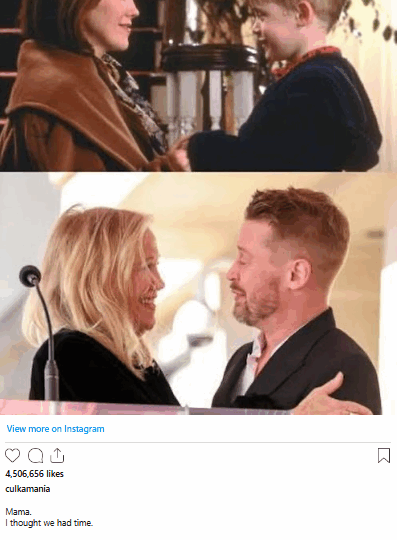
The depth of the bond she formed on set was evidenced by a moving tribute from her onscreen son, Macaulay Culkin. Posting to Instagram, Culkin addressed her simply as “Mama,” writing: “Mama. I thought we had time. I wanted more. I wanted to sit in a chair next to you. I heard you. But I had so much more to say. I love you. I’ll see you later.” His words echo the sentiment of a generation that grew up seeing O’Hara as the ultimate, albeit harried, cinematic mother.
Gothic Whimsy and Guest’s World
In Tim Burton’s Beetlejuice (1988), she gave us Delia Deetz, a flamboyant, avant-garde socialite whose comedic timing was as sharp as her character’s sculptural art. Yet, it was her work with Christopher Guest in films like Waiting for Guffman, Best in Show, and A Mighty Wind that perhaps best showcased her genius. In these largely improvised projects, O’Hara created characters that were simultaneously ridiculous and heartbreakingly human, solidifying her reputation as the premier improviser of her generation.
The Moira Rose Era and a Transcendent Legacy
While O’Hara’s filmography was already legendary, her role as the wig-wearing, accent-defying Moira Rose on Schitt’s Creek catapulted her to a new level of international acclaim. Co-created by Eugene and Dan Levy, the show allowed O’Hara to showcase a lifetime of skills—physical comedy, linguistic gymnastics, and a vulnerability that turned a potentially cartoonish character into a beloved icon. Her 2020 Emmy win was a formal recognition of a performance that had already captured the public’s imagination.
Even as she entered her seventh decade, O’Hara refused to slow down, taking on guest roles in prestigious series ranging from The Larry Sanders Show and 30 Rock to a powerful dramatic turn in The Last of Us.
The Private Life of a Public Treasure
Away from the glare of the cameras, O’Hara led a life grounded in the same warmth she brought to her best roles. She met the renowned production designer Bo Welch on the set of Beetlejuice; the pair married in 1992 and raised two sons, Matthew and Luke.
O’Hara leaves behind a legacy of joy, a body of work that serves as a curriculum for any aspiring comedian, and a reminder that the best humor is always rooted in a deep understanding of the human heart. She didn’t just make us laugh; she made us feel seen.
In the quiet hours of a Friday morning, the world of entertainment lost one of its most luminous and versatile lights. Catherine O’Hara, the Emmy-winning virtuoso whose career served as the backbone of modern comedy for half a century, has left a void that few could ever hope to fill.
While the public knew her through a kaleidoscope of eccentric, sharp-witted, and deeply human characters, those closest to her knew a woman who navigated the dizzying heights of Hollywood with a grounded grace. Throughout her storied life, O’Hara consistently steered the conversation back to the importance of family, frequently citing motherhood as her greatest and most enduring joy.
A Collaborative Spirit
To step onto a set with Catherine O’Hara was to witness a masterclass in professional generosity. Her longtime collaborators—a “who’s who” of comedic royalty including Eugene Levy, Martin Short, and Rick Moranis—have spent decades praising her boundless creativity and unwavering collaborative spirit.
Despite an accolades shelf that would intimidate most, O’Hara remained a steadfastly humble figure in the comedy community. She was known as a quiet mentor, often extending a steadying hand to younger actors and emerging talents, ensuring the future of the craft was as bright as the legacy she was building.
The Final Curtain
The timeline of her passing began in the pre-dawn stillness of Brentwood. Emergency responders were reportedly summoned to O’Hara’s Los Angeles residence at 4:48 a.m. on January 30, 2026.
Though she was transported to a local hospital in serious condition, she was later pronounced dead. While her representatives have requested privacy regarding the specifics of the brief illness that led to her passing, they confirmed a poignant final detail: she died as she lived, surrounded by the family she cherished. The O’Hara-Welch family has indicated they will hold a private celebration of life, opting to honor her memory away from the glare of the public eye.
A Global Outpouring of Grief
The news of her death triggered an immediate and extraordinary wave of tributes, cutting across generations of fans and colleagues:
Macaulay Culkin, her onscreen son in the Home Alone franchise, addressed her simply as “Mama,” sharing raw, heartfelt memories of their time together.
Dan Levy, the creative force behind Schitt’s Creek, hailed her as a “legend whose work transformed the very landscape of modern comedy.”
Eugene Levy, her partner in comedic brilliance for over forty years, reflected on a decades-long artistic partnership that was anchored by a profound personal friendship.
From the high-octane sets of blockbuster films to the improvised trenches of SCTV, peers like Pedro Pascal, Seth Rogen, and Joe Pesci have added their voices to the chorus, reflecting on her unique blend of humor and generosity. Even at the highest levels of government, Canadian Prime Minister Justin Trudeau recognized her as a national cultural icon whose work resonated far beyond the borders of her home country.
A Legacy of Imperfection and Inclusivity
O’Hara’s cultural footprint is immeasurable. She didn’t just perform; she helped architect several of the most significant pivots in comedy history. Whether it was the sharp-edged satire of her SCTV years, the perennial holiday warmth of Home Alone, or her late-career triumph in the inclusive storytelling of Schitt’s Creek, her work always centered on the beauty of human imperfection.
She had a preternatural ability to make eccentricity feel relatable. Through Schitt’s Creek, in particular, she became a champion for diverse communities, helping to shepherd LGBTQ+ representation into the mainstream with a touch that was both hilariously absurd and deeply empathetic.
The Enduring Echo of Laughter
Catherine O’Hara’s passing marks the end of a truly remarkable chapter in the arts. Her body of work, spanning five decades, remains a permanent gift to the world—a library of joy, laughter, and insight into the human condition.
She is survived by her husband, the renowned production designer Bo Welch, and their two sons, Matthew and Luke. While the curtain has fallen on her final performance, her legacy of heartfelt storytelling and her spirit of creative bravery will endure. Catherine O’Hara’s performances are timeless; her characters are etched into the cultural DNA. In the hearts of the millions who laughed and cried with her, she remains immortal.