“Honoring the Life and Remarkable Legacy of Lou Holtz”
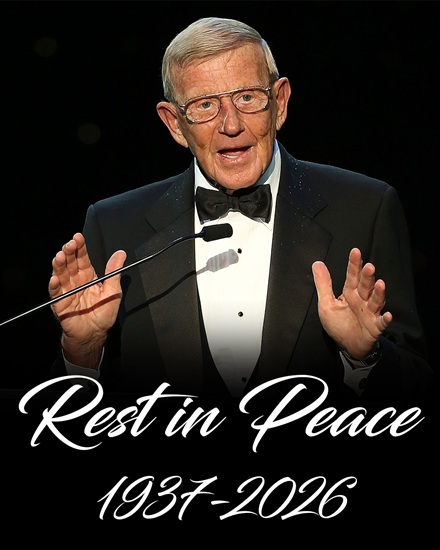
One of the most successful and influential figures in the history of college football has died. Lou Holtz, the Hall of Fame coach whose impact on the sport stretched far beyond wins and losses, passed away on March 4, 2026, at the age of 89.
His family announced his death on Wednesday, saying he died in Orlando, Florida, where he had been surrounded by loved ones. A cause of death was not publicly disclosed by the family.
Holtz’s passing brings to a close not only a remarkable coaching career that spanned more than three decades, but also the life story of a man whose influence shaped the lives of thousands — players, students, colleagues, and fans alike.
In the world of college athletics, Lou Holtz was more than a coach. He was a mentor, motivator, moral compass, and teacher of life lessons that extended far beyond the football field.

Early Life and Beginnings in Football
Born January 6, 1937, in Follansbee, West Virginia, Louis Leo Holtz grew up in the steel town environment of the Ohio River Valley.
As a boy, he gravitated toward athletics, eventually playing linebacker at Kent State University. His passion for the game and natural leadership qualities quickly became evident — qualities he would later instill in countless players.
Holtz began his coaching journey in 1960 as a graduate assistant at the University of Iowa, learning the fundamentals of coaching and team leadership.
From there, he went on to serve as an assistant at multiple schools before landing his first head coaching job in 1969 at William & Mary.
A Career of Turning Around Programs
Lou Holtz quickly earned a reputation as a coach who could take struggling teams and make them competitive. Over the next 33 years, he would lead six different college football programs — and even attempt a brief stint in the NFL.
William & Mary (1969–1971)
Holtz’s first head coaching role at William & Mary laid the foundation for what would become a distinguished career. Though the program was modest in national stature, Holtz’s leadership style and attention to culture began to emerge.
North Carolina State (1972–1975)
At NC State, Holtz continued establishing his methods and philosophy, turning the program into a competitive force. His teams posted winning records and helped elevate the school’s profile in college football.
New York Jets (1976)
In 1976, Holtz accepted a head coaching job with the New York Jets, his lone foray into NFL leadership. While his tenure was short — finishing 3–10 — it served as a significant learning experience in his life journey, shaping his commitment to college coaching.
Arkansas (1977–1983)
Holtz’s time at Arkansas marked his first stretch of real national prominence. He compiled a 60–21–2 record, led the Razorbacks to six straight bowl games, and famously upset a top‑ranked Oklahoma team in the 1978 Orange Bowl. Under his leadership, Arkansas became a respected and nationally relevant opponent.
Minnesota (1984–1985)
Though shorter, Holtz’s tenure at Minnesota was notable for competitive improvements and set the stage for his eventual arrival at Notre Dame.
The Notre Dame Years — A Career‑Defining Legacy
Lou Holtz arrived at University of Notre Dame in 1986, at a time when the storied program was struggling to regain its footing in college football. What followed was a chapter in sports history that would secure his legacy forever.
Immediate Impact and 100 Wins
Over 11 seasons, Holtz guided Notre Dame to 100 wins, amassing a record of 100–30–2 — the third‑best win total in the school’s history. His teams played competitive, disciplined football and became known for their toughness, precision, and resilience.
1988 National Championship
The pinnacle of Holtz’s tenure at Notre Dame came in 1988, when his Irish squad finished 12‑0 and claimed the consensus national championship. That season featured one of the most dramatic and iconic games in college football history: the upset victory over No. 1 Miami, a showdown that cemented Holtz’s reputation as a master motivator and strategist.
Records and Tradition
Holtz’s impact at Notre Dame went beyond wins. His teams produced a 23‑game win streak, set a program record with nine consecutive bowl appearances, and helped deliver back‑to‑back 12‑win seasons — unprecedented achievements in the school’s football history.
Several traditions Holtz emphasized, such as the famous “Play Like A Champion Today” sign in the locker room and removing names from jerseys to emphasize team identity, endure to this day.
Player Development and Mentorship
Countless future professionals passed through his program, including standout stars like 1987 Heisman Trophy winner Tim Brown and College Football Hall of Famers such as Raghib “Rocket” Ismail, Michael Stonebreaker, Aaron Taylor, and Chris Zorich.
Later Career and Continued Innovation
After departing Notre Dame at the end of the 1996 season, Holtz briefly stepped into broadcasting with CBS Sports before returning to coaching in 1999 at the University of South Carolina.
South Carolina Turnaround
Holtz inherited a struggling Gamecock program, which had finished 1‑10 the previous year. In his first season, the team still struggled, but by 2000, South Carolina posted an 8‑4 record and a victory in the Outback Bowl, one of the most remarkable turnarounds in college football history. Holtz’s leadership earned him national recognition and Coach of the Year honors.
He remained at South Carolina until 2004, retiring with a career that included 249 wins, 132 losses, and 7 ties, making him one of the winningest coaches in college football history.
He remains the only coach to lead six different programs to bowl games and one of the select few to guide four different teams to final Top 20 national rankings.
Holtz Beyond Coaching — Broadcasting, Writing, and Speaking
After coaching, Lou Holtz became a familiar voice in sports media, especially as a college football analyst on ESPN, where his sharp insight, humor, and colorful expressions brought depth and entertainment to broadcasts.
His natural ability to connect with audiences made him a beloved figure not just among football fans, but among casual viewers who appreciated his wisdom on leadership, teamwork, and life.
Holtz also wrote books and traveled extensively as a motivational speaker, using his experiences in football to teach lessons about resilience, character, and personal growth.
His message — that sports are not just about competition, but about shaping individuals to face life’s challenges with courage and integrity — resonated far beyond the stadiums he once filled.
Faith, Family, and Personal Values
Holtz’s life was marked by a strong commitment to faith and family. A devout Roman Catholic, he consistently spoke about the role his beliefs played in his approach to coaching, leadership, and personal conduct.
His values were evident in how he treated people, the ethical standards he demanded from his teams, and the community service efforts he supported through foundations and scholarships.
He was married to his beloved wife Beth for nearly 60 years before her death in 2020, and together they were known for their generous support of educational and charitable initiatives.
The Holtz family’s philanthropy at Notre Dame included funding the renovation of campus chapels and establishing scholarships in their names.
He is survived by their four children, nine grandchildren, and two great‑grandchildren, each of whom carried forward aspects of his legacy in their own lives and careers.
Honors, Awards, and Lasting Legacy
Lou Holtz’s influence was recognized with numerous honors throughout his life:
Inducted into the College Football Hall of Fame (2008) for his extraordinary contributions to the sport.
Presidential Medal of Freedom (2020), one of the nation’s highest civilian honors, awarded in recognition of his lifelong leadership and service.
But beyond trophies and titles, his legacy is measured most profoundly in the thousands of young men whose lives he changed — players who learned about discipline and loyalty, coaches who adopted his principles of leadership, and fans who followed his teams with admiration.
His genuine interest in people, his faith‑driven worldview, and his belief that athletic competition could build character continue to influence American football culture today.
Tributes and Reflections After His Passing
Following news of Holtz’s death, tributes poured in from across college football, media, and fan communities. Current and former coaches spoke of his mentorship, former players shared how he impacted them long after their playing days, and fans around the country reflected on how Holtz shaped their love for the game.
Notre Dame — where his legacy is deeply woven into the fabric of the university — paid particular homage, noting that his influence extended beyond the gridiron into the very heart of the school’s mission and values.
Closing Thoughts — More Than a Coach
Lou Holtz’s life was a testament to what it means to lead with conviction, humility, and grace. His coaching record — remarkable by any standard — stands alongside a deeper, more enduring legacy of teaching life lessons, inspiring others, and building character through sport. As one long‑time admirer put it, “Lou didn’t just coach football. He coached life.”
Though he is gone, the values he championed — faith, family, resilience, and service — will live on in the countless lives he touched. The imprint Lou Holtz left on college football and on the hearts of those he encountered will endure for generations to come.