My PARENTS And SISTER Refused To Take My DAUGHTER To The ER ‘After She Broke Her LEG’ And Made Her
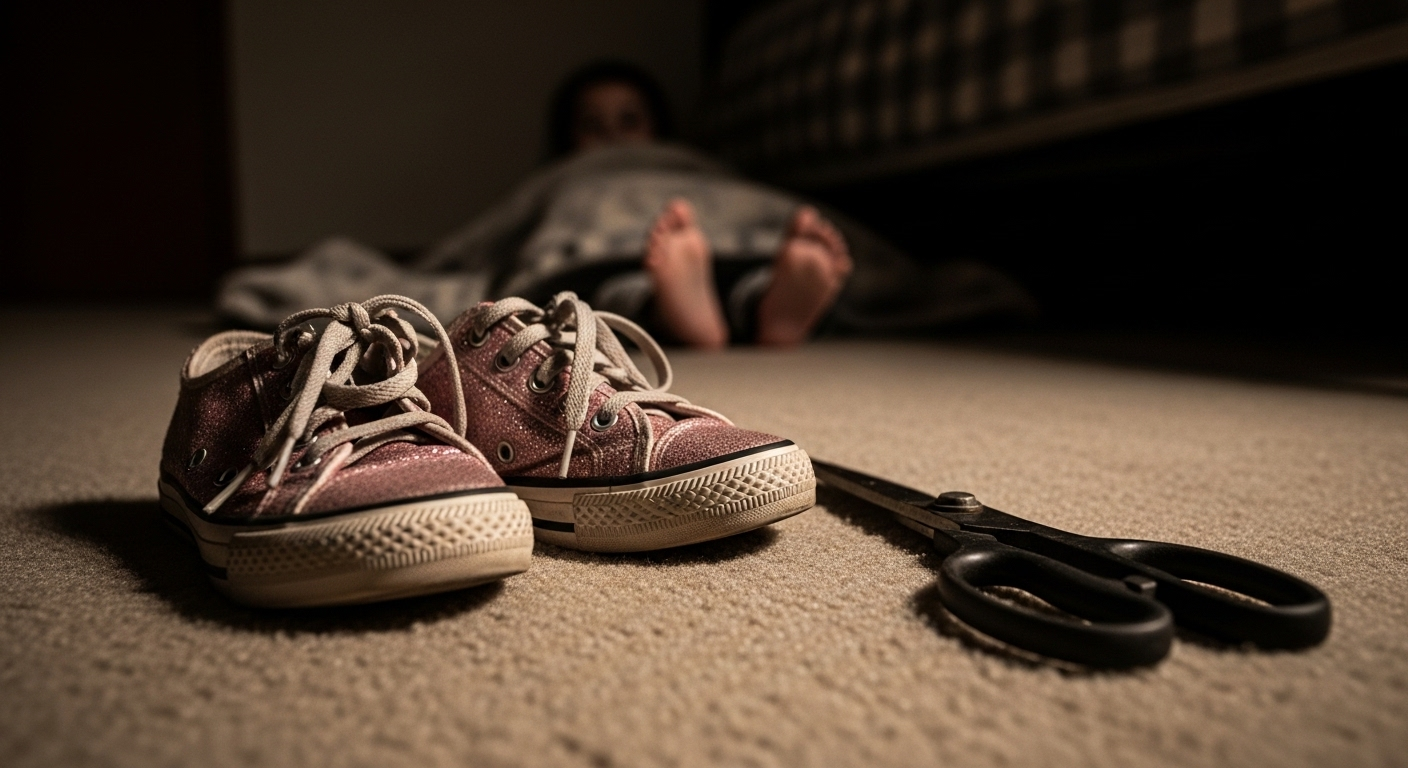
When I came through the front door that evening, the first thing I noticed was the silence. Not the good kind. Not the tired, domestic quiet of a house settling into dusk, with the refrigerator humming and somebody in another room running water or opening drawers. This silence was wrong. It sat in the living room like something waiting to be discovered. My keys slipped from my hand and hit the hardwood floor with a sharp metallic crack that should have made someone look up, but nobody moved fast enough. Then I saw my daughter on the couch.
She was folded in on herself in a way the body should never have to learn. Pale. Sweating. Her hair stuck damply to her temples. One leg was stretched out stiff and unnatural over an old quilt my mother had thrown under her as if fabric could solve neglect. The denim at her knee had been cut open, and beneath it her shin and ankle were swollen grotesquely, the skin stretched tight and shiny, the color already turning from angry pink to a deep ugly purple. Her hands were clenched so hard in the cushion that her knuckles were white.
“Mom,” she whispered when she saw me, and the sound of her voice was so thin it scraped at something inside me. “It hurts so bad.”
I crossed the room so fast I nearly slipped. “What happened?”
She looked at me, and what broke me first was not the injury. It was the hesitation. The reflexive little pause of a child trying to decide whether her pain was inconvenient.

“I think I broke it,” she said. “I slipped on the back steps. A while ago.”
“A while ago” turned out to be four hours.
I remember straightening up slowly and turning toward the dining room table, where my mother sat with one ankle over the other and a glass of iced tea sweating onto a coaster. My father was in his usual chair near the window, half-hidden behind the local paper, his reading glasses low on his nose. My sister, Rebecca, was at the table with her phone in one hand and a bowl of cherries in front of her, dropping pits into a napkin as casually as if we were all passing through an ordinary Tuesday.
“Four hours?” I said.
My mother lifted one shoulder. “She was crying too much to explain anything.”
My father did not lower the newspaper.
Rebecca glanced up, bored already by my tone. “We thought it was a sprain.”
“You thought,” I repeated.
“We had errands,” my mother said. “Your father needed gas, and Rebecca had to pick up the dry cleaning before they closed.”
I stared at her. There are moments when the mind rejects what the ears have plainly heard. “She was in pain.”
“She needed to calm down first,” my mother said. “You know how dramatic she can be.”
That sentence hung in the air for one second too long. My daughter heard it too. I knew because her face changed. Not outwardly, not in some theatrical way. She simply turned her eyes toward the far wall, as if to make herself smaller inside the room.
I did not scream. Even now, when I think back on that moment, what I remember most clearly is the terrible stillness that came over me. My heartbeat seemed to move away from me, heavy and slow. The house smelled like lemon cleaner, stale coffee, and the roast my mother had probably been proud of all afternoon. Outside, a lawnmower droned somewhere down the block. The kitchen clock clicked loudly over the doorway. My whole life, when something unbearable happened in that house, I had either argued or explained or tried to smooth it over before it became a spectacle. But there are injuries that rip through politeness so completely that all you are left with is instinct.
I bent, slid one arm behind my daughter’s shoulders and the other beneath her knees, and lifted her. She gasped so sharply I felt it in my teeth. She was almost seventeen, all coltish limbs and recent height, no longer little enough to be scooped up without thought, but adrenaline and fury gave me strength I didn’t know I had left. Her face buried against my neck.
“Bag,” I said, not looking at anyone. “Phone. Insurance card.”
My mother stood up at last. “Danielle, don’t be ridiculous. If it were that serious—”
I turned my head and looked at her.
She stopped talking.
There are very few times in life when somebody who has dismissed you for years finally sees that the version of you they counted on is gone. It is not dramatic. It is not loud. It is a kind of cold administrative clarity. My mother saw it then, and for the first time in my life, she did not try to step in front of me.
Rebecca made a show of exhaling. “You’re overreacting.”
My daughter lifted her head off my shoulder just enough to speak, her voice weak. “Aunt Becca, I told you it made a cracking sound.”
Rebecca rolled her eyes. “People say things when they panic.”
I carried my daughter to the front door. My father finally lowered the paper and muttered, “Hospital’s a waste unless you know it’s broken.”
I turned back just long enough to say, “That is your granddaughter.”
He looked irritated, not ashamed. “Don’t start.”
I opened the door and walked out into the evening.
It had rained earlier. The front steps were still damp, and the air carried that wet-earth smell that always rises from the gutters and flower beds after a spring storm. The sky was going bruise-colored over the houses, and the neighborhood looked offensively normal. Porch lights blinking on. A dog barking three yards over. Somebody laughing near a pickup truck. I got my daughter into the back seat as gently as I could, hands shaking so badly I nearly dropped the buckle twice. She gritted her teeth and tried not to cry louder than she already was, which told me everything I needed to know about what the last four hours had taught her.
“It’s okay,” I said, though we both knew it wasn’t. “I’ve got you.”
At the emergency room the fluorescent lights were brutal, the waiting area cold enough to raise gooseflesh on my forearms, and the air smelled like bleach, rubber gloves, vending machine coffee, and fear. A television in the corner was tuned to a cooking competition no one was watching. A toddler coughed wetly into his father’s shirt. A woman with a bloodstained towel wrapped around her hand rocked in a plastic chair near the window. My daughter leaned against me, trembling with pain, while the triage nurse took one look at her leg and called for a wheelchair before I finished giving her name.
The x-rays came back fast.
Compound fracture. Multiple bone fragments. Tissue trauma. Significant swelling. Infection risk from prolonged weight-bearing and delayed treatment.
The attending physician was a lean woman in navy scrubs with dark hair twisted into a knot at the back of her head and the kind of face that had learned long ago how to deliver bad news without wasting any words. Her badge said DR. S. MENDEZ. She held the scan up, pointing with a capped pen.
“She’s lucky,” she said.
Lucky. I looked at the image and felt sick. The bone looked wrong in a way that made my stomach clench.
“Lucky?” I asked.
Dr. Mendez nodded once. “If she’d been made to keep walking much longer, or if this had gone overnight untreated, we’d be talking about more serious complications. Infection. Improper healing. Potential surgery for correction, depending on how things shifted. She’s young, which helps. But this was not something that should have been ignored.”
My daughter stared at the ceiling tiles, silent now, tears drying at her temples.
Dr. Mendez looked at me for a second longer than necessary. “Who was supervising her?”
The question was clinical. The answer was not.
“My parents,” I said. “And my sister.”
Dr. Mendez’s expression did not change much, but something behind her eyes sharpened. She made a note in the chart. “The nurse will bring you discharge and orthopedic follow-up instructions. I’d also like social work to stop by before you leave.”
I looked up. “Social work?”
“Injuries with delayed care sometimes require additional documentation,” she said evenly. “Especially when a minor reports that her pain was dismissed.”
My daughter closed her eyes.
That was the moment the shape of the situation changed in my mind. Until then I had been inside the immediate animal terror of seeing her hurt. But hearing a doctor translate what had happened into the language of systems, reports, documentation, liability—that took something unbearable and gave it edges. It was not a family disagreement. It was not one more episode in the long series of selfish, thoughtless acts I had spent my life minimizing. It was neglect. Maybe worse. A line had been crossed, and not in the private emotional way my family specialized in. In a way that left records.
The social worker, whose name was Elise, came in with a clipboard and the softest voice in the building. She was maybe in her early fifties, silver threaded through her dark hair, sensible shoes, no-nonsense posture. She crouched beside my daughter’s bed instead of standing over her.
“Can you tell me what happened?” she asked gently.
My daughter’s voice was small but clear. “I slipped. I heard something crack. I told them it hurt really bad.”
“Did anyone call your mother?”
“No.”
“Did anyone call 911?”
She shook her head.
“Did anyone ask if you could feel your toes?”
Another shake.
“Did anyone help you keep weight off it?”
My daughter swallowed. “They told me to try walking, because if I could walk it probably wasn’t broken.”
Elise nodded once and wrote something down. Then she asked, “How long did they wait before your mother got home and brought you here?”
“Four hours. Maybe a little more.”
“And during that time?”
Silence.
Elise waited.
My daughter looked at me. I squeezed her hand.
“They told me to stop crying,” she whispered. “And Grandpa said pain makes people stronger if they quit making a show of it.”
I felt something inside me go so still it almost seemed to stop. My father’s voice landed in my memory exactly as she said it, because of course it did. Pain makes people stronger. That had been the religion of our house. Not healing. Not care. Endurance. Endurance without complaint, especially from the inconvenient people.
Elise finished the interview and left with the chart.
By the time my daughter was settled into a temporary boot, loaded with antibiotics and pain medication, and finally sleeping in the stiff recliner beside the bed while we waited for final paperwork, the hospital had gone into that strange after-midnight rhythm where everything is dimmer and more exposed at the same time. The corridors glowed pale blue under low lights. Machines beeped at intervals that never seemed to align. Somewhere far off, someone laughed too loudly and was hushed. A janitor’s cart squeaked across the linoleum. My daughter’s fingers stayed curled around my hand even in sleep, as if some part of her no longer trusted that help would remain once she stopped watching it.
I sat there all night staring at the ceiling and understanding, in slow unbearable layers, that this was not an isolated cruelty. This was a culmination.
My mother had never liked inconvenience, especially in children. When I was eight and got the flu during Thanksgiving week, she kept me in the laundry room on a cot because guests were coming and she did not want “all that coughing” in the good part of the house. When I was eleven and split my chin on the driveway, my father told me to stop bleeding on my shirt and walk inside upright because neighbors were outside. When I was fourteen and Rebecca backed her car into the mailbox and blamed me for distracting her, my parents grounded me for “creating tension” by denying it too forcefully. None of it had looked dramatic from the outside. That was the genius of families like mine. They specialized in injuries that could pass for discipline if you were not the one carrying them.
Rebecca had adapted best. Two years younger than me, pretty in the harmless, agreeable way people trusted too quickly, she learned early that our mother rewarded performance and our father respected whichever child mirrored his contempt most efficiently. Rebecca became fluent in both. She smiled at the right moments, cried on cue, borrowed and did not return, broke things and let me get blamed because she knew I would spend twice as much energy trying to prove innocence as she would spend manufacturing wounded surprise. By adulthood she had turned fragility into a profession. Everything exhausted her. Everything burdened her. And somehow she remained the person everyone in town described as sweet.
I, on the other hand, had become capable.
Capable women are useful to families like mine. We pick up shifts. Remember appointments. Handle paperwork. Provide childcare. Smooth holidays. Keep secrets. Work jobs. Stay calm. Do not make scenes. When my marriage ended six years earlier—a polite, devastating unraveling that left me with a fifteen-year-old daughter, some debt, and a townhouse I could barely afford—I had made the practical mistake of leaning on my parents for after-school coverage while I worked. My ex-husband had moved three states away with a woman who sold handmade soap online and believed herself spiritually evolved because she drank moon water. Child support came inconsistently. My job at the insurance office was steady but demanding. My parents lived fifteen minutes away. My mother insisted they wanted to help. My father liked playing benevolent patriarch when there was an audience for it. Rebecca drifted in and out of their house enough that she was often there too. I told myself it was temporary. Then temporary became routine, and routine disguised risk.
At four in the morning, when the nurse finally brought the discharge folder and a paper cup of apple juice my daughter barely touched, I signed every page with a hand that no longer trembled. Shock had burned off. In its place was something cleaner.
We went home just before dawn.
The streets were empty, washed silver under streetlights. Early mist lifted off the grass in low strands. My daughter dozed fitfully in the passenger seat this time, the boot elevated on pillows from the hospital. When we pulled into the driveway, the house looked exactly as it always had: narrow brick front, clipped hedges, one porch light still on. It made me irrationally angry that structures could remain so calm around cruelty.
I got her upstairs, settled her in bed, checked her temperature twice even though the doctor said once was enough, lined up the medication on her nightstand, and sat beside her until she fell asleep for real. Then I went into the kitchen, made coffee I did not want, and started a folder.
Photos first. The leg before the hospital, on the couch under my mother’s quilt. The swelling. The bruising. The cut denim. Then the hospital bracelet. The discharge instructions. The medication list. The orthopedic referral. I scanned everything to cloud storage, emailed copies to myself, printed duplicates. After that I wrote down the timeline while every detail was fresh. 4:17 p.m. fall on back steps, approximate. 4:20 to 8:15 left untreated by grandparents and aunt. Made to bear weight. Complaints dismissed. 8:27 arrival at home. 8:48 ER triage. The act of recording it kept me from shaking apart.
At 8:03 a.m. my phone lit up with my mother’s name.
I let it ring.
Then my father.
Then Rebecca.
Then all three in a row like clockwork.
I turned the phone facedown and called someone else.
Angela Voss had handled my divorce. She was not warm, exactly, but she was precise, which in my experience was more useful. She had iron-gray hair cut to her jaw, a habit of finishing other people’s excuses for them in ways that made excuses sound indecent, and a private practice built mostly on family law, custody disputes, emergency petitions, and the kind of quiet legal violence respectable people pretend not to understand until they need it themselves.
She answered on the second ring. “Danielle.”
“I need help.”
That got her full attention. I heard typing stop on the other end.
“Tell me.”
So I did. Everything. The fall, the delay, the doctor, the social worker, the chart note, the history, the calls now coming in. Angela did not interrupt once except to ask for the hospital’s name and the attending physician’s spelling.
When I finished, she said, “Do not respond to any of them. Save every voicemail. Screenshot every text. I want the ER records, discharge summary, and any notes from the social worker forwarded to me by noon.”
“I can do that.”
“I know you can.” Her voice changed slightly, softened by maybe five percent. “Danielle, listen carefully. This is no longer a private family matter. It may never have been, but it definitely is not now. We’re going to treat it accordingly.”
Something in me unclenched just enough to let a breath through. “Okay.”
“Also,” she added, “I want you to call child protective intake in your county. And because your parents were acting as caregivers, I want a report made there as well. Don’t editorialize. Stick to facts. Time, injury, delay, names.”
I stared out the kitchen window at the wet fence line and the drooping hostas. “I don’t know why I still feel guilty.”
“Because they installed the guilt before you had any defenses,” she said. “That doesn’t mean it deserves obedience.”
By ten that morning the reports were underway.
There are few experiences more surreal than describing your own parents to an intake worker in the language of negligence. I kept my voice level. I gave dates, times, observations, names. I explained that my daughter had been injured while in their care, that they had delayed treatment for hours, that they had forced weight-bearing despite severe pain, that medical staff documented risk from the delay. The woman on the line asked careful questions and typed as I spoke. Her tone remained neutral, which I appreciated. Neutrality is sometimes the only mercy bureaucracy offers.
Afterward I sat at the kitchen table and shook for ten full minutes.
My daughter woke around noon, groggy and embarrassed. “I’m sorry,” she murmured as I adjusted her pillows.
I turned so fast I nearly knocked over the water glass. “No.”
She blinked.
“You do not apologize for being hurt.”
“I know, I just—”
“No.” I knelt by the bed so she had to look at me. “You did nothing wrong. Not the fall. Not crying. Not needing help. None of it.”
Her eyes filled before mine did. “Grandma said I was making it worse by panicking.”
I closed my eyes for a second.
When I opened them, I kept my voice even because children can mistake adult rage for danger even when that rage is aimed at protecting them. “Grandma was wrong.”
My daughter studied my face. She had my chin, her father’s dark eyes, and a way of curling into herself when she feared taking up too much room. I had watched that habit deepen over the last year and told myself adolescence explained it. Shyness. Stress. Too much phone time. Typical teen mood. That morning, kneeling by her bed, I realized how much I had missed because I was tired and working and still, shamefully, inclined to assume my parents’ version of events was more reasonable than the one my daughter never quite managed to articulate.
“How often,” I asked quietly, “have they made you feel like a problem?”
She looked away.
That was answer enough.
The next four days moved like weather building over flat land. Quiet at first, then electric.
My mother left a voicemail the first afternoon, her voice tight with offense. “I don’t know what story she told you, but you need to calm down before you make a fool of yourself.” My father texted: CALL ME. Rebecca sent a longer message, full of selective tenderness. She’s a teenager, Dani. You know how dramatic she gets when she wants attention. Please don’t turn this into something ugly.
Something ugly. As if ugliness had not already happened on their watch.
Angela filed emergency motions. Temporary revocation of all caregiving access. Formal notice that medical decisions were not to be discussed with extended family. Instructions that any contact regarding my daughter had to come through counsel. The orthopedic specialist confirmed the fracture was healing but emphasized again that delayed care had worsened swelling and increased infection risk. Physical therapy would be needed. So would patience.
The county investigator called on Thursday morning.
Her name was Marisol Vega. She sounded young until she began asking questions, and then she sounded like steel wrapped in civility. She had already reviewed the ER documentation and wanted clarification on the living arrangement, prior caregiving schedule, and whether there had been previous instances of medical neglect or emotional dismissal.
I answered carefully.
“Did your daughter report fear of asking for help prior to this incident?” Marisol asked.
I thought about the apologies. The flinch in her shoulders. The way she had learned to say “It’s fine” before anyone even challenged her.
“Yes,” I said. “Not in those exact words. But yes.”
Marisol was quiet for a moment, then said, “We’ll be contacting them today.”
They arrived at my porch that evening before sunset, exactly as I knew they would.
My mother pounded first, flat-palmed and indignant. Then my father, who knocked as if the house belonged morally to him no matter whose name was on the mortgage. Rebecca stood half a step behind them in oversized sunglasses, which she removed when I opened the door just enough to stand in the frame. Her mascara had indeed smudged, though whether from crying or craftsmanship I could not say.
“Have you lost your mind?” my mother demanded.
“No,” I said. “You’re just hearing the truth with consequences.”
Dad’s face was mottled red. “You called the state on us.”
“I reported what happened.”
Rebecca folded her arms. “It was a sprain.”
Behind me, I heard the careful thump of one crutch.
My daughter had come to the hallway and was standing just far enough back to stay inside the house, her face pale but steady, the boot heavy on her leg, her hair tied up messily from a day in bed. I stepped slightly to the side so she could be seen if she wanted to be, but not reached.
Rebecca saw her and tried to soften instantly, her voice turning honeyed. “Sweetheart, you know we never meant—”
“It wasn’t a sprain,” my daughter said.
Nobody moved.
“It wasn’t a sprain,” she repeated, louder this time. “You just didn’t care.”
My mother’s whole face changed. Not to shame. To panic. She took one involuntary half-step forward. “Honey, don’t say that. You were hysterical.”
I put my hand flat against the doorframe between us. “Stop.”
Dad jabbed a finger toward me. “You’re coaching her.”
“No,” I said. “I’m finally listening.”
My daughter was still looking at Rebecca, not my mother, not my father. Rebecca’s mouth parted slightly. For once in her life, she had no script ready. Children are inconvenient witnesses that way. They ruin adult mythologies simply by remembering.
My mother tried a different tactic. “Danielle, families make mistakes.”
I laughed then, once, without humor. “Forgetting a birthday is a mistake. Overcooking dinner is a mistake. Making a child walk on a broken leg because dry cleaning seemed more urgent is neglect.”
Dad’s voice dropped lower, uglier. “You always did enjoy humiliating this family.”
There it was again. The original religion. Reputation over reality. Image over injury.
I looked straight at him. “No. You just finally did something I could prove.”
Angela called thirty minutes after they left, as if she had been waiting for the exact moment my nerves might waver. “Emergency orders were granted,” she said. “Temporary no-contact relating to care and custody. If they show up again, you document and call.”
My shoulders sagged against the kitchen counter. “Okay.”
“Also,” she said, and I could hear papers shifting on her desk, “there is enough here for a petition regarding negligent supervision. We are proceeding.”
I shut my eyes.
“Danielle?”
“Yeah.”
“You don’t have to feel good about this for it to be right.”
That line stayed with me.
By Monday the town knew.
Small towns do not keep secrets; they ferment them. A church prayer request becomes a grocery aisle whisper becomes a school pickup murmur becomes a certainty no one can source but everybody can repeat. I said nothing publicly. I did not need to. The investigator had spoken to them. The initial notice existed. The hospital record existed. And when institutions begin circling private sin, people suddenly develop a nose for scandal.
Rebecca’s social media went quiet first. No filtered coffee cups. No inspirational quotes about grace. No reposted memes about family. Then a local mother’s page removed her from a babysitter recommendation thread. My mother still tried to walk into the grocery store with her normal smile fixed in place, but the cashier who had once hugged her at Christmas gave her change without meeting her eyes. The pharmacist stopped calling her “darlin’.” The pastor’s wife, who had worked as an orthopedic nurse before marriage and ministry repackaged her, made the fatal mistake of reading the medical report.
My father tried to get ahead of it at church that Sunday. He stood during testimony time—a tradition he had always loved because it allowed him to disguise performance as humility—and asked the congregation to pray for a family “under spiritual attack by lies and misunderstanding.” He even got choked up in the right places. I know because two separate people texted me versions of it before lunch.
What I heard later was better.
When he sat down, the pastor’s wife rose slowly from the second row, smoothed her skirt, and said in a calm voice everyone could hear, “Delayed treatment of a fracture in a minor is not a misunderstanding. It is neglect.”
Then she sat back down.
That, in a town like ours, was social execution.
My daughter began physical therapy two weeks later.
The clinic smelled like rubber mats, antiseptic, and peppermint gum. There was always soft instrumental music playing somewhere above the hum of treadmills and conversation. Her therapist, Naomi, was in her thirties, athletic without being intimidating, with freckles across her nose and a way of explaining pain that made it sound like a message rather than a moral failing. It mattered instantly. My daughter had spent enough time around adults who treated suffering as weakness. Naomi treated it as information.
“Your body’s not betraying you,” she told her on the first day. “It’s protecting what got hurt.”
My daughter looked at her with open suspicion, which broke my heart and made Naomi like her more.
Progress came slowly. First the boot, then partial weight-bearing, then exercises that made her sweat and scowl and sometimes cry in frustrated private tears afterward in the car. But beneath the physical healing something else was happening. She stopped apologizing before asking for help sitting down. She stopped saying “sorry” every time a task took longer than expected. The first time Naomi said, “Tell me exactly where it hurts,” and my daughter answered without shrinking, I had to look away so I wouldn’t cry in the waiting room.
At home I changed things too. Not dramatically. Deliberately.
A new sitter when I had to work late: Mrs. Alvarez from two streets over, who wore bright lipstick, baked empanadas on Sundays, and spoke to children with the same respect she gave adults. A new pediatric clinic closer to work, where the nurses learned my daughter’s name within two visits. Therapy, though I introduced it carefully and let my daughter choose from three female clinicians after reading their bios herself. She picked Dr. Elaine Mercer because “she looks like she would tell the truth even if it’s awkward.” That was not inaccurate.
We repainted her room in lavender and gray. Put up softer lights. Cleared out old boxes. Bought a new comforter that felt less like the house she had been hurt in and more like something forward-facing. One afternoon I came home from work and found a drawing taped to the refrigerator. Two stick figures. One on crutches, the other holding her hand. Above them, in her round, still slightly childish handwriting, she had written: me and mom safe.
I stood in the kitchen with my purse still on my shoulder and cried quietly enough not to make her come explain it.
Three weeks after the fracture, a letter arrived in a cheap white envelope with my name typed across the front.
No return address.
Inside was a single sheet of printer paper. My mother had dictated it, if the syntax was any indication, but someone else—probably Rebecca—had typed it to give it a false air of formality.
Danielle, this has gone too far. Families argue, mistakes happen, but reporting your own blood is beyond cruel. Your sister is devastated. Your father has not slept. This is your final chance to undo what you’ve done. Come to the house. Sit down. Let’s fix this before you destroy everything.
I read it once. Then again, slower.
The arrogance of it almost deserved admiration. They had endangered my child, ignored her pain, lied when confronted, accused her of dramatics, and now wanted me to enter their house—the old theater, the old jurisdiction—and help them restore control in the name of repair. They had not apologized. They had not asked after her healing. They had not expressed fear for the damage they had caused. Only fear for themselves.
I dropped the letter into the kitchen trash and did not mention it to my daughter.
That night, while helping her pick out shoes for her eventual return to school, I watched her hold up a glittery pair of sneakers and smile without checking first to see whether she was being too much. It struck me then how little children need in order to begin recovering if safety is real. A softer room. A trustworthy adult. Pain believed the first time it speaks.
“Can I ask you something?” she said later, while I tucked the blanket around her boot.
“Anything.”
“If I never want to see them again… does that make me bad?”
The lamp beside her bed cast a low amber circle over the nightstand, her books, the glass of water, the pill bottle. Outside, rain tapped lightly at the windows. Somewhere down the block a car door slammed. Small ordinary noises. Inside that small ordinary room, the question felt enormous.
I sat on the edge of the bed and brushed hair back from her face. “No, baby.”
Her eyes searched mine.
“It makes you wise enough to choose peace over people who hurt you and called it love.”
She let out a breath she had clearly been holding a long time.
Rebecca texted again two days later. You’ve made your point. Can we stop now?
I stared at the message while standing in line for coffee on my lunch break, the smell of espresso and burnt sugar rising around me, office workers talking too loud over their phones, the raincoat of the woman in front of me dripping onto the tile. Made your point. As if this were rhetoric. As if my daughter’s fracture were a family debate that had simply gotten out of hand.
I did not reply.
Because I had not made a point. I had drawn a line. There is a difference, and people raised in manipulative families spend years learning it.
The formal notice became public record in limited form soon after. Not every detail, but enough. Negligent supervision of a minor resulting in delayed medical care. Three names. My mother. My father. Rebecca. That changed the local conversation completely. It is one thing to gossip about family trouble. Another to gossip about a documented act that leaves legal tracks.
Rebecca lost the part-time babysitting job she had through a woman at church. A local moms’ group quietly blacklisted her. My father complained to anyone who would listen that society had become too eager to criminalize ordinary family dynamics. Fewer and fewer people listened. My mother took to staying home more, which I know because Mrs. Alvarez knew everybody’s comings and goings without ever seeming nosy. “Your mama hasn’t been out except early,” she said one evening while handing me a foil pan of arroz con pollo. “That’s pride with bruises on it.”
Angela kept me updated with the sort of brisk precision that made chaos feel manageable. Potential interviews under oath. Protective orders. Limits on contact. Documentation requirements. She had the rare gift of making legal procedure sound like moral architecture. Not dramatic. Structural.
“You are not punishing them for being flawed,” she said during one meeting in her office, tapping a stack of papers into alignment. “You are protecting your daughter from people who demonstrated dangerous disregard. I need you to keep those categories separate in your mind.”
The office smelled faintly of black coffee and printer toner. Outside her window, traffic moved in blurred gray ribbons through drizzle. I nodded, though part of me still hated how much of adulthood had become the labor of translating obvious harm into a language powerful enough to matter.
Then came the grocery store encounter.
It was a Sunday afternoon. We were in the produce aisle picking through apples, my daughter walking carefully but independently now, a pink scarf tied over her ponytail because she said it made errands feel less boring. The store was bright and over-air-conditioned, smelling of citrus, wet lettuce, and bakery bread. A child somewhere near the freezers was crying for popsicles. My daughter had just chosen three Honeycrisps and put them in the cart when I heard my mother’s voice behind me.
“Oh, Danielle. There you are.”
I turned.
She stood three feet away holding a basket with almost nothing in it: a bottle of dish soap, a carton of eggs, one avocado she probably did not need. Her hair was set. Her lipstick was on. She looked like a woman who had dressed carefully to appear unfallen. But there was strain under it, the skin around her mouth pulled tight, her eyes too bright.
My daughter’s hand immediately found the side of the cart.
“Can we talk for just a second?” my mother asked.
“No,” I said.
She blinked, genuinely startled. That was the thing about boundaries with people like her. They never sounded rude in her own mouth, only in yours.
“What do you mean, no?”
“I mean no.”
“I’m your mother.”
The fluorescent lights buzzed faintly overhead. Somebody turned their cart around at the end of the aisle and then pretended not to watch. A produce employee rearranged oranges with the kind of exaggerated concentration that signaled very real interest.
I stepped slightly so I was between her and my daughter. “You are a biological relative who endangered my child. That is where your role ends.”
Her whole face went cold. “You are being unbelievably cruel.”
I almost laughed. Instead I kept my voice level. “Cruel is telling a child to walk on a broken leg because dry cleaning mattered more.”
“That is not what happened.”
“It is exactly what happened. There are records.”
She hissed the next part so quietly I almost didn’t hear it. “You’re teaching her to hate us.”
I leaned in just enough that my voice would reach only her. “I’m teaching her that silence is not a virtue when someone is hurting her.”
She reached out then, maybe for my arm, maybe for the cart, maybe out of old instinct. I stepped back immediately.
“Don’t touch us,” I said.
My daughter’s posture changed beside me. Subtle. But there. Chin up slightly. Shoulders less folded. She was watching. Learning. That mattered more than anything I might have liked to say.
So I took the cart and walked away with her beside me.
Behind us I heard something drop—maybe the avocado, maybe the basket. I did not turn around. Healing is sometimes less cinematic than people want. Sometimes it is simply refusing one more scene.
At a parent-teacher conference a few weeks later, her biology teacher sat across from me in a classroom that smelled faintly of dry-erase marker, old textbooks, and floor wax. Student posters on cellular respiration flapped slightly under the vent. My daughter, still not fully cleared for sports, waited in the hall scrolling through her phone.
“She’s different,” he said.
My stomach tightened reflexively. “Different how?”
He smiled. “More sure of herself. More willing to speak up. She told the class she wants to go into trauma surgery.”
I blinked. “She didn’t tell me that.”
“She wrote a short essay about it. Said she wants to be the kind of person who helps when everybody else freezes.”
When I got back to the car, I sat there for a second before starting the engine.
At home that night, after dinner, I asked her about it while she was doing homework at the kitchen table, pencil tucked behind one ear.
“You want to be a trauma surgeon?”
She looked up, almost shy but not quite. “Maybe.”
“Because you’re good at science?”
“That too.” She tapped her eraser against the notebook. “But mostly because when I was in the hospital, everybody just… knew what to do. Nobody was annoyed. Nobody acted like I was being dramatic. They just helped.”
Her voice was calm, but I could hear the old astonishment under it. The astonishment of a child discovering care without conditions.
“I want to be that for somebody,” she said.
I had to look down at the math worksheet between us for a second. “That’s a beautiful reason.”
She shrugged a little. “I just don’t ever want anyone to feel stupid for being hurt.”
There are sentences children say that reveal exactly how much damage they’ve been trying to organize internally. I reached across the table and squeezed her hand.
Later that same month, Dr. Mercer suggested something I had not considered: a closure letter.
“Not for reconciliation,” she clarified during a joint session. Her office was soft in all the right ways—muted lamps, two armchairs, a couch with textured pillows, tissues within reach but not aggressively visible. “For authorship. So the story does not remain trapped inside silence.”
My daughter thought about it for a week.
Then on a Sunday afternoon we sat at the dining table with her laptop open and rain sliding down the windows while she wrote. She did not cry. She did not ask what to say. She knew. The letter was simple, direct, and so much stronger than anything my family had ever earned from her.
You hurt me. You did not listen when I said I was in pain. You made me walk when I was already broken. I am healing now, and that healing does not include you. I do not need an apology. I need space, and I am keeping it.
She printed it herself. Folded it herself. Sealed the envelope. We did not include a return address.
At the mailbox, she held it for one second longer than necessary before sliding it through.
“Okay,” she said.
“Okay,” I said back.
That night I passed her room and heard her laugh in her sleep.
Not cry out. Not whimper. Laugh.
I stood in the hallway with my hand against the doorframe and closed my eyes because sometimes healing announces itself in the smallest, most private ways. A body forgetting fear long enough to dream without guarding itself. A child safe enough to make noise in sleep.
Six months after the fracture, we moved.
Not far. Just far enough.
The new house had larger windows, lighter floors, and a backyard that caught the evening sun. It smelled like fresh paint, cardboard, sawdust from the repaired pantry shelf, and eventually us. Our dishes in the cabinets. Our blankets on the couch. Our music in the kitchen. No room in it held memory like a threat. My daughter got the bedroom with the morning light. I planted rosemary and mint by the back steps because I wanted the new threshold to smell like something clean when rain hit it.
She wrote her scholarship essay at the breakfast bar one October weekend while wind rattled the trees outside. The topic was resilience. She titled it, without irony, The Day I Stopped Walking on Pain and Started Walking in Purpose. She did not show it to me until the final draft, and when she did I had to go into the laundry room and cry into a towel for five minutes before I could come back out and discuss punctuation like a stable adult.
The protective order finalized quietly. The case itself narrowed, shifted, and eventually sealed in ways I do not discuss because some justice belongs to files, not storytelling. Enough to protect. Enough to record. Enough that they could not simply reset the narrative later and pretend nothing formal had ever happened.
They did not contact her again.
Not directly.
Once, around Christmas, a card arrived with no note inside, only money tucked into the fold as if cash could crawl where accountability would not. Angela handled it. Another time, Rebecca apparently told someone at a beauty salon that she missed her niece terribly and hoped one day “all the women in the family would learn grace.” Mrs. Alvarez delivered that gem to me with such contempt that I nearly laughed milk through my nose.
“Grace,” she said, snorting while setting a casserole on my counter. “People love that word when they mean access.”
She was right.
On my daughter’s seventeenth birthday, we hung string lights in the backyard and invited six girls from school, Naomi from physical therapy, Mrs. Alvarez and her husband, and Dr. Mercer for cake the next day because my daughter insisted “therapists deserve frosting too.” There was music from a bluetooth speaker, citronella candles on the table, and a chocolate cake with buttercream so thick it left a sugary scent in the warm air. She ran barefoot across the grass at one point, laughing as her friends chased her with sparklers, and I had to sit down because the sight of her moving without fear, without flinching, without watching herself for signs of being too much, was almost more than my body knew how to hold.
Mrs. Alvarez sat beside me in a lawn chair and handed me a paper plate. “You did good,” she said.
I watched my daughter under the lights, all long limbs and bright eyes and the easy recklessness of someone finally permitted joy.
“I almost didn’t,” I admitted quietly.
Mrs. Alvarez turned to me. “But you did.”
That matters. Not perfection. Not never missing warning signs. Not being some mythic mother who knows everything immediately. I missed things. I was tired. I leaned on the wrong people too long. I mistook familiarity for safety because I was raised by people who treated emotional injury as normal weather. There is shame in that, yes. But there is also truth: cycles break imperfectly. Usually in the hands of women who are still bleeding while they do it.
A week after her birthday we sat on the new porch during a light rain, wrapped in blankets, watching water slide off the roof in silver ribbons. She had her feet tucked under her. I had tea going cold in my mug.
“Do you ever miss them?” she asked.
I thought about lying, because motherhood sometimes makes us want to present healing as cleaner than it is. But she deserved better than a polished answer.
“Sometimes I miss the idea of them,” I said. “The version I kept hoping they could become.”
She nodded slowly. “Me too.”
We sat with that awhile. The porch light cast a warm oval on the wet boards. Somewhere in the neighborhood a wind chime kept catching, then falling silent.
After a minute she leaned her head against my shoulder. “I love what we have more.”
I put my cheek against her hair and closed my eyes.
So do I, I thought.
That is the part nobody tells you about breaking a family pattern. The first feeling is terror. Then grief. Then paperwork. Then anger, if you’re lucky. Then long stretches of administrative boredom punctuated by ache. But eventually, if you keep choosing what is true over what is familiar, something else appears. Not triumph exactly. Not even closure. Something gentler. A life that no longer requires you to deny harm in order to belong to it.
My mother once told me, years ago, that blood is blood and no one else will ever love you like family. She said it after Rebecca stole from me and I was expected to forgive it quietly because “she was going through something.” I believed her for too long. What she meant, of course, was no one else would demand so much while calling it love.
She was wrong.
Love is not delayed care. It is not humiliation in a calm voice. It is not being told pain makes you stronger by people who never intend to share any of the pain. Love is not access without responsibility. It is not family reputation balanced on a child’s body. It is not silence performed so the cruel can stay comfortable.
Love is a therapist crouching to eye level. A lawyer filing the hard thing cleanly. A neighbor showing up with food and no agenda. A physical therapist saying your body is protecting you. A daughter laughing in her sleep. A mother learning, later than she wishes, how to stop mistaking endurance for virtue.
Sometimes I still remember the exact sight that greeted me that first evening: my daughter pale on the couch, her leg swollen, my mother sipping iced tea, Rebecca scrolling her phone, my father behind his newspaper as if pain happening in front of him was merely poor timing. I do not revisit it out of obsession anymore. I revisit it because that was the doorway. The moment the house split in two. On one side, the old inheritance: excuse, minimize, obey, absorb. On the other side, something harder and cleaner: believe the injured, document the truth, protect the child, let the adults feel the consequence.
I chose the second door.
So did my daughter.
And that is why, when I think of them now, I do not think first of what they lost. Their access, their standing, their authority, their version of events. I think of what we gained.
A room that feels like hers.
A body that healed.
A future she can imagine without fear in it.
A house where no one is called dramatic for hurting.
A life where the word family has been emptied out and rebuilt with care.
They thought pain would teach her obedience.
Instead it taught us both how to leave.
And in the end, that was the lesson that saved us.