Second Infant Graveyard Found at Home Linked to Nearly 800 Babies Feared Dumped in Septic Tank
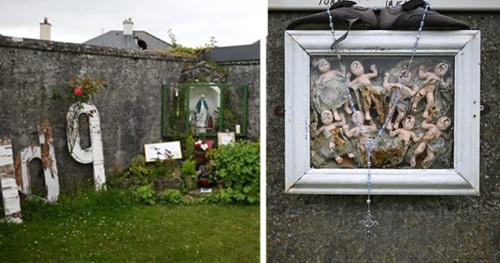
A second graveyard has been discovered at the site of a former mother and baby home in Tuam, Ireland.
Intensifying one of the country’s most painful historical revelations about the treatment of unmarried mothers and their children.
This recent finding comes amid ongoing excavations aimed at locating and identifying the remains of infants and young children who died at the home decades ago.
Earlier this year, forensic teams began systematic excavations at the site where the Bon Secours Mother and Baby Home once stood.
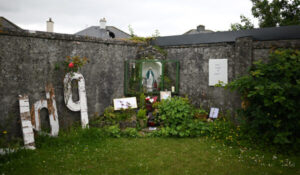

Authorities believed that nearly 800 infants and young children who died there between 1925 and 1961 were buried in a mass grave — possibly within or near an unused septic tank.
In recent months, investigators working under the Office of the Director of Authorized Intervention in Tuam (ODAIT) announced that they had uncovered “consistent evidence” of a second burial ground some distance from the original site.
According to the statement, this new area lies roughly 55 to 105 yards from the location where the remains of hundreds of children were previously expected to be found.
Authorities have already recovered the remains of multiple infants — some found in coffins — and these have been sent for detailed forensic analysis.
Experts are working to establish identities where possible and to understand more about who these children were and how they may be connected to families today
So far, at least 160 people have come forward to offer DNA samples to aid the identification process, highlighting the deep personal and emotional resonance this investigation has for many families both in Ireland and abroad.
Historical Context: What Happened in Tuam
The Tuam site was one of many mother and baby homes that operated in Ireland throughout much of the 20th century.
These institutions were often run by religious orders — in this case, the Sisters of Bon Secours, a Catholic congregation — and served as places where unmarried women went when they became pregnant.
Social stigma surrounding out‑of‑wedlock pregnancies in Ireland at that time was intense.
Unmarried mothers were frequently isolated from their families and communities, compelled to live in these homes, and in some cases separated permanently from their children. Many women were required to work, often without payment, in exchange for room and board.
Despite their name, “mother and baby homes” were often far from safe places. Infant mortality was alarmingly high.
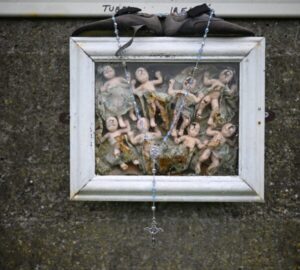
Between 1925 and 1961, records show that 796 children died at the Tuam home — a figure confirmed through painstaking research by local historian Catherine Corless.
Corless’s research involved obtaining and reviewing death certificates for every child who died at the home, at her own expense.
She then compared these records with burial registries in nearby cemeteries — only to find no corresponding burial records for all but two of the deceased children.
This absence of burial documentation raised pressing questions about where these children were laid to rest. Her work challenged longstanding assumptions and drew unprecedented attention to a chapter of Irish history that had been largely unexamined.
The “Septic Tank” and the First Grave Site
Local memory and archaeological evidence pointed to a former sewage or septic tank near the former home as a likely resting place for the remains.
Over the decades, residents and historians remembered finding bones on the property, and by the 1970s, two boys discovered what appeared to be human remains in a hidden chamber underground.
However, for decades after that early discovery, the significance of these remains was not fully recognized, and the issue remained largely unresolved.
It was only after Corless published her findings in the early 2010s that serious public and governmental scrutiny began.
In 2014 and later years, media coverage and public pressure prompted the Irish government to launch a comprehensive investigation into the home and similar institutions across the country.
These inquiries examined the circumstances surrounding the deaths and treatment of children and women in these homes.
By the late 2010s, preliminary excavations confirmed the presence of infant human remains in structural chambers at the Tuam site. This evidence validated Corless’s longstanding claims and deepened national outrage.
The Modern Excavation Effort
In 2025, a full‑scale forensic excavation began under tight scientific and legal oversight. The operation, expected to last several years, aims to recover, analyze, and identify the remains with contributions from DNA testing and other modern techniques.

dav
Broader effort to confront the legacy of mother and baby homes across the country. Government and church authorities have acknowledged the suffering endured by many women and infants, and survivors’ groups have long sought closure and recognition for those lost.
The discovery of a second burial area at Tuam adds both complexity and urgency to this work. According to ODAIT, there were no visible surface signs indicating a second burial location prior to the excavation — meaning the discovery was made entirely through careful archaeological and forensic investigation.
The remains found in this new area are being carefully cataloged and analyzed. If DNA connections can be made with living relatives, the hope is that some families may finally learn what happened to loved ones lost long ago.
The Human Impact and Legacy
The Tuam tragedy has resonated deeply within Ireland and internationally. Survivors of mother and baby homes, as well as the descendants of those who died, have described the emotional weight of these discoveries. For many, the excavation represents not only a historical reckoning but a chance for dignity and closure.
Local historian Catherine Corless, whose work first drew attention to the tragedy, has spoken of a profound sense of relief that her research has led to real action. What began as a library‑based investigation evolved into a national effort to uncover and honor the lives of forgotten children.
The broader investigation into mother and baby homes nationwide has uncovered similar stories of neglect, secrecy, and suffering. A 2021 government commission report estimated that thousands of children died in such institutions across Ireland between 1922 and 1998.
For many families, the journey toward recognition and healing continues. Some have submitted DNA samples, others seek participation in memorialization efforts, and many advocate for greater awareness of what these homes represented and how society can better protect vulnerable people in the future.
Institutional Apologies and Public Reaction
The Catholic religious order that ran the Tuam home — the Sisters of Bon Secours — has issued statements of profound apology for the suffering and indignities experienced by the women and children in their care.
However, public responses have varied, with many survivors and family members calling for deeper accountability and acknowledgment.
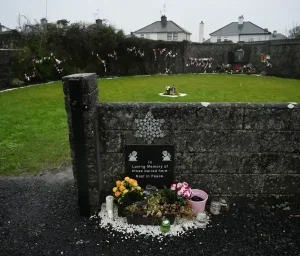
The Irish government has also apologized and established redress schemes for survivors of mother and baby homes, recognizing that institutional neglect and societal stigma contributed to immense personal and intergenerational trauma.
Why This Matters Today
The discovery of a second burial site at Tuam is not simply a historical footnote — it is a vivid reminder of how societal attitudes, institutional practices, and lack of oversight can lead to profound human suffering.
It also reflects the long journey from silence and obscurity toward truth, accountability, and dignity for those who were denied it in life and, too often, in death.
The excavation work now underway represents both scientific discipline and moral responsibility. For families who lost children, it offers a chance — perhaps the first — for memorialization and acknowledgement.
For Ireland as a whole, it deepens the conversation about how past injustices should inform contemporary values and care for the vulnerable.
A second graveyard has been discovered at the site of a former mother and baby home in Tuam, Ireland.
Intensifying one of the country’s most painful historical revelations about the treatment of unmarried mothers and their children.
This recent finding comes amid ongoing excavations aimed at locating and identifying the remains of infants and young children who died at the home decades ago.
Earlier this year, forensic teams began systematic excavations at the site where the Bon Secours Mother and Baby Home once stood.