Steve Irwin’s cameraman caught his heartbreaking last words on camera
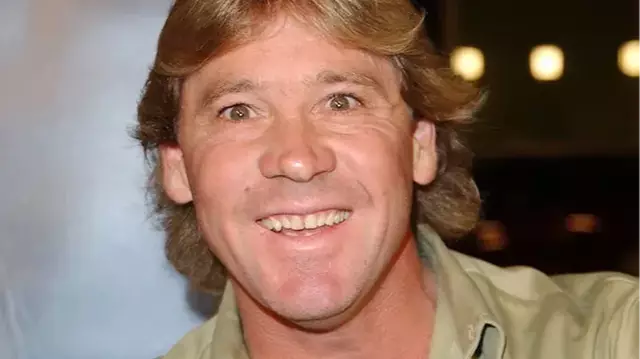
Steve Irwin’s tragic final words were caught on film as he was fatally attacked by a stingray.
The camera crews who were accompanying the legendary zookeeper and conservationist on that fateful day in 2006 have told how they watched on in horror as he was stung.
Eyewitnesses described how the croc-loving TV star was left in a ‘huge pool of blood’ after being struck by the fatal animal.
Jack Osbourne speaks on MS diagnosis
Irwin had been shooting the nature documentary Ocean’s Deadliest, swimming in chest-deep water in the Great Barrier Reef.
The late 44-year-old was filming off the coast of Port Douglas, Australia, when a stingray suddenly ‘started stabbing wildly with its tail’, according to cameraman Justin Lyons.
In 2014, Lyons told Studio 10 how the usually calm creature made ‘hundreds of strikes in a few seconds’, explaining he assumes it mistook Irwin’s shadow for ‘a tiger shark’.
“I panned with the camera as the stingray swam away, I didn’t even know it had caused any damage,” he said, as per PEOPLE.
“It wasn’t until I panned the camera back, that Steve was standing in a huge pool of blood, that I realised something had gone wrong.”
According to Lyons, the stingray left a two-inch-wide gash in Irwin’s chest, puncturing his heart and lungs.
Despite frantic efforts to save him, his Ocean’s Deadliest cohost Philippe Cousteau Jr previously told WUFT that ‘the wound was too grievous into his heart from the stingray barb’.
“Steve was a great guy, and he died doing what he loved,” Cousteau said.
Despite the grave situation at hand, the cameras kept rolling when the stingray attacked Irwin, as crews were reportedly under his strict instruction to continue recording no matter what happened.
Irwin’s IMDb biographer Tommy Donovan previously said: “He tells his camera crew to always be filming. If he needs help, he will ask for it. Even if he is eaten by a shark or croc, the main thing he wants, is that it be filmed.
“If he died, he would be sad if no one got it on tape.”
Those who were present have told how the father-of-two ‘calmly’ looked around and uttered the words ‘I’m dying’ before losing consciousness. Sadly, those were Irwin’s final words.
This is when cameras were finally cut, according to The Crocodile Hunter producer John Stainton.
Speaking of the last footage obtained of Irwin, Stainton described it as a ‘very hard’ watch, as ‘you’re actually witnessing somebody die’.
“It shows that Steve came over the top of the ray and the tail came up, and spiked him here [in the chest], and he pulled it out and the next minute he’s gone,” he said. “That was it. The cameraman had to shut down.”
The footage was deemed too distressing to air and although it was handed over to authorities, it has never seen the light of day.
Investigators claimed to have destroyed the tapes they were given in 2007 and said there was just one copy remaining – which was given to Irwin’s grief-stricken widow, Terri, who said she never watched it and also ultimately got rid of it.
Steve Irwin’s cameraman opened up about the conservationist’s tragic final words.
Justin Lyon was a long-term crew member who worked with Irwin for over a decade.
He was also with him while filming Ocean’s Deadliest in the Great Barrier Reef in 2006, which was when Irwin was attacked by a stingray, leading to the death of a man the world loved to watch wrangle crocodiles.
According to Lyons, it all began when he and Irwin were looking for tiger sharks, even though filming wasn’t meant to happen that day.
In 2022, Lyons told Daily Mail Australia: “Steve wasn’t one to sit around and wait, so I said let’s jump in the boat and see what we can find.
“We never wasted a minute. We were always shooting and because we had some spin-off shows, we used every frame of every shot.”
While in the water, the pair came across a large stingray, but they tend to be docile so they wanted to get a closer look.
The camera man explained: “We knew the behaviour. We weren’t scared of them.
“We thought this was going to be a joy. We were swimming around [the stingray], he’d glide off and settle on the bottom.”
Speaking to Australian morning programme Studio 10 in 2014, Lyons said: “I had the camera and thought this was going to be a great shot. But all a sudden the stingray propped on its front and started stabbing Steve with its tail.
“There were hundreds of strikes within just a few seconds.”
He recalled to the studio: “He just sort of calmly looked up at me and said, ‘I’m dying’. And that was the last thing he said.”
Lyons went on to say that he didn’t expect to lose his friend, and that there was ‘always hope’.
He said he did CPR on Irwin for ‘over an hour’ until the zookeeper was pronounced dead within 10 seconds of medical responders looking at him.
Irwin, who was just 44 at the time of his death, was survived by his adoring wife Terri and two children Bindi and Robert, who were eight and two at the time.
Now young adults, Bindi and Robert have done their animal-loving dad proud, following in his footsteps at the family-run Australia Zoo.
Due to the fact that Irwin instructed Lyons to film, even when if he was dying, there is a tape recording of his final moments.
However, nobody knows where it is, though Terri believes that it’s sitting in a dusty police vault which was left after the 2007 investigation concluded.
Featured Image Credit: YouTube / Studio 10/ YouTube / Animal Planet
Topics: Steve Irwin, Australia, Celebrity
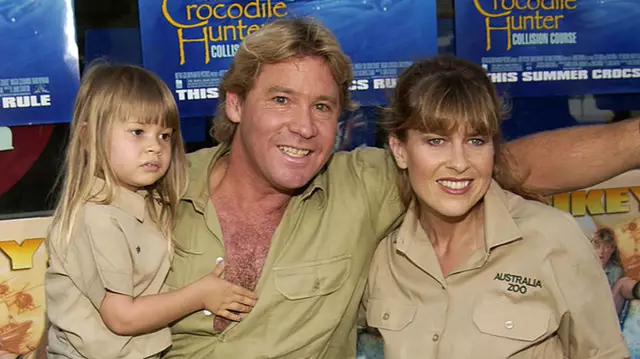
This September will mark the 19-year death anniversary of iconic Australian conservationist Steve Irwin, but according to his widow, Terri Irwin, he’d always prophesied a short life for himself.
After meeting each other in 1991, the couple tied the knot just 12 months later in Terri’s home city of Eugene, Oregon, before welcoming their daughter Bindi in 1998 and son Robert in 2003.
Steve, who would’ve been 63 years old this Saturday (22 February), tragically died on 4 September 2006, aged 44, while filming in the Great Barrier Reef for a docuseries titled Oceans Deadliest.
Upon encountering a usually docile species of stingray in the water, the beloved ‘Crocodile Hunter’ was fatally pierced in both his heart and lungs by its barbed tail.
In a Sky News interview from 2008, Terri revealed that her late husband’s foot was forever on the accelerator because of his doomy suspicions.
“He had a sense of his own mortality and it was only heightened after he lost his mother in an automobile accident,” she explained.
“He said: ‘I have a feeling something like that’s going to happen,’ and he was always in a hurry. ‘I want to get as much done as I can while I’m here,’ and I would always change the subject or ignore it when he brought that up.
“But I feel that looking back now it’s a real life lesson, and for me and my family and people that I talk to, I try to inspire people to do it now – to take a page out of Steve’s book.
“He was never morbid or dramatic about it, he was very matter-of-fact.”
Terri also spoke of her husband’s death being filmed, stating that it was common that everything Steve did with animals was caught on camera. She was also given the footage once police had finished with it, which she promptly ‘disposed’ of it – despite some people’s belief that they have seen it.
She added: “To me that was the last of Steve and it was almost like having a funeral for that as well.”
As well as producing some of the greatest wildlife TV shows we’ve ever seen, Steve was also a visionary.
He once told current affairs programme, 60 Minutes, of his plan to save the animal world, sharing: “I’ve been put on this planet to protect wildlife and wilderness areas, which in essence is going to help humanity.
“I want to have the purest oceans, I want to be able to drink water straight out of that creek, I want to stop the ozone layer, I want to save the world.
“And you know money’s great, I can’t get enough money and you know what I’m going to do with it? I’m going to buy wilderness areas with it. Every single cent I get goes straight into conservation.”