The ‘Ideal Male Body’ Meme Shows Men Are Insecure About Their Bodies, Too
The ‘Ideal Male Body’ Meme Shows Men Are Insecure About Their Bodies, Too
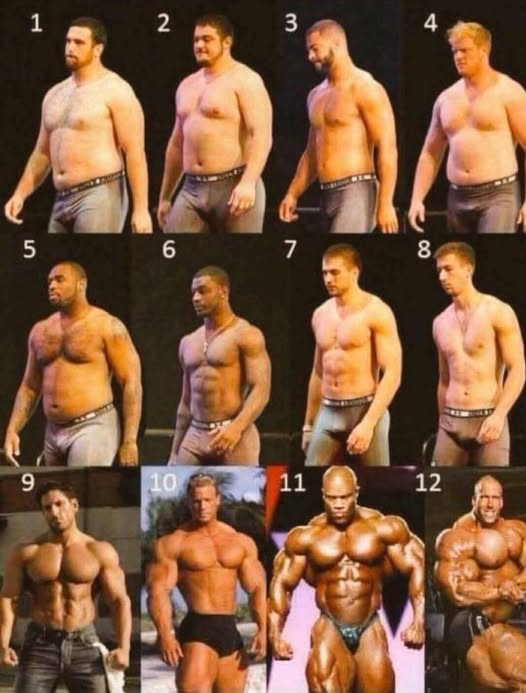
For years, the conversation around body image and the “unattainable ideal” was almost exclusively focused on women. We discussed the “Barbie” proportions and the airbrushed perfection of fashion magazines. But a viral meme featuring a numbered grid of twelve men (ranging from “average Joe” to “Mr. Olympia”) has pulled back the curtain on a quiet reality: men are just as susceptible to body dysmorphia and the pressure to look “perfect.”
The image, which often asks users to “pick their ideal” or “identify where they are,” highlights a complex spectrum of masculinity that goes far beyond simple fitness.
The Spectrum of Pressure
Looking at the grid, the progression isn’t just about losing weight; it’s about a radical transformation of the human form.
The “Everyman” (1–4): These figures represent a more common reality—men with some muscle but also body fat. In the context of the meme, these are often labeled as “untrained,” even though they represent healthy, functional bodies.
The Athletic Ideal (6–8): This is often where the “social media standard” sits. These bodies are lean, defined, and represent what many consider the peak of “natural” fitness.

The Hyper-Muscular (10–12): These frames represent the extreme end of bodybuilding. While impressive in terms of discipline, they represent an aesthetic that is physically impossible for the vast majority of men to achieve without specific genetic gifts and extreme chemical assistance.
The Rise of ‘Bigorexia’
The fascination with the higher numbers on this chart points to a growing phenomenon known as Muscle Dysmorphia, or “Bigorexia.” Unlike traditional anorexia, where the goal is to be as small as possible, men struggling with this condition feel they are never “big” or “lean” enough, regardless of how much muscle they gain.
When memes like this go viral, they often spark “locker room talk” that masks deep-seated insecurities. By turning body types into a multiple-choice question, it reduces the human form to a project that is constantly “under construction.”
Why the Meme Matters
This meme serves as more than just internet fodder; it’s a snapshot of the modern male psyche.
Comparison Culture: Social media has replaced the local gym with a global stage. Men aren’t just comparing themselves to the guy next door; they are comparing themselves to professional bodybuilders and filtered influencers.
The “Natural” Myth: Many men feel inadequate because they cannot reach the aesthetics of numbers 10, 11, or 12, often unaware that those physiques are frequently the result of “enhanced” training regimens.
The Silence of Men: There is still a lingering stigma that men shouldn’t care about their looks. This makes the insecurity “loud” in memes but “silent” in real-life conversations, preventing men from seeking support for body image issues.
“The pressure to be ‘alpha’ or ‘shredded’ isn’t just about vanity; it’s about a perceived sense of worth in a digital age that rewards the extreme.”
Moving Beyond the Grid
While it’s easy to laugh off a numbered meme, it’s worth asking why we feel the need to categorize bodies this way. True health isn’t found in a specific number on a grid, but in the functionality, mental well-being, and longevity of the person.
The “Ideal Male Body” doesn’t exist in a static image—it’s the one that allows you to live a full, healthy life without being a prisoner to the mirror.