Why Some Wall Outlets Are Installed Upside Down — The Simple Reason Many Homeowners Never Notice
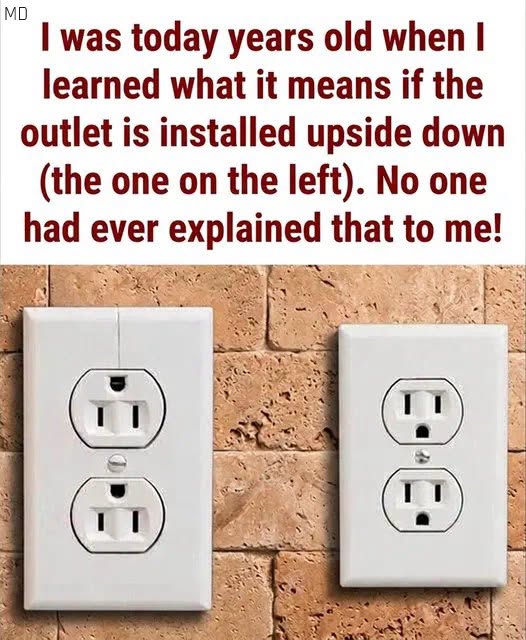
You walk into a room, reach for a plug, and suddenly notice something that looks completely wrong: the electrical outlet is upside down. The round ground opening is on top instead of the bottom, making it seem as though someone made a careless installation mistake. In many homes, however, that reversed outlet was placed that way deliberately. The practice is especially common in older houses where wall switches were used to control lamps before ceiling fixtures became standard. A homeowner might have a $40 table lamp plugged into one half of the receptacle while another device stayed powered continuously from the other half. For electricians, turning the outlet around sometimes became a quick visual clue that this particular receptacle worked differently from the others.
The surprise is that the entire outlet may not actually be controlled by the switch. In many installations, only one of the two plug-in spaces is switched, while the other receives electricity all the time. That means a floor lamp can turn on from a wall switch while a clock, charger, router, or other device keeps running without interruption. But there is one important detail many homeowners discover only after testing it themselves: an upside-down outlet does not automatically mean it is switched — and the real reason may be something entirely different.