With heavy hearts, we announce the passing of a true legend! When you find out who he is, you will cry
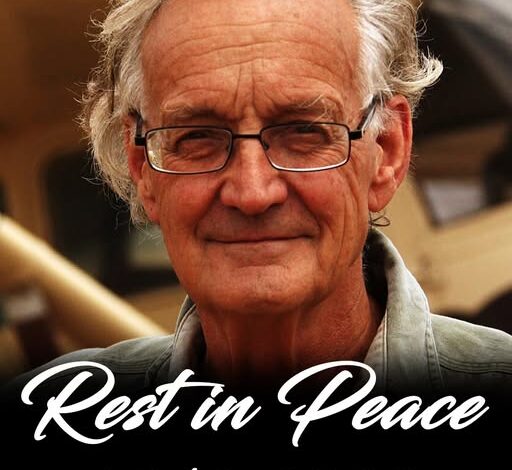
We mourn celebrities easily—actors, musicians, performers whose names dominate headlines. But sometimes the most profound losses come from people who spent their lives far from the spotlight, quietly reshaping the world in ways that outlast any fame. Iain Douglas-Hamilton was one of those rare individuals: a scientist whose work didn’t just study elephants, but fundamentally changed how humanity understands them. He has died at 83, passing away peacefully at his home in Nairobi, and the tributes that followed made clear just how deep his impact truly was.
Douglas-Hamilton devoted more than six decades to the animals he loved. He wasn’t simply documenting wildlife; he was revealing a hidden world of intelligence, emotion, communication, and social structure that many had never believed possible. Before his work, elephants were treated as anonymous giants—magnificent, yes, but not recognized as individuals with personalities, grief, memory, and complex family ties. He proved otherwise. Through years of patient observation, he showed that elephants choose leaders, mourn their dead, and make decisions as groups. His findings not only transformed scientific research but also shifted global attitudes about the ethics of poaching, the ivory trade, and habitat destruction.
The scale of the response to his passing reflected that influence. Prince William, who had joined him in the field and supported his conservation efforts for years, described him as a man whose work “leaves lasting impact on our appreciation for, and understanding of, elephants.” Charles Mayhew, the founder of Tusk, summed it up with blunt clarity: “The world has lost a true conservation legend.” These weren’t empty gestures—they were acknowledgments of a legacy that stretched across continents.
Douglas-Hamilton’s journey began far from the African savannahs that would define him. Born in Dorset in 1942 to an aristocratic British family, he grew up surrounded by tradition but drawn to something wilder. After studying biology and zoology in Scotland and at Oxford, he moved to Tanzania at just 23 years old. Lake Manyara National Park became his proving ground, the place where he first began identifying elephants individually by their ears, tusks, scars, and behavior. At the time, this was a radical idea. No one had ever attempted to track elephants on a one-by-one basis, treating them as singular beings rather than parts of a herd.
“Nobody had lived with wildlife in Africa and looked at them as individuals yet,” he later said. But he did. And that perspective became the foundation of modern elephant conservation.

As he followed herds across Tanzania and Kenya, his research revealed something alarming: the elephant population was collapsing. Poaching for ivory had reached catastrophic levels. Douglas-Hamilton wasn’t content to study the problem from afar—he went straight into the field. He flew dangerous aerial surveys to document carcasses scattered across once-thriving landscapes, often risking his life. He faced charging elephants, swarms of bees, and armed poachers who didn’t appreciate being followed. His work produced undeniable data showing that Africa’s elephants were on the brink of devastation.
Those findings helped fuel the international campaign that eventually led to the 1989 global ban on the ivory trade. It was a turning point in conservation history, and Douglas-Hamilton’s research was at the center of it. He later described the poaching era as “an elephant holocaust,” a phrase he did not use lightly.
Jane Goodall, one of his closest peers in the conservation world, often spoke about how his work changed public understanding of elephants. In their 2024 documentary, A Life Among Elephants, she emphasized his role in showing the world that elephants “are capable of feeling just like humans.” Coming from Goodall, that was a significant endorsement—and another reminder that Douglas-Hamilton belonged in the same category of pioneering field scientists.
In 1993, after years of documenting the crisis, he founded Save the Elephants. What began as a small conservation initiative grew into one of the most influential wildlife organizations in the world. Long before GPS tracking became a standard research tool, Douglas-Hamilton used it to follow elephant migrations. What he uncovered was remarkable: elephants didn’t just wander—they navigated, remembered routes, and made strategic decisions about water, safety, and social bonds. His findings helped reshape land management and conservation practices across Africa.
Frank Pope, CEO of Save the Elephants and Douglas-Hamilton’s son-in-law, paid tribute by highlighting both his scientific brilliance and his personal courage. “Iain changed the future not just for elephants, but for huge numbers of people across the globe,” he said. “His courage, determination and rigour inspired everyone he met.”
Douglas-Hamilton’s influence extended into global politics. He advised Barack Obama, Xi Jinping, and other world leaders on combating wildlife trafficking. His advocacy contributed to the critical 2015 U.S. and China agreements restricting ivory sales—milestones in the fight against poaching. Few scientists ever see their work directly shape international policy. He did.
Despite the awards that followed—the Indianapolis Prize, the Order of the British Empire, and eventual recognition as a Commander of the British Empire—Douglas-Hamilton remained grounded. His mission never changed: protect elephants, and teach people to coexist with them rather than destroy them.
He expressed his hope for the future simply: “that there will be an ethic developed of human-elephant coexistence.” It wasn’t idealistic. It was necessary.
Douglas-Hamilton leaves behind his wife, Oria, daughters Saba and Dudu, and six grandchildren. But the most profound part of his legacy will continue walking, trumpeting, and thriving across Africa: elephants whose survival stories trace directly back to his work and his relentless commitment to protecting them.
His dream was straightforward—“for human beings to come into balance with their environment, to stop destroying nature.” Because of him, that dream feels a little less distant. His life proved that one person, armed with patience, courage, and conviction, can shift the fate of an entire species.
Iain Douglas-Hamilton changed the world quietly, fiercely, and permanently. A legend not of celebrity, but of impact. And the world is better because he walked among elephants—and taught us to truly see them.