How Many Numbers Do You See? The Viral Puzzle That Has Everyone Counting Differently
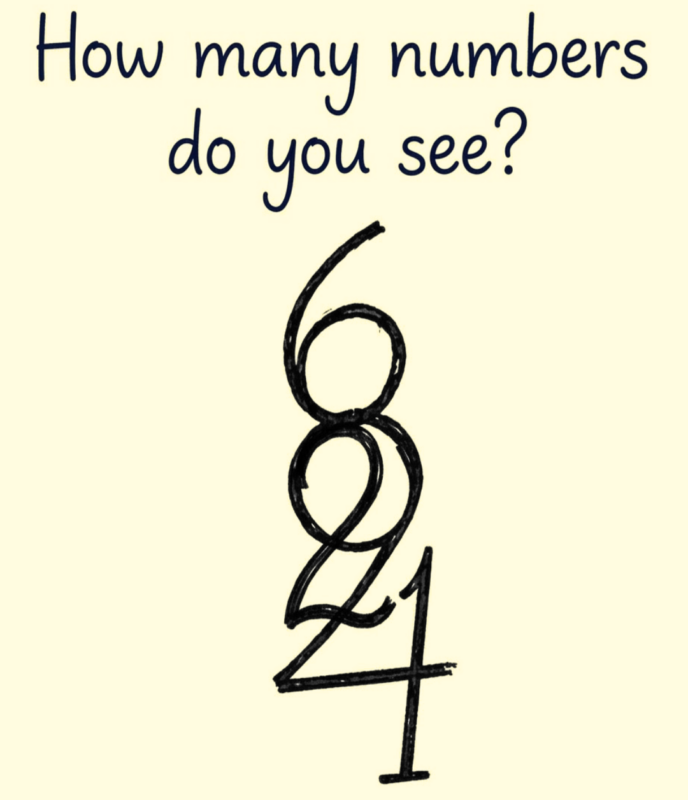
Brain teasers and optical illusions have always fascinated people, especially when a seemingly simple image leads to dozens of different answers. One of the latest viral puzzles asks a straightforward question:
“How many numbers do you see?”
At first glance, the image appears to contain a jumble of overlapping digits. However, the more closely you look, the more numbers seem to emerge. This is exactly what makes the puzzle so interesting—and why people often disagree on the correct answer.
Looking Closely at the Image
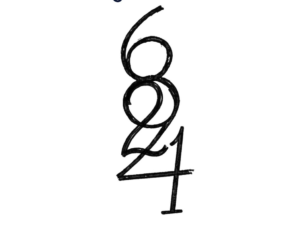
The drawing consists of several numbers layered on top of one another. Depending on how you interpret the lines and curves, you may identify different digits hidden within the design.
Most viewers can clearly spot the following numbers:

6 – Formed by the large curved line at the top and the circular loop beneath it.
8 – Created by the two connected loops in the center.
2 – Visible through the curved diagonal shape crossing the lower half.
4 – Formed by the horizontal and vertical lines near the bottom.
1 – The straight vertical stroke on the right side.
These five digits are the easiest to recognize and are generally accepted by most people.
Are There More Numbers Hidden?
This is where the debate begins.
Some observers also identify:
9 – The upper loop combined with the descending curve can resemble a nine.
0 – Either of the circular loops can be interpreted as a zero.
3 – Parts of the overlapping curves may suggest the shape of a three.
Because the image is intentionally ambiguous, there is no universally agreed-upon answer. The puzzle relies on visual perception, and different people focus on different line combinations.
The Most Common Answers
Across social media and puzzle forums, the most popular answers include:
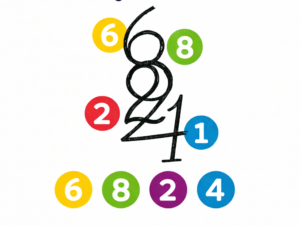
5 Numbers
People who answer 5 usually identify:
6, 8, 2, 4, and 1
This is often considered the most conservative and objective interpretation because each digit is clearly distinguishable.
6 Numbers
Others count:
6, 8, 9, 2, 4, and 1
In this interpretation, the upper section is viewed as both a 6 and a 9.
7 or More Numbers
Some puzzle enthusiasts find:
0, 1, 2, 3, 4, 6, 8, and 9
This approach treats overlapping shapes as multiple valid digits.
Why Do People See Different Answers?
The human brain is designed to recognize patterns. When we encounter incomplete or overlapping shapes, our minds automatically try to match them with familiar objects—in this case, numbers.
Psychologists refer to this as pattern recognition and visual perception. Two people can look at the exact same image and notice completely different details because their brains prioritize different visual cues.
This phenomenon is the same reason optical illusions work so well. Our brains do not simply record what our eyes see; they actively interpret the information.
Is There a Correct Answer?
The honest answer is: not necessarily.
Unlike a mathematical equation, this puzzle was designed to be open to interpretation. The creator did not provide an official solution, which is why discussions about the image continue to generate engagement online.
If we focus only on the digits that are clearly and intentionally visible, the strongest answer is:
6, 8, 2, 4, and 1 = 5 numbers
However, if we allow overlapping lines to represent additional digits, the total can increase to 6, 7, or even 8 numbers, depending on the viewer’s interpretation.
Final Verdict
For most people, the image clearly contains five numbers: 6, 8, 2, 4, and 1. This makes 5 the most widely accepted answer.
Nevertheless, the real purpose of the puzzle is not to arrive at a single correct number. Instead, it highlights how differently people perceive the same visual information. That is why one person confidently says “5,” another says “6,” and someone else insists there are “8” hidden numbers.
So, how many numbers do you see? The answer may reveal more about your perception than about the image itself.