13-Year-Old ‘Superhuman’ Swims 4km to Save His Family: Survival Experts Reveal the Secrets to Enduring the Open Ocean
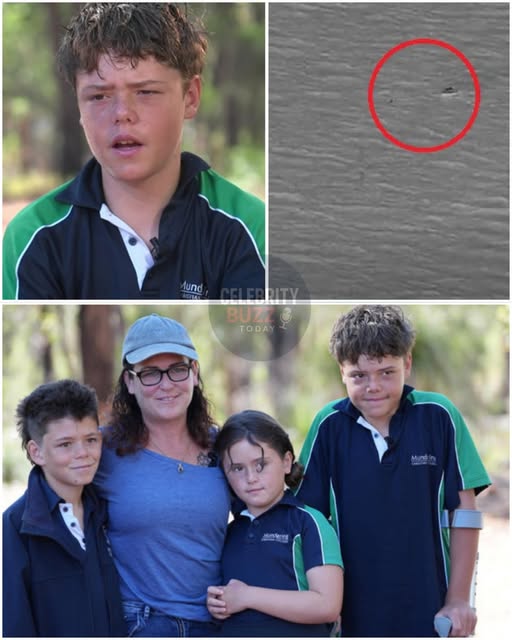
The Appelbee family was swept out to sea off WA’s South West. (ABC News: Briana Shepherd)
An experienced adventurer has praised a West Australian family for their rational decision-making after being swept out to sea.
Joanne Appelbee and her children Beau, Austin and Grace had been holidaying at Quindalup, about 250 kilometres south of Perth, when they were swept out to sea on a kayak and inflatable paddle boards on Friday afternoon.
call to action icon
The family was eventually rescued after 13-year-old Austin Appelbee swam 4km back to shore to raise the alarm, an effort praised as “superhuman” by rescuers.

It took Austin about four hours to swim the 4 kilometres to shore.
He then ran about 2 kilometres back to their accommodation, where he got his mum’s phone to call emergency services.
Survival expert and former defence helicopter pilot “Outback Mike” Atkinson, said it was a remarkable story.
“I was putting myself in the position of the kids and the mum, and I couldn’t help but tear up a little bit,” he said.
“The stress on the 13-year-old, the mum and the rest of the family too must have been absolutely enormous.”
He said conditions could change quickly on the water, even in areas not known to be rough.
How do you survive?
The physical risks are considerable for anyone in a situation similar to the Appelbees’.
Stress can cause you to breathe rapidly, raising your blood pressure and increasing the risk of exhaustion.
call to action icon
The risk of cold shock and hypothermia increases with prolonged water exposure, with the family stranded offshore for about 10 hours before their rescue.
Repeated hits from heavy swell compound the physical pressure.
In addition to their life jackets, Mr Atkinson said the family’s calm, rational decision-making played a massive role in their survival.
“The fact that all of them seemed to keep a level head and make calculated decisions,” he said.
“That’s often what doesn’t happen in situations like that.
“It’s very easy to fall apart … and not focus on doing what you need to survive.”
Mental challenges critical
Speaking more generally, Mr Atkinson said prior exposure to the outdoors often gave people a point of reference and enabled them to put dangerous situations into perspective.
“You’ll be able to compare it to other things you’ve done and go, ‘Well, this is hard, but I’ve done hard things before,’” he said.
“The British Navy … studied the men who survived torpedoing, and it was the men in their 40s, rather than the younger, fitter guys in their 20s.
“They concluded that it was because they’d had more chance to go through hardship in their lives, and not just give up when they were in the water and the waves were coming.”
While considerably younger and less experienced than a WWII-era British sailor, Austin displayed determination of a similar kind.
“I was trying to get the happiest things in my head, and trying to make it through, [and not think of] the bad things that will distract me,” he told media in Perth on Tuesday.
“And at this time, you know, the waves are massive, and I have no life jacket on … I just kept thinking, ‘Just keep swimming, just keep swimming.’”
Joanne Appelbee displayed similar resilience, huddled on the paddle boards, as she worked to keep her children calm and safe.
Despite thinking both she and her family were about to die, she remained focused on keeping her children calm and comfortable.
“[When] it got dark, that’s when the bigger waves came, well, it definitely felt bigger,” she told ABC Radio Perth.
“But I was saying to the children, ‘Look, there’s a big wave coming, we’re gonna get three or four, hold on really tightly, just ride the wave, don’t try and fight it.’
“They were amazing, the two kids were amazing and I was so proud of them.”
Mr Atkinson said the steps both family members took were admirable.
“Luck does play a part, but constantly making smart decisions helps,” he said.
“They’re not always perfect, but constantly re-evaluating and making commonsense decisions is always going to maximise your chances.”