A neglected camel turned on its owner after being left tied for hours in extreme heat.
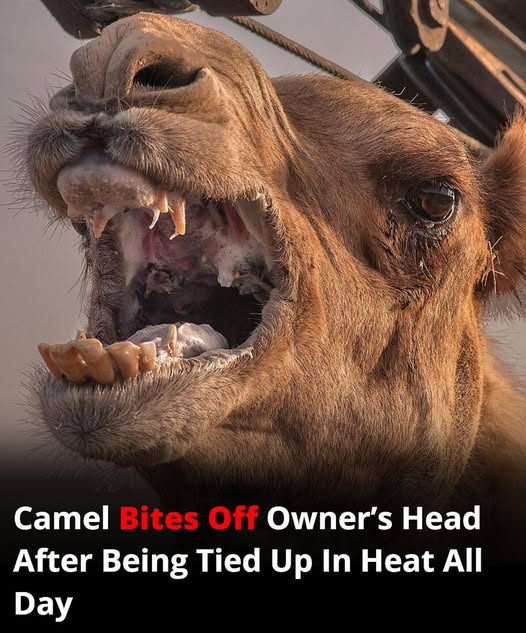
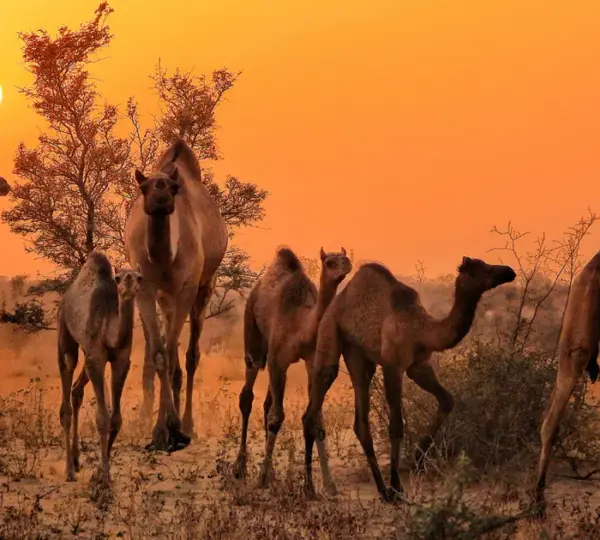
In the sweltering expanse of the Thar Desert, where the horizon shimmers with a heat so oppressive it challenges even the most seasoned inhabitants, a harrowing incident unfolded in 2016 that would reverberate far beyond the borders of India. This was far more than a routine report of a livestock mishap; it was a visceral, tragic cautionary tale regarding the lethal intersection of extreme climate, animal psychology, and the heavy mantle of responsibility that comes with husbandry. The setting was the Barmer district of Rajasthan—a region defined by its punishing aridity and a culture inextricably linked to the livestock that make life possible in the dunes. While the locals are accustomed to the sun’s bite, the conditions on the day of the tragedy were exceptional, even by Rajasthani standards. According to meteorological data from that period, temperatures had surged past a blistering 109°F (43°C). In such a climate, shade and water are not merely comforts; they are the thin line between life and death. Yet, for one particular camel, the day was spent tethered in the unforgiving, direct glare of the sun, unable to seek refuge or reprieve for several hours.
A Fatal Oversight
The camel was owned by a local villager named Urjaram. Reports from The Times of India and other national outlets indicate that Urjaram’s attention was diverted that day by social obligations. While hosting guests at his home, the pressing demands of hospitality seemingly caused him to lose track of time—and with it, the welfare of the powerful animal tied up outside.
Eyewitnesses would later recount that the camel’s descent into distress was visible long before the situation turned fatal. Throughout the afternoon, the animal was observed pacing restlessly and vocalizing in a manner that suggested a state of high agitation.
Veterinarians note that these are the classic markers of heat stress and severe dehydration. When a creature as large and sentient as a camel is pushed to its physiological limit while physically restrained, the resulting psychological “snap” can be explosive.

The Breaking Point
By the time Urjaram finally remembered his animal and approached to untie the lead, the camel had transitioned from discomfort to a state of panicked, erratic behavior. As he reached for the ropes, the animal—ordinarily a symbol of desert patience—reacted with a sudden and violent outburst.
The attack was so swift and ferocious that bystanders were left powerless to intervene. The “Ship of the Desert” had, in its agony, turned on its captain.
The aftermath was a scene of chaos and communal shock. In a region where camels are esteemed as intelligent, loyal companions essential for agriculture and transport, the incident felt like a betrayal of the natural order. However, the animal’s distress did not subside with the attack; it reportedly took a contingent of 25 men nearly six hours of coordinated effort, using ropes and even a vehicle, to finally subdue and restrain the creature.
The Sensitive Giant
In the wake of the tragedy, local whispers suggested there may have been prior tension between Urjaram and the camel. While these claims remain unverified, they sparked a vital national dialogue on the humane treatment of working animals.
Animal behaviorists are quick to point out that while camels possess legendary endurance, they are not biological machines. They are sensitive, powerful creatures capable of experiencing profound fear and emotional frustration. When the environment becomes a furnace and the basic needs of the animal are neglected, even the most patient creature can be driven to a breaking point.
The tragedy in Barmer remains a somber reminder: in the heart of the desert, the bond between man and beast is a fragile one, predicated entirely on the respect given to the limits of life itself.
While the “Ship of the Desert” is globally synonymous with stoic patience and a docile temperament, a series of high-profile international incidents has forced a reexamination of the camel’s formidable physical capabilities. Beneath their calm disposition lies an apex-level strength that, when ignited by mistreatment or environmental stress, can turn a domestic partner into a lethal adversary.
The Anatomy of an Underestimated Giant
The physical prowess of a full-grown camel is frequently overlooked by those outside desert communities. Weighing between 1,300 and 2,200 pounds, these animals possess a physiological toolkit designed for survival in the world’s harshest climates—and for defense when provoked.
Their massive neck muscles provide the leverage for a surprisingly forceful bite; their jaws, evolved to grind through the toughest, thorniest desert vegetation, can exert enough pressure to cause catastrophic injury. Furthermore, their powerful legs are capable of delivering strikes in multiple directions, making them dangerous from nearly any angle if they feel cornered. As one animal expert noted in an interview with The Sun, an adult camel possesses enough raw strength to seriously maim or kill a human if the animal feels its life is threatened.
A Global Pattern of Retaliation
While attacks remain statistical anomalies, the documentation of camel-related fatalities across the globe reveals a consistent trigger: prolonged stress or immediate physical provocation.
Siberia (2023): In a case that shocked the Russian Federation, a Bactrian camel—a two-humped breed built for sub-zero temperatures—fatally attacked its owner. Witnesses described the animal as peaceful until the moment the owner struck it in the face. The camel’s reaction was described as an instinctive, violent retaliation to the blow.
Tennessee, USA (2022): Domestic safety protocols were called into question after a camel at a petting zoo escaped its enclosure. When two men attempted to recapture the animal, it cornered them, inflicting fatal injuries. The camel remained so agitated it attempted to charge responding law enforcement officers.
Mexico: An experienced wildlife sanctuary owner was crushed to death after a camel knocked him down and bit him. Even with years of professional handling, the victim was unable to manage the animal once it reached a state of extreme agitation.
The Science of Instinct: Welfare as a Safety Protocol
Animal behaviorists stress that these tragedies are rarely acts of “malice.” Instead, they are the result of a biological “snap.” Camels are highly sensitive to their environment; extreme heat, dehydration, and the psychological strain of tight restraints can push a gentle animal into a state of primal fear.
Welfare advocates argue that humane treatment is not just a moral obligation but a fundamental safety requirement. In regions like Rajasthan, the 2016 Barmer tragedy—where a camel attacked its owner after being left in 109°F heat—has sparked a national dialogue on the responsibilities of owners. When an animal’s basic needs for shade, water, and rest are ignored, their behavior becomes a gamble.
Lessons from the Barmer Tragedy
The 2016 incident remains a touchstone for activists and livestock owners alike. It serves as a somber case study in the fragile balance between human utility and animal endurance. The case continues to prompt difficult questions for communities that depend on these creatures for agriculture and tourism:
Thresholds of Endurance: How much environmental and physical stress can a working animal absorb before the survival instinct overrides domestication?
Climate Awareness: Are rural communities equipped with the knowledge to identify the early warning signs of heatstroke in camels?
Human Accountability: What legal and moral weight should be placed on owners to ensure the well-being of their livestock as a means of preventing human tragedy?
The Path Forward: Compassion as a Directive
Experts are quick to emphasize that the sensational nature of these headlines should not overshadow the reality: millions of camels work peacefully alongside humans every day. They remain icons of loyalty and intelligence.
However, the common thread in every fatal attack is a failure of care. The Barmer tragedy and others like it serve as a sobering reminder that animals experience suffering with the same intensity as humans. When their limits are breached, the results are often a predictable, albeit tragic, response to an unendurable situation.
Ultimately, the call is for a deeper understanding of the creatures we rely upon. When kindness and respect are the foundations of the bond, tragedies are avoided. But when a “Ship of the Desert” is pushed into the abyss of heat and pain, the ship will eventually fight back.