Fake people have the following 4 characteristics
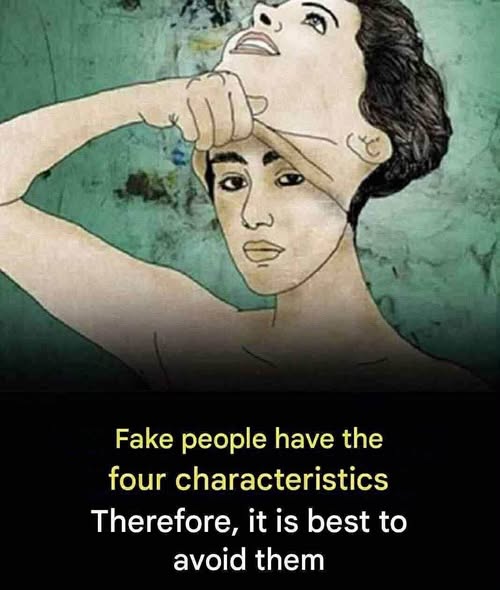
Throughout our life, we come across different individuals, and it’s safe to say that some of them seem… well, a little off. They wear a “mask” to conceal their true identity, and many refer to them as “fake” people.
These are people who don’t find it hard to imitate the moods, the interests, and the personalities of the people around them, almost as if they were social chameleons. Although this may not sound like a big deal, their lack of authenticity, which is often a result of their own insecurities and constant need for approval, can be draining to those around them.
Psychologists have analyzed this phenomenon and found some common characteristics that are associated with it. Narcissism is one of the most common traits, which is characterized by an individual’s sense of self-importance, need for admiration, and lack of empathy for others.
Then there is Machiavellianism, which is associated with a person’s ability to manipulate others in order to get what they want.
And finally, the most alarming one is psychopathy, which is associated with an individual’s lack of guilt and remorse, which may make some fake people emotionally harm others without batting an eyelid.

Childhood is also cited as a contributing factor by experts. People who have not experienced emotional bonding or validation throughout their childhood may feel that they do not deserve love. This leads them to develop a kind of shield or a façade of authenticity that protects them from being rejected. Although this is a useful strategy for them in the short run, it can lead them to be caught in a web of deceit, making it difficult for them to form authentic relationships.
According to Kernberg, “Fake behavior often begins as a shield, but it can become a barrier—not just for the person, but for everyone around them.”
Below are four characteristics fake people share:
1. Inconsistent Behavior
One of the most obvious traits of fake people is the inconsistency in their behavior. They tend to behave in one way around certain people, and then totally differently around others. Along the way, they they adjust their words, their tone, and even their personality to suit the situation.
For instance, a person may be warm and friendly around people of authority, while being cold and distant around others, or they may adopt the interests, opinions, and even the personality of those they try to impress. This can be quite confusing for people around them since it becomes difficult to know who they really are and what they really think. According to psychologists, this is usually a result of the need for social approval or a manipulation of a situation to suit their own ends.
Over time, a pattern starts to develop where the fake individual adjusts, exaggerates, or even makes up things for the sake of winning favor, attention, or influence. In such cases, their words often contradict their actions, and their promises or views may change based on who is listening. Friends, coworkers, or a romantic partner can easily notice that something is off.
These inconsistencies can easily cause damage and emotional distress for those attempting to keep a relationship with the fake individual. The truth is, of course, that everyone occasionally adjusts their behavior in a social setting. However, fake people make a habit of inconsistency, which leaves others wondering what their motives, intentions, and authenticity are in every interaction.
2. Constant Need for Validation
People who are fake tend to be very dependent on the validation of others in order to feel safe.
What this means is that many of these individuals tend to seek compliments, reassurance, or approval on a frequent basis and seem to enjoy being the center of attention in a social setting. This is not necessarily apparent or deliberate, but it can have a tendency to impact their interactions with others over time. Conversations may tend to revolve around their accomplishments, concerns, or needs, with less room for actual dialogue.
When so much energy is invested in being liked or admired, it can be really difficult to settle into a relationship in which being honest and showing your emotions is more important than being liked. Over time, things can begin to feel a little bit skin-deep, because the emphasis is on gaining approval instead on getting to know one another.
And although it’s true that each of us needs a little bit of encouragement from time to time, being too dependent on what others think of you and feeling constant need of approval can make it difficult to build a balanced relationship.
3. Master of Manipulation
A fake person can also be very skilled at manipulating situations and emotions, sometimes without it even being noticeable. They know what people want to hear and how to say it, using charm, flattery, or sympathy.
This type of behavior is not always overt and dramatic. In fact, it is often very subtle, such as small talk, carefully timed praise, or emotional hints that nudge things in their direction. They may also exploit someone’s vulnerabilities, not necessarily out of malice, but perhaps out of self-protection or to get what they want. This can create a situation where others are left feeling uncertain or questioning their own responses, even if they can’t quite put their finger on why.
Dishonesty can often be a part of this as well. People who are fake may exaggerate the truth, or they may change details to fit the circumstances. They may exaggerate their accomplishments or watch as their mistakes fade away into the background. They may not be lying with ill intent, but it’s because they want to maintain the image that they feel they need to keep up. But when the truth keeps changing, it can lead to a breakdown of trust. The people around them may pick up on inconsistencies or feel as though they are never hearing the whole story. A series of small lies can lead to a situation where it’s hard to form real, honest relationships.
4. Lack of Boundaries
Often, fake people do not have a good sense of boundaries. Out of the blue, they may get too personal, too soon, or just ignore boundaries altogether and insert themselves into places where they are not even wanted in the first place. This can be a subtle thing, such as sharing too much or asking too much, or it can be overt, such as ignoring a “no” when someone says it to them. Either way, it can make people feel like they are being pressured or coerced into something, even if they cannot quite put their finger on why.
At the same time, they tend to be quite hypocritical. They might be talking about values such as honesty, loyalty, or kindness, but their behavior doesn’t always reflect their words. They might be saying one thing about how wrong certain behavior is, but then they go ahead and behave exactly like that.
Over time, this becomes too difficult to ignore. You begin to notice that what they are saying is good, but what they are doing is something else entirely. And while no one is perfect, when this happens repeatedly, it erodes trust. You stop listening to what they are saying and start listening to what they are doing.
Conclusion
The point of being able to recognize some of the crucial traits most fake people share isn’t about being too conscious and about analyzing every social connection you make with people, but simply about awareness. So, the next time you start noticing a pattern, such as inconsistency, the lines between people getting fuzzy, any sort of manipulation, or words that don’t match actions, simply take a step back. It doesn’t mean you should exclude that person from your life entirely, just be cautious for the sake of protecting your own emotions and sanity.
Also, when you don’t feel comfortable about someone you’ve just met, maybe it’s best to trust your intuition that warns you that the person is fake.
If you are aware and clear about who you are, what you want, and where your values stand at, you won’t be likely to be manipulated by fake people. You need to learn how to say “no” when you really feel like saying “no,” how to communicate your needs, and how to protect what you believe in. This way, you are likely to attract people who are similar to you, and avoid the fake ones.
It is also important to remember that pretentious behavior is often a product of insecurity rather than confidence, but it doesn’t mean it’s a reason to accept it. To choose to keep people at arm’s length is not cruel, it is self-respect.
Ultimately, genuine relationships are the ones that are developed over time, not overnight. These relationships are a result of shared values, respect, and the ability to simply be yourself without the fear of being judged.