From teen heartthrob to homeless: The unbelievable life of Willie Aames
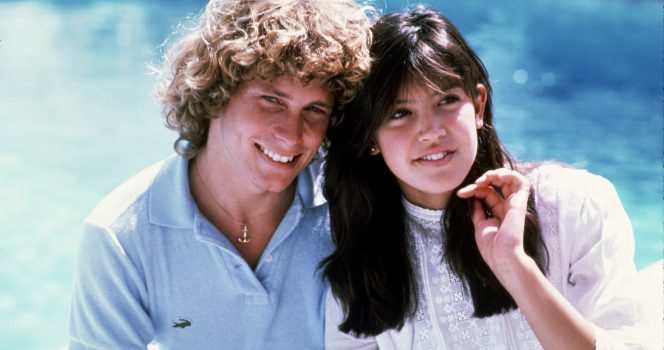
He was America’s golden boy at nineteen, pulling in over a million dollars a year.
Then he lost it all — his money, his career, his family, even his home.
And yet, what saved him wasn’t fame, fortune, or a Hollywood comeback. It was a fan letter written thirty years earlier.
Starring as Tommy Bradford
Willie Aames’ journey began like a storybook Hollywood tale. Born in 1960 in Newport Beach, California, the son of a firefighter, he appeared in his first commercial at just nine years old.
By the early ’70s, he was already navigating the adult world of television, appearing on Gunsmoke, The Odd Couple, and The Wonderful World of Disney.

Then came Eight Is Enough. At just seventeen, Willie was cast as Tommy Bradford, the charming middle son in a sprawling TV family led by Dick Van Patten. The show was a sensation, averaging 20 million viewers per episode.
Posters of Willie, with his sparkling green eyes and tousled sandy hair, adorned countless teenage bedrooms, while fan mail poured in by the stacks, teetering impossibly high.
“I did my first commercial at the age of nine,” Willie later wrote, “and by nineteen, I was making a million dollars a year — and doing a killer job of going through most of it.”
But fame came without a manual. Drinking started during Eight Is Enough, followed by marijuana, then cocaine. Independence accelerated the destruction. He later admitted to using substances “six days in a row.” His addiction didn’t replace his career — it ran quietly alongside it, hiding behind the smile America loved.
Many people don’t know this, but Willie was also considered for the lead in the 1980 summer blockbuster The Blue Lagoon, yet his role on Eight Is Enough kept him from taking it.
After Eight Is Enough ended in 1981, he starred in teen comedies like Zapped! and soap operas, then became the lovable best friend Buddy Lembeck on Charles in Charge from 1984 to 1990.
But behind the scenes, his life was crumbling. His first marriage ended in 1984. Money drained through bad investments. Addiction lingered quietly in the background.
By the mid-2000s, Willie had filed for bankruptcy. His second marriage ended in divorce. His home went into foreclosure. Desperate, he held a garage sale at his Olathe, Kansas home in 2009, selling scripts, awards, and memorabilia to raise cash. The media framed it as the final confirmation of his downfall.
It wasn’t enough. He lost the house anyway. With just ten dollars to his name, Willie borrowed money to fly back to Kansas City, broke into his own foreclosed home, and squatted there while figuring out what came next. He slept under bushes, in parking garages, lying awake at night, haunted by the question: “Is this how my life really turns out?”
Friends feared for his life. He later admitted people had “a lot of cause” for concern. But something held him — stubbornness, maybe, or the faint memory of the kid from Newport Beach who once believed anything was possible.
At forty-eight, Willie decided to start over. He applied for a job at Dish Network as a satellite installer for $8.60 an hour. They almost didn’t hire him — he was too famous. But he got the job and began racking up what he calls “little wins.”
From there, he worked on a cruise ship, starting as a “pingpong and shuffleboard boy, bathroom monitor, and library cleaner,” and within six months, he worked his way up to cruise director. Over the years, he sailed to 127 countries, rebuilding himself port by port.

Then came the most extraordinary twist: Winnie Hung. Decades earlier, during his Eight Is Enough years, Willie had received thousands of fan letters every week.
Randomly, he picked one, dialed the number, and reached Winnie — who hung up, thinking it was a prank. He called back. They became pen pals, writing for thirty years through marriages, divorces, fame, and homelessness.
When Willie hit rock bottom, Winnie sent a simple LinkedIn message: “Just checking to see if you’re OK.” She became his closest confidant. Finally, during a cruise stop in Vancouver, they met in person.
”That afternoon, I took one look at her and I knew,” Aames said of their first interaction.
Willie bought her a little Pandora charm, that said ‘Fairytale’ on it, and said, “Don’t miss out on your own real-life fairy tale.”

On March 21, 2014, after thirty years of letters and calls, Willie Aames and Winnie Hung married. Their love story inspired a Hallmark Channel movie.
Willie also rebuilt his career, returning to acting and filmmaking. He has two children — Christopher from his first marriage, “one of the few people who didn’t give up on me,” and Harleigh, his “miracle baby” from his second.
His early marriage to Maylo McCaslin came with its own hurdles: her cancer diagnosis and the struggles of raising a child under financial stress, compounded by his ex-wife’s constant financial demands.
“People scampered for what was left of Willie’s money,” McCaslin said.
Despite all the chaos, Willie rebuilt his life, choosing to start over at forty-seven.
“I had a choice. I could either start over at 47 or choose to be a victim. So what did I do?” he recalled.
Today, Willie is 65 years old and seems happier and healthier than ever. He frequently updates his fans on Facebook, sharing glimpses of his life and the trips he takes with Hung. His most recent film, Bottle Monster, was released in 2020.
From teen heartthrob to homelessness, to cruise director and loving husband, Willie’s journey is a testament to resilience.
“I’ve never been happier,” he says. “I’ve never felt better about life and opportunity, and I don’t know what I’d do without Winnie. It was meant to be.”

Sometimes, the best comebacks don’t come from fame, money, or even talent. Sometimes, they come from a thirty-year-old fan letter, a phone call, and the courage to show up for the love that never stopped believing in you.