Grief, Love, and Judgment: Erika Kirk’s Life in the Spotlight

Erika Kirk Faces Public Scrutiny for Moving Forward After Tragedy
Just months after a tragedy that captured national attention, Erika Kirk’s private life is again in the spotlight—not for her loss, but for a new relationship. The reaction raises a broader question: why does society feel entitled to judge how someone processes grief, and why does the timing of love provoke more outrage than the tragedy itself?
Only four months after the sudden death of her husband, Kirk has reportedly begun a new romantic relationship. The news has sparked widespread discussion online, revealing more about societal discomfort with grief than about her personal choices.
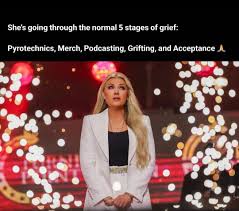
Her husband’s passing was abrupt and deeply traumatic, drawing national sympathy. In the months that followed, Kirk largely retreated from public view, focusing on family and the private work of navigating life after loss.

Now, with reports of a new relationship, scrutiny has returned. Public reaction ranges from supportive to critical, often questioning whether “enough time” has passed to move forward. This reflects a broader tendency to impose arbitrary timelines on mourning, ignoring that grief unfolds differently for everyone.
Mental health experts emphasize that there is no universal schedule for mourning. For some, forming new connections during grief can provide companionship, stability, or relief from isolation—not a replacement for lost love. Many supporters note that moving forward emotionally does not erase the memory of a deceased partner; grief and love can coexist.
Critics, however, often frame the situation through rigid social expectations, policing how grief should appear—especially when publicly observed. Widows, in particular, face harsher judgment than widowers for similar choices, exposing deep-seated gendered double standards. What might be seen as resilience in a man can be criticized as insensitivity or impropriety in a woman.
Kirk herself has remained silent, likely to protect her privacy during an already emotionally taxing period. In this context, silence can be an act of self-preservation rather than avoidance.
Conclusion
Erika Kirk’s experience highlights how society struggles to accept that grief is deeply personal. Moving forward after loss is not a betrayal—it is a testament to endurance. Compassion requires acknowledging that love and mourning can coexist, and that judgment has no place in someone’s private journey of healing.