I Divorced My Husband Over Secret Hotel Visits—At His Funeral, I Learned the Heartbreaking Truth
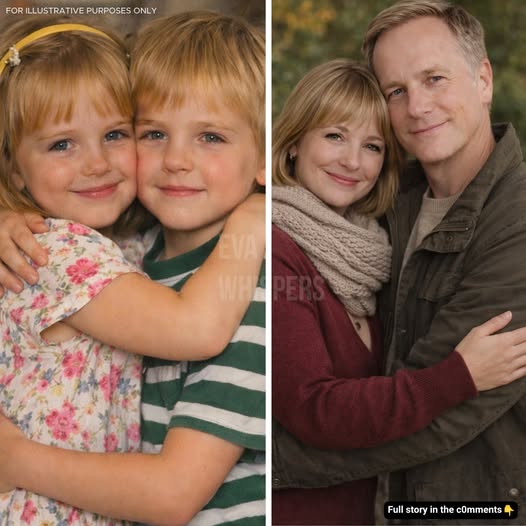
The day Troy died, the world felt strangely quiet.
For two years after our divorce, we’d lived separate lives—close enough to hear about each other through mutual friends, but distant enough to avoid real conversations. When I heard he’d passed away suddenly from a heart condition, I didn’t know what I felt.
Sadness. Confusion. Maybe even anger that our story had ended the way it did.
We had known each other almost our entire lives.
Troy and I met when we were five years old. Our families lived next door to each other, sharing a wide patch of grass that served as both our yards. We rode bikes together, walked to school together, and spent summers catching fireflies until the streetlights came on.

By the time we were twenty, marrying each other felt like the most natural thing in the world.
Our life wasn’t glamorous, but it was steady. We built it piece by piece—two children, a modest home, family dinners, and quiet Sunday mornings. For decades, things felt simple.
Then, during our thirty-fifth year of marriage, the money started disappearing.
At first, I thought it was a banking error. A few hundred dollars missing here and there. But then it became thousands.
I only noticed because our son transferred some money to me, and when I checked the balance before moving it into savings, the numbers didn’t make sense.
I reviewed the statements again and again.
Large withdrawals.
Regular.
Quiet.
When I asked Troy about it, his answers changed every time.
“Bills,” he said once.
“Home repairs,” another time.
“Just moving money around,” he told me later. “It’ll be back.”
But it never came back.
Something inside me started to feel hollow, like a wall had quietly cracked between us.
A week later, I opened his desk drawer while searching for batteries for the TV remote. Instead, I found hotel receipts hidden under a stack of papers.
Same hotel.
Same city.
Same room number.
My heart sank.
My hands were shaking when I picked up the phone and called the hotel. I told the concierge I was Troy’s assistant and wanted to reserve the same room he usually booked.
The man didn’t hesitate.
“Of course,” he said politely. “Mr. Carter is one of our regular guests. That room is practically reserved for him.”
The words hit me like ice water.
That night, when Troy came home, I laid the receipts on the kitchen table.
“Explain this,” I said quietly.
He looked at the papers. Then at me.
And said nothing.
Not denial. Not an apology. Not even an explanation.
Just silence.
Something inside me broke in that moment.
After thirty-six years of marriage, I realized I didn’t recognize the man sitting across from me anymore.
A few months later, we filed for divorce.
It was quiet and uncomplicated. Our children were already grown, and neither of us fought over the house or the savings that remained.
We simply separated two lives that had once been one.
For two years, we rarely spoke.
Then he died.
The funeral was small, held on a gray afternoon in the same town where we had grown up together. Old neighbors came. Our children stood beside me. There were photos of Troy throughout the years—boyhood smiles, family vacations, holidays.
I studied those pictures and wondered when exactly we had lost each other.
After the service ended, people gathered quietly outside the church.
That was when Troy’s father approached me.
Harold Carter was eighty-one years old, and grief had clearly hit him hard. His steps were unsteady, and the smell of whiskey clung to him.
His eyes were red as he leaned close.
“You don’t even know what he did for you, do you?” he slurred.
I stiffened.
“This isn’t the time, Harold,” I said gently.
But he waved a shaky hand.
“You think I don’t know about the money? The hotel room? Same one every time?”
I felt the old anger rise again.
“Yes,” I said quietly. “I know about that.”
Harold suddenly laughed—loud and bitter.
“Oh, you think you know,” he said.
I folded my arms.
“What are you talking about?”
He leaned closer, lowering his voice.
“That hotel room wasn’t for another woman.”
My heart skipped.
“Then what was it for?”
Harold exhaled heavily and rubbed his eyes.
“For you.”
I stared at him.
“That doesn’t make any sense.”
He sighed and shook his head.
“Two years ago, when you got sick—remember those hospital tests? The ones you almost didn’t go to?”
Of course I remembered.
I had gone through weeks of strange fatigue and dizziness. Doctors had ordered scans and tests. Eventually, they found the issue early enough to treat it easily.
“You had a heart condition,” Harold said quietly. “Early-stage cardiomyopathy. It runs in your family.”
I blinked in confusion.
“Yes, but they treated it—”
“Because Troy paid for a specialist,” Harold interrupted. “One you didn’t even know about.”
The ground beneath me suddenly felt unsteady.
“What do you mean?”
Harold took a long breath.
“That hotel room was where he met the cardiologist.”
I shook my head slowly.
“That doesn’t make sense. Why would he hide that?”
“Because you refused to spend money on yourself,” Harold said.
And he was right.
For our entire marriage, I had always insisted on being careful with money. I hated expensive doctors and private specialists. I believed regular hospitals were enough.
“You told him the tests were unnecessary,” Harold continued. “You told him you didn’t want to waste money.”
My chest tightened.
“So he found another way.”
Harold’s voice softened.
“That doctor worked in a private clinic in that city. The only place the insurance would partially cover it was if Troy paid certain consultation fees personally.”
The missing money.
The hotel.
The same room.
“He stayed overnight because the appointments were early morning,” Harold said. “Sometimes he had to meet the doctor several times to discuss treatment options.”
I felt the air leave my lungs.
“He… never told me.”
Harold looked at me with tired eyes.
“He said if he told you the truth, you’d refuse the treatment.”
And I knew immediately that he was right.
I would have.
I had always believed my health problems were minor. I would have insisted we save the money.
“Troy told me once,” Harold said quietly, “that if spending a little money could give him twenty more years with you, it was the easiest decision he’d ever made.”
My vision blurred.
All those nights I thought he was betraying me.
All those arguments.
All that silence.
“He didn’t fight the divorce,” Harold continued. “Not because he didn’t care. Because he knew you wouldn’t believe him anymore.”
Tears slid down my cheeks.
“Why didn’t he tell me later?” I whispered.
Harold shook his head.
“He thought the truth would only make you feel guilty.”
For a long moment, neither of us spoke.
The wind rustled through the trees beside the church.
I looked back at the building where Troy’s funeral had just ended.
Thirty-six years of marriage.
Two years of silence.
And a secret I had never known.
Harold placed a gentle hand on my shoulder.
“He loved you until the very end,” he said softly. “You should know that.”
I nodded slowly, tears still falling.
And for the first time since our divorce, I understood something that had once felt impossible.
Even though our marriage had ended…
Troy had never stopped protecting me.