I Returned From A Black Ops Mission To Find My Own Obituary Taped To The Fridge…
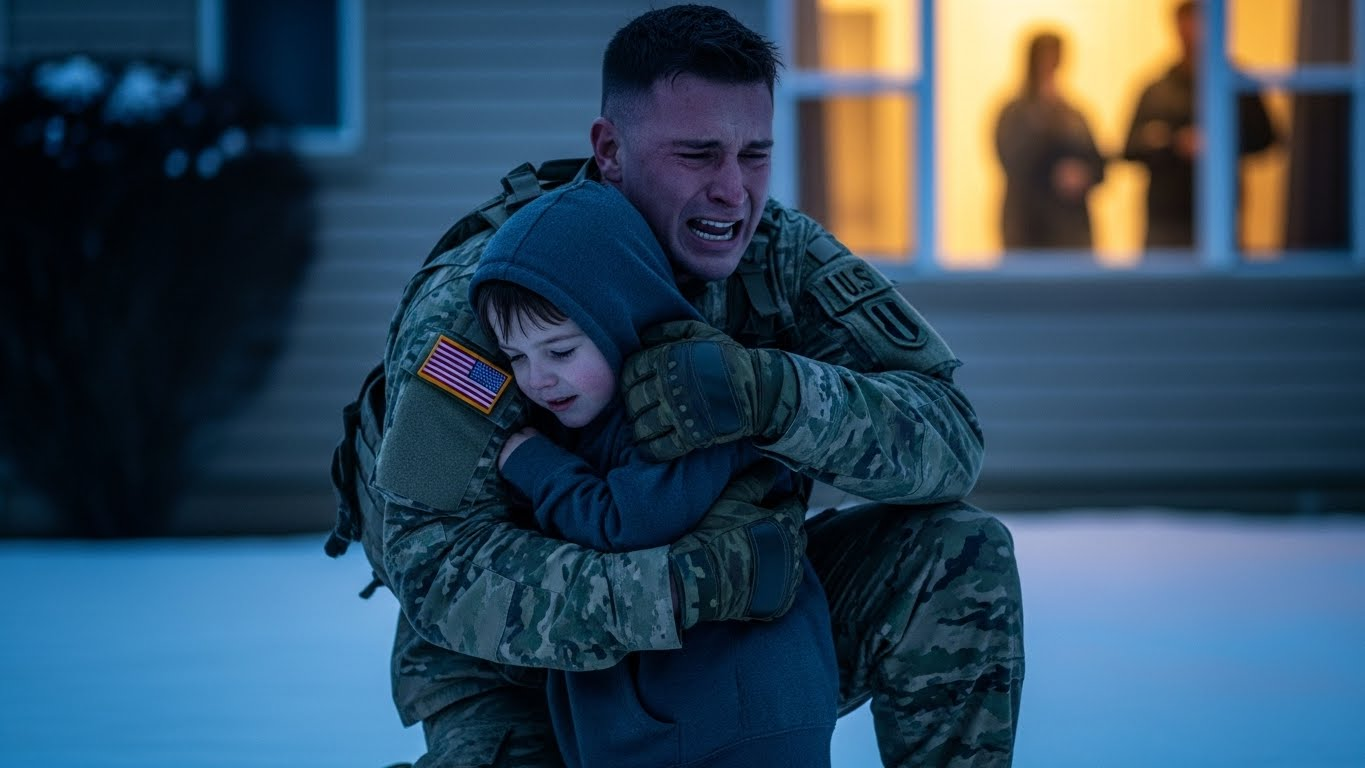
The heater in the yellow cab was blasting, but it couldn’t cut through the chill sitting in my marrow. It was a Minnesota cold, the kind that doesn’t just sit on your skin but burrows into your bones and sets up camp. But honestly? It wasn’t just the weather. It was the eighteen months of silence.
The driver, a heavyset guy with a thick mustache and eyes that had seen too much road, glanced at me in the rearview mirror again. He’d been doing it for the last twenty minutes, eyeing the Multicam pattern of my fatigues and the battered olive-drab duffel bag resting on the cracked leather seat beside me.
“Long trip home, soldier?” he asked, his voice gravelly. The windshield wipers slapped away the heavy, wet snow that had been falling since I landed at MSP.
“Longest of my life,” I muttered, staring out at the gray, frozen landscape passing by. The suburban sprawl of Minneapolis gave way to the familiar, tree-lined streets of Maple Creek.
Eighteen months. That’s how long I’d been gone. The last three were completely off the grid—black ops, deep cover, no comms in or out. No Skype, no emails, no letters. Standard protocol for the unit I was attached to. When you work in the shadows, you disappear. My wife, Sarah, knew the drill. We’d been through three deployments before this. She knew that radio silence didn’t mean death; it meant I was working. It meant I was keeping my head down so I could come back to her and our son, Leo.

Or at least, I thought she knew.
My stomach twisted with a mix of hunger and anxiety. I hadn’t eaten a real meal in two days, surviving on airport coffee and adrenaline. I kept picturing the look on Leo’s face. He was three and a half when I left. Now he was five. Five years old. I’d missed two birthdays, two Christmases. The guilt was a heavy stone in my gut, but I pushed it down. I was home now. I was done. I had the discharge papers in my bag. I was going to be a dad, a husband, a peewee hockey coach. No more sand. No more gunfire.
“This is it, right? 420 Elm?” the driver asked, pulling the car over.
The engine idled with a rattle that shook the frame. I looked up at the house. My house. A two-story Craftsman with a wrap-around porch I’d spent a summer restaining. It looked… quiet. Too quiet.
“Yeah. This is it,” I said.
I tipped the driver forty bucks—way too much, but I was feeling generous—grabbed my bag, and stepped into the biting wind. The air smelled of woodsmoke and impending snow, a scent I used to dream about when the temperature hit 120 degrees in Syria.
I walked up the driveway, my combat boots crunching loudly on the uncleared ice. That was the first red flag. It pricked at the back of my neck, a subtle warning I almost ignored. I sent Sarah money every two weeks. Plenty of it. Combat pay, hazard pay, separation allowance. There was more than enough to hire the neighbor kid to shovel the walk.
The second red flag was the darkness. It was Saturday afternoon, late, but not night yet. Leo should be watching cartoons. The TV should be flickering blue light against the curtains. But the blinds were drawn tight, sealing the house like a tomb.
I reached the front porch, the wood creaking under my weight. My hand was shaking slightly as I fished for my keys. It wasn’t the cold. It was the anticipation. I played this moment out in my head a thousand times. I’d open the door, shout “Honey, I’m home” like a cliché from a sitcom, and they’d come running.
I slid the key into the lock. It didn’t turn.
I frowned, jiggling it. Nothing. It felt stiff, wrong. I pulled it out, checked the teeth, and tried again. It hit the tumblers and stopped dead.
“Come on,” I whispered, frustration bubbling up. “Don’t tell me the lock froze.”
I leaned my shoulder into the door and tried to wiggle the key. It wasn’t frozen. It simply didn’t fit. The lock had been changed.
Confusion washed over me, quickly followed by a spike of irritation. Did she lose her keys? Did the lock break while I was gone? Why wouldn’t she mention it in the letters before the blackout period?
I raised my fist to knock, preparing to pound on the heavy oak, but movement in my peripheral vision stopped me.
Mrs. Higgins, my next-door neighbor, was walking her prize-winning poodle, Princess. She was bundled up in a pink parka that looked ridiculous against the gray sky. She stopped dead in her tracks on the sidewalk when she saw me standing on my own porch.
She dropped the leash. The plastic handle clattered onto the frozen pavement.
“Jack?” she whispered. Her voice was thin, carrying across the silent, frozen lawn. She looked like she was seeing a phantom. Her face went pale, her hand flying to her mouth in a gesture of pure, unadulterated shock.
“Hey, Mrs. Higgins,” I called out, forcing a smile I didn’t feel. “Good to be back. Do you know if Sarah is home? My key isn’t working. I think she might have changed the locks.”
She didn’t answer. She took a step back, stumbling into a snowbank. Her dog started yapping, sensing her distress.
“But… the service,” she stammered, her eyes wide, darting between me and the house. “We went to the service, Jack. Last month. At the VFW.”
My smile froze. The wind suddenly felt ten degrees colder. “What service?”
“Yours,” she choked out, tears welling up in her eyes behind her glasses. “Sarah said… she got the letter. You were KIA. An IED in Damascus. We all signed the book, Jack. We brought casseroles. The whole neighborhood came.”
My blood ran cold. Colder than the ice under my boots. Dead? I wasn’t dead. There was no letter. The military doesn’t send a letter without a body, or at least a definitive witness report. And I had been very much alive, just dark.
“She told you I was dead?” I asked, my voice dropping an octave. The soldier in me was waking up. The part of me that analyzed threats.
Mrs. Higgins nodded frantically. “She was devastated. Truly. For about a week or two. Then… then Greg moved in. She said she needed him to help with the ‘grieving process.’ For Leo’s sake.”
Greg.
The name hit me like a physical blow to the solar plexus. Greg Miller. Her ex-boyfriend from high school. The guy who peaked at eighteen when he threw a winning touchdown and spent the last decade bouncing between bartending gigs, DUIs, and unemployment checks. The guy I had bailed out of jail once because Sarah begged me to.
“Greg is in there?” I asked, pointing at my front door.
“He moved in three weeks ago,” Mrs. Higgins whispered. “Jack… I… I thought I was seeing a ghost.”
I didn’t say another word to Mrs. Higgins. I didn’t reassure her. I didn’t pick up her leash. I dropped my heavy duffel bag on the porch. The thud it made sounded like a gavel coming down.
The confusion was gone. The hurt was there, deep and bleeding, but it was being rapidly cauterized by a white-hot rage. The tactical mindset I had honed over a decade of service snapped into place. The mission had changed. I wasn’t a husband coming home anymore. I was an operator infiltrating a hostile target.
I stepped off the porch, bypassing the front door entirely. I walked around the side of the house toward the backyard. The snow was deeper here, drifting against the cedar fence I’d built with my own hands.
I needed to see through the back sliding glass door. I needed to see who was in my house, sitting on my furniture, living my life.
But I never made it to the window.
Chapter 2: The Boy in the Snow
The backyard was a wreck. It looked like a dumping ground. Toys were scattered everywhere, buried under weeks of snowfall—expensive trucks I’d bought, a tricycle, plastic shovels. The cover for my grill was torn and flapping in the wind.
But near the old oak tree, the one where I used to push Leo on the tire swing until he laughed so hard he got the hiccups, there was a small, huddled shape.
I stopped. My heart hammered against my ribs, a chaotic rhythm that drowned out the wind.
It was Leo.
He was wearing a thin, stained hoodie—one that looked two sizes too small—and flannel pajama pants that were soaked through at the knees. He had no coat. No gloves. No hat. His little boots were unvelcroed, filling with snow.
He was kneeling in the powder, digging at a patch of relatively clean ice near the patio furniture.
I moved closer, my boots silent on the fresh drift. My breath caught in my throat.
I watched, paralyzed by a horror worse than anything I had seen in a war zone. I had seen cities leveled. I had seen the aftermath of drone strikes. But this… this broke me.
My son, my flesh and blood, picked up a chunk of dirty ice with his bare, red-raw hands. His fingers were swollen, clumsy with the cold. He brought the ice to his mouth and crunched down on it. He was shivering so violently that his whole small body vibrated, like a leaf about to tear off a branch.
“Leo?” I choked out. The sound was barely a whisper, ripped from my throat.
He flinched. He dropped the ice and scrambled backward, crab-walking away from me on his hands and feet, terror blowing his pupils wide. He didn’t recognize me. To him, I was a stranger in camouflage. A giant looming out of the winter gray.
“Don’t!” he whimpered, curling into a tight ball and covering his head with his freezing hands. “I wasn’t loud! I promise I wasn’t loud! Don’t tell Greg! Please don’t tell Greg!”
The sound of my son begging for mercy—begging not to be hurt for simply existing—shattered the last remnants of my restraint. It shattered the discipline, the regulations, the civilized man I tried so hard to be for them.
I fell to my knees in the snow, ignoring the wet cold soaking through my pants, and reached out. I pulled him into me, tucking his head under my chin. He was freezing. His skin felt like marble. He smelled like dirty laundry and cold air.
“Leo, it’s me. It’s Daddy,” I whispered, my voice cracking. I frantically unzipped my heavy field jacket and wrapped it around him, engulfing his tiny frame in my warmth. “Look at me, buddy. Please, look at me. It’s Daddy.”
He stopped struggling, but he was stiff as a board. He peered up at me, his eyes rimmed with red, his lips cracked and blue. He squinted, confused, his brain trying to process the impossible.
“Daddy?”
“Yeah, buddy. I’m here. I’m right here.”
“Mommy said you were with the angels,” he whispered, his teeth chattering so hard the words were chopped up. “She said you died and couldn’t come back. She said I didn’t have a daddy anymore.”
“She was wrong,” I rasped, rubbing his back vigorously to generate heat, feeling the prominence of his spine through the thin hoodie. He was too thin. He was starving. “Why are you out here, Leo? Why aren’t you inside?”
He buried his face in my chest, seeking the warmth like a heat-seeking missile. “Greg said I chew too loud. He said I disturb his game. Mommy put the bicycle lock on the fridge handles. She said… she said dinner is for people who behave.”
He looked up at me, innocent and starving, tears freezing on his cheeks. “I was just thirsty, Daddy. The hose is frozen. I just wanted some water.”
A dark, primal roar began to build in the back of my throat. It wasn’t a human sound. It was the sound of a predator finding its young in a trap.
They locked him out. They starved him. While I was halfway across the world eating MREs in the dirt, dodging sniper fire to pay for this house, for that food, for their safety, they treated my son like a stray dog. They let him eat ice off the patio furniture while they sat inside my home.
I looked at the back of the house. Through the sliding glass door, the warm, golden light of the living room spilled out onto the snow. I could see the glow of the 65-inch TV I bought last Christmas.
I could see two figures on the couch.
I stood up, lifting Leo effortlessly into my arms. He weighed nothing. I held him tight to my chest with my left arm, shielding his face with my hand.
“Daddy, are you mad?” Leo asked, his voice trembling, sensing the lethal tension radiating off me.
“No, Leo,” I said, my voice eerily calm. Dead calm. “I’m not mad. I’m fixing it.”
I walked toward the back door. I could see them clearly now. Sarah was laughing, her head resting on Greg’s shoulder. She was wearing a sweater I bought her. Greg had a beer in his hand—my favorite IPA, likely from my stash in the garage—and his feet were propped up on the oak coffee table.
They looked comfortable. They looked happy. They looked like a family.
They had no idea that a dead man was walking up their steps. They had no idea that the reaper they lied about was actually here, and he wasn’t in a forgiving mood.
I stepped onto the wooden deck. I didn’t bother trying the handle. I shifted Leo to my left hip, pressing his ear against my chest so he wouldn’t hear the violence to come.
“Close your eyes, buddy,” I said softly.
“Why?”
“Because Daddy is going to make a noise. And I don’t want you to be scared.”
I stepped back, planted my left foot firmly on the decking, and unleashed every ounce of rage, training, and fatherly instinct into my right boot.
Chapter 3: The Shattered Glass
The sound wasn’t a thud. It was an explosion.
I didn’t just kick the door open; I obliterated the lock mechanism. The wood of the door frame splintered with a violence that sounded like a gunshot, sending shards of painted timber flying into the living room. The heavy door swung inward, crashing against the interior wall, shaking the framed photos—photos of them, not me—that hung there.
The sudden influx of freezing wind swirled into the warm living room, carrying snowflakes that melted on the hardwood floor.
Silence followed the crash for exactly one second.
Then, chaos.
Sarah screamed, a high-pitched, piercing sound that grated against my nerves. She scrambled backward on the couch, pulling her knees to her chest, her eyes wide and fixated on the gaping hole where her security used to be.
Greg was slower. The beer bottle in his hand slipped, tumbling to the floor and foaming over the expensive rug I had bought in Turkey. He stumbled to his feet, blinking rapidly, his face flushed with alcohol and confusion. He squinted at the figure standing in the swirling snow and darkness of the doorframe.
I stepped inside. The warmth of the house hit me, a stark contrast to the shivering boy in my arms. I didn’t look at Sarah. I didn’t look at Greg. My eyes swept the room, clearing the corners, checking for weapons, checking for threats. It was muscle memory.
“Who the hell are you?” Greg slurred, trying to puff out his chest. He took a step forward, his hands balling into clumsy fists. “You can’t just—”
I stepped into the light.
The glow from the TV illuminated my face. It illuminated the scars, the stubble, the cold, dead look in my eyes that usually only surfaced before a breach. It illuminated the Multicam uniform, the mud on my boots, and the American flag patch on my shoulder.
Greg stopped. His mouth opened, but no sound came out. He looked from me to the pictures on the mantel—pictures of a man in uniform—and back to me. The color drained from his face so fast he looked like he was about to faint.
“Jack?”
It wasn’t Greg who spoke. It was Sarah. Her voice was a trembling whisper, barely audible over the sound of the wind.
I ignored her.
I walked past them, my boots leaving muddy, wet prints on the hardwood. I went straight to the loveseat near the fireplace—the one furthest from them. I gently lowered Leo onto the cushions.
“Stay here, buddy,” I said, my voice softening instantly. I pulled a throw blanket from the back of the sofa and wrapped it around his legs, tucking him in tight. “Don’t look at them. Just look at the fire.”
“Is the bad man going to hurt you, Daddy?” Leo whispered, peeking out from the blanket.
“No,” I said, standing up and turning around. “The bad man is leaving.”
I turned to face them. I stood between my son and the people who were supposed to protect him.
“Jack… oh my god,” Sarah stammered, standing up. She reached out a hand, trembling. “We… we got a letter. They said you were dead. They said—”
“Save it,” I said. My voice was low, flat, and devoid of any emotion. It was the voice of a man giving orders over a radio. “Sit down, Sarah.”
“Jack, please, you have to understand—”
“SIT. DOWN.” The command cracked like a whip.
She collapsed back onto the couch, sobbing into her hands.
Greg, however, seemed to find a scrap of liquid courage. He looked at Sarah crying, then looked at me, sizing me up. He saw a guy who had been traveling for days. He saw the fatigue in my eyes. He thought he saw weakness.
He made a mistake.
“Now listen here, pal,” Greg started, stepping around the coffee table. “I don’t know who you think you are, busting in here like this, scaring the kid—”
“Scaring the kid?” I repeated. I tilted my head. “You mean the kid you locked outside in twenty-degree weather? The kid eating ice because he’s thirsty?”
“He has behavioral issues!” Greg shouted, pointing a finger at me. “We’re using tough love! You haven’t been here, you don’t know what it’s like raising a—”
He jabbed his finger into my chest.
That was the trigger.
I didn’t punch him. Punching breaks knuckles. I grabbed his outstretched finger with my left hand, twisting it back until I heard the distinct snap of the metacarpal.
Greg screamed, his knees buckling.
As he doubled over, I stepped in, driving my right knee into his solar plexus. The air left his lungs in a wheezing whoosh. He crumpled to the floor, gasping, clutching his hand, curling into a fetal position on the rug he had stained with my beer.
I stood over him. “Tough love,” I muttered. “How does it feel?”
Sarah screamed again, “Jack! Stop! You’re hurting him!”
I turned my gaze to her. For the first time, she saw the monster. Not the husband who brought her flowers. Not the high school sweetheart. She saw the soldier who had survived things she couldn’t even imagine.
“He’s hurting?” I asked, walking slowly toward her. “Leo was freezing. Leo was starving. And you…”
I looked at the coffee table. There was a plate of half-eaten pizza. Pepperoni. Leo’s favorite.
“You were eating pizza while my son ate ice.”
“I… we…” Sarah stammered, backing up against the cushions. “It’s not what it looks like, Jack. The letter… the obituary… I had to move on! I had to survive!”
“Where is it?” I asked.
“What?”
“The letter. The obituary. Show it to me.”
She froze. Her eyes darted to the kitchen.
I followed her gaze. The refrigerator.
I walked into the kitchen. The linoleum was cold. The house smelled of pizza and stale beer, masking the underlying scent of neglect.
And there it was.
Taped to the stainless steel door of the refrigerator—the one I had bought with my re-enlistment bonus—was a clipping from the local newspaper. It was an obituary. My face, cropped from a photo of us at a barbecue, smiled back at me.
Jack R. Sullivan. 32. Beloved husband and father. Died heroically serving his country.
It was dated three weeks ago.
But my eyes didn’t linger on the paper. They drifted lower.
Wrapped through the heavy handles of the French doors was a thick, braided bicycle lock. A Master Lock combination dial secured it.
It wasn’t a child safety latch. It was a prison lock.
I touched the cold metal of the lock. I looked through the gap in the doors. Inside, the fridge was stocked. Juice boxes, milk, leftovers, fruit.
Food. Just inches away.
And outside, the patio furniture where my son had been scraping ice.
The rage that had been a fire in my chest turned into something else. It turned into ice. Cold, calculating, absolute zero.
I turned back to the living room. Sarah was kneeling beside Greg, trying to help him up.
“Get out,” I said.
Sarah looked up. “What?”
“I said get out. Both of you.”
“Jack, this is my house!” Sarah shrieked, her fear turning into indignation. “My name is on the deed too! You can’t just kick me out in the snow!”
“You’re right,” I said, walking back toward them. “You can stay.”
Her shoulders relaxed slightly.
“But he leaves,” I pointed at Greg. “And if he isn’t out the door in ten seconds, I’m going to finish what I started. And then I’m calling the police to report a trespasser and child abuse.”
Greg didn’t need to be told twice. He scrambled up, cradling his broken hand, his face gray with pain. He didn’t look at Sarah. He didn’t grab his coat. He stumbled toward the door, slipping on the snow that had blown into the entryway, and ran out into the night.
Sarah stood there, alone.
“Jack,” she whispered, trying to summon the look that used to melt my heart. “Baby, please. I was lonely. I was scared. I thought you were dead. Greg… he just kind of took over. He made me do those things. He said Leo needed discipline.”
I looked at her. Really looked at her. I saw the manipulation. I saw the selfishness. I saw a stranger.
“Did he make you spend my life insurance, too?” I asked.
The silence that followed was the loudest sound in the world.
Chapter 4: The Paper Trail
The question hung in the air, sucking the oxygen out of the room.
Did he make you spend my life insurance, too?
Sarah’s face went slack. It was a subtle shift, a micro-expression of panic that a civilian might have missed. But I wasn’t a civilian. I was trained to read intent, to spot the tell before the trigger pull. Her eyes flicked down and to the left. Shame. Guilt. Confirmation.
She didn’t answer. She didn’t have to.
“SGLI,” I said, stepping closer. “Servicemembers’ Group Life Insurance. Four hundred thousand dollars. Plus the death gratuity. That’s nearly half a million dollars, Sarah.”
“I… I haven’t spent it all,” she whispered, her voice trembling. “Just… debts. We had debts, Jack.”
“We had no debts,” I countered, my voice rising slightly. “I paid off the truck before I left. The mortgage is on autopay from my account. I sent you three thousand dollars a month for expenses.”
I looked around the room. I really looked this time. I saw the new 65-inch OLED TV. I saw the designer bag sitting on the dining table—a Louis Vuitton that cost more than my first car. I saw the new leather recliner Greg had been sitting in.
Then I looked at Leo, huddled on the couch under the blanket, watching us with terrified eyes.
“You bought a purse,” I said, the realization hitting me like a gut punch. “You bought a TV. You bought booze for your boyfriend. And our son is wearing pants that don’t fit him.”
“It’s not like that!” she cried, tears streaming down her face now. “Greg said we needed to upgrade! He said… he said since you were gone, we should enjoy the money you left behind. That it’s what you would have wanted!”
“I would have wanted my son to have a winter coat!” I roared.
The shout echoed off the walls. Leo flinched.
I took a deep breath, forcing the volume down. I couldn’t lose control. Not now. I had to be the anchor Leo needed.
“Go to your room,” I said to Sarah.
“Jack—”
“Go. To. Your. Room,” I enunciated every word. “Do not come out until I tell you. Do not touch your phone. If I see you text Greg, if I see you call anyone, I’m done being nice.”
“You’re scaring me,” she whimpered.
“Good,” I said. “Now move.”
She fled. She ran up the stairs, the sound of her footsteps retreating to the master bedroom. I heard the door click shut.
I was alone with my son.
The adrenaline began to fade, leaving behind a profound exhaustion. My hands were shaking. I looked at the broken front door. Snow was still drifting in.
First things first. Secure the perimeter. Secure the boy.
I walked over to the door and shoved it shut. The frame was busted, so I dragged the heavy oak armchair from the corner and wedged it against the door. It wasn’t perfect, but it would keep the wind—and Greg—out.
Then, I went to the kitchen.
I stared at the bike lock on the fridge. It was a symbol of everything that had gone wrong here. I didn’t have the combination, and I didn’t have bolt cutters.
But I had a tactical tomahawk in my duffel bag.
I retrieved the bag from the porch, bringing it inside. I unzipped it, the familiar smell of canvas and gun oil wafting up. I pulled out the Gerber downrange tomahawk.
I walked back to the kitchen. I wedged the pry-bar end of the hawk into the gap between the handles and the lock. I applied pressure. The fridge handles were plastic; the lock was steel. The handles gave way first. With a loud crack, the plastic handle on the right door snapped off.
The lock fell to the floor with a heavy clatter.
I pulled the doors open.
The light inside the fridge flickered on. It was a treasure trove. Deli meats, cheese blocks, yogurt, fresh strawberries, a gallon of whole milk.
I grabbed a plate. I made a sandwich—ham, cheese, mayo, just the way I knew Leo liked it. I poured a glass of milk. I grabbed a handful of strawberries.
I walked back to the living room and sat on the coffee table, directly in front of Leo.
He was staring at the fire, his eyes glassy.
“Leo?”
He looked at me. “Is Greg coming back?”
“No,” I said firmly. “Never.”
I held out the plate. “Are you hungry, buddy?”
His eyes widened when he saw the food. He swallowed hard. He looked at the stairs, terrified that his mother would come down and yell at him.
“It’s okay,” I said softly. “You can eat. You can eat as much as you want. I promise.”
He reached out with a trembling hand and took a strawberry. He ate it in one bite. Then he grabbed the sandwich. He didn’t eat like a child; he ate like a starving animal, wolfing it down without chewing properly.
“Slow down, buddy,” I said, stroking his hair. It was matted and dirty. ” plenty more where that came from.”
As he ate, I pulled out my phone. It had been off since I landed, preserving the last 10% of battery. I turned it on.
I had a hundred notifications. Missed calls from my mom. Texts from my buddies. But I ignored them all.
I dialed a number I knew by heart.
“This is Detective Miller,” a voice answered. Not Greg Miller. Detective Frank Miller. No relation. An old friend from high school who stayed in town and joined the force.
“Frank,” I said.
“Jack?” There was a pause. “Jack Sullivan? Holy sh*t. Is that you? I thought… we heard you were gone, man. Sarah said—”
“I’m alive, Frank,” I said. “I’m home.”
“Jesus, that’s… that’s a miracle! Sarah must be over the moon.”
“Sarah isn’t over the moon,” I said, my voice grim. “Frank, I need you to come over here. Quietly. No sirens.”
“Why? What’s going on?”
“I just kicked my front door in. I found my son freezing in the backyard. And I have reason to believe my wife committed insurance fraud and child endangerment.”
Silence on the other end.
“Frank,” I said, watching Leo lick the crumbs off his fingers. “Bring a social worker. And bring a camera. You need to see this before she cleans it up.”
“I’m five minutes out,” Frank said, his tone shifting from friend to cop.
I hung up.
I sat there, watching my son finish his milk. The anger was still there, a low hum in the background, but my mind was working on the next step.
I needed to understand the lie. How did she fake it? The military doesn’t just lose people and tell the wives they’re dead without proof. There’s a casualty assistance officer. There’s a protocol.
Unless there was no official notification.
Unless the “letter” Mrs. Higgins talked about… was a forgery.
I stood up. “Leo, stay here. Watch cartoons. I’m going to look at something in the kitchen.”
I turned the TV channel from the news to a cartoon. Leo settled back, his belly full for the first time in weeks, his eyelids drooping.
I went back to the kitchen. I looked at the “obituary” taped to the fridge again. I peeled the tape off.
I held the paper under the kitchen light.
It looked real. The font was right. The layout was right. But then I looked at the text on the back. It was an ad for a car dealership sale that ended last year.
This wasn’t a newspaper clipping from three weeks ago. It was a mock-up.
I went to the junk drawer—every kitchen has one. I dug through the piles of rubber bands and takeout menus until I found what I was looking for. A stack of mail.
I flipped through it. Past Due notices. Credit card offers.
And then I found it. A letter from the Department of Veterans Affairs. Unopened.
Wait. If she thought I was dead, she would have opened everything looking for checks.
I ripped it open. It was a standard benefits update. Addressed to Jack Sullivan.
Not The Estate of Jack Sullivan. Just Jack Sullivan.
She knew.
The realization hit me harder than the cold.
She knew I wasn’t dead. She never filed the claim. She couldn’t have, not without a body or a DD-1300 form.
So where did the money come from?
I looked at the counter. Sarah’s laptop was sitting there, charging.
I opened it. It was password protected.
“1234,” I muttered. She never changed it.
It unlocked.
I opened the browser. I checked the history.
How to fake a death notice. GoFundMe for widow of fallen soldier. Crowdfunding sympathy scams.
My blood boiled. It wasn’t the insurance. She hadn’t cashed out my SGLI because she couldn’t. She had scammed the town. She had set up a GoFundMe, told the neighbors I was dead, and collected “donations” from grieving friends, family, and strangers who thought they were helping a hero’s widow.
She didn’t just betray me. She monetized my memory while I was still alive.
And she starved my son to play the part of the struggling, grieving widow.
The front door rattled. Not the broken one, but the sound of tires in the driveway.
I looked out the window. A cruiser. No lights.
Frank was here.
I looked up the stairs. The game was over.
Chapter 5: The Blue Lights
Frank stepped through the ruined doorway, his hand resting instinctively on his holster. He wasn’t drawing, but he was ready. He was a big guy, a former linebacker who filled the room just by standing in it.
He looked at the splinters on the floor. He looked at the snow blowing in. Then he looked at me.
“Jack,” he breathed, his eyes widening. He walked over and pulled me into a hug that smelled of coffee and patrol car vinyl. It was a hard, brief embrace. “I swear to God, we thought you were dust. The VFW put a plaque up.”
“I know,” I said, pulling back. “I saw the obituary.”
Frank looked past me to the couch. He saw Leo.
Leo was curled up under the blanket, holding the half-eaten sandwich like it was a treasure he had to protect. His eyes were wide, darting between me and the uniform.
“Is that… is that Leo?” Frank asked, his voice dropping. “He looks…”
“Starving?” I finished for him. “Hypothermic? Terrified?”
Frank’s face hardened. He was a father of two girls. I saw the shift in his eyes—the compassion vanishing, replaced by cold, professional assessment.
“Where is she?” Frank asked.
“Upstairs,” I said. “Master bedroom.”
“And Greg?”
“Ran,” I said. “Broken hand. Probably heading to the ER or a dive bar.”
I walked over to the kitchen counter and picked up the laptop. I turned it around so Frank could see the screen. The search history was still up. Crowdfunding sympathy scams. How to fake a death certificate.
“She didn’t get my SGLI,” I explained, my voice tight. “She knew I wasn’t dead. She just told everyone I was so she could run a GoFundMe scam. She collected donations from the neighbors, Frank. From you. From the church.”
Frank stared at the screen, his jaw working. “We raised fifteen grand in the first week,” he muttered. “The Fire Department threw a pancake breakfast. She stood there crying, accepting the checks.”
“She locked Leo outside to keep up the act,” I added, pointing to the broken fridge handle and the patio doors. “Can’t have a kid running around happy when you’re playing the grieving widow. So she turned him into a ghost.”
Frank unclipped his radio. “Dispatch, this is Unit 4-Alpha. I need a second unit at 420 Elm. And get CPS on the line. Priority.”
“Don’t take him,” I said, stepping between Frank and Leo. “He stays with me.”
“I have to document it, Jack. Standard procedure. But if you’re the biological father and you’re fit… he’s yours. But we need a medic to check him out.”
“I’ve got him,” I said.
We heard a door creak upstairs.
Sarah appeared at the top of the landing. She had wiped her tears, fixed her hair, and changed into a more modest sweater. She was trying to reset the scene. She saw Frank and forced a smile.
“Frank!” she exclaimed, walking down the stairs with her hands out. “Thank God you’re here. Jack… he just snapped. PTSD, Frank. You know how it is. He broke the door, he hurt Greg… he’s scaring Leo.”
She was good. If I hadn’t lived the last hour, I might have believed her. She played the terrified wife perfectly.
Frank didn’t smile. He didn’t move toward her. He stood like a statue at the bottom of the stairs.
“Sarah,” Frank said, his voice flat. “Why is there a bicycle lock on your refrigerator?”
Sarah froze on the third step. Her hand hovered in the air. “We… we were dieting. Greg and I.”
“And why was your son outside in twenty-degree weather without a coat?”
“He slipped out!” she argued, her voice rising in pitch. “He’s fast, Frank. You know how boys are.”
“I saw the laptop, Sarah,” Frank said, cutting her off.
The color drained from her face. She looked at the kitchen counter. She looked at me. The mask crumbled.
“I didn’t mean to hurt anyone,” she whispered, her lip trembling—for real this time. “The bills… Jack was gone… I just needed help.”
“You needed a Louis Vuitton bag?” I asked, pointing to the dining table.
“That was a gift!” she shrieked.
“Mrs. Sullivan,” Frank said, stepping forward and pulling his handcuffs from his belt. “Turn around and place your hands behind your back.”
“What? No!” She backed up the stairs. “You can’t arrest me! I’m his wife! Jack, tell him!”
“I’m not your husband right now,” I said coldly. “I’m the witness.”
Frank moved up the stairs with surprising speed for a big man. He spun her around gently but firmly. The click of the handcuffs echoed through the silent house.
“Sarah Sullivan, you are under arrest for fraud, theft by deception, and child endangerment,” Frank recited the rights, but she wasn’t listening. She was screaming.
“Greg made me do it! It was Greg! Go get him!”
As Frank led her down the stairs, she looked at me. Her eyes were wild, pleading. “Jack, please. Who will watch Leo? You can’t take care of him alone! You’re a soldier! You’re never here!”
I looked at her, then I walked over to the couch. I picked up Leo, wrapping him in the blanket. He buried his face in my neck, hiding from his mother’s screams.
“I’m here now,” I said. “And I’m not going anywhere.”
Chapter 6: The Town Wakes Up
The waiting room at Maple Creek General Hospital was bright, sterile, and quiet. It was 3:00 AM.
I sat in a plastic chair, my elbows on my knees, still wearing my combat boots and muddy fatigues. The nurses gave me a wide berth, whispering behind the glass partition. I probably looked like a maniac—unshaven, dirty, intense.
But I wasn’t leaving.
Leo was in Exam Room 4. The doctor, a kind woman named Dr. Aris, had been in there for twenty minutes.
I stared at the linoleum floor, replaying the night. The look on Mrs. Higgins’ face. The crunch of the ice. The way Greg whimpered on the floor.
My phone buzzed. It was Frank.
She’s booked. We picked up Greg at a motel on Route 9. He’s singing like a canary. Says it was all her idea. Says he just went along for the free rent.
I typed back: They deserve each other.
Also, Frank wrote, The story is leaking. Police scanner groups on Facebook picked up the arrest. People are asking questions. You need to be ready, Jack. The town is going to feel stupid, and then they’re going to get angry.
I put the phone away. I didn’t care about the town. Not yet.
The door to Exam Room 4 opened. Dr. Aris stepped out. She looked tired. She held a clipboard against her chest.
“Mr. Sullivan?”
I stood up immediately. “How is he?”
She sighed, taking off her glasses. “He’s stable. His core temperature is back to normal. We gave him fluids and a warm meal.”
She paused, looking at her notes. “But there are issues, Jack. He’s severely underweight. Malnourished. He has frostnip on his fingers and toes—stage one frostbite. It will heal, but it’s painful. And… he has bruising on his upper arms. Consistent with being grabbed or shaken.”
My hands balled into fists. “Greg,” I growled.
“We’ve documented everything for the police report,” she said. “Physically, he will recover. But psychologically… he’s terrified, Jack. He asked me if he was allowed to eat the cracker I gave him. He thought he would get in trouble for making crumbs.”
I felt a burning behind my eyes. Tears I hadn’t shed for eighteen months threatened to spill. “Can I see him?”
“Yes. He’s asking for you. He won’t sleep unless you’re there.”
I walked into the room. Leo was sitting on the edge of the oversized hospital bed, looking tiny in a hospital gown with cartoon dinosaurs on it.
“Daddy?” he squeaked.
“Hey, buddy.” I walked over and sat on the bed. “How are you feeling?”
“Warm,” he said. “The lady gave me apple juice.”
“That’s good.”
“Are we going home?” he asked, a shadow crossing his face.
“Not to that house,” I said. “We’re going to a hotel tonight. A nice one. With a pool. And tomorrow, we’re going to go buy you new toys. And a new coat. The biggest, warmest coat they have.”
“And pizza?”
“All the pizza you can eat.”
He leaned his head against my arm. Within seconds, he was asleep.
I stayed awake. I sat guard over my son as the sun began to rise over Maple Creek.
By 8:00 AM, the story had broken.
I checked my phone. The local news had picked it up.
“HERO SOLDIER RETURNS FROM DEAD TO FIND WIFE ARRESTED FOR FRAUD.”
“LOCAL MOM SCAMS THOUSANDS WITH FAKE DEATH STORY.”
I opened Facebook. The “In Memory of Jack Sullivan” group, which had 2,000 members, was in chaos. People were furious. They were posting screenshots of their donations. They were demanding their money back.
But amidst the anger, there was something else. Support.
I donated $500, one comment read. I don’t care about the money. I’m just glad Jack is alive. Someone needs to buy that man a beer and help him with his son.
This makes me sick, another wrote. I saw her at the grocery store last week buying expensive wine while her kid looked like he hadn’t slept in days. We were blind.
My phone rang. It wasn’t Frank. It was a number I didn’t recognize.
“Sullivan,” I answered.
“Jack? This is Tom Wilson. From the bank.”
“Yeah, Tom. What’s up?”
“Jack, I saw the news. I… I’m looking at your accounts right now. I froze everything the second the arrest report hit the wire.”
“How bad is it?” I asked.
“The joint checking is drained,” Tom said, his voice apologetic. “Overdrafted, actually. The savings… gone. She transferred about forty thousand dollars over the last year to an external account. We’re tracing it, but it looks like it went to pay off credit cards in Greg Miller’s name.”
Forty thousand dollars. Every penny I had saved for Leo’s college. Every penny of hazard pay.
“What about the GoFundMe?” I asked.
“That’s not in our bank,” Tom said. “But the police said the balance on that account is zero. She spent it as fast as it came in.”
I closed my eyes. I was broke. I had a traumatized son, a destroyed house, and a wife in jail.
“Thanks, Tom,” I said.
“Jack, one more thing,” Tom said quickly. “Check your other account. The one your grandfather set up.”
“That old trust? There’s barely anything in there.”
“Just check it.”
I hung up and opened the banking app. I navigated to the forgotten trust account my grandfather left for me years ago. It usually had a few hundred bucks.
I stared at the screen.
Balance: $42,500.00
I frowned. Where did that come from?
I clicked on the transaction history.
Deposit – VFW Post 402 Fundraiser – $12,000 Deposit – Rotary Club – $5,500 Deposit – Anonymous – $10,000
I realized what had happen. The town hadn’t just given money to Sarah. The old-timers, the veterans who knew my grandfather, they didn’t trust online fundraisers. They had deposited their donations directly into the only account they knew was safe. The one Sarah didn’t know about.
They had been trying to protect my son’s future, even when they thought I was dead.
I looked at Leo, sleeping peacefully.
We were broke, but we weren’t destitute. We could start over.
But first, I had to go back to the house. I had to pack. And I had to face the neighbors who had watched my wife starve my son and done nothing but sign a guestbook.
Chapter 7: The Ruins of Home
The house at 420 Elm Street didn’t look like a home anymore. It looked like a crime scene because, technically, it was.
When I pulled up to the curb two days later, the yellow police tape had been removed, but the stigma remained. A news van was parked down the street. Neighbors were lingering on their porches, pretending to sweep or check their mail, but their eyes were glued to my driveway.
I got out of the rental truck. I was alone. Leo was safe at the hotel with my sister, who had flown in from Chicago the second she heard the news.
I walked up the driveway. The ice I had crunched over that first night was melting into a gray slush. The front door was boarded up with plywood where I had shattered the frame.
I entered through the garage.
The air inside was stale. It smelled of the pizza that had been left out and the underlying rot of a lie that had lasted too long.
I wasn’t here to reminisce. I was here to extract.
I grabbed a stack of cardboard boxes and went straight to Leo’s room.
It was the only room that felt innocent, yet it held the darkest secrets. I started packing his clothes—the ones that were too small. I threw them in a trash bag. He wouldn’t wear those again. I packed his toys, the ones Greg hadn’t stepped on or thrown away.
Then, I knelt down to check under the bed.
My breath hitched.
Stashed in the far corner, hidden behind a box of Legos, was a pile of wrappers. Granola bar wrappers. Empty fruit snack pouches. Cracker crumbs carefully collected on a paper towel.
He had been hoarding food.
My five-year-old son had been squirreling away scraps like a prisoner of war because he didn’t know when he would be allowed to eat again.
I sat on the floor, holding a crumpled wrapper, and wept. I cried for the fear he must have felt. I cried for the nights he lay here awake, hungry, listening to his mother and her boyfriend laugh downstairs.
I wiped my face. Tears wouldn’t fix this. Action would.
I finished packing his room. I didn’t touch the master bedroom. I didn’t touch Sarah’s things. I left the Louis Vuitton bag on the table. I left the new TV. I left the furniture.
I only took what mattered. My gear. Leo’s things. The photo albums from before the darkness took over.
I carried the last box out to the truck.
Mrs. Higgins was standing at the end of the driveway. She wasn’t walking her dog this time. She was just standing there, wringing her hands in her apron.
“Jack,” she called out, her voice shaking.
I stopped. I didn’t want to talk to her. I didn’t want to talk to any of them.
“I didn’t know,” she said, tears spilling over. “I swear, Jack. We thought… she was grieving. We thought the boy was just acting out because he missed you. She told us he was difficult.”
I looked at her. I looked at the other neighbors who had gathered behind her—the ones who had signed the guestbook, the ones who had donated to the fund, the ones who had watched my son get thinner and thinner and did nothing but gossip.
“You didn’t know because you didn’t look,” I said. My voice wasn’t loud, but it carried. “You saw what you wanted to see. You saw a poor widow. You didn’t see the starving boy.”
“We’re so sorry,” a man shouted from across the street. “If there’s anything we can do…”
“There is,” I said, climbing into the truck. “Don’t write me any checks. Don’t bring me any casseroles. Just open your eyes.”
I slammed the door.
I put the truck in gear and drove away. I didn’t look in the rearview mirror. I left 420 Elm Street behind. It was just wood and brick now. It wasn’t my home.
My home was waiting for me at the hotel.
Chapter 8: The High Ground
Three months later.
The cabin was small, tucked away near the boundary of the Superior National Forest. It smelled of pine needles and real wood fire, not stale secrets.
I sat on the porch, watching the sun dip below the treeline. The air was crisp, but it wasn’t the biting, deadly cold of that night in Maple Creek. It was a fresh, clean cold.
“Daddy! Look!”
I turned. Leo came running out the back door.
He looked different. The hollow cheeks were gone, filled out by three months of pancakes, steak, and regular meals. His color was back—rosy and healthy. He was wearing a puffy red winter coat that I had bought him the day after the rescue. He wore it even when it wasn’t that cold, a security blanket he could zip up.
“What is it, buddy?”
“I found a frog!” He held up his hands, cupping a small, muddy creature. “Can we keep him?”
I laughed. It was a genuine laugh, one that came from my belly. “We can visit him. But he has a family too, Leo. We have to let him go home.”
“Okay,” Leo said, running back to the edge of the woods to release his prisoner.
I took a sip of my coffee.
Life had changed fast.
Sarah was currently awaiting trial. The DA wasn’t going easy. Fraud, embezzlement, child neglect. She was looking at five to ten years. Greg had taken a plea deal to testify against her, but he was still serving time for assault and child abuse.
The divorce was already in motion. I had full custody. No visitation. The judge had seen the medical photos of Leo’s frostbite and made the ruling in under five minutes.
We had sold the house in Maple Creek “as is.” I used the money from the sale, plus the funds from my grandfather’s trust, to buy this place. It was quiet. It was ours.
I wasn’t deploying again. I had submitted my retirement papers. My war was over. I had fought for my country, I had fought for my life, but the most important battle I ever fought was on a snowy patio in the suburbs.
And I had won.
Leo ran back to the porch, climbing onto my lap. He buried his face in my flannel shirt.
“Daddy?”
“Yeah, bud?”
“Is dinner soon?”
It was a question he used to ask with fear. Now, he asked it with annoyance, like a normal, impatient five-year-old.
“Yeah,” I said, hugging him tight. “We’re having tacos. And you can have as much cheese as you want.”
He smiled. “You’re the best, Daddy.”
I looked out at the woods.
They tried to bury me. They tried to erase me. They tried to break my son.
But they forgot one thing.
You don’t corner a soldier. And you never, ever touch his family.
I survived the desert. I survived the betrayal. And now, I was going to survive the peace.
“Come on,” I said, standing up and lifting him onto my shoulders. “Let’s go eat.”
We walked inside, and I locked the door behind us. Not to keep people out, but to keep the warmth in.
THE END