Inside The Life Of U.S. Army Psychiatrist Douglas Kelley And His Soul-Crushing Work At Nuremberg Prison
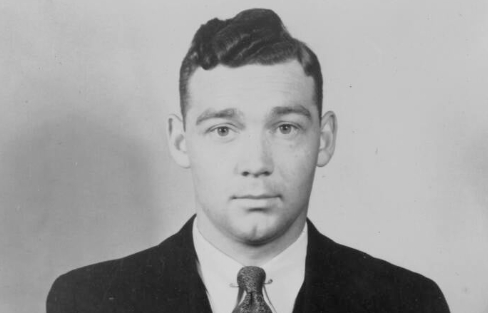
Douglas Kelley spent the months leading up to the Nuremberg trials interviewing Nazis about their motivations for the Holocaust, an assignment that shook him to his core — and seemingly led to his suicide in 1958.
Douglas Kelley, the psychiatrist who interviewed Nazi leaders at Nuremberg prison.
In the fall of 1945, a 33-year-old American psychiatrist named Douglas Kelley walked into Nuremberg Prison carrying a leather briefcase filled with Rorschach inkblot cards for what he would describe as an “astounding” task: examining the minds of the most notorious war criminals the world had ever known.
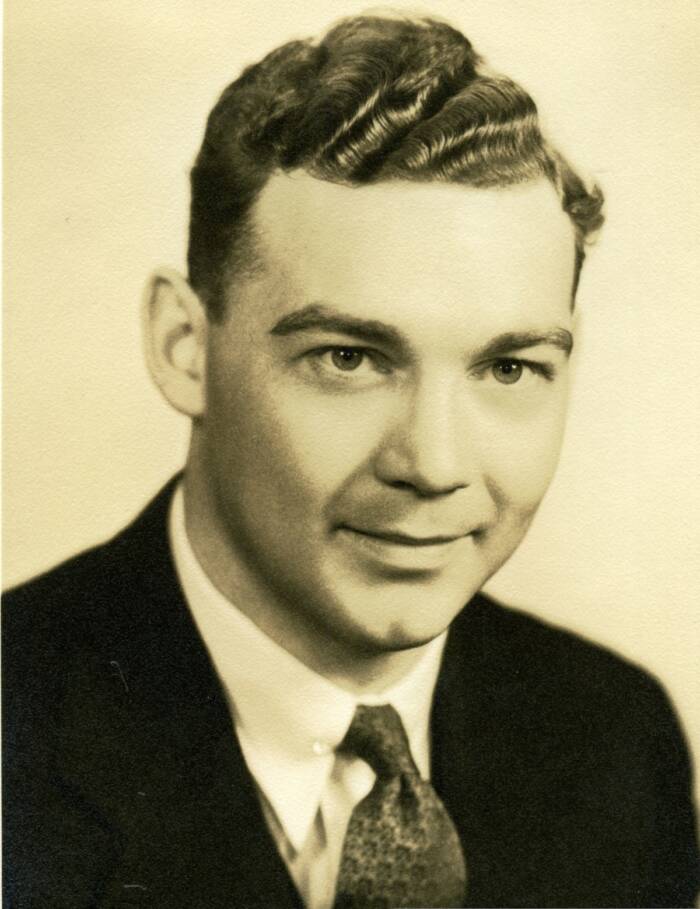
It was an unprecedented assignment in the history of psychiatry, and though it laid the groundwork for how criminals would be evaluated in the future, Kelley’s work was full of missteps and ethical conflicts.

Lines were blurred. As he attempted to understand the Nazi mind, he crossed professional boundaries. And despite detesting the crimes of people like Hermann Göring, Kelley ultimately determined that the prisoners he spoke to were indeed fit to stand trial. Indeed, they were just as “sane” as he was.
Still, what Douglas Kelley discovered in those prison cells would ultimately haunt him for the rest of his life — and lead to his death.
Douglas Kelley’s Life Before Nuremberg
Douglas Kelley was born in California in 1912. Brilliant and ambitious, he breezed through his education, earning his medical degree from the University of California and specializing in psychiatry and neurology. By his early 30s, he had already established himself as a rising star in American psychiatry, publishing research on brain chemistry and the physiological basis of mental illness.
When the U.S. Army needed psychiatric expertise for the upcoming Nuremberg trials, Kelley seemed like an ideal choice. He was scientifically rigorous, intellectually curious, and unburdened by prejudices that might cloud his judgment.
The military wanted answers to fundamental questions: Were these Nazi leaders insane? What kind of minds could orchestrate the Holocaust? Could psychiatry explain the Third Reich?
Douglas Kelley arrived at Nuremberg in the autumn of 1945, just months after Germany’s defeat.
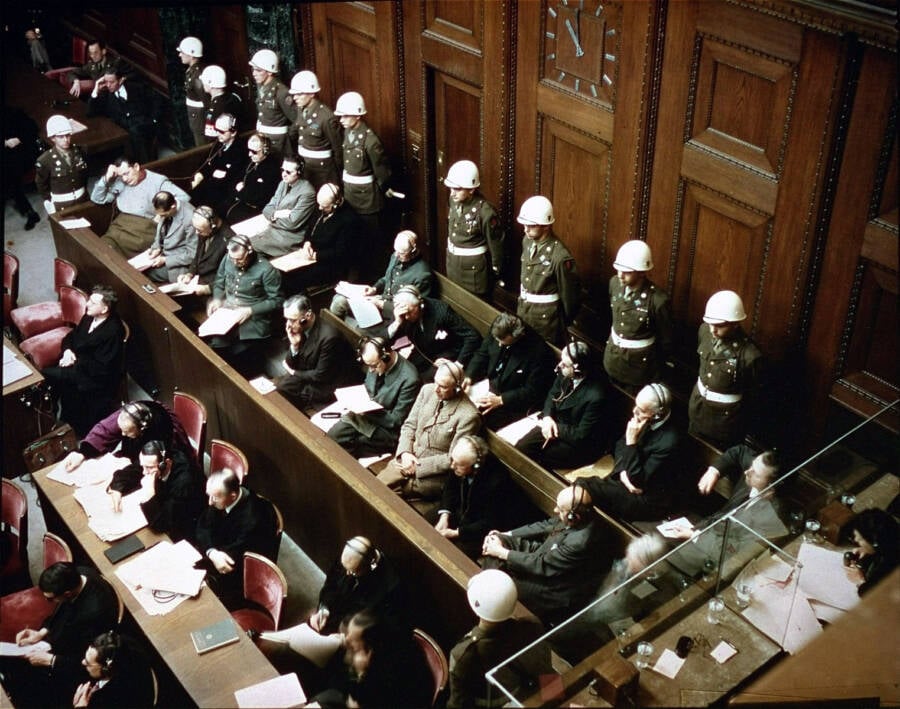
The prison holding the surviving Nazi officials was a grim stone building adjacent to the Palace of Justice where the trials would take place. Inside its cells sat Hermann Göring, Rudolf Hess, Joachim von Ribbentrop, Julius Streicher, and 18 other architects of Nazi terror, awaiting judgment for their crimes against humanity.
And it was up to Kelley to determine if they were mentally fit to stand trial.
Rami Malek plays Douglas Kelley in the 2025 film Nuremberg.
Douglas Kelley’s approach was methodical and, by the standards of the time, remarkably humane.
He conducted extensive interviews with each prisoner, administered psychological tests including the Rorschach and Thematic Apperception Test, and carefully observed the behavior of his patients. He wanted to understand not just why they had carried out such heinous crimes, but who they really were — and he knew the gravity of the mission before him.
In papers obtained by Jack El-Hai for his famed Scientific American article, Kelley wrote, “the near destruction of modern culture will have gone for naught if we do not draw the right conclusions about the forces that produced such chaos. We must learn the why of the Nazi success so we can take steps to prevent the recurrence of such evil.”
What struck Douglas Kelley immediately was how ordinary the Nazi leaders seemed. These were not the raving lunatics he had expected to find.
In one manuscript, for instance, Kelley wrote of Robert Ley, Hitler’s Reich Labor Leader, that “despite his condemnation of anti-Semitism, Ley was still convinced that the Jews constituted a problem in Germany.”
Ley admitted in his interviews that, unlike Hitler, he would not have killed the Jews, but rather would have denied them the right to work and then refused to provide them with a place to live, thus driving them out of Germany without shedding a drop of blood. “All the Jews in Germany would have quietly packed up and moved elsewhere,” Ley said. “Is that not so?”
Robert Ley, the Nazi leader who pushed Hitler’s “Strength Through Joy” campaign.
Kelley noted that Ley reiterated time and time again that he had not killed anyone and that he became “violently disturbed” when he read the indictment in which he was being called a criminal. He continued to maintain his innocence, even as he claimed that he and Hitler had only worked for the benefit of the German people.
Ley was erratic and at times suicidal, but there was nothing in his logic — however flawed — that hinted at insanity.
Hess, on the other hand, appeared disturbed, claiming amnesia, but his condition was more theatrical than psychotic. Streicher was crude and repugnant, but also not clinically insane. Hans Frank, the brutal governor-general of occupied Poland, spoke eloquently about art and culture in between his confessions to his unthinkable crimes.
Again, Douglas Kelley found these men, who had committed some of history’s greatest atrocities, were of sound mind.
Kelley also developed a particularly complex relationship with Hermann Göring, Hitler’s designated successor and the highest-ranking Nazi on trial.
Douglas Kelley’s Complicated Relationship With Hermann Göring
“Each day when I came to his cell on my rounds,” Douglas Kelley wrote of his talks with Göring, “he would jump up from his chair, greet me with a broad smile and outstretched hand, escort me to his cot and pat its middle with his great paw.”
The two men spent hours together, discussing everything from German history to American politics.
Göring was sharp and manipulative, and he had undeniable charisma. He performed well on intelligence tests and showed no signs of psychosis or severe mental illness. Göring also mentioned several times that he “felt great responsibility, not for [Germany’s] crimes, but for its evaluation by history.”
“Yes, I know I shall hang,” Göring told Kelley. “You know I shall hang. I am ready. But I am determined to go down in German history as a great man. If I cannot convince the court, I shall at least convince the German people that all I did was done for the Greater German Reich.”
Hermann Göring during the Nuremberg trials.
And when Göring learned that Kelley would be leaving the prison in 1946, the Nazi leader wrote to the psychiatrist: “I regret your departure from Nuremberg, as do the comrades confined with me. I thank you for your humane behavior and also for your attempt to understand our reasons.”
Douglas Kelley found himself simultaneously repelled and fascinated by the man — and this was precisely the problem. The longer he spent with these Nazis, the more unsettling his conclusion became: They truly were not insane.
At the same time, Kelley had been divulging information gleaned from his conversations to General William “Wild Bill” Donovan, the founder of what would soon be the CIA. It was information that, in a traditional doctor-patient relationship, would be considered confidential. He was conflicted about his role: Was he Göring’s doctor or was he a patriotic informant? Could he be both?
However he felt about his position, Douglas Kelley still had to reach a conclusion.
The Controversial Conclusions From Nuremberg Prison
Nazi defendants at the Nuremberg trials, which began in November 1945.
In 1946, Kelley published his findings, arguing that the Nazi leaders represented a particular personality type — authoritarian, nationalistic, and prone to following strong leaders — but not a pathological one. The capacity for their evil, he wrote, “could be duplicated in any country of the world today.”
This was not the answer anyone wanted to hear.
The idea that “normal” people could commit genocide was deeply threatening. It suggested that the Holocaust was not an aberration committed by madmen but rather something that emerged from human nature itself under certain conditions. If Göring and his cohorts were sane, then the comfortable boundary between “us” and “them” dissolved.
Evil was not safely quarantined in the minds of the abnormal.
Hermann Göring standing trial. He would die by suicide in October 1946, just hours before his scheduled execution.
Douglas Kelley’s conclusions were controversial and remain so. Some colleagues suggested that he had been manipulated by the very men he was studying. The psychologist Gustave Gilbert, who worked alongside Kelley at Nuremberg, eventually broke with him over their interpretations, with Gilbert arguing that the Nazis did show distinct pathological traits.
Others accused Kelley of being too sympathetic to his subjects, particularly Göring.
When recalling Göring’s suicide just hours before his scheduled execution, for instance, Kelley wrote, “His suicide, shrouded in mystery and emphasizing the impotency of the American guards, was a skillful, even brilliant, finishing touch, completing the edifice for Germans to admire in times to come.”
The Weirdest Things People Have Found at Flea Markets
But if the greater scientific community and general public found Kelley’s conclusion disturbing, the weight of that assessment did not weigh nearly as heavily on them as it did on Kelley himself.