My name is Nneka, and on Instagram they call me Madam Soft Life, the woman in silk robes and designer bags, living inside a mansion in Asaba, smiling effortlessly daily.-phuongthao
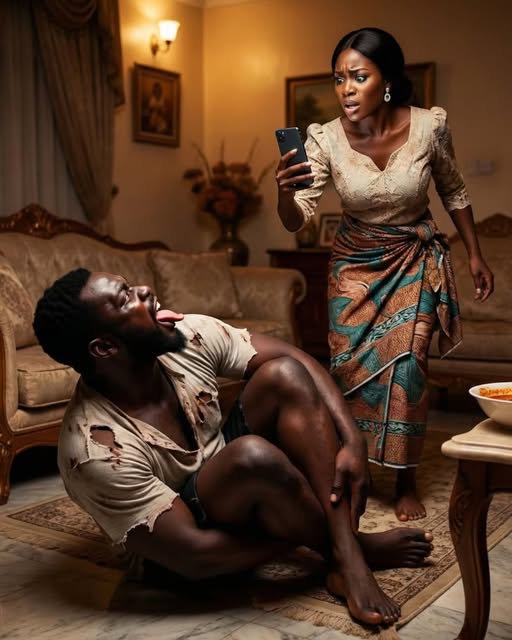
My name is Nneka, and on Instagram they call me Madam Soft Life, the woman in silk robes and designer bags, living inside a mansion in Asaba, smiling effortlessly daily.
People say I am lucky. They comment under my photos, “God when,” and “Husband material.” They do not know my house has rules heavier than gates.
For three years I have not shared a bed with my husband, Chief Odogwu. He says he is busy. He says rituals require focus. He says obedience keeps blessings flowing.
On our wedding night he pointed to a corridor and warned me. “Never open that door,” he said calmly. “If you enter, you will die instantly. Understand?”
I nodded, because fear can wear a suit and speak softly. I also nodded because money makes women tolerate strange stories, especially when the world expects gratitude.

I learned to smile. I learned to dress expensive. I learned to post vacations and unboxings, while inside, my spirit lived like a tenant who pays rent.
Last week, something shifted. Every Friday night, Odogwu returned with a crate of raw eggs and a live chicken. He carried them inside that forbidden room.
Two hours later he would emerge sweating, eyes bright, voice unusually gentle. The eggs’ crate was empty, the chicken was gone, and he never explained.
I asked once, lightly, like a wife joking. He stared at me until my throat dried. “Do you like your soft life?” he asked. “Then mind yourself.”
Curiosity is a stubborn animal. It grows quietly, feeding on patterns. I began to watch details: his keys, his footsteps, the way he locked the corridor twice.
Yesterday morning he rushed out for a meeting and left his keys on the dining table. Among them was a small brass key, wrapped in red thread.
I stood there listening to my heartbeat. My hands shook so badly I could barely pick it up. I whispered Psalm 23 like a rope around my mind.
The corridor felt colder than the rest of the house. Even the air conditioner sounded afraid. I reached the forbidden door, slid the key in, and turned.
The lock clicked with a finality that sounded like destiny. I pushed the door open a little, expecting candles, skulls, or some dramatic shrine from movies.
What I saw was worse, because it was clean. A large golden cage sat in the center of the room, gleaming under white fluorescent light, immaculate and deliberate.
Inside the cage, coiled on a red velvet rug, was a gigantic python, thick like a NEPA pole, breathing slowly, its scales shining as if oiled.
My stomach turned to water, but I did not scream. Something older than fear entered me, the spirit of women who survived villages where silence killed.
I noticed photos pasted around the cage: my wedding picture, my birthday picture, my smiling face on vacation. The python’s head angled toward them, watching.
In the corner were empty egg shells and a wooden bowl stained dark. A small feeding hatch was built into the cage, like someone designed this carefully.
My mouth tasted metallic. I stepped back, careful, and closed the door quietly. My first thought was not revenge. My first thought was survival and evidence.
I went to the kitchen and grabbed my phone charger, a power bank, and the strongest flashlight we owned. Then I returned, breathing through my nose, steady.
I opened the door again, this time filming from the crack. The python shifted slightly, tongue flickering, sensing movement. The camera captured the photos, the shells, the cage.
I did not approach the bars. I did not touch anything. I simply recorded, slowly, like a journalist walking through a crime scene, letting the truth speak.
Then I saw a notebook on a small table, covered in plastic. I zoomed in without picking it up. Pages showed dates, amounts, and the word “exchange” repeated.
My husband did not pray there. He negotiated. He offered flesh and fear, and he placed my pictures like a menu. Suddenly his “grace” looked like a contract.
I backed out and locked the door again. My legs trembled, but my mind cleared. Calmness returned, not as weakness, but as the only weapon I trusted.
I checked the house cameras. The secret corridor camera was disabled. Of course it was. So I set my own: phone on tripod, facing the corridor entrance.
Next, I called my friend Ifunanya, a lawyer, and said only, “I need you today. Bring police contacts. Don’t ask questions on phone. Just come.”
I also sent the videos to three people immediately: my sister, Ifunanya, and a cloud backup account. Evidence must survive even if the witness disappears.
When Odogwu returned in the evening, he looked satisfied, like a man who had won unseen battles. He kissed my forehead and asked, “What’s for dinner, babe?”
I smiled like Instagram. “Your favorite,” I said. I served him ordinary pepper soup with goat meat, nothing strange, nothing symbolic, only the taste of normal life.
He ate with appetite and complimented me. He asked for more. I watched his hands, the same hands that signed contracts and warned me about death, moving casually.
After dinner he walked toward the corridor, humming. My phone on the tripod captured everything. He reached into his pocket for the key and froze when he saw the door seal.
His eyes slid to me. “Did you go there?” he asked softly. Softly can be more dangerous than shouting. I kept my voice even. “Yes,” I said, “and I recorded.”
The air changed. His smile disappeared like light switched off. He stepped toward me slowly, measuring distance. “Delete it,” he said. “Now, Nneka.”
I raised my own phone. “It’s already sent,” I replied. “If anything happens to me, it goes everywhere. Instagram, Snapchat, WhatsApp groups, blogs, all of it.”
His jaw tightened. He tried a new tone, sweet and pleading. “Babe, you don’t understand. That room protects us. It protects the business. It protects you.”
I laughed once, short and dry. “It protects you,” I corrected. “And it targets me.” I opened the gallery and showed him the photos around the cage.
For the first time, I saw fear in my husband’s face. Not fear of God, not fear of enemies, but fear of exposure, the one thing money cannot bribe easily.
He lunged for my phone. I stepped back into the parlor where the security staff could see. “Touch me,” I said loudly, “and the neighbors will know tonight.”
The houseboy paused in the doorway, confused. The gateman looked in. Odogwu stopped, recalculating, because witnesses are louder than fists, and reputations are fragile.
He tried to speak, but words failed. He pointed toward the corridor, trembling. “You opened a covenant,” he whispered. “If it wakes hungry, it will demand balance.”
I held my ground. “Then you should have fed it your own pictures,” I said. “You should have offered your own body, not mine. You built this danger yourself.”
Ifunanya arrived within forty minutes, with two police officers in plain clothes. They did not enter like heroes. They entered like men who had seen strange things before.
I played the videos. I showed the notebook pages, zoomed, dated. I showed the photos around the cage. The officers exchanged a look that needed no language.
We approached the corridor together. The officers wore gloves. They called for animal control backup. Odogwu stood behind us, sweating, whispering prayers that sounded like bargaining.
When they opened the door, the python lifted its head, slow and heavy. The room smelled faintly of raw eggs and musk. Everyone stepped back instinctively, even the brave ones.
Animal control arrived with a crate and long hooks. The python moved, powerful but contained by trained hands and careful distance. No one screamed. Fear stayed silent, respectful.
As they removed it, the photos fluttered slightly from the air movement, as if my smiling face finally exhaled. Odogwu watched like a man losing his private god.
The officers photographed everything. They took the notebook and sealed it. They asked Odogwu questions he could not answer smoothly. His voice cracked, then hardened, then went quiet.
Outside, neighbors gathered as news spread. In Nigerian compounds, silence never lasts. People came to see what was happening, pretending they were only passing, eyes wide.
Kunle the barber shouted, “I always knew this money was not clean!” Someone else said, “Madam, God save you!” Women hissed prayers under their breath.
Odogwu tried to shout at the crowd, but his authority had slipped. A transporter without mystery is just a man with trucks. And a man with shame is smaller than his gate.
I stood on the balcony and watched the estate change shape. The mansion looked the same, but it felt different, like a stage after the curtains drop, revealing wires and dust.
My phone kept buzzing with messages from my followers. They had seen my tears before, but filtered. Now they sensed something raw behind my silence, a story without makeup.
Ifunanya squeezed my hand and said, “You did right. Calm women survive because they move wisely.” The police asked if I wanted to file charges. I said yes.
That night I locked my bedroom door, not because I feared the python anymore, but because I finally accepted the truth: the most dangerous creature in the house was my husband.
In the mirror I looked at my own eyes and saw a woman returning from a long disappearance. Soft life is sweet, but it is useless if your body is collateral.
I wrote one post and saved it as draft. No video of violence, no sensational gore, only one sentence: “If a door is forbidden, ask who benefits from your fear.”
By morning, Odogwu’s family began calling. His mother cried. His uncle begged. They said I should settle quietly, for the sake of reputation, for the sake of community respect.
I listened, calm, because calmness is my new language. “Respect,” I said, “is not built on secrets that eat women. Respect is built on safety and truth.”
I packed a small suitcase and moved to my sister’s house temporarily. The mansion felt cursed not by spirits, but by the choices made inside it without my consent.
Some friends urged me to post everything for clout. I refused. Exposure without strategy can backfire. I chose law, documentation, and controlled truth, not chaos.
Still, I kept the videos safe. Not to entertain strangers, but to protect myself if stories were twisted. In Nigeria, narratives are weapons, and women are often blamed first.
Days later, the animal control officer told me the python was under observation. He said it had been fed regularly, conditioned, and kept unnaturally calm, like an investment.
Hearing that, I understood the room better. It was not religion. It was control disguised as spirituality, a private economy built on fear, sacrifice, and someone else’s body.
I do not know what will happen to Odogwu’s business. I do not care. Trucks can be replaced. Peace cannot. A woman is not a bargaining chip, not a photo on a cage wall.
People will say I should have been patient. People will say I should have stayed quiet for soft life. But I have learned that quiet can be a coffin.
So, yes, I locked the doors. Not to wait for transformation, but to secure my exit, secure my evidence, and secure the version of me that finally chose herself.