My Stepmom Left Me Her $3M Mansion While Her Own Kids Got Just $4,000—Then I Found a Letter from Her
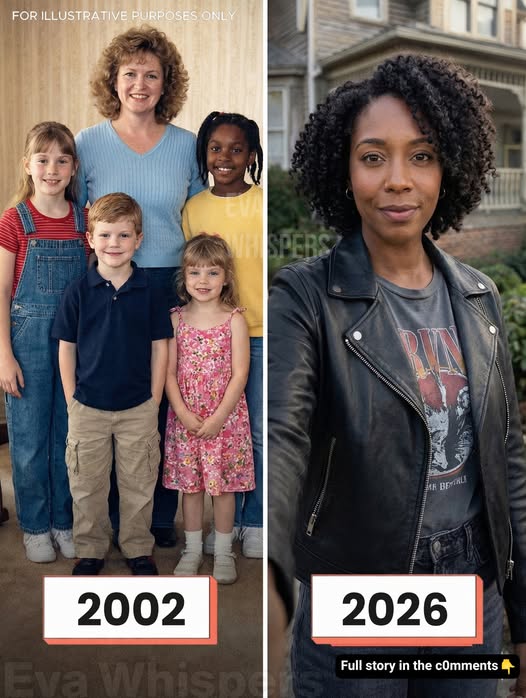
I grew up invisible in my own home — an afterthought in my father’s second marriage. So when my stepmother passed away years later, no one was more shocked than I was to learn what she had left me.
When the lawyer slid the envelope across the polished mahogany desk, my palms went clammy. I had expected a routine will reading, nothing more. What I didn’t expect was to walk out as the sole heir of a $3 million house that didn’t even feel like it belonged to me.
But before I explain how that inheritance shattered every relationship I thought I had severed years ago, I need to take you back to the moment when my life first split in two.
I was ten years old when my mother died. One day she was there, humming in the kitchen while stirring her famous chicken soup, and the next she was gone — taken by an illness that swept through our lives like a thief in the night.
After her funeral, the silence in our house was unbearable. My father and I ate our dinners quietly, clinging to each other like survivors of a shipwreck.

Two years later, he remarried.
Her name was Helen. To outsiders, she was elegance personified — immaculate hair, pressed suits, and a faint trace of expensive perfume that followed her everywhere. But to me, she was a wall.
I remember the first night she came into our home. She brought her three children: Lisa, Emily, and Jonathan. They were loud, confident, territorial — like a pack of wolves assessing new ground.
“This is Anna,” my father said proudly, resting a hand on my shoulder. “My daughter.”
Lisa, the oldest, looked me up and down, her lip curling into a smirk sharp enough to slice skin. “She’s… quiet.”
“She’s shy,” Helen corrected quickly, smiling without warmth. Then she leaned toward me, her tone light but dismissive. “You’ll get along with my kids just fine if you try, won’t you?”
I nodded, though inside I already knew I was an outsider in my own home.
From that day forward, dinners became a stage where I had no lines. The spotlight was on Helen’s children — their piano recitals, their trophies, their perfect report cards. I sat at the edge of the table, invisible.
By eighteen, the weight of it all finally broke me. “I can’t do this anymore,” I whispered as I zipped up my suitcase. My father had already passed, and leaving meant cutting ties not just with Helen but with the entire painful chapter of my life.
I never imagined I’d hear her name again — until the day I learned she was gone too.
Fast-forward nearly twenty years. At thirty-eight, I had rebuilt myself into someone unrecognizable from the lonely teenager who once slipped out of Helen’s house without a backward glance. I had a husband who adored me, a job that kept me grounded, and a home that finally felt safe. The ghosts of my childhood rarely visited anymore.
That night, though, they came knocking.
I had just dragged myself in from work, every muscle aching. My heels landed with a thud by the door, my bag slumped across the kitchen chair. I reheated leftovers with the kind of practiced resignation only working adults know.
The quiet felt like a balm. I poured a glass of water, sat down, and took a deep breath.
Then my phone buzzed against the wood.
An unfamiliar number flashed across the screen. For a moment, I considered ignoring it. Bill collector? Telemarketer? Wrong number? But something — intuition, fate, maybe dread — made me swipe to answer.
“Hello?”
“Is this Anna?” The voice was calm, deliberate, too professional to be casual.
“Yes…” I said slowly.
“My name is Mr. Whitman. I’m an attorney. I represent your stepmother, Helen.”
The fork froze halfway to my mouth. My throat closed. I hadn’t heard that name spoken aloud in years, and suddenly it sounded like a ghost had whispered it.
“Helen?” My voice cracked.
“Yes,” he continued gently. “I’m very sorry to inform you… Helen has passed away. And I need you to attend the reading of her will.”
The silence pressed in tighter. My mind raced. Why me? Why now?
“I… I haven’t spoken to Helen in decades,” I blurted. “I don’t understand. Why would you be calling me?”
“I can’t discuss details over the phone,” he replied. “But your presence is required.”
My heart hammered. Every instinct told me to hang up, to protect the life I had built. But curiosity — that insidious, gnawing thing — wrapped its claws around me.
After a long pause, I whispered, “Alright. I’ll come.”
“Good,” Mr. Whitman said softly. “You might be surprised at what Helen left behind.”
The following week, I gripped the steering wheel tightly on my way there. The city traffic blurred, but my mind wasn’t in the present. It was caught between dread and disbelief.
The law office loomed ahead — an old brick building with tall windows and brass handles gleaming like they were polished every morning. I parked at the curb and sat for a long moment, my reflection pale and nervous in the rearview mirror.
“You can do this,” I whispered, though I wasn’t sure I believed it.
Inside, the receptionist led me into a conference room. And there they were.
Lisa noticed me first, arms crossed, expression sharp. Emily didn’t even look up at first, her thumbs flying across her phone, gum snapping like defiance. Jonathan muttered under his breath, fragments of “unbelievable” and “her” dripping with disdain.
I slid into a chair at the far end of the table, deliberately keeping distance. No greetings. No pleasantries. I was still the intruder.
Moments later, Mr. Whitman entered, leather folder under his arm. He cleared his throat.
“Thank you all for coming. We are here today to read the last will and testament of Helen.”
The room stilled. Even Emily lowered her phone.
Mr. Whitman opened the folder. His voice was measured, but each word landed like a thunderclap.
“To my stepdaughter, Anna, I leave my residence on Lakeview Drive, valued at approximately three million dollars.”
The world tilted. For a moment, no one breathed. Then chaos erupted.
Lisa shot to her feet, chair screeching. “What?! That’s ridiculous!” she screamed. “She must have forged it! There’s no way!”
Jonathan leaned forward, fists balled. “Why would Mom leave you anything? You weren’t even family to her! This is some kind of scam.”
Emily tossed her phone onto the table so hard it rattled. “Oh, please. This reeks of manipulation. What did you do, Anna? Sneak in and twist her mind when no one was looking?”
Their words stung, but I couldn’t find my voice.
Mr. Whitman raised his hand. “Please. Let me finish.”
“As for Helen’s biological children — Lisa, Emily, and Jonathan — each of you will receive a bequest of four thousand dollars.”
The silence shattered.
“Four thousand?!” Lisa shrieked. “That’s an insult. She spent more on a handbag!”
Jonathan slammed his fist against the table. “She lost her damn mind before she died. That’s the only explanation!”
Emily leaned forward, eyes blazing. “This is your fault,” she spat. “She despised you for years. And now suddenly you get everything? What did you do to her, Anna?”
I sat frozen, staring at the polished wood, my heart pounding. I wanted to scream that I had no idea. That I was just as blindsided as they were.
But the truth was, I didn’t know why Helen had chosen me.
When the meeting ended, I walked out without a word. Lisa was still shouting, Emily glued to her phone, Jonathan muttering curses.
Outside, the cool air hit my face like a slap. Without thinking, I drove straight to Lakeview Drive.
The mansion towered before me, its tall windows blazing in the late afternoon sun. Ivy curled up the stone walls, a wide porch stretched across the front.
“This… this is mine?” I whispered.
Inside, the air smelled faintly of old wood and lavender polish. The grand staircase gleamed, my footsteps echoing as I wandered room to room. Everything was immaculate, heavy with invisible weight.
Drawn by instinct, I entered her study — the forbidden room. Sunlight slanted across the desk, catching on a sealed envelope.
My name was written on the front in Helen’s elegant script.
Hands trembling, I broke the seal.
“Dear Anna, If you are reading this, then my time has passed…”
Her words spilled across the page. She spoke of her children’s distance, their hunger for money rather than love. She admitted her failures, confessed regret.
And then she spoke of me.
“You were quiet, excluded, yet resilient. I admired you for it… Leaving you this house is not about money. It is about giving you something I denied you when you were younger: a place where you belong.”
By the time I reached the end of Helen’s letter, my vision blurred and my chest heaved with sobs I hadn’t realized I’d been holding for decades.
For so long, I believed she hadn’t seen me at all — that I was nothing more than a shadow in her perfect family portrait. But she had seen me. Maybe too late, but she had.
Of course, her children didn’t see it that way.
Within days, Lisa plastered Facebook with rants, calling me a thief. “She manipulated our mother!” she typed in all caps, gathering sympathy from distant acquaintances. Emily whispered to cousins and aunts, painting me as a schemer who preyed on a grieving widow. Jonathan called Mr. Whitman’s office, vowing to contest the will.
“She doesn’t deserve that house,” he shouted in one voicemail. “We’ll fight this until it’s overturned!”
But Mr. Whitman reassured me: the will was airtight. Legally, the house was mine.
Still, late at night, I stood at the window overlooking the lake. The moonlight shimmered across the water, calm and endless. I pressed my palm against the glass and whispered Helen’s words aloud, letting them settle into the silence:
“A place where you belong.”
And for the first time in decades, I believed her.
In the weeks that followed, the storm only grew louder.
Lisa filled my inbox with venom. “You don’t deserve that house. You were nothing to her. Give us what’s rightfully ours!” Her emails arrived at all hours, dripping with rage and entitlement.
Jonathan showed up one evening, pounding on the iron gates until his fists left red marks. His shouts echoed through the quiet neighborhood until security escorted him away.
Emily made me the villain in every conversation she could find. “She tricked our mother,” she hissed to relatives, friends, even strangers. “She preyed on her when she was weak.”
At first, their bitterness stung. Each accusation burrowed into my chest. I lay awake at night, replaying memories, searching for hidden signs. Did Helen truly mean for me to have this? Or was I just the accidental beneficiary of a cruel twist of fate?
But then, every night, I would return to her study. The letter stayed folded neatly in the top drawer of her desk, waiting for me. Reading her words anchored me.
“You belong.”
Three simple words. Words I had needed my entire childhood.
I didn’t flaunt my inheritance. I didn’t buy new cars or drape myself in designer clothes. Instead, I lived as I always had — simply. The mansion wasn’t about wealth to me. It was about healing.
I transformed one of the upstairs rooms into a library, filling its shelves with books I had once only borrowed or dreamed of owning. On weekends, I cooked dinners for friends — nothing extravagant, just warm meals and laughter echoing through halls that had once known only silence. For the first time, those walls held joy.
Eventually, Helen’s children stopped fighting. Mr. Whitman had made it clear: the will was unshakable. Their inheritance would remain what Helen chose — four thousand dollars each.
At first, I thought it was punishment. But the more I reflected, the more I realized it was a message. Helen had wanted them to learn what love without money looked like.
Sometimes, late at night, I sat by the lake with her letter in my lap, the moonlight painting the water silver. I thought of my father — the man who had asked Helen to look after me. She admitted she had failed him, and me too. But in her final act, she tried to make it right.
I would never know if we could have been closer in life. But in death, Helen gave me what she never had while alive: acknowledgment, regret, and perhaps, in her own flawed way, love.
Her mansion was worth millions, but that wasn’t the real inheritance. The real gift was something I had craved since I was ten years old — belonging.
One evening, as I tucked the letter back into the drawer, my husband appeared in the doorway, watching me with quiet concern.
“You still read it every night,” he said gently.
I nodded, my fingers lingering on Helen’s handwriting. “Because every time I do… I believe her words a little more.”