Researchers Identify Unusual Jelly-Like Clusters in an Oklahoma Lake
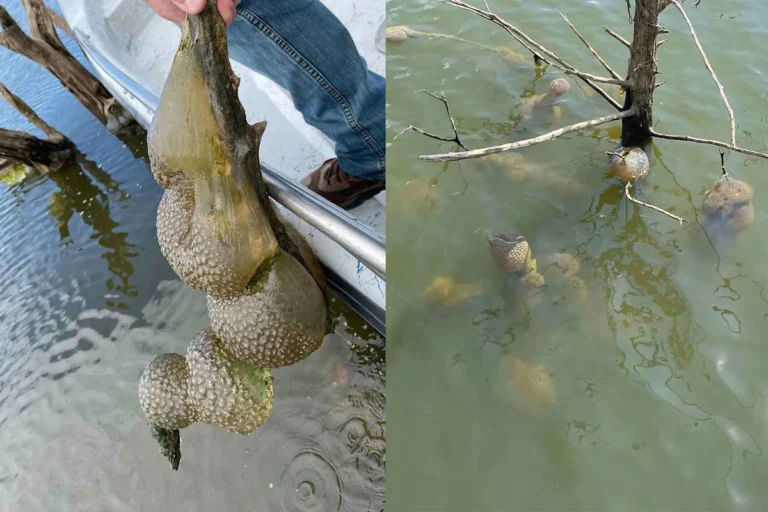
In March 2024, visitors to McGee Creek Reservoir, located in the picturesque Atoka County, Oklahoma, began noticing an unusual and intriguing phenomenon that immediately captured attention and sparked widespread curiosity.
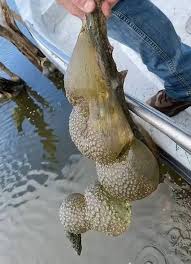
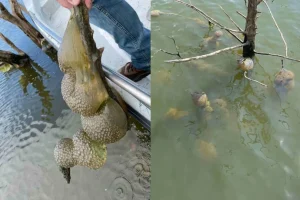
Boaters, anglers, and nature enthusiasts reported seeing strange, jelly-like masses clinging firmly to submerged tree limbs, rocks, and other structures along the lake’s shoreline.
The gelatinous blobs, which at first glance appeared almost alien in nature, prompted a wide range of speculations. Some worried about pollution or invasive species, while others half-joked that the lake might have become home to creatures more fitting for a science fiction movie.
Despite their strange and unsettling appearance, these gelatinous masses were completely harmless and entirely natural.
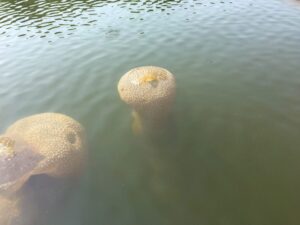

Experts quickly identified them as bryozoans, a fascinating and often overlooked group of aquatic invertebrates commonly referred to as “moss animals.”
Bryozoans are colonial organisms that form intricate, gelatinous colonies in freshwater and marine habitats. What might initially appear as a strange or alarming phenomenon is, in fact, a remarkable example of nature’s complexity and the hidden intricacies of aquatic ecosystems.
What Are Bryozoans? Tiny, But Mighty Architects
Bryozoans are small, colonial invertebrates that live in both freshwater and marine environments around the world. Each colony is composed of hundreds or even thousands of individual zooids—microscopic units that function collectively as a single, interconnected organism.
Zooids specialize in specific tasks: some feed, some reproduce, and others provide structural support, creating a highly efficient and cooperative system.
The appearance of bryozoans is often described as jelly-like or gelatinous because of the chitinous exoskeleton surrounding each zooid.
This exoskeleton is soft and flexible underwater, allowing the colony to move subtly with currents and attach securely to submerged surfaces such as tree branches, rocks, and man-made structures. Once removed from water, the same structures harden, revealing their resilient nature.
This duality—soft and flexible in water, hard on land—is one reason these colonies can appear so mysterious or alien to those unfamiliar with them.
Bryozoans grow through asexual reproduction, rapidly forming large colonies when conditions are favorable. In addition, they can reproduce sexually, producing microscopic larvae that disperse and settle on new surfaces.
This dual reproductive strategy ensures their survival and allows colonies to colonize new areas efficiently.
How Bryozoans Form Jelly-Like Blobs
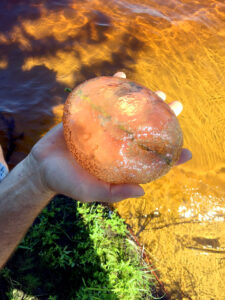
When bryozoan colonies grow extensively, they form large gelatinous masses that can seem eerie to unsuspecting observers.
These colonies often appear in spring and early summer, when water temperatures, nutrient availability, and light conditions support rapid growth.
Each colony starts with a few zooids, which divide and multiply asexually to form complex structures that may cover entire submerged branches or rocks.
The gelatinous consistency of these colonies results from the combination of soft, living tissues and the chitinous skeleton. Underwater, this makes the colonies flexible and almost cloud-like in texture.
When the water recedes or the colony is exposed to air, the structures harden, sometimes giving the impression of mysterious, otherworldly formations. This seasonal growth pattern explains why the masses were particularly noticeable at McGee Creek Reservoir during early 2024.
Ecological Role: Indicators of a Healthy Lake
Far from being dangerous or a nuisance, bryozoans play a critical role in freshwater ecosystems. They are filter feeders, consuming microscopic algae, bacteria, and detritus, which helps maintain water clarity and nutrient balance.
By removing excess organic material, bryozoans prevent harmful algal blooms and support the health of the lake’s broader ecosystem.
In addition, bryozoan colonies provide food and shelter for various aquatic species. Small fish, insects, and even amphibians utilize these colonies for protection, feeding, or breeding.
The presence of bryozoans contributes to biodiversity, creating a dynamic and interconnected web of life. Observers who initially perceive these colonies as alien may be surprised to learn that they are a sign of ecological health, not a warning of contamination or imbalance.
{“capture_mode”:”AutoModule”,”faces”:[]}
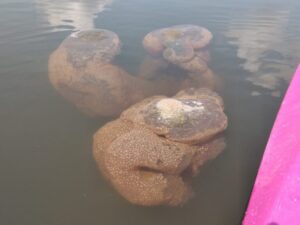
The appearance of large bryozoan colonies at McGee Creek Reservoir in March 2024 drew attention from local residents and recreational visitors.
Wildlife authorities from the Oklahoma Department of Wildlife Conservation (ODWC) promptly conducted field inspections, confirming that the masses were indeed bryozoans.
Experts emphasized that these organisms posed no threat to humans, pets, or other wildlife in the area.
Researchers also noted that such growth patterns are natural and seasonal. Bryozoan colonies tend to flourish during spring and early summer, gradually shrinking or dispersing as environmental conditions change.
Similar phenomena have been documented in freshwater lakes throughout the United States, highlighting that these gelatinous formations are not unique to Oklahoma but rather a recurring feature in healthy aquatic systems.
The Life Cycle and Reproduction of Bryozoans
Understanding bryozoans’ life cycle helps explain why these colonies appear suddenly and in such striking forms. Each zooid within a colony is specialized, allowing the colony to operate as an efficient unit.
Asexual reproduction enables rapid expansion of colonies through budding, while sexual reproduction ensures long-term survival and the spread of new populations via microscopic larvae.
The larvae are tiny, free-floating, and nearly invisible to the naked eye. After drifting with currents, they settle on suitable substrates, establishing new colonies.
This combination of reproductive strategies makes bryozoans highly resilient, able to colonize new areas and sustain existing populations, even under fluctuating environmental conditions.
Environmental Conditions That Support Bryozoan Growth
Bryozoans thrive in clean, well-oxygenated freshwater. Unlike certain organisms that prefer polluted or stagnant waters, bryozoans require balanced conditions to grow.
Nutrient-rich water supports the microorganisms they feed on, creating an ecosystem in which both bryozoans and their surrounding community flourish.
At McGee Creek Reservoir, these ideal conditions are naturally present. Careful management by local authorities ensures minimal pollution, while the lake’s diverse aquatic population helps maintain ecological balance.
Fish, amphibians, and invertebrates all indirectly benefit from bryozoans’ filtering activity, creating a healthier, more resilient ecosystem overall.
Interactions with Other Species
Bryozoans are far more than passive gelatinous blobs in the water—they actively shape the ecosystem around them. By filtering microscopic algae, bacteria, and organic debris, they reduce nutrient loads that could otherwise fuel harmful algal blooms.
This process directly benefits fish and invertebrate species, which rely on clean water and balanced nutrient levels for growth and reproduction.
Small fish often seek shelter within bryozoan colonies. Juvenile species, in particular, benefit from the physical structure the colonies provide, using them as protection against predators such as larger fish and aquatic birds. Insects and amphibians also interact with these colonies.
For example, some aquatic larvae feed on the biofilm and microorganisms trapped within the gelatinous matrix, turning bryozoans into a vital component of the local food web.
Even though bryozoans are microscopic individually, their colonies’ collective filtering activity significantly influences the chemical and biological composition of freshwater ecosystems.
By promoting water clarity, they support submerged aquatic vegetation, which in turn stabilizes sediments, provides habitat for fish, and contributes to oxygen production in the water.
This cascading effect demonstrates how even small organisms can have large ecological impacts.
Public Awareness and Educational Opportunities
For many visitors, the sudden appearance of large jelly-like masses can be surprising or even alarming. Local authorities and wildlife educators emphasize that understanding bryozoans fosters greater environmental literacy.
Educating the public about these organisms helps people appreciate freshwater ecosystems and recognize indicators of ecological health.
The Oklahoma Department of Wildlife Conservation has actively promoted educational outreach at McGee Creek Reservoir, providing signage and informational resources for anglers, boaters, and tourists.
These efforts encourage responsible interaction with the environment and discourage unnecessary disturbance of bryozoan colonies.
Observing these organisms in their natural habitat allows residents and visitors to gain insight into the complex interactions that sustain lake ecosystems.
Through educational programs, students and nature enthusiasts can learn about ecological balance, aquatic food webs, and the importance of water quality.
Such awareness can inspire conservation initiatives, promote sustainable recreation, and foster respect for biodiversity.
Why Bryozoans Are Fascinating
Beyond their ecological role, bryozoans are visually striking and scientifically interesting. Their jelly-like colonies vary in shape, size, and texture, depending on water conditions and the age of the colony.
These delicate structures reveal the complexity of colonial organisms, where individual zooids cooperate to perform different functions—feeding, reproducing, and protecting the colony.
Bryozoans function like miniature water filtration systems. Each colony constantly removes microscopic particles from the water, improving clarity and supporting healthy aquatic plant growth.
Their efficiency illustrates how even the smallest organisms can have a disproportionately large effect on their environment.
For photographers, biologists, and eco-tourists, observing bryozoans can be an inspiring experience. The colonies’ semi-translucent, gelatinous appearance makes them unique subjects for documentation, while their ecological function adds a layer of scientific intrigue.
Observing these colonies is not only visually captivating but also a hands-on lesson in biodiversity, ecological balance, and the subtle interconnections within freshwater habitats.
Seasonal Dynamics and Responsible Observation
Bryozoan colonies are most prominent during spring and early summer when water temperatures rise, triggering rapid reproduction and expansion. As summer progresses and environmental conditions fluctuate—changes in water flow, temperature, or nutrient levels—the colonies may shrink or disperse.
This seasonal pattern is natural, reflecting the dynamic cycles of growth, reproduction, and ecological equilibrium in freshwater systems.
Visitors to McGee Creek Reservoir are advised to observe bryozoans from a respectful distance. While the colonies are harmless to humans and pets, leaving them undisturbed ensures that they continue to perform their ecological functions.
Occasionally touching the colonies is safe but not necessary; preserving their integrity benefits the broader lake ecosystem. Responsible observation also reduces potential stress to the organisms and allows researchers to continue monitoring these fascinating populations.
A Lesson in Nature’s Complexity
The story of the mysterious jelly blobs at McGee Creek Reservoir highlights the importance of understanding and appreciating natural phenomena.
What initially seems alien or frightening can, upon closer examination, reveal itself as an essential and beneficial part of the ecosystem. Bryozoans are tiny architects, quietly maintaining water quality, supporting biodiversity, and contributing to the resilience of freshwater habitats.
By learning about bryozoans, residents, visitors, and nature enthusiasts gain a deeper appreciation for ecological balance and the interdependence of species.
These gelatinous colonies illustrate how even the smallest organisms play crucial roles in sustaining healthy, vibrant lakes. Observing and respecting these colonies fosters curiosity, environmental stewardship, and a stronger connection to the natural world.
Broader Implications for Conservation
The presence of bryozoans in McGee Creek Reservoir is not just an interesting biological curiosity; it is a positive indicator of water quality and ecosystem health.
Clean, well-managed freshwater systems allow these colonies to thrive, demonstrating that human intervention—through pollution control, habitat protection, and careful management of recreational activities—can support resilient ecosystems.
Furthermore, bryozoans can serve as a model for understanding ecological interactions in other freshwater environments.
By studying their growth, reproduction, and interactions with other species, scientists gain insights into nutrient cycling, habitat structure, and the responses of aquatic communities to environmental changes.
This knowledge informs conservation strategies, helping to protect freshwater ecosystems in Oklahoma and across the United States.
Conclusion: Embracing Nature’s Hidden Wonders
The mysterious jelly-like blobs of McGee Creek Reservoir, initially met with alarm and speculation, are a testament to the subtle beauty and complexity of freshwater ecosystems.
Bryozoans, with their gelatinous colonies and intricate behaviors, illustrate how even the smallest organisms contribute to ecological stability, biodiversity, and environmental health.
Far from alien or threatening, these “moss animals” are nature’s tiny architects, filtering water, supporting other aquatic species, and adding to the visual and educational richness of the lake.
Understanding and appreciating bryozoans encourages responsible recreation, environmental awareness, and conservation efforts, demonstrating that the wonders of nature often lie hidden in plain sight.
McGee Creek Reservoir’s jelly blobs remind us that curiosity, observation, and scientific inquiry are essential for appreciating the natural world.
Through education, research, and respectful interaction, humans can coexist with these fascinating organisms while protecting the delicate balance of freshwater ecosystems for generations to come.