SOTD – I Adopted a 3-Year-Old Girl After a Fatal Crash – 13 Years Later, My Girlfriend Showed Me What My Daughter Was Hiding
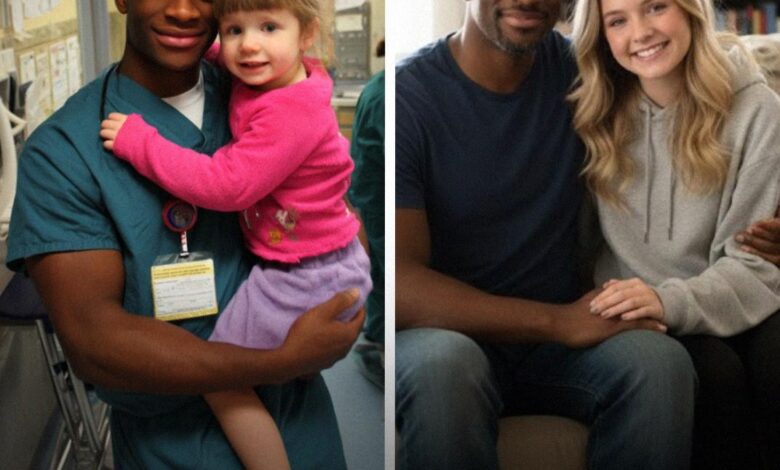
The night Avery entered my life, the air in the emergency room was thick with the copper tang of blood and the sterile, biting scent of antiseptic. I was twenty-six, a green resident six months out of medical school, still figuring out how to steady my hands when the red trauma lights began to pulse. Just after midnight, the chaos erupted. Two stretchers rolled in with sheets already pulled over the faces—parents who had been silenced instantly in a highway wreckage. Following them was a gurney carrying a three-year-old girl. Her eyes weren’t crying; they were wide and hauntingly vacant, scanning the ceiling as if looking for the pieces of the world that had just disintegrated.
I wasn’t the pediatric specialist, and I wasn’t her assigned physician, but when the nursing staff tried to move her to a quieter observation room, she reached out and clamped her tiny, blood-stained fingers onto my forearm. Her grip was desperate, a drowning person catching a lifeline. “I’m Avery,” she whispered, her voice a fragile thread. “I’m scared. Please don’t leave me and go. Please.” In that moment, the clinical distance I had been taught to maintain vanished. I stayed. I brought her apple juice, read a book about a lost bear until the pages felt like silk, and when she touched my hospital badge and called me “the good one,” I knew my life had shifted on its axis.
When social services arrived the next morning, they found no living relatives. No grandparents, no aunts, no emergency contacts. There was only Avery and her stuffed rabbit, Mr. Hopps. Every time I stood up to check on another patient, the panic that flickered in her eyes was a physical blow to my chest. I heard myself offering the caseworker a temporary solution: “I’ll take her. Just until you find a placement.” The woman looked at me as if I’d lost my mind—a single, debt-ridden, sleep-deprived junior doctor wanting to take home a traumatized toddler. But she saw the way Avery held my hand, and she let me sign the papers.
One night became a week, and a week became a lifetime. I navigated the labyrinth of background checks and parenting classes between thirty-six-hour shifts. The first time she called me “Daddy” in the middle of a grocery store aisle, she froze, looking as if she had broken a sacred rule. I knelt down, pulled her close, and told her that was the best thing I’d heard all year. I made it official six months later. I built my entire world around her, trading the frantic energy of the ER for a steadier schedule, meticulously building a college fund, and becoming the man who never missed a soccer game or a debate tournament.
Thirteen years later, Avery had grown into a sharp, sarcastic sixteen-year-old with a heart of gold hidden under a layer of teenage bravado. She was my soul, the greatest achievement of my life. I had been careful about who I brought into our sanctuary, but then I met Marisa. She was a nurse practitioner—sophisticated, articulate, and seemingly perfect. She remembered Avery’s bubble tea orders and didn’t mind when our dates were interrupted by school projects. After eight months, I found myself looking at a velvet box in my nightstand, wondering if our duo was ready to become a trio.

That was before Marisa arrived at my door one evening, her face a mask of simulated horror. She held out her phone, showing me a grainy clip from the security camera she had insisted we install “for safety.” In the video, a figure in a gray hooded sweatshirt—Avery’s signature look—crept into my bedroom, opened the safe in my dresser, and pocketed a stack of emergency cash. “Your daughter is hiding something terrible from you,” Marisa said, her voice dripping with a poisonous kind of pity. “You’re blind where she’s concerned, Mark.”
I felt the air leave the room. The betrayal was a cold weight in my stomach. I went upstairs to confront Avery, my heart hammering a rhythm of pure dread. When I asked if she had been in my room, her confusion quickly turned into a fierce, righteous anger that was so uniquely her that it gave me pause. She didn’t look guilty; she looked heartbroken that I was even asking. When I mentioned the gray hoodie, she walked to her closet and showed me an empty hanger. “It’s been missing for two days, Dad. I thought it was in the wash.”
The cold weight in my stomach shifted. It didn’t lift; it transformed into a different kind of suspicion. I went back downstairs and looked at Marisa. She was pouring water, looking entirely too satisfied with the chaos she had unleashed. I asked her a simple question: “What was the code for the safe in the video?” She faltered. Her eyes darted toward the hallway. I pulled out my own phone and opened the camera app, scrolling back through the archived footage that Marisa hadn’t realized I could access just as easily as she could.
A few minutes before the “thief” appeared, the camera caught Marisa in the hallway. She was holding Avery’s gray hoodie. The next clip showed Marisa entering the room, donning the sweatshirt, and performing the theft for the lens. She looked directly at the camera with a small, triumphant smirk as she held up the money. She wasn’t just stealing; she was auditioning for the role of the whistleblower who would finally “save” me from my daughter.
I turned the screen toward her. “Explain this.”
Marisa’s face curdled. The polished mask fell away, revealing a hollow, bitter interior. “She’s not your daughter!” she hissed, the words coming out like venom. “She’s a charity case you’ve wasted your life on. The money, the house, your attention—it’s all going to a stranger’s child who’s just going to leave you at eighteen. I was trying to show you that she isn’t worth it.”
A silence settled over the kitchen—the kind of silence that precedes a permanent ending. I looked at the woman I had thought about marrying and felt a profound sense of revulsion. “She isn’t blood,” I said quietly, “but she is mine. You, however, are nothing. Get out of my house.”
Marisa didn’t leave quietly. She laughed, a sharp, ugly sound, and pulled the engagement ring box from her purse—she had already helped herself to that, too. “Keep your little project,” she sneered, tossing the box onto the counter. “Don’t come crying to me when she breaks your heart.”
After the door slammed shut, I found Avery standing at the base of the stairs. She had heard it all. She looked small again, like the three-year-old girl in the ER, terrified that the world was about to break. I crossed the room and pulled her into a hug, burying my face in her hair. “I am so sorry I ever doubted you,” I whispered. “No one and nothing is ever going to come between us. You are my daughter, Avery. That is the only truth that matters.”
The next day, I filed a police report for the theft and the attempted fraud, and I made sure the hospital administration knew exactly who Marisa was. But the real work happened at home. I sat Avery down at the kitchen table and opened the college fund accounts, showing her every penny I had saved since she was four. I told her that family isn’t a biological contract; it’s a choice you make every single morning when you wake up. Avery chose me thirteen years ago when she wouldn’t let go of my arm. And I choose her—now, tomorrow, and every day for the rest of my life. The house is quiet again, but it’s the right kind of quiet. It’s the sound of a home that is finally, irrevocably safe.