Springwatch Presenter Michaela Strachan Reveals Second Cancer Scare — 12 Years After Breast Cancer Battle That Changed Everything
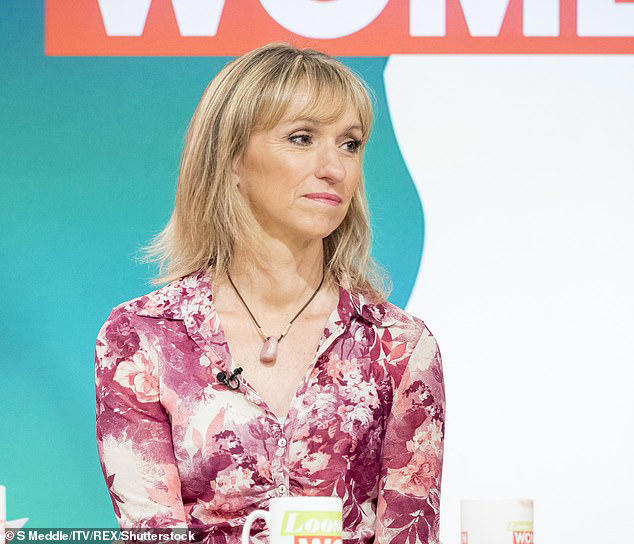
Springwatch presenter Michaela Strachan has opened up about a frightening second cancer scare — more than a decade after her devastating breast cancer diagnosis that ultimately led to a double mastectomy.
The BBC wildlife expert, now 59, was first diagnosed with breast cancer in 2014, shortly after appearing on ITV’s diving show Splash!. At the time, the diagnosis came following a routine mammogram in Cape Town, South Africa, where Michaela lives. After careful consideration and medical advice, she chose to undergo a double mastectomy as part of her treatment.
But in a deeply personal new revelation, Michaela has now spoken about a second health scare that unfolded years later — and in the most unexpected way.
Speaking on the How to Be 60 with Kaye Adams podcast, the longtime Springwatch presenter explained that eagle-eyed viewers were the first to notice something was wrong. While she was presenting the show live, several viewers reached out to her after the broadcast, asking if she was aware of a visible lump on her throat.
“I did have a second scare, which was extraordinary,” Michaela admitted. “I was doing Springwatch and a few people messaged me afterwards saying, ‘Did you know you’ve got a lump on your throat?’”

At first, she was taken aback. But later that evening, watching the episode back in bed — something she admits she always does — she saw it for herself.
“I thought, ‘Oh my God, I do — I’ve got a lump,’” she recalled.
The lump appeared on the side of her throat and moved up and down as she spoke, resembling an off-centre Adam’s apple. Concerned, Michaela immediately alerted the production team. At the time, they were filming in the Cairngorms in Scotland, far from specialist medical facilities.
Given her medical history, the situation was treated with urgency. A doctor was brought in, and after explaining her past breast cancer diagnosis, she was sent for immediate blood tests at a local hospital. Within days, she had secured a weekend appointment with a throat cancer specialist in Harley Street.
What made the ordeal even more distressing was the timing. The scare occurred in 2019 — just as fellow TV presenter Nicki Chapman had been diagnosed with a brain tumour. Michaela felt unable to speak openly about her own fears.
“Everyone was talking about Nicki,” she said. “I couldn’t say, ‘By the way, I’ve just found a lump on my throat — it could be cancer.’ The whole thing was just awful.”
During her specialist appointment, Michaela confronted her worst fears head-on.
“I asked him to give me the worst-case scenario,” she explained. “He said it could be cancer, but it would be highly unlikely. He’d never heard of secondary breast cancer in the throat. It could also be throat cancer — completely separate.”
She was then faced with the terrifying possibility that surgery could affect her voice — something central to her career. Even in the best-case scenario, removal of the lump carried risks.
“I remember thinking, none of this is sounding good,” she said. “Then I had to go back and do Springwatch on the Monday. That was horrible — really horrible.”
Thankfully, further tests confirmed the lump was a benign cyst. Doctors were able to drain it without complications, and Michaela made a full recovery.
Reflecting on her original breast cancer diagnosis, Michaela explained that doctors had given her the option of removing one breast or both. After speaking with a close friend who had faced a similar diagnosis, she chose a double mastectomy.
“She said to me, ‘Get them both off,’” Michaela recalled. “You don’t want to spend the rest of your life wondering if it’s going to come back.”
The diagnosis was particularly hard on her partner, film director Nick Chevallier, whose previous wife had died of colon cancer, leaving him to raise three children alone.
“To tell your partner you’ve been diagnosed with cancer — when he’s already lost his wife to it — is incredibly tough,” Michaela said. “So I became the stoic one. I just thought, ‘Right, let’s get through this.’”
Only later did she realise how much trauma she had suppressed. She eventually sought trauma release therapy (TRE), a treatment designed to help the body physically release stored trauma.
“The first time I did it, I just sobbed,” she said. “That was the trauma coming out.”
Now approaching her 60th birthday this April, Michaela says surviving cancer has completely reshaped how she views life.
“When you’ve had the big C scare, every year feels like a bonus,” she reflected. “You just think — let’s make the most of it. Because who knows what’s coming next.”