The Night Joy Learned to Hold Hands With Fear — A Parent’s Quiet Journey Through a Child’s Heart Surgery 5504
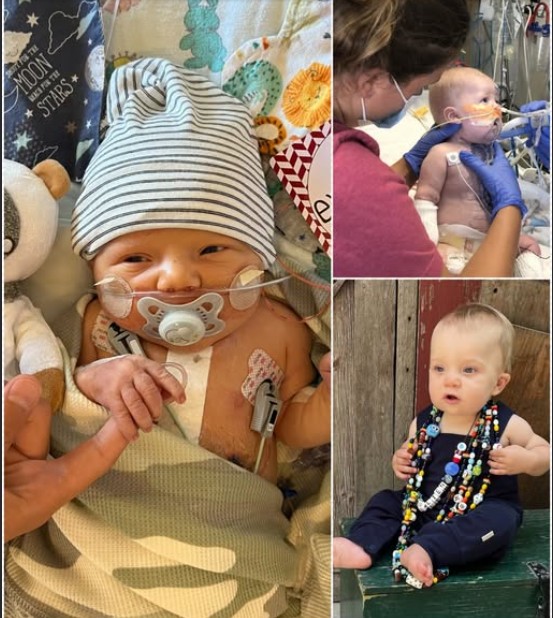
No one ever tells you how quickly joy can transform into fear, how fragile happiness can feel when it is still warm in your arms.
One moment, you are holding your newborn, tracing tiny fingers and counting toes, convinced that this is what forever is supposed to look like.
I remember that first night with painful clarity, the way the room felt suspended in time as I held my daughter against my chest.
She was perfect in my arms, her breathing soft, her skin impossibly new, and for a few fleeting hours, nothing else existed.
Then the world shifted without warning.
Voices changed, footsteps hurried, and doctors began studying my baby’s heart as if it were a fragile clock that might stop at any second.
I heard words I had never searched for, words I never imagined would become part of my life’s vocabulary.
Each diagnosis landed heavily, stacking on top of the last, until the joy of her birth felt buried beneath a weight I didn’t know how to carry.
They spoke calmly, carefully, as if choosing the right tone could soften the truth.
But nothing softens the moment you realize your child is not safe, not in the way you thought she was just hours before.
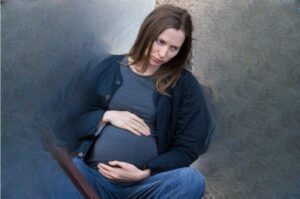
I smiled when nurses checked on us, when family sent messages filled with congratulations and heart emojis.
Inside, something was quietly breaking in places no one could see, fractures forming where certainty used to live.
Becoming a parent teaches you love in an instant, but fear often arrives just as quickly.
That night, I learned that the two can exist together, tangled and inseparable.
The days that followed blurred into a rhythm of monitors, consultations, and whispered conversations.
Every beep felt like a question, every pause like a threat I was afraid to name.
Doctors explained that surgery was unavoidable, that waiting too long would only make things worse.
I nodded as if understanding was something I could choose, even though my heart was already racing ahead to moments I didn’t want to imagine.
There is a particular kind of grief that comes with knowing you must hand your baby over to strangers and machines.
It is not loud or dramatic, but deep and suffocating, settling into your chest and refusing to leave.
The morning of the surgery arrived faster than I was ready for.
I dressed my daughter in clothes far too big for her tiny body, my hands shaking as I tried to stay steady.
She didn’t know what was coming.
She only knew my voice, my warmth, and the way I held her just a little tighter than usual.
When it was time, I placed her in the arms of the medical team, my arms feeling instantly empty.
That moment changed me forever, a dividing line between who I was before and who I would become after.
Waiting is its own kind of endurance.
Time stretches and contracts in strange ways when your child is on an operating table.
Minutes feel like hours, hours feel like days, and every second carries the weight of everything you love.
You begin to measure hope in numbers on screens, in the steady rhythm of machines doing what your heart cannot.
I learned to read meaning into beeps and wires, into the smallest signs of progress.
An improved number, a steady line, a doctor’s nod became reasons to breathe again.
Prayer takes on a different shape in those moments.
It is no longer about big dreams or distant futures, but about survival, about getting through the next minute intact.
I prayed for a future I was terrified to imagine.
I prayed for her first laugh, her first steps, even though allowing myself to picture them felt dangerous.
Fear teaches you caution in hope.
You want to believe, but you brace yourself at the same time, preparing for pain even as you reach for light.
When the surgery ended, relief did not arrive all at once.
It came in fragments, cautious and incomplete, as doctors explained what went well and what still worried them.
Recovery was not a straight line.
There were setbacks that felt like falling backward after finally standing up.
There were nights spent watching monitors instead of sleeping, learning to exist in a constant state of alertness.
Every change in her breathing sent my heart racing, every alarm made my stomach drop.
I smiled for visitors and thanked them for their kindness.
But when the room was quiet again, fear crept back in, whispering questions I was too tired to fight.
This journey stripped away any illusion of control I once had.
It taught me that love does not protect you from pain, but it does give you the strength to endure it.
I learned that bravery is not the absence of fear.
It is holding your child’s hand while being terrified and choosing to stay present anyway.
Slowly, progress came in inches instead of miles.
Each small victory felt monumental, each stable day something to celebrate quietly.
I began to understand how deeply connected hope and exhaustion can be.
They live side by side, feeding off each other, pushing you forward even when you feel empty.
There is a unique loneliness in this experience.
Even surrounded by doctors, nurses, and family, it can feel like no one truly understands the weight you are carrying.
If you are living this now, I want you to know you are not alone.
There are countless parents measuring time in heartbeats and courage in moments of survival.
Your fear does not make you weak.
Your tears do not mean you are failing.
Loving a child through uncertainty is one of the hardest things a human being can do.
And yet, here you are, doing it anyway, showing up even when your heart feels like it might break.
This journey changes you, but it also reveals parts of you that you never knew existed.
Strength you didn’t ask for, resilience you didn’t choose, and love that deepens with every challenge.
My daughter’s story is still being written.
So is mine, shaped by fear, hope, and the quiet determination to keep going.
If this story finds you in a hospital room, a waiting area, or a place of uncertainty, hold on.
Hope may feel fragile, but it is stronger than you think.