The Untold Story of Beloved Family Affair Star Final Hours
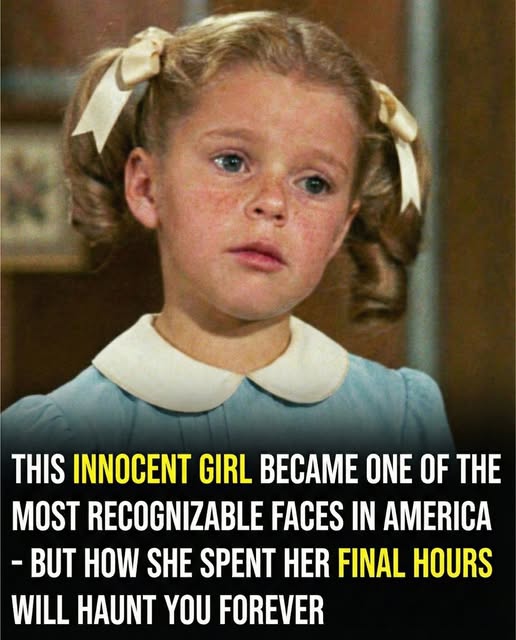
She represented the gentle purity of childhood, and her character became one of the most recognizable faces on television.
With her blond pigtails and bright smile, Anissa Jones was thrust into national fame as Buffy Davis on Family Affair. The final days of the beloved young star serve as a sobering reminder of the pressures child actors often endure.
Related Articles
At Fiery Pennsylvania Rally, Trump Unveils Harsh New X-Rated Nickname for Biden
Trump Flaunts Latest Cognitive Test Results While Facing Health Scrutiny
When Family Affair debuted on CBS in 1966, viewers immediately embraced Buffy Davis, the sweet blond orphan portrayed by Anissa and her cherished doll, Mrs. Beasley.

Buffy’s innocence and charm made her an unforgettable presence. For audiences in the turbulent late 1960s, she symbolized childhood simplicity and tenderness. Entertainment historian Geoffrey Mark observed, “America was aching for gentleness then. Anissa gave them that.”
But behind the charming character and endearing smile, Anissa’s real life was far more complicated.
A rising star
Anissa Jones was born on March 11, 1958, in West Lafayette, Indiana, home to Purdue University. Her father, John Paul Jones, worked as an engineer and served on Purdue’s faculty board, while her mother, Mary Paul Tweel, studied zoology.
In 1963, the family relocated to Playa Del Rey, California, when her father accepted a job in aerospace engineering.
Anissa began acting early, appearing in commercials at age six. By 1966, at eight years old, she secured her breakout role as Buffy Davis. Petite for her age, she could easily portray a six-year-old on screen even as she grew older.
Actress Anissa Jones poses for a portrait in circa 1969. (Photo by Michael Ochs Archives/Getty Images)
Her interviews at the time reflected the candid innocence of childhood. “I like doing the show,” she said, “but I miss school sometimes. I like to be with my friends.”
One Family Affair producer remembered, “She didn’t act like a kid who was trying to be cute. She was just Anissa — honest and open.”
ccess led to appearances on programs like The Hollywood Palace, The Mike Douglas Show, and The Merv Griffin Show. In 1969, she also had a small role in the Elvis Presley film The Trouble with Girls.
But the attention came with pressure.
Child actors in family sitcoms were expected to remain perpetually cheerful and charming. Even when she was exhausted or homesick, Anissa seldom let it show. “It’s fun being Buffy,” she once said, “but when people call me that on the street, sometimes I forget they mean me.”
Chest bindings on set?
A report in The Republic of Columbus, Indiana, stated: “She had a growing frustration over the fact that she was playing younger than she really was. She was a 9-year-old pretending that she’s 6. She finds playing a mere child of 6 ‘babyish’ and quickly reveals her true age to anyone willing to listen.”
As time passed, the demands of the role took a psychological toll.
Anissa Jones and Johnny Whitaker during filming of the television show ‘Family Affair,’ 1967. (Photo by Smith Collection/Gado/Getty Images)
By the time Family Affair ended in 1971, Anissa was nearly 14. While most girls her age were exploring adolescence, she was still required to behave like a child — playing with dolls on camera and at public events.
As her personality and body matured, she was forced to remain frozen in the identity of an eight-year-old. Columnist Marilyn Beck later revealed that during the show’s final season, chest bindings were reportedly used to conceal her development.
Life After Family Affair
Following the end of the series, Anissa struggled to find acting work.
Casting directors continued to see her only as Buffy. Meanwhile, her home life became chaotic: her parents divorced, and she faced instability caused by custody disputes.
When she turned 18 in March 1976, she gained control of her earnings — roughly $200,000 — which she reportedly spent within a few months.
Sebastian Cabot, Johnny Whittaker, Anissa Jones, Brian Keith and Kathy Garver. (Photo by CBS Photo Archive/Getty Images)
Without steady work or school, she gravitated toward peers who introduced her to drugs. Her once-bright prospects dimmed, and she drifted from Hollywood entirely.
By the mid-1970s, entertainment columns routinely asked, “What happened to Anissa Jones?” An article from August 25, 1973, in the Pottsville Republican noted: “It may seem hard to believe of one so young, but Anissa Jones has retired. She just wants to be a plain ordinary schoolgirl these days. And — this may be hard to believe, too — but she’s now a teen-ager.”
Anissa Jones’ final hours
=
On August 27, 1976, Anissa went out with friends in Oceanside, California.
The next day, she was found dead in the bedroom of her close friend Helen Hennessy’s home. Anissa was just 18.
At 12:29 p.m., Helen called for an ambulance to report a suspected overdose. Paramedics found Anissa upstairs on a waterbed, wearing only white boxer shorts and covered with a blanket.
She had no vital signs, and attempts at CPR failed.
The Los Angeles County Coroner’s Office determined that she died from a massive drug overdose — a lethal mix of cocaine, PCP, Seconal, and Quaaludes. The coroner described it as “one of the most severe overdoses” they had ever seen. Her death was ruled accidental.
Last picture of child star Anissa Jones taken the day before she died / Reddit
Her physician, Dr. Don Moshos, had prescribed Seconal to her, and authorities were already investigating his practice for unrelated issues. Reports indicated he issued more than 100 prescriptions a day.
A KABC news crew found his office filled with young people waiting hours for appointments. Reporter Wayne Staz claimed that prescriptions could be purchased for as little as $5 by simply showing ID.
Dr. Moshos was later charged with prescribing dangerously unnecessary medications that contributed to Anissa’s death, but he died before his case went to trial.
Her passing devastated fans and colleagues. Her life is often cited as a striking example of the dangers of early fame.
According to Scott Michaels of Find A Death, Anissa did not have a formal funeral. She was taken to Eternal Hills Memorial Park in Oceanside, cremated, and her ashes were scattered at sea near her home.
Tragedy continued to affect her family: her brother died of a drug overdose in 1984. Other Family Affair cast members struggled as well — Johnny Whitaker battled addiction before becoming a counselor, and Brian Keith, who played Uncle Bill, died by suicide in 1997.
Her biggest dream
At only eight years old, Anissa told columnist Marilyn Beck:
“I want to grow up and be a mom with six children, and a veterinarian who takes care of puppies and kittens — because I love ‘anythings’.”
Sadly, she never lived long enough to fulfill those dreams.
She later shared another:
“I want to see God, because everyone always talks about him, but no one has seen what he looks like. I bet he’s got blue eyes and is bald-headed and is a big, big man who looks just like Yul Brynner.”
Perhaps, in some way, she found the answer she sought.
Anissa Jones’ life remains a powerful reminder of the fragility of childhood fame. From her popularity as Buffy Davis — adored by millions — to her tragic and untimely death, her legacy endures as both a tribute to her talent and a warning about the pressures young stars often face.