This Hollywood star’s real-life story is far more gripping than any of his movies
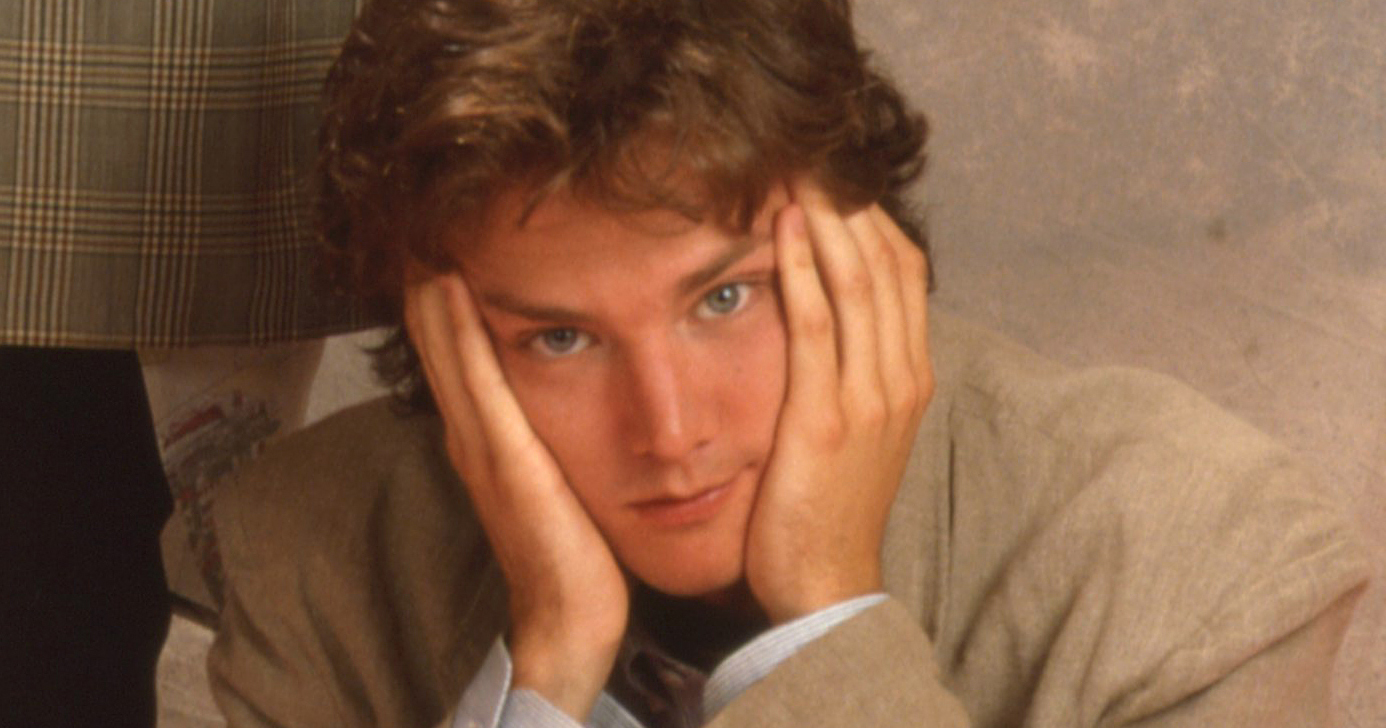
He was the archetypal 1980s dream boy, the kind of face that sent a generation of teenage girls swooning and inspired an entire era of teen idols—a visage seemingly destined for posters, lunchboxes, and the glossy covers of fan magazines. With his signature tousled dark hair, a quiet, disarming smile, and a subtle charm, he specialized in making awkward high school crushes feel deeply personal and intensely real.
Yet, behind the perfectly framed photos and the carefully constructed heartthrob persona, a darker, far more complex story of vulnerability and struggle was rapidly unfolding.
Unprepared for the Whirlwind
Known for defining 1980s cinematic milestones such as St. Elmo’s Fire, Pretty in Pink, Mannequin (1987), and later the cult hit Weekend at Bernie’s, this actor rapidly became one of Hollywood’s most instantly recognizable young stars.
Born in 1962, he was just a regular kid growing up in Westfield, New Jersey, the third of four boys. His mother worked at a newspaper, and his father was involved in investments and stocks—a typical, hardworking, blue-collar family far removed from the glitz and insular glamour of Tinseltown.
“I was totally unprepared for any kind of success when I was a young person. I didn’t know anyone who was successful in that way in show business, or famous,” he once shared, reflecting on his sudden ascent. He added a critical insight: “I also temperamentally wasn’t particularly suited for it. Attention made me recoil.”

While his high school years clearly revealed a growing passion for performing, his time at school was not exactly smooth sailing. “I just felt sort of very lonely at school. I just didn’t feel like I belonged there,” he recalled. After graduating, he enrolled at NYU to study acting, though his academic career was cut short when he was expelled after only two years. As he later put it with characteristic frankness, “I didn’t really go [to class].”
An Instant Leap: From Expulsion to Stardom
Given that he had just been unceremoniously kicked out of university, nothing could have prepared the young, aspiring actor for the startling speed with which he would break into the movie business. Just a few weeks after being dismissed, he decided to respond to an “open call” advertised in the newspaper for a role in the film Class, which starred the established actress Jacqueline Bisset.
“I waited for hours with 500 other kids and they call me back. It was so out of the blue,” he recalled of the whirlwind transformation. “One week I was in school and the next week I’m in bed with Jacqueline Bisset. I thought, ‘I’m doing something right here.’”
After playing the role of Jonathan in Class, where his character famously romanced his prep school roommate’s mother, the New Jersey-born actor instantly became the talk of the town. The attention was swift and overwhelming. “[NYU] then offered that I come back, pay the tuition and I could use [the movie] as independent study. I told them to go f*** themselves.”
A few short years later, he hit the definitive big time with St. Elmo’s Fire in 1985. Despite receiving harsh critical reviews, the film was a massive box-office hit and featured a powerhouse ensemble cast including Rob Lowe, Judd Nelson, Emilio Estevez, and Demi Moore.
Our star was undeniably a box-office draw, but his reputation suffered from being lumped together with other high-profile young actors—some of questionable talent and many notorious for their arrogance and partying. They were quickly dubbed the infamous “Brat Pack.” By 1986, his place as a premier teen heartthrob was fully cemented. Acting opposite Molly Ringwald in Pretty in Pink, he became celebrated for his quiet charm and a sensitive, understated screen presence that won over audiences across the country.
And now, the mystery is solved: the heartthrob who defied expectations is none other than Andrew McCarthy.
The Secret Battle Behind the Sensitive Image
In his candid memoir, Brat: An 80s Story, Andrew McCarthy opens a revealing window into the glamorous Hollywood whirlwind he was abruptly thrown into. Stays at the opulent Chateau Marmont and attendance at wild, chaotic parties at the home of Sammy Davis Jr. became routine. Recalling one hotel bash, he noticed a “cute young woman with a pixie haircut” but noted that “Courteney Cox was having none of me.”
Today, Andrew McCarthy is recognized as a respected, enduring actor and a lasting icon of his generation—ranked No. 40 on VH1’s list of the 100 Greatest Teen Stars of All Time. Beyond his acting career, he has successfully branched out as an acclaimed director, notably for his work on the hit series Orange Is the New Black.
However, when he first burst onto the scene in the ’80s, the rapidly rising star was secretly battling a much tougher, more debilitating struggle. Neither his co-stars, the press, nor even he himself fully realized the extent to which he was sliding into full-blown alcoholism. He had been smoking cannabis since high school and drinking socially, but the habit eventually spiraled out of control, quickly becoming a necessity.
“Like in Pretty in Pink for example, people said, ‘Oh, he’s so sensitive and lovely in that movie.’ I was so hungover for that whole movie… I’m thinking, ‘God, I got a headache. I am just dying here. I got to go lay down.’ But on film I came across a certain way,” Andrew revealed to ABC’s 20/20 in 2004.
He has also shared the root cause of why alcohol became such a vital crutch for him. “If I was frightened, it gave me good Dutch courage,” McCarthy admitted. “I felt confident and sexy and in charge and in control and powerful—none of those things I felt in my life.”

The Turning Point and the Fallback
In 1989, McCarthy attempted a significant turning point in his life, quitting drinking cold turkey just before shooting the comedy Weekend at Bernie’s. To stay sober, he pulled back completely from his high-profile social life—a withdrawal that wasn’t overly challenging for the actor, who considers himself a natural introvert. “I’m very comfortable being alone and I’ve always been comfortable being alone,” he said in 2020. “I find that people go to great lengths to avoid being alone and they get themselves into a lot of trouble. I find that a lot of unhappiness is from trying not to be alone.”
However, the temptation for alcohol crept back while he was filming Jours tranquilles à Clichy, when a co-star casually offered him a beer. As he lifted the can, his hands began violently shaking—a clear, undeniable warning that he was on the dangerous edge of a severe slide.
What followed were three years he would later characterize as “lost and painful.” One morning, violently hungover and wracked with convulsions, he collapsed on the bathroom floor, sobbing uncontrollably over the devastating state his life had reached. McCarthy also opened up about his brief foray into cocaine use during the 1980s. “If you had it, I did it,” he admitted, though he noted that it mostly just fueled his drinking. Still, he rarely touched drugs while on set, explaining, “I was anxious enough—I didn’t need to be adding cocaine.”
A New Chapter Forged in Sobriety
By 1991, McCarthy’s youthful, boyish glow had matured into a more rugged, lived-in look. On the surface, in his casual denim shirts and with his easygoing charm, he still appeared as a familiar, confident figure on red carpets. But inside, he was still locked in a devastating struggle with addiction. Then, at the age of 29, he made a game-changing, life-preserving decision: He checked himself into rehab, went through a detox program, and committed fully to a life without alcohol or drugs.
That decisive choice kicked off an entirely new chapter: one centered on sobriety, deep self-awareness, and slowly rebuilding both his respected career and his fundamental sense of purpose. He intentionally stepped away from Hollywood’s relentless party circuit, prioritizing the rediscovery of what it meant to live a life that was both full and honest.
His career successfully evolved, too. Moving on from the glitter of teen movies, McCarthy transitioned into directing acclaimed television series, most notably including Orange Is the New Black and Gossip Girl. He also shifted his focus toward more challenging independent films.
In addition to his roles as an actor and director, the St. Elmo’s Fire star has earned significant acclaim as a talented writer and travel author. He was recognized as Travel Journalist of the Year in 2010 and has since become a contributing editor for top-tier outlets like National Geographic Traveler and Men’s Journal.
“People say, ‘How does an actor become a travel writer? That’s interesting. They are so different.’ But they are exactly the same to me. They manifest in the same way in that they’re both storytelling, and that’s how I communicate. They’re both some expression of creativity,” McCarthy shared, adding: “I’m just a better version of myself when I’m traveling. You’re more vulnerable, you’re present in the world, your ‘Spidey sense’ is up.”
Personal Life and Lasting Legacy
On October 9, 1999, McCarthy married his college sweetheart, Carol Schneider—nearly 20 years after they first dated. He later explained why he reached out after all those years: “I ran into someone who said they had seen Carol and her boyfriend and they seemed really happy, and for some reason it bothered me for a week. I called her and asked her if she was really with this guy and asked her out for coffee.” The couple welcomed a son, Sam, in 2002, who has since followed his father’s footsteps into acting. They eventually divorced in 2005.
On August 28, 2011, McCarthy married Irish writer and director Dolores Rice, and the two have two children together, Willow and Rowan.
Now, nearly four decades after his first breakout role, the actor who once had an entire generation of teenagers swooning is remembered not just for his iconic movies, but for the profound life he rebuilt, the crippling challenges he bravely faced, and the nuanced legacy he continues to shape. His eyes no longer hold the wide-eyed wonder of youth; instead, they crinkle with a quiet intensity. After years in the Hollywood machine, he has developed a clear armor and a general detachment from the industry. Nostalgia, he maintains, is not really his thing—even when it involves his own past.
McCarthy remains modest about the lasting effect his iconic films have had on women of a certain age, even if he doesn’t fully comprehend the fuss. “It’s nice,” he says. “It’s their experience, but it doesn’t have a lot to do with me particularly at this point. I don’t have a lot of nostalgia for my past.” Despite this personal detachment, he is still universally adored by his fanbase. “Still as gorgeous as ever ❤️,” one person recently wrote. “He’s aged very well indeed ❤️,” another fan added.
Over time, McCarthy has successfully carved out an impressive secondary career as a director, overseeing nearly a hundred hours of television. Now a father of three, he enjoys a fairly normal family life in the West Village with his second wife. “I adore my children, naturally,” he shared.
Considering the tumultuous outcomes for many of Andrew’s peers who achieved massive stardom at a young age, his story of pulling himself out of addiction and the attendant chaos to emerge stronger on the other side is truly remarkable. His is an inspiring and incredible life story that continues to evolve, reminding audiences that true artistry and personal victory often lie beyond the glare of the silver screen.