Little-known mistakes and bloopers in The Graduate
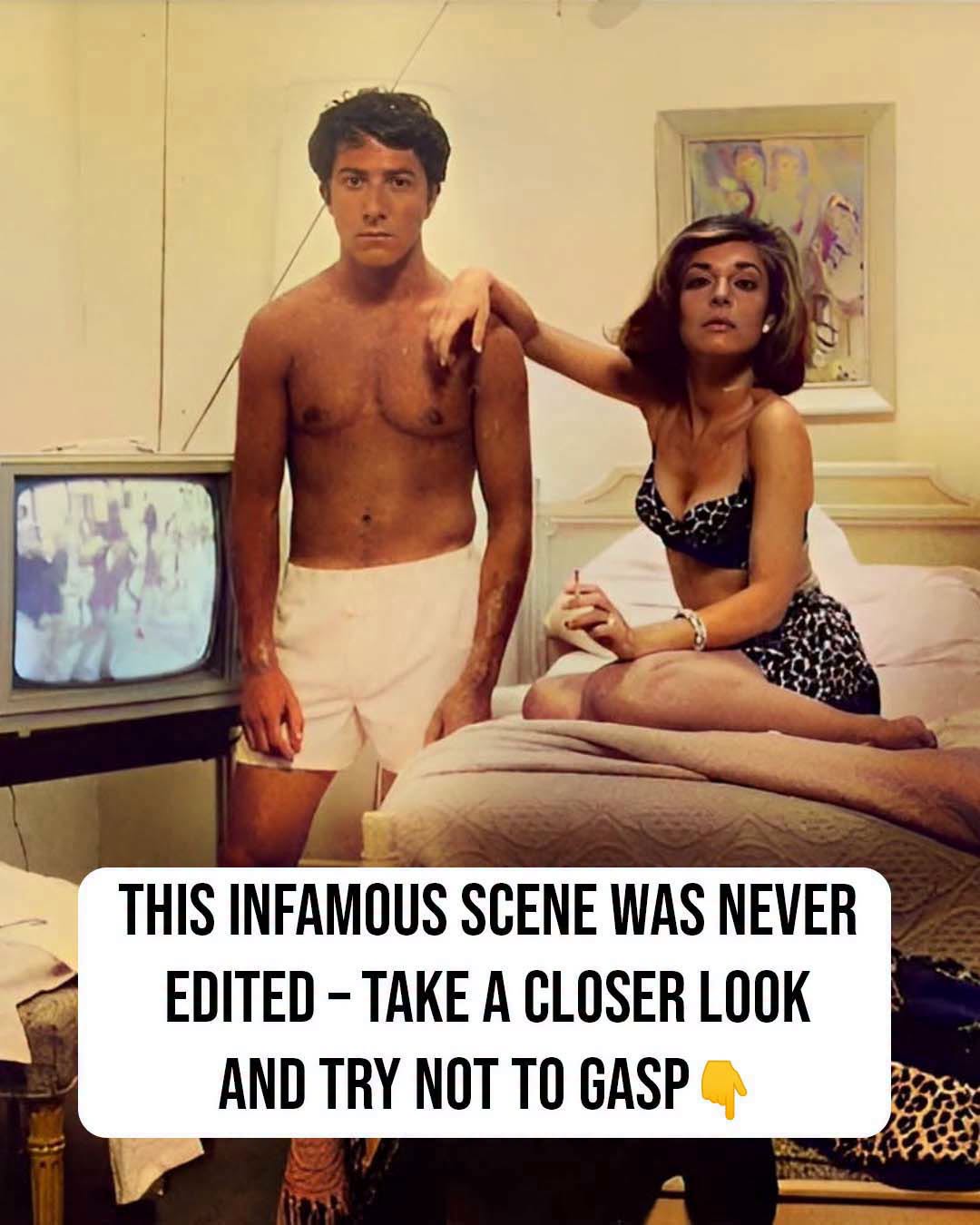
Long before the modern lexicon gave us terms like “cougar” or “MILF,” a quiet cinematic earthquake rattled the foundations of Hollywood. Released in 1967, at the absolute zenith of Beatlemania and against the fractured backdrop of the Vietnam War, The Graduate captured counterculture lightning in a bottle. It was a dazzling, deeply uncomfortable snapshot of a generation questioning authority, social norms, and the rigid architecture of American relationships.
Anne Bancroft delivered a career-defining performance that masterfully balanced sophistication with profound emotional decay, while Dustin Hoffman’s twitchy, teeth-gritting innocence made the film endlessly relatable. Lines like, “Mrs. Robinson, you’re trying to seduce me, aren’t you?” quickly hardened into Hollywood legend.
Yet, nearly sixty years after it first filled theaters, the reality behind this flawless masterpiece tells a vastly different story. From bizarre casting blunders and unscripted physical contact to crushing financial ironies and editing slip-ups, the road to celluloid immortality was paved with chaotic improvisation.
The Window Cleaner and the Snubbed Heartthrob
The casting of Benjamin Braddock—the disillusioned, upper-middle-class college graduate who drifts into a scandalous affair with the wife of his father’s business partner—remains one of the most volatile pre-production stories in studio history.

When Dustin Hoffman walked into the casting office, he was an unkempt, virtually unknown theater actor pushing 30. He looked so far removed from the traditional Hollywood leading man that the film’s executive producer, Joseph E. Levine, genuinely mistook him for a window cleaner. Rather than correcting the mogul, Hoffman leaned into the awkwardness, grabbed a cloth, and actually started wiping down the office glass. Levine eventually clued in, and a bizarre spark of casting magic was struck.
Before Hoffman locked down the gig, superstar Robert Redford was heavily in the running, even going as far as to screen-test alongside Candice Bergen. However, director Mike Nichols harbored deep reservations about whether the impossibly handsome Redford could project the fundamental “underdog” energy the character required.
When Redford pushed back, insisting he completely understood Benjamin’s sense of social isolation and romantic ineptitude, Nichols shut down the debate with a legendary zinger:
“Bob, look in the mirror. Can you honestly imagine a guy like you having difficulty seducing a woman?”
Redford took the point, relinquishing the role but preserving his creative bond with Nichols, who had previously directed him on Broadway in Barefoot in the Park.
A “Disastrous” Audition
Even after securing the part, the atmosphere on set was thick with insecurity. Hoffman was tasked with performing a highly intimate love scene with Katharine Ross (cast as Mrs. Robinson’s daughter, Elaine), despite having zero experience with on-screen romance.
Hoffman privately feared the pairing was absurd, later admitting, “A girl like [Ross] would never go for a guy like me in a million years.” Ross was equally unenthusiastic, recalling that Hoffman “looked about three feet tall… so unkempt. This is going to be a disaster.”
Yet, it was precisely this friction that Nichols wanted. The director won an Academy Award for his efforts, though the victory was bittersweet for his leading man.
“As far as I’m concerned, Mike Nichols did a very courageous thing casting me in a part that I was not right for, meaning I was Jewish,” Hoffman later reflected. “In fact, many of the reviews were very negative. It was kind of veiled anti-Semitism… I was called ‘big-nosed’ in the reviews; ‘a nasal voice’.”
From Box Office Triumph to the Unemployment Line
The Graduate was an absolute juggernaut, pulling in a staggering $104.9 million to become the highest-grossing film of 1967. You would assume its breakout star was instantly set for life.
Instead, Hoffman was paid a flat fee of $20,000. By the time Uncle Sam took his cut and Hoffman paid for a temporary rental, he was left with a meager $4,000 in his pocket.
His immediate post-movie move? He returned to New York City, moved into a cramped, two-room apartment in the West Village, and officially filed for state unemployment benefits, quietly collecting $55 a week while his face decorated billboards across the country.
The Metamorphosis of Mrs. Robinson
While Hoffman provided the film’s anxious heartbeat, Anne Bancroft completely hijacked the narrative as the predatory, deeply nuanced Mrs. Robinson. It is a performance so deeply etched into the cultural consciousness that it is difficult to imagine any other actress in the role.
Initially, Nichols envisioned the character through an entirely different cultural lens, pursuing French cinematic icon Jeanne Moreau. The logic was rooted in a European stereotype: the sophisticated, older continental woman who “initiates” a younger man into the complexities of adulthood. When that direction shifted, the studio courted wholesome American sweetheart Doris Day. However, Day famously turned the script down flat, citing the script’s blunt sexual themes and required nudity as an absolute dealbreaker.
The Age-Bending Illusion
Bancroft ultimately claimed the mantle, but the iconic “older woman” dynamic was entirely an illusion sustained by Hollywood smoke and mirrors.
In reality, Anne Bancroft was only 36 years old when cameras rolled. She was a mere six years older than her on-screen lover, Dustin Hoffman, and only eight years older than Katharine Ross, the actress playing her daughter.
To bridge the gap, the crew relied on the actors’ natural physical trajectories. Hoffman possessed a naturally boyish, arrested-development demeanor. Bancroft, conversely, was a heavy smoker and drinker whose skin and presence carried a mature, world-weary gravity.
In a revealing 2012 interview with Connecticut Magazine, Elizabeth Wilson—who played Benjamin’s overbearing mother—confirmed the reality behind the aesthetic, noting bluntly that Bancroft “had a drinking problem,” which inadvertently aided the film’s premise by giving Mrs. Robinson a prematurely aged, hardened edge.
The Unscripted Hotel Grab and the Search for a Body Double
One of the film’s most memorable flashes of dark comedy occurred entirely by accident during rehearsals for the tense hotel room sequence. Without warning the director or his co-star, Hoffman suddenly reached out and grabbed Bancroft’s breast.
He later explained the impulse was drawn from his own childhood memories of schoolboys trying to sneak a quick grope while pretending to put on their coats.
The unexpected gesture caused Mike Nichols to explode into uncontrollable laughter behind the camera. Caught between staying in character and breaking character, a panicked Hoffman turned toward the wall and began physically banging his head against it to hide his own giggles. Nichols found the bizarre, unscripted display of neurosis so brilliant that he kept the entire sequence in the final print of the film.
The Sunset Strip Search
However, the bedroom scenes also presented a major logistical hurdle. Bancroft had explicitly written a strict “no topless scenes” clause into her contract.
Faced with a firm refusal from their leading lady for the pivotal bedroom confrontation scene, production managers had to get creative. A crew was dispatched to scout the gritty nightclubs of the Sunset Strip to locate a body double willing to strip down.
The first candidate accepted the job but balked at the last second, refusing to remove her pasties. The production was forced to trigger “Plan B,” eventually sourcing a second stand-in who agreed to the shoot, saving one of the most famous visual reveals in cinema history.
Sonic Architecture and Visual Subversion
The film’s legendary soundtrack, which catapulted the folk-rock duo Simon & Garfunkel into the stratosphere, was born entirely out of convenience.
Initially, Nichols and film editor Sam O’Steen used the duo’s existing tracks—including The Sound of Silence—merely as temporary placeholders to establish the rhythm and pacing of the editing room. As the cut neared completion, Nichols realized that any newly commissioned orchestral score failed to match the existential melancholy of the temporary tracks. In a highly unusual move for late-60s Hollywood, he kept the folk songs as the permanent acoustic spine of the film.
Paul Simon actually penned two original tracks specifically for the movie—Punky’s Dilemma and A Hazy Shade of Winter—but Nichols flatly rejected both (they would later surface on the duo’s Bookends album).
Remarkably, the track Mrs. Robinson wasn’t even written for the production. Simon had been working on a skeletal draft of a song titled Mrs. Roosevelt, an ode to Eleanor Roosevelt. When Nichols heard the melody, he convinced Simon to adapt the name. Furthermore, the version heard in the film features only the chorus, missing the verses entirely, and contains lyrics that notably diverge from the definitive single that eventually topped the billboard charts.