12 Things Narcissistic Mothers Often Say To Their Children
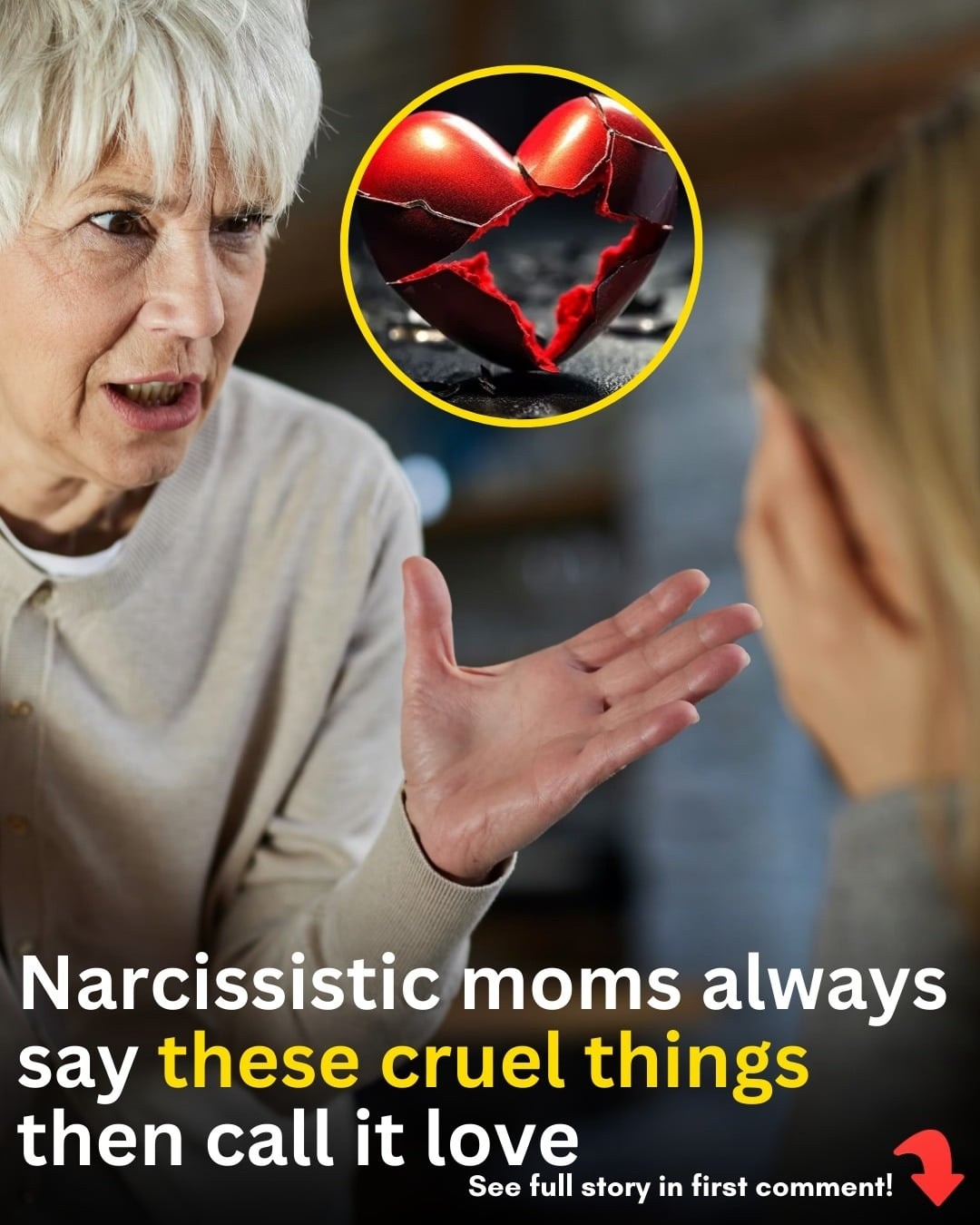
For most of us, the word “mother” evokes images of selfless care, a safety net, and the one person who loves us unconditionally. However, for those raised by narcissistic mothers, the reality is a confusing hall of mirrors. In these households, “love” doesn’t feel like a warm blanket; it feels like a cafe, a debt, or a performance. The most disorienting part of this experience is that the mother often uses the language of devotion to justify behaviors that are actually emotionally manipulative. She may claim to be your biggest fan while simultaneously sabotaging your boundaries.
The impact of this dynamic on a developing child is profound. Because children naturally look to their parents to define reality, a narcissistic mother’s distorted version of “love” becomes the child’s blueprint for relationships. You learn that to be loved is to be useful, and to be “good” is to be invisible. This article explores the specific phrases used to maintain this control and the clinical reality behind the mask. By deconstructing these twelve common phrases, we can begin to separate genuine affection from narcissistic projection. Understanding the “why” behind the words is the first step toward breaking the cycle of guilt and reclaiming your own identity.
Defining the Shadow: What Narcissism Actually Is
Human head profile with word narcissist in dark black background. Narcissistic behavior concept.
Narcissists are those characterised by a long-standing pattern of grandiosity, an overwhelming need for admiration, and a profound lack of empathy. Image credit: Shutterstock
How Can Naturopathic Medicine Address Our Mental Health?
In clinical terms, Narcissistic Personality Disorder (NPD) is characterized by a long-standing pattern of grandiosity, an overwhelming need for admiration, and a profound lack of empathy. When this manifests in a parent, the relationship becomes transactional. A narcissistic mother does not see her child as a separate human being with their own needs, dreams, and feelings; instead, she sees the child as an extension of herself. In the eyes of a narcissistic parent, the child exists to serve a function: to make the parent look good to the world, to provide emotional regulation for the parent, or to act as a scapegoat for the parent’s own insecurities.
This dynamic is often described by psychologists as enmeshment. In a healthy family, parents encourage their children to grow, differentiate, and eventually become independent. In a narcissistic family system, independence is viewed as a threat or a betrayal. The mother’s self-esteem is so fragile that any sign of the child’s autonomy is perceived as a rejection. Consequently, the narcissistic mother uses a variety of tactics, including gaslighting, guilt-tripping, and “splitting” (pitting siblings against each other) to keep the child within her sphere of influence. This isn’t a lack of love in the way we usually think of it; it is an inability to see the child as anyone other than a character in the mother’s own internal drama.