Women’s health doctor warns against ‘Wicker’ movie-inspired bedroom trend
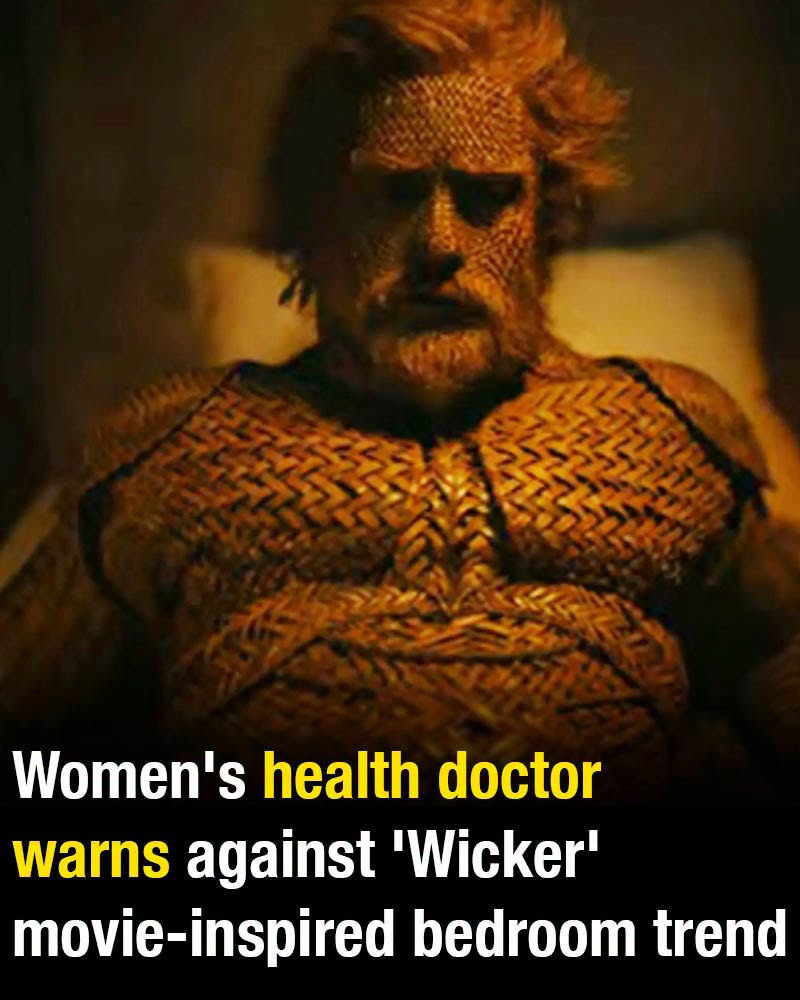
A new movie has sparked laughter, cheeky jokes, and plenty of unusual conversations across social media. But while some viewers are amused by its unconventional love story, a women’s health expert is issuing a serious warning to anyone considering recreating the film’s unusual bedroom activities in real life.
Wicker, which premiered in theaters on October 23, has quickly attracted attention, with some audiences particularly fascinated by the movie’s unconventional romance and its rather unusual central character.
However, Dr. Amy Novatt, an OB-GYN associated with sexual wellness brand Dame, is urging women to think carefully before allowing the film’s fictional romance to inspire real-life experiments involving wicker furniture and other natural materials.
Her warning comes after several scenes from the movie began circulating online, prompting a wave of jokes about women discovering new ways to find pleasure using wicker household items.
Even IKEA joined in on the online conversation, joking that its wicker lamps, ottomans, cabinets, and headboards were all made of “husband material,” according to Tyla.

While the jokes have entertained social media users, Novatt believes there is a serious health concern behind the growing conversation.
OB-GYN Warns Against Using Wicker and Other Natural Materials
Although the idea might sound amusing in the context of a fictional movie, Novatt says inserting objects made from natural materials into the vagina can lead to painful injuries and potentially dangerous infections.
Speaking to the New York Post, the doctor explained that materials such as wood and plant fibers can present several risks because of their physical structure and the microorganisms they may carry.
“Wood can splinter, and plant material harbors bacteria and molds that can cause infection,” she warned.
Novatt also revealed that she has personally treated women who suffered injuries after experimenting with foreign objects, sometimes requiring medical intervention far beyond an ordinary examination.
“In my career, I have examined women with cuts, tears, infections and injuries from foreign objects, and I have taken some of them to the operating room. Many were simply seeking pleasure and never expected harm,” she explained.
Her warning highlights how quickly an experiment intended to be enjoyable can turn into a painful medical emergency.
The doctor also stressed that the vagina’s natural ability to recover from irritation and minor injuries should never be mistaken for an invitation to experiment with objects that could cause significant harm.
The vagina maintains a delicate biological environment that depends on healthy bacteria, balanced pH levels, and protective mucus layers. Introducing unsuitable materials can disrupt that balance and increase the risk of irritation, injury, and infection.
Novatt made her position particularly clear when explaining the limits of what the body is designed to accommodate.
“What it was not designed for is receiving trees, shrubs or other plants,” she said.
Her message is straightforward: something that appears harmless or amusing in a movie can carry very real health consequences outside the fictional world.
What Is ‘Wicker’ About? The Unusual Love Story Behind the Movie
The movie’s unusual premise is based on Ursula Wills-Jones’ short story, The Wicker Husband, which explores loneliness, companionship, and the unexpected consequences of creating an unconventional partner.
The story follows a lonely fisherwoman who approaches the village basketmaker with an extraordinary request: she wants him to make her a husband entirely out of wicker.
What begins as an unusual attempt to find companionship soon takes an unexpected turn when her new creation comes to life.
The wicker husband, portrayed by Alexander Skarsgård, quickly becomes more than just an unusual addition to the village. His arrival disrupts the community’s everyday routines, attracts attention, and sparks unexpected jealousy among those around him.
For the fisherwoman, however, her extraordinary new companion seems to offer exactly the kind of relationship she has been longing for.
The unusual romance has become one of the film’s biggest talking points, with viewers sharing jokes, reactions, and creative interpretations of its central relationship.
And while the movie’s fictional storyline has inspired plenty of playful online commentary, Novatt believes it is important to distinguish between enjoying an unusual fantasy and attempting to recreate it physically.
Doctor Says Fantasies Are Healthy, but Reality Is Different
Despite her warning, Novatt is not suggesting that women should avoid unconventional fantasies or feel embarrassed about their imaginations.
In fact, she believes fantasy plays a perfectly healthy role in sexuality and relationships.
“Fantasy is healthy and to be encouraged. Women have always imagined an ideal partner, one who takes care of all our emotional and sexual needs,” she explained.
Her concern, she clarified, begins when people feel tempted to turn fictional scenarios into literal experiences without considering the possible consequences for their health.
“My concern begins where fantasy tempts us to act it out literally, at the expense of our health.”
Ultimately, the doctor wants women to enjoy the humor, creativity, and unusual romance behind Wicker without confusing its fictional storyline with safe real-life behavior.
The film may have audiences looking at wicker furniture in an entirely different way, but Novatt’s message is clear: not everything that works in a movie belongs in the bedroom.
And when it comes to sexual wellness, protecting your health should always come before experimenting with an unconventional trend.