Can You Solve This $100 Shop Puzzle? The Answer Is Simpler Than It Seems
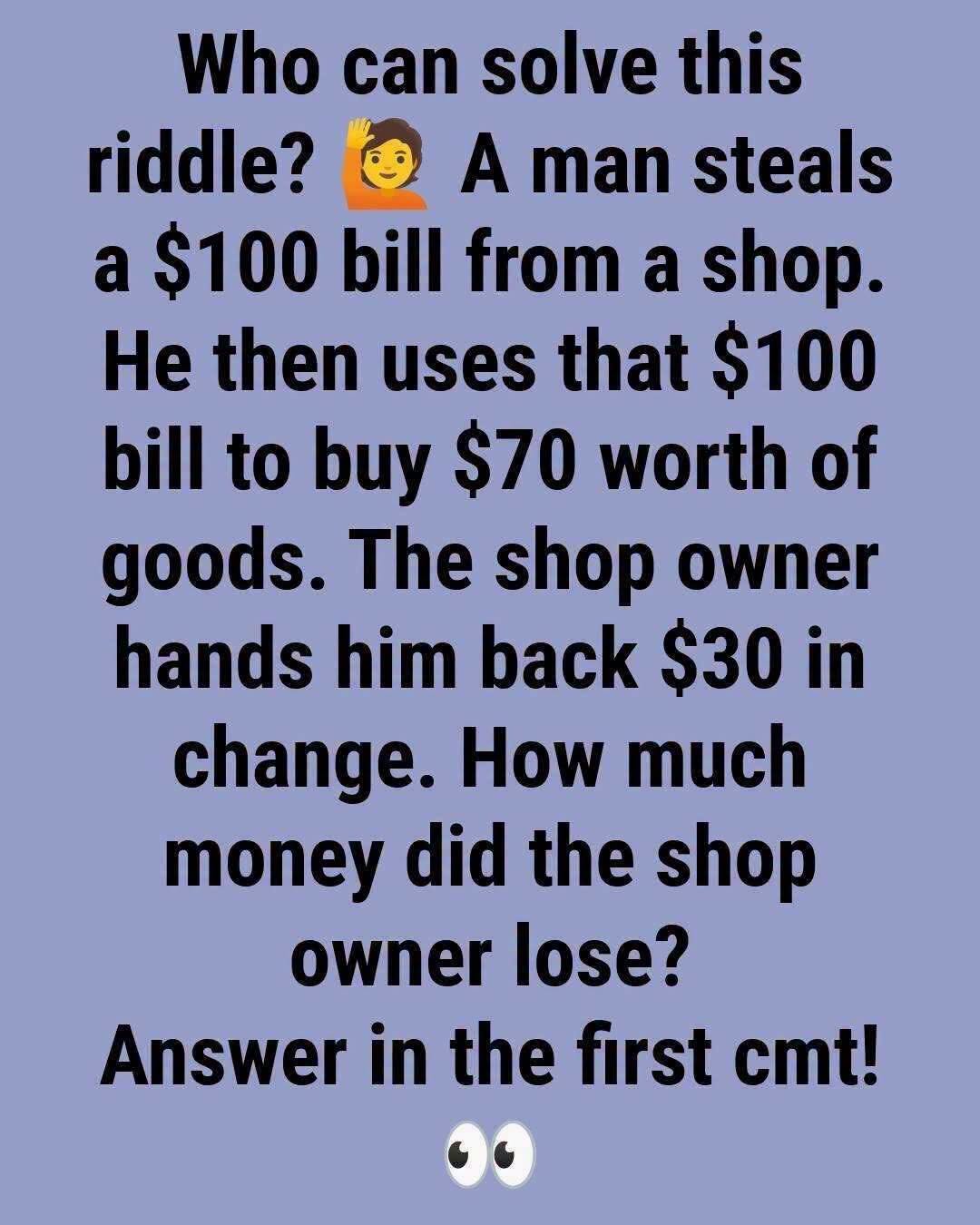
The shopkeeper’s total loss is $100, not $170 or $200. The trick is to follow what leaves the business and what comes back. Initially, the theft reduces the register’s cash by $100. During the purchase, however, that exact bill returns to the till. Its return cancels the initial cash shortage, so treating the stolen bill as an additional, permanent loss would count the same money twice. That is where this seemingly simple puzzle trips people up.
What remains missing after both events is the real answer: merchandise valued at $70 and the $30 handed over as change. Together, those amount to $100 in total losses. The thief walks away with goods and cash, while the owner is left short by their combined value. There is no separate third loss hiding in the transaction. The clearest solution comes from comparing the shop’s position before the theft with its position after the sale.