How Many Monkeys Are in This Picture? Your Answer Might Reveal Hidden Narcissism
We all love a good personality test. Whether it’s finding out our Myers-Briggs type, our love language, or what kind of bread we are on a spiritual level, human beings are naturally obsessed with learning more about themselves. But lately, visual puzzles and optical illusions have taken over the internet, claiming to unlock the deepest secrets of our subconscious minds.
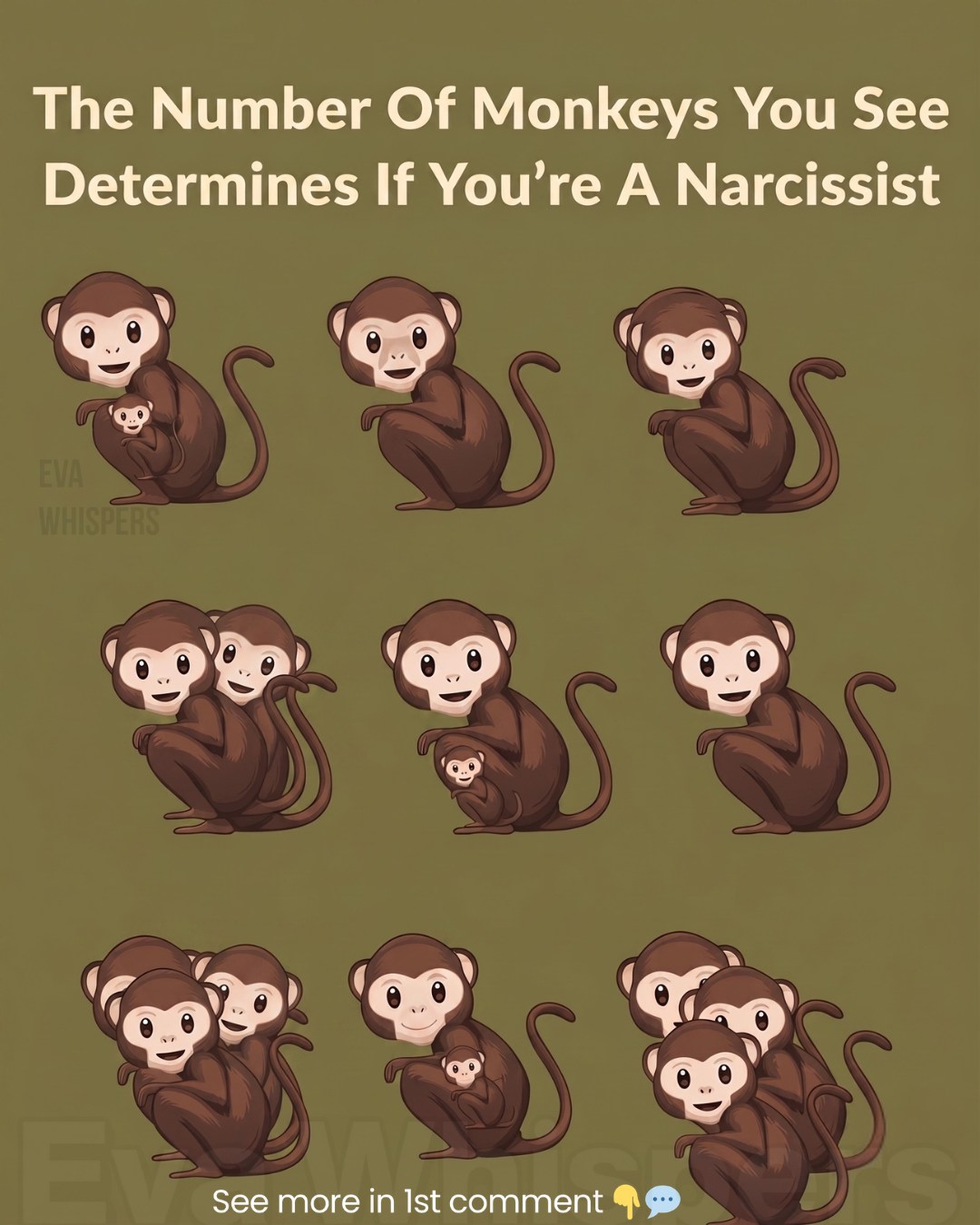
The latest puzzle making the rounds? A deceivingly simple illustration featuring a group of brown monkeys.
The bold claim attached to this image is sure to make anyone stop scrolling: “The Number Of Monkeys You See Determines If You’re A Narcissist.” Are you brave enough to take the test? Look closely at the image above. Don’t rush. Take about 10 to 15 seconds to scan the rows. Count every single monkey face you can spot—including the tiny ones hiding in the shadows.
Got your number locked in? Great. Let’s dive into what your visual perception allegedly says about your ego, and then we’ll look at the actual science behind it.
The Results: What Did You See?
Depending on how observant you are, your answer likely falls into one of three categories. Here is what pop psychology has to say about your monkey-counting skills.

1. You Counted 9 Monkeys
If you glanced at the image and confidently counted exactly nine monkeys, you simply looked at the main, prominent figures in each row.
The Verdict: According to the viral trend, you might possess a few narcissistic traits. Why? Because you focus entirely on the “big picture” and the most obvious things directly in front of you. You might move too fast to notice the smaller, hidden details of the people around you, suggesting a personality that is self-assured, busy, and slightly self-centered. You see the world exactly as it immediately benefits you, without digging deeper.
2. You Counted 10 to 14 Monkeys
If you looked a little closer, you probably noticed the baby monkeys clinging to the fronts of some of the adults, bringing your total up to somewhere between 10 and 14.
The Verdict: You are perfectly balanced. You aren’t a narcissist, but you aren’t a complete pushover, either. Seeing the baby monkeys shows you have a natural baseline of empathy and care for others. You notice the people who rely on you, but you don’t over-analyze situations to the point of exhaustion. You have healthy boundaries.
3. You Counted 15 to 17 Monkeys
If you have the eyes of a hawk, you noticed the baby monkeys and the extra faces creeping out from behind the adults in the middle and bottom rows. (If you count perfectly, there are exactly 17 monkey faces in the image!).
The Verdict: You are the furthest thing from a narcissist. In fact, you might be an empath or a chronic over-thinker. You are highly attuned to your environment and incredibly detail-oriented. You notice the people hiding in the background who need a voice. While this makes you a deeply caring friend, it also means you might often put the needs of others before your own.
The Reality Check: Can a Picture Actually Diagnose Narcissism?
While it is incredibly fun to analyze our personalities through viral brain teasers, it’s time for a quick dose of reality. No, an optical illusion cannot diagnose you as a narcissist.
Narcissistic Personality Disorder (NPD) is a complex, clinically diagnosed mental health condition. True narcissism is characterized by a pervasive pattern of grandiosity, a constant need for admiration, and a profound lack of empathy for others. It is diagnosed by trained psychological professionals through extensive interviews and behavioral tracking, not by counting illustrated monkeys.
So, why do we see different numbers of monkeys? It all comes down to visual perception and cognitive processing.
When our brains process images, they look for shortcuts. This is based on Gestalt psychology principles. At first glance, our brains group the large, similar brown shapes together (the 9 main monkeys). It takes active, conscious cognitive effort to override that initial shortcut and force the eye to recognize the subtle lines and shadows that make up the “hidden” faces.
If you only saw 9 monkeys, you aren’t a narcissist—your brain was simply being highly efficient! If you saw 17, your brain naturally prioritizes pattern recognition and fine detail over broad strokes.
The Final Word
Optical illusions like this one are a fantastic way to wake up your brain, test your visual processing speed, and spark a fun debate in your group chat.
So, don’t worry about your ego! Send this image to your friends and family. Who is the most observant of the group, and who completely missed the babies hiding in the back?