A Starving Mother Only Had $1 and a Baby in Her Arms—What She Was Really Hungry For Broke My Heart
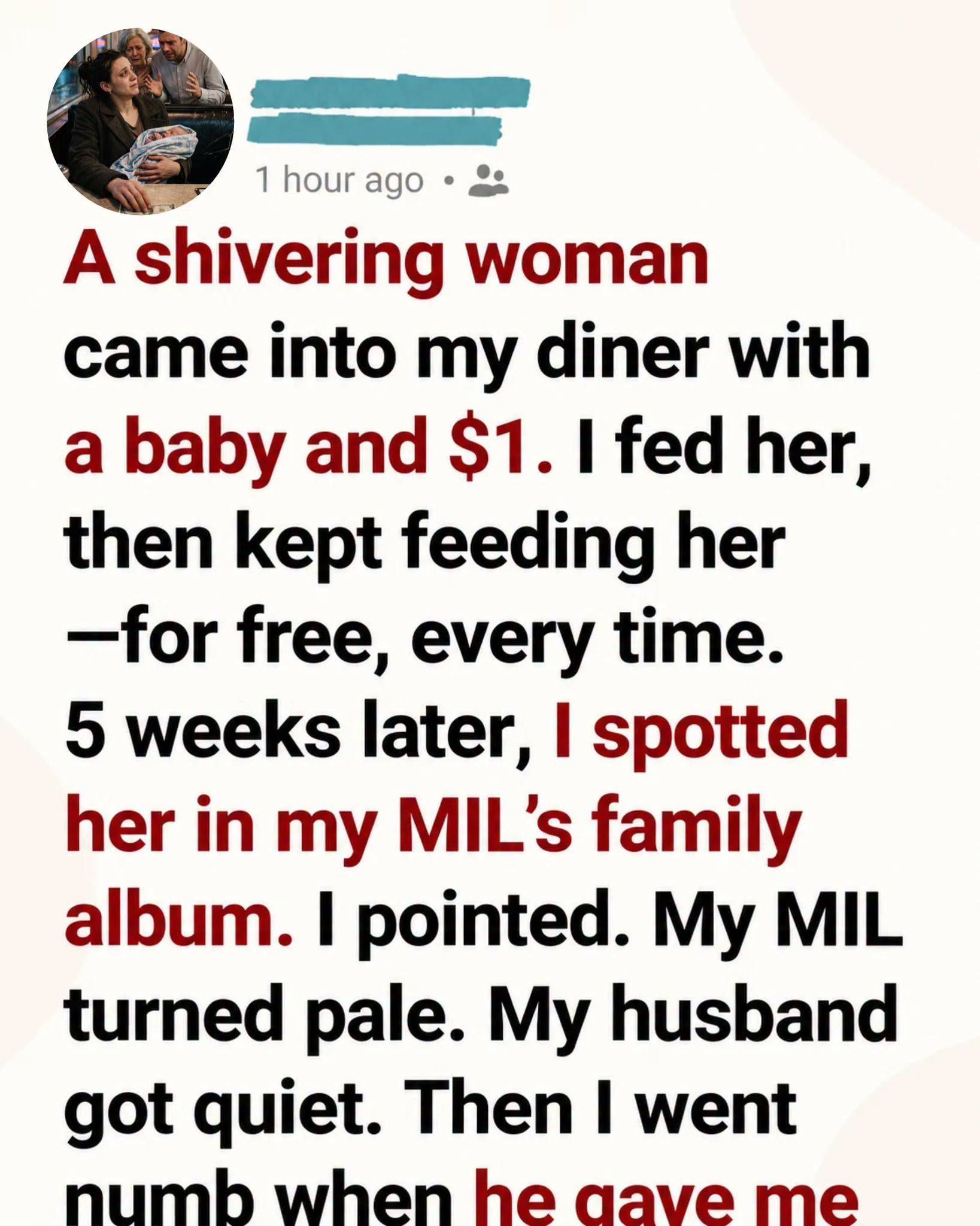
Part One: The Woman in the Last Booth
The night she first walked into my diner, I almost didn’t see her.
It was one of those slow, gray evenings in late autumn, when the damp clung to your skin and the neon sign in the front window hummed louder than anyone inside. Only a few regulars were left, including an old man working through his pie. I was wiping down the counter for the third time, mostly to keep my hands busy, when the door groaned open and a gust of cold air slipped in ahead of her.
My first thought was that she looked fragile. Not tired the way we all get tired, but worn down, like something rubbed thin from too much handling. Her coat was far too light for the weather. Her hair was pulled back in a loose knot that had given up hours ago. And pressed against her chest, wrapped in a faded yellow blanket, was a baby.
She stopped just inside the door. She didn’t look at the menu board or the pastry case. She looked at the floor, then at the tables, then at me, the way a person does when they aren’t sure they’re allowed to be somewhere.
“Sit anywhere you like, hon,” I said, and I made sure to smile.

She nodded without quite meeting my eyes and chose the booth at the very back, the one half-hidden by the coat rack, as far from everyone else as she could get.
When I brought her a menu, she didn’t reach for it. Instead she slid her hand into her coat pocket, drew out a single dollar bill, and smoothed it flat on the table with her fingertips, as if careful handling might make it worth more.
“I… this is all I have,” she said, so softly I had to lean in. “Could I get something small? Anything. It doesn’t have to be much.”
I looked down at the dollar. It was soft and creased, folded and unfolded so many times it had gone nearly white along the lines. Then I looked at the baby. A tiny hand had worked its way free of the blanket, the fingers opening and closing around nothing.
Something in my chest tightened.
“Of course,” I said, and my voice came out steadier than I felt. “Let me bring you something warm.”
I didn’t ring anything up.
I went back to the kitchen and filled a bowl with the chicken and barley soup we’d simmered since noon. I added buttered bread, roast chicken with mashed potatoes, and a pot of chamomile tea, and set it all in front of her.
She stared at it. Then she looked up at me as if I’d handed her something sacred.
“I can’t,” she began. “This is too much. I only have…”
“You can,” I said gently. “Please. Just eat.”
She didn’t argue after that. I think she had no argument left in her.
I went back to the counter and tried not to watch, but I couldn’t help it. She ate slowly at first, small careful spoonfuls, her other arm curled around the baby like she was afraid someone might come and take the food away. Then, bit by bit, she let herself eat faster. When the baby stirred and began to fuss, she rocked her without thinking and murmured something low and tender I couldn’t make out, a lullaby or a promise.
When she finally stood to leave, she pushed the dollar across the table toward me.
I folded her fingers back over it.
“Next time,” I said.
Her eyes filled, and for a moment I thought she might say something more. But she only nodded, pulled the blanket tighter around the baby, and stepped back out into the cold.
I stood at the window long after, wondering where a woman like that goes on a night like this.