Do You Have This Tiny Hole Above Your Ear? The Fascinating Science Behind a Rare Body Quirk
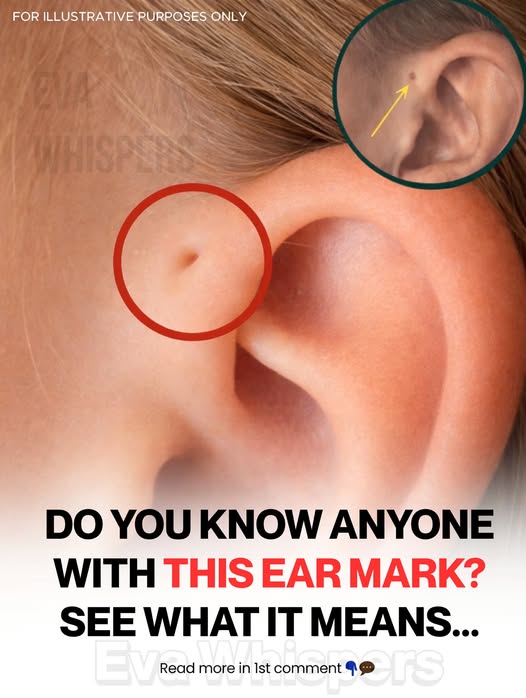
Take a quick trip to the mirror and look closely at where the top of your ear cartilage meets the side of your face. Do you see a tiny, barely-there indentation that looks like a pinprick? Or maybe you’ve noticed this subtle little mark on a friend, a family member, or a newborn baby, and assumed it was just a remnant of an old, abandoned cartilage piercing.
As it turns out, that tiny hole is completely natural. It is not the result of a needle, a scar, or an accident. It is a fascinating, relatively rare congenital quirk known in the medical world as a preauricular pit (or preauricular sinus).
While it might look like nothing more than a microscopic dimple, the story behind how it gets there—and what it might mean about the ancient history of the human body—is absolutely mind-blowing.
What Exactly Is a Preauricular Pit?
To understand what this tiny mark is, we have to go all the way back to the womb.
A preauricular pit is essentially a minor developmental anomaly that occurs very early in pregnancy, usually around the sixth week of gestation. During this crucial period, the human face and ears are rapidly forming from structures known as pharyngeal arches. Sometimes, these arches don’t fuse together completely seamlessly. When there is a microscopic gap or a slight hiccup in the fusion of the tissues that form the outer ear, a tiny tract or sinus is left behind.

The result? A tiny hole that leads to a narrow tract underneath the skin. Some people have them on just one ear (most commonly the right side, for reasons scientists still don’t entirely understand), while others hit the genetic lottery and have them on both.
The Mind-Blowing Evolutionary Theory: Are We Part Fish?
Here is where the story shifts from a standard medical explanation into something straight out of an evolutionary biology thriller.
While anatomists have known about preauricular pits since they were first documented by scientist Van Heusinger in 1864, it was Neil Shubin, a renowned evolutionary biologist and author of the groundbreaking book Your Inner Fish, who popularized a much more dramatic theory.
Shubin hypothesized that these tiny holes are actually an evolutionary leftover—specifically, an evolutionary remnant of fish gills.
It sounds like science fiction, but it makes incredible sense when you look at how human embryos develop. Those pharyngeal arches we mentioned earlier? In fish embryos, those exact same structures develop into gills. In human embryos, they develop into our jaws, our throats, and our ears.
According to Shubin’s theory, the preauricular pit is simply an ancient genetic echo from millions of years ago, a time when our earliest ancestors were still swimming in the prehistoric oceans. When you look at that tiny hole, you might literally be looking at a microscopic window into the evolutionary history of humanity. It is your inner fish saying hello.
Who Gets Them? A Look at the Genetic Lottery
If you don’t have one, you are in the vast majority. Preauricular pits are relatively uncommon, but their prevalence varies wildly depending on your genetic background and where you are in the world.
In the United States and the UK: Only about 0.1% to 1% of the population has this unique ear mark.
In Asia: The numbers jump significantly, with up to 10% of people carrying the trait.
In parts of Africa: The prevalence is roughly 4% to 10%.
Because it is a congenital trait, it is often hereditary. If you have one, there is a strong chance that one of your parents does, too, or that you might pass it down to your own children.
Should You Be Worried? (The Health Reality)
If you just discovered you have a preauricular pit, take a deep breath: they are almost entirely harmless. They do not affect your hearing, they are not a sign of a severe underlying disease, and the vast majority of people live their entire lives without ever giving their little ear dimple a second thought.
However, because the pit is essentially a tiny tunnel lined with skin tissue, it can occasionally collect dead skin cells or sweat. In a small number of cases, this can lead to:
Cysts: A painless lump forming underneath the skin near the hole.
Infections: If bacteria enter the tract, the area can become red, swollen, and painful, sometimes forming an abscess.
If it ever gets inflamed or starts discharging fluid, a quick trip to a doctor or an Ear, Nose, and Throat (ENT) specialist is necessary. They can easily treat an infection with antibiotics. In the rare cases where a pit becomes chronically infected time and time again, a surgeon can perform a simple outpatient procedure to remove the entire sinus tract, solving the problem permanently.
The golden rule: Never try to squeeze, poke, or insert a piercing into a preauricular pit. Just leave it alone and let it be its awesome self.
A Badge of Evolutionary Honor
The human body is an incredible, messy, and fascinating map of our biological history. We have tailbones we don’t use, wisdom teeth that no longer fit in our jaws, and for a select few of us, tiny holes by our ears that connect us to the deep blue sea.
A preauricular pit isn’t a defect; it’s a conversation starter, an exclusive genetic club, and a tiny biological signature of human evolution.
Do you have this rare mark, or do you know someone who does? Share this article and tag them to let them know they might just be walking around with the ultimate evolutionary superpower!