He Smiled And Said The Boy “Just Liked Dressing Warm”—But When The ER Cut Through The Layers, The Child’s Skin Told The Truth.
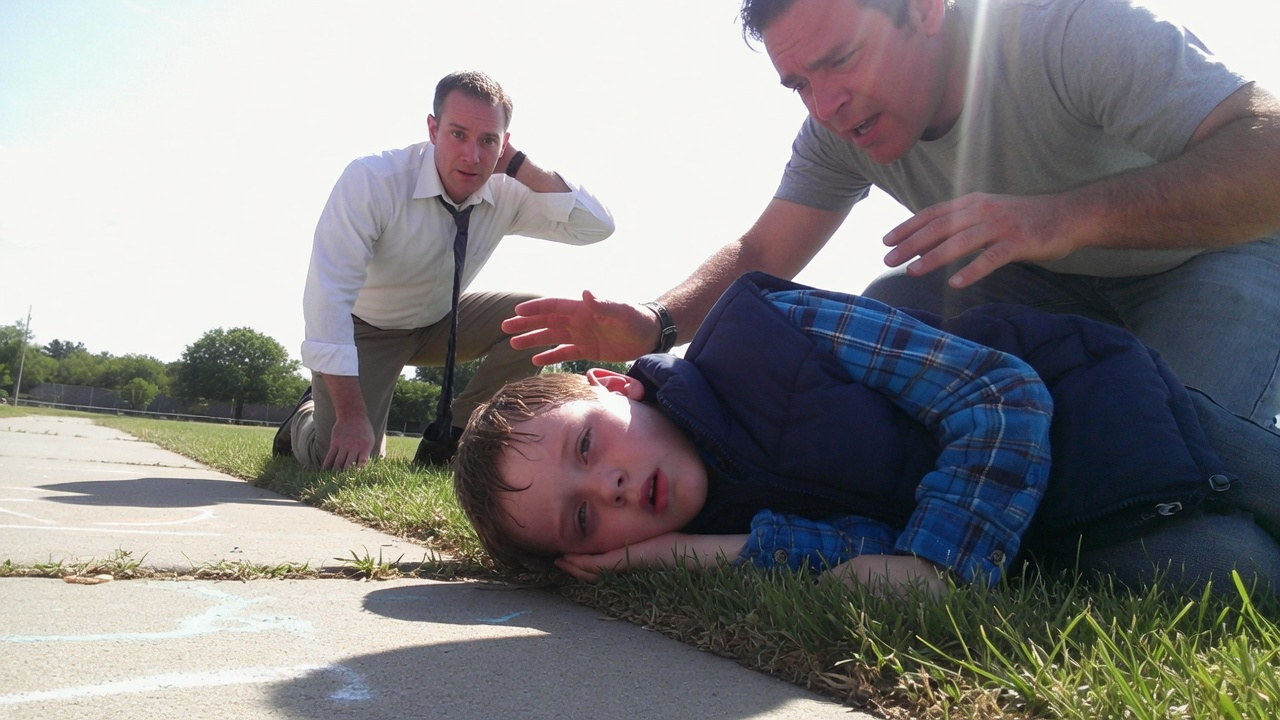
MY NEIGHBOR ALWAYS INSISTED HIS 7-YEAR-OLD SON JUST “LIKED DRESSING WARM” IN THE SCORCHING SUMMER HEAT. I BLINDLY BELIEVED HIM UNTIL THE BOY COLLAPSED ON MY LAWN TODAY. WHEN THE ER DOCTORS CUT THROUGH 4 LAYERS OF FLANNEL, THE HORRIFYING TRUTH ENGRAVED ON THAT CHILD’S SKIN SHATTERED OUR ENTIRE SUBURB TO THE CORE.
It was 98 degrees in the shade, the kind of brutal Midwest July afternoon where the asphalt sticky-melts to the soles of your sneakers. I was sitting on my front porch, nursing a sweating glass of iced tea, watching the heat waves ripple off the hoods of parked cars. Down the street, the local kids were running through a rusted lawn sprinkler, screaming with laughter, wearing nothing but swim trunks and flip-flops. Then there was Leo.
Leo was 7, maybe 8, with pale skin and dark circles under his eyes that made him look like he hadn’t slept since the previous winter. He was standing on the sidewalk right outside his house, completely frozen, watching the other kids play. But he wasn’t wearing a swimsuit. Leo was wearing heavy denim jeans, a thick long-sleeve flannel shirt buttoned all the way to his throat, and a padded winter vest.
I felt sweat dripping down my own spine just looking at him. It made absolutely no sense, and it wasn’t the first time either. For the past 3 months, ever since he and his father, Arthur, moved into the rental house next door, Leo had been wrapped up like he was living in an Arctic tundra.
Just last week, I bumped into Arthur at the local grocery store while he was buying gallons of milk. I jokingly asked him why Leo was wearing a heavy wool beanie in the middle of a June heatwave. Arthur didn’t laugh. He just gave me a tight, polite smile, shrugged his shoulders, and said the boy “just liked dressing warm” because he had poor circulation. Arthur was a quiet man, an accountant who kept his lawn perfectly manicured and always waved when he drove past, so I didn’t push it. People have their quirks, right? I told myself it wasn’t my business.
But watching Leo on the sidewalk today, things felt completely wrong. The boy was swaying slightly from side to side, his small hands clutching the edges of his heavy vest. His face wasn’t flushed red from the heat; it was a terrifying, sickly shade of grey.
“Hey, Leo!” I called out from my porch, trying to keep my voice light and friendly. “You want a popsicle, buddy? I’ve got cherry in the freezer.”
The boy turned his head toward me slowly, like his neck was made of lead. He didn’t answer. He tried to take one step toward my porch, but his knees instantly buckled beneath him.
Leo hit the concrete sidewalk hard, collapsing face-first without even putting his hands out to break the fall.
A spike of pure adrenaline hit my chest. I dropped my glass of iced tea, letting it shatter across the porch steps, and sprinted down the lawn as fast as my legs could carry me.
“Leo! Leo, can you hear me?” I yelled, dropping to my knees beside his small, bundled body.
He was completely unresponsive, his eyes rolled back into his head, breathing in rapid, shallow gasps. His skin felt like a burning radiator through the thick flannel shirt. He was suffering from severe heatstroke, and every second counted.
I scrambled for my phone in my pocket and dialed 911, my hands shaking so violently I almost dropped it. “I need an ambulance at 412 Maple Drive immediately! A child just collapsed from the heat!”
While the operator typed in the details, I knew I had to cool him down right away. I grabbed the collar of his heavy winter vest, intending to rip it open to let his skin breathe. But the moment my fingers gripped the fabric, a desperate, raspy scream tore out of the unconscious boy’s throat.
Leo’s eyes flew wide open, filled with a primal, blinding terror that shook me to my bones. He began to thrash violently, clawing at my hands, trying to push me away from his clothes.
“No! No, please don’t!” Leo choked out, his voice cracking into a sob. “Don’t look! Daddy said don’t let anyone look!”
Before I could even process his words, a shadow fell over both of us. I looked up and saw Arthur standing over us, his face completely pale, his eyes wide with a cold, desperate panic that didn’t look like a worried father at all.
— CHAPTER 2 —
The sirens were a distant, mocking wail at first, cutting through the heavy, suffocating silence that had settled over my front yard. I stayed down on the scorching concrete, my knees burning through my jeans, keeping my body between Arthur and his son. Leo was entirely limp now, a dead weight in my arms, his shallow breaths rattling so faintly in his chest that I had to press my ear to his mouth just to make sure he was still alive. Every instinct I had was screaming at me that if I let Arthur touch this boy right now, the truth—whatever horrifying thing it was—would vanish back into that dark, tightly shuttered rental house down the street.
Arthur didn’t move toward me, but he didn’t retreat either. He stood exactly where he had frozen, his hands half-raised in a defensive, pleading gesture that looked utterly grotesque given the sheer terror in his son’s eyes just moments before. The pristine white dress shirt he wore was completely dry, not a single drop of sweat on it, while my own shirt was plastered to my back. He looked like an actor who had walked onto the wrong stage, a perfectly manicured suburban figure entirely detached from the life-or-death crisis unfolding on the grass.
“You don’t understand, Mark,” Arthur said, his voice dropping into a low, desperate whisper that barely carried over the approaching sirens. “He’s sick. He has a condition. The doctors told me to keep him covered. I’m just doing what the specialists said.”
“What kind of specialist tells you to bake a seven-year-old child alive in a ninety-eight-degree heatwave, Arthur?” I demanded, my voice shaking with a volatile mix of rage and adrenaline. “Look at him! He’s burning up! If I hadn’t been sitting on my porch, your son would be dead on the sidewalk right now!”
“It’s a rare autoimmune disorder,” Arthur insisted, taking a single, tentative step forward, his eyes darting toward the corner of the block where the red flashing lights were finally reflecting off the neighbor’s windows. “Please, just let me take him inside. I have his medication in the house. The paramedics will just complicate things. They don’t know his medical history. I can handle this. I’m his father.”
The sheer normalcy of his tone was the most terrifying part. He wasn’t screaming, he wasn’t crying, he wasn’t displaying a single shred of the frantic, chaotic panic that any normal parent experiences when their child collapses. He was negotiating. He was trying to manage a PR crisis, treating his unconscious, heat-stroked son like a bad line item on a corporate tax return.
“Stay back,” I warned, putting a hand up. “Don’t come any closer.”
The massive yellow fire truck roared around the corner first, its air horn blasting a deafening note that shattered the neighborhood’s paralysis. Within seconds, the heavy vehicle pulled up along the curb, followed immediately by the white and blue ambulance. The air brakes hissed loudly, releasing a cloud of hot mechanical air that mingled with the summer heat.
Doors slammed. Two paramedics in dark blue uniforms sprinted toward us, carrying heavy trauma bags and a portable monitor. Behind them, three firefighters leaped from the truck, their heavy turnout gear clanking loudly in the quiet afternoon.
“What do we have here?” the lead paramedic shouted, a tall woman with her hair pulled back in a tight bun, her eyes instantly locking onto Leo’s heavily bundled body.
“He collapsed face-first onto the concrete,” I yelled back, not letting go of Leo until she knelt right beside me. “He’s been out for at least five minutes. Look at what he’s wearing. He’s boiling hot to the touch. I think it’s severe heatstroke.”
The paramedic, whose name tag read Miller, didn’t hesitate. She placed her gloved hand against Leo’s forehead and immediately winced. “Jesus Christ. He’s burning. Tim, get the ice packs and the saline cooling lines out of the rig right now. We need to strip these layers immediately.”
“No! Wait!” Arthur’s voice cut through the professional urgency of the medical team. He stepped into the circle of responders, his face twisted into a mask of authoritative concern. “I am his father, Arthur Vance. My son has a severe, diagnosed sensitivity to ambient temperature variations. Removing his clothing abruptly could trigger an anaphylactic shock. I demand that you transport him to the medical center immediately without altering his current state.”
Paramedic Miller paused for a fraction of a second, looking from Arthur to the child, then up at me. The jargon Arthur used sounded completely convincing, the kind of complex medical explanation that would make an emergency responder hesitate out of fear of a lawsuit or a medical error.
“Is this true?” Miller asked, her fingers hovering over the top button of Leo’s thick flannel shirt. “Does he have a documented metabolic or autoimmune diagnosis?”
“He’s lying,” I said, my voice dead serious as I stared straight into Miller’s eyes. “A few minutes ago, right before he lost consciousness, the boy opened his eyes. He begged me not to take his clothes off. He didn’t say anything about a disease. He said, ‘Daddy said don’t let anyone look.’ Look at his face, look at his clothes. Does this look like medical treatment to you?”
Arthur’s face underwent a terrifying transformation in that exact moment. The polite, soft-spoken accountant persona vanished completely, replaced by a cold, calculating malice that sent a shiver straight down my spine despite the sweltering heat.
“You have no right to interfere with my family,” Arthur hissed, stepping closer to Miller, his voice dropping into a threatening register. “I am the legal guardian. I am telling you, as a medical professional, that if you touch his clothing without a physician’s oversight, I will hold you and your department legally liable for any adverse reactions.”
“Sir, your son’s internal core temperature is easily over a hundred and four degrees right now,” Miller said, her tone hardening as she stood her ground, completely unfazed by his legal threats. “If we do not cool him down immediately, his organs will begin to fail. Brain damage sets in within minutes at these thresholds. Legal liability is the least of your concerns right now. Tim, hand me the trauma shears.”
The second paramedic, Tim, handed her a pair of heavy-duty, stainless steel medical scissors with a blunt tip designed for cutting through thick leather and canvas.
Arthur made a sudden, frantic movement forward, his hand reaching out to grab Miller’s arm to stop her from using the shears. But the three firefighters who had been standing by watching the interaction stepped in instantly. One of them, a massive guy with a bearded face, caught Arthur by the shoulder and firmly but gently forced him back three steps.
“Step back, sir,” the firefighter said, his voice an absolute wall of authority. “Let the medics do their job. If you interfere with an emergency response, I will have the police officer who just pulled up arrest you on the spot.”
I looked down the street and saw a local police cruiser pulling up behind the ambulance, its lights spinning silently in the bright afternoon sun. Arthur saw it too. He stopped resisting the firefighter’s grip, but his eyes never left Leo’s body. He looked like a man watching a bomb countdown reach its final single digits.
Miller didn’t waste another second. She slid the blunt tip of the trauma shears right under the collar of Leo’s heavy winter vest. With a sharp, rhythmic snip-snip-snip, the thick padded material split wide open, revealing the heavy blue flannel shirt underneath. The shirt was soaked through, not with fresh sweat, but with an old, stale moisture that smelled faintly of copper and sour dampness.
“Help me roll him slightly,” Miller commanded Tim.
They cut the vest completely away and tossed it onto the grass. It hit the ground with a heavy, unnatural thud, far too heavy for a regular piece of clothing. I noticed then that the interior lining of the vest had been intentionally reinforced with extra layers of heavy wool fabric, stitched crudely by hand to make it completely impervious to any breeze or airflow. It wasn’t a garment; it was an insulated prison.
Next came the flannel shirt. Miller positioned the shears at the bottom hem of the shirt and began cutting upward along the line of buttons. The fabric was stiff and thick, resisting the blades for a moment before giving way. As the shirt split open from the waist to the chest, a sudden, collective gasp escaped the lips of everyone standing within five feet of that sidewalk.
Tim, the second paramedic, actually took a step back, his hand flew to his mouth as his face went completely bloodless. The giant firefighter who was holding Arthur let out a low, guttural curse under his breath, his grip tightening on Arthur’s shoulder so hard the accountant winced.
I looked down at Leo’s exposed chest, and for a long, horrifying three seconds, my brain completely refused to process what my eyes were seeing.
The child’s skin wasn’t just red from the heat stroke. It was an intricate, terrifying landscape of deep, raised, purple and white scarring that ran in perfectly straight, deliberate lines across his ribs, his stomach, and up toward his collarbones. But these weren’t accidental injuries. They weren’t the result of a fire or a car accident.
The scars formed words.
Someone had used a sharp, precise instrument to carve rows of neat, capital letters directly into the flesh of this seven-year-old boy’s torso, and the wounds had healed into a permanent, raised, silver-and-pink script that read like a continuous, maddening chant.
I leaned closer, the heat radiating off the concrete suddenly feeling cold as ice as I read the first line etched across his small chest: PROPERTY OF THE FIRST DAY.
Below that, running horizontally across his abdomen, another line of deeply embedded text read: THE CHOSEN VESSELS DO NOT BLEED IN THE LIGHT.
“Oh dear God,” Miller whispered, her professional detached demeanor completely shattering. Her hands began to shake as she pulled the shears further up to cut the sleeves of the flannel shirt away. “What is this? What the hell is this?”
As the sleeves were cut open, the true extent of the horror became clear. Both of Leo’s forearms were covered in a series of strange, circular burns that looked like they had been made by some kind of heated metallic brand—a geometric symbol consisting of a cross enclosed within a jagged, multi-pointed star. The skin around the brands was raw, flaky, and heavily infected, oozing a yellowish fluid that explained the foul, copper smell that had drifted up from the clothes.
The four layers of clothing weren’t meant to keep him warm because of poor circulation. They were a systematic, deliberate concealment strategy designed to hide a level of ritualistic, ritual-like abuse that didn’t belong in a modern midwestern suburb. Arthur hadn’t been protecting a sick child; he had been hiding a crime against humanity that was written directly onto his son’s flesh.
I looked up from Leo’s scarred body to look at Arthur, my vision blurring with a white-hot fury that I had never felt in my entire life.
But Arthur wasn’t looking at me. He was staring at the police officer who was now walking up the lawn, his hand resting on his utility belt. Arthur’s face didn’t hold a single trace of shame, guilt, or fear of prison. Instead, his eyes were wide with a frantic, religious zealotry that looked entirely insane.
“You’ve broken the seal,” Arthur whispered, his voice cracking as he looked down at his exposed son. “You don’t know what you’ve done. The elders… they’re already on their way. You think you’re saving him, but you’ve just signed all of our death warrants.”
— CHAPTER 4 —
The heavy iron door of the interview room slammed shut with a metallic finality that echoed deep in my chest. Agent Miller didn’t sit down immediately; instead, she paced the perimeter of the small room, her heels clicking sharply against the linoleum floor. The air in here was thick, smelling of stale coffee, industrial disinfectant, and the palpable, lingering sweat of dozens of terrified people who had sat in this exact chair before me. I kept my hands folded tightly in my lap to stop them from shaking, my eyes tracing the scratches on the metal table.
“You’re holding back on me, Mark,” Miller said suddenly, her voice dropping into a low, dangerous register as she stopped right behind my chair. “I’ve spent the last two hours reviewing the initial patrol logs and the dashcam footage from the first unit on the scene. You didn’t just stumble into a neighborhood dispute out there on the sidewalk. You looked into that boy’s eyes, and you heard him speak before he went under.”
I swallowed hard, the back of my throat feeling like sandpaper as I looked up to meet her cold, unblinking gaze. “I told the officers everything I remembered, Agent Miller. The kid was terrified, he collapsed, and his father tried to prevent the medical team from touching him. I was just trying to keep the boy from baking alive in the middle of a historic heatwave.”
“Don’t play dumb with me, not now,” she snapped, slamming a thick manila folder down onto the metal table with a loud bang that made me jump. “The local police might buy the concerned neighbor routine, but the Bureau doesn’t. We just pulled a seven-year-old child out of a suburban home whose torso is a literal manifesto of an active, highly dangerous extremist sect. That doesn’t happen because a father has a quirky parenting style.”
She opened the folder, revealing several high-resolution forensic photographs taken in the emergency room under the harsh, unforgiving fluorescent lights. Even though I had seen the scars with my own eyes on the grass, looking at them captured in still, clinical detail made a wave of intense nausea roll through my stomach. The purple, raised letters carved into Leo’s pale, unblemished skin looked even more mechanical and deliberate up close.
“The First Day,” Miller whispered, tapping her finger against the photograph of the inscription across the boy’s chest. “Do you have any idea what that means, Mark? Do you have any conception of what kind of hornet’s nest you stepped into when you decided to play hero on your front lawn today?”
I shook my head slowly, my voice barely louder than a breath. “No. I’ve lived on Maple Drive for five years, Agent Miller. It’s a quiet street. Arthur moved in three months ago, kept to himself, mowed his lawn every single Saturday at nine in the morning. I thought he was just an awkward, overprotective accountant.”
“Arthur Vance isn’t an accountant,” Miller said, sitting down across from me and leaning forward until I could see the tiny flecks of amber in her dark eyes. “His real name is Arthur Pendelton. Five years ago, he vanished from a closed compound in northern Idaho along with forty-two other members of a high-control apocalyptic isolationist group. The Department of Justice has been looking for them ever since they pulled two dozen children out of a similar commune in Oregon.”
The room seemed to tilt slightly as her words sank in, the familiar, boring reality of my suburban neighborhood completely disintegrating into something dark and unrecognizable. “An isolationist group? In the middle of an Ohio suburb? That doesn’t make any sense. Why would he come here? Why would he live right next door to regular families if he was trying to hide?”
“Because the best place to hide a lie is between two truths,” Miller explained, her tone turning chillingly pragmatic. “A closed compound attracts satellite surveillance, local sheriff investigations, and federal task forces. But a quiet rental house in a sleepy, middle-class neighborhood with a perfectly manicured lawn? Nobody looks twice at that. Neighbors like you notice a kid wearing a jacket in July, but you rationalize it because you don’t want to create conflict.”
She was right, and the realization hit me like a physical blow to the sternum. I had seen the signs for three solid months; I had watched that poor boy struggle under the weight of those heavy clothes, and I had chosen to believe a polite, hollow lie because it was easier than facing an uncomfortable truth. My compliance had allowed that horror to continue right outside my window.
“What do the words mean?” I asked, pointing a trembling finger at the photograph of the text etched into Leo’s skin. “‘The chosen vessels do not bleed in the light.’ What does that mean?”
Miller sighed, a weary, deeply haunted sound that told me she had seen things in her career that regular people could never comprehend. “The First Day group believes that the modern world is a corrupted, decaying illusion that will be wiped clean by a purging fire. They believe that certain children, born under specific alignments, are vessels designed to carry the true language of their creator through the coming destruction. The scars aren’t just torture, Mark. To them, they are a protective seal.”
“A seal against what?” I asked, my heart hammering against my ribs.
“Against the outside world,” Miller said, her eyes locking onto mine with an intensity that made me want to look away. “According to their theology, if the sacred script is exposed to the uninitiated—to people like you and me—the vessel becomes corrupted. The seal is broken, and the cleansing process must be accelerated. That’s why Arthur was terrified when the medics started cutting those clothes off.”
The memory of Arthur’s final words on the lawn flashed through my mind with sudden, terrifying clarity: You’ve broken the seal. You don’t know what you’ve done. The elders… they’re already on their way.
“He said the elders were coming,” I told her, my voice rising slightly as the panic began to take over. “Right before the police put him in the car, he looked at me and said the elders were already on their way. He said I had signed all of our death warrants. Was he just rambling? Was it just religious psychosis?”
Miller didn’t answer right away. She slowly closed the manila folder, her face completely expressionless, but I noticed her fingers tighten against the cardboard edges until her knuckles turned white. She stood up, walked over to the heavy door, and knocked twice. The lock clicked, and a young agent opened the door, handing her a small, yellow slip of paper.
Miller read the note quickly, her jaw tightening as she finished the short text. She dismissed the young agent with a sharp nod, then turned back to face me, the atmosphere in the room instantly shifting from an interrogation to a tactical briefing.
“That was the field office in Cleveland,” Miller said, her voice completely devoid of emotion. “An hour ago, a local utility truck was found abandoned three miles from your neighborhood. The two regular technicians were found tied up in the back, uninjured but heavily sedated. The truck itself, along with two sets of official uniforms, is missing.”
A cold sweat broke out across my forehead. “The elders? They’re already here?”
“We don’t know yet,” Miller replied, walking back to the table and leaning her hands on the surface. “But three minutes ago, the power grid supplying the regional hospital where Leo is currently being held went completely dark. The emergency backup generators kicked on, but the main fiber-optic communication lines to the pediatric intensive care unit have been physically severed from the outside.”
I stood up so fast my chair screeched loudly against the floor, my instincts screaming at me to run, to get out of this building, to hide somewhere where the reach of this madness couldn’t find me. “You have to get more men down there! If they’re trying to take him back, you have to stop them!”
“We’ve already dispatched two tactical units to the hospital,” Miller said, her voice remaining steady despite the escalating crisis. “But there’s a larger problem, Mark. A much larger problem that involves you specifically.”
“Me? Why me?” I asked, my heart leaping into my throat. “I’m just a guy who lives next door. I don’t know anything about their group. I don’t know their secrets.”
“Arthur Pendelton had a personal cell phone in his pocket when he was arrested,” Miller said, pulling a transparent evidence bag from her jacket. Inside was a cheap, cracked burner phone, its screen glowing faintly with a series of missed calls. “We bypassed the encryption twenty minutes ago. There was a single outbound text message sent from this device exactly four minutes before Leo collapsed on your lawn.”
She turned the plastic bag around so I could see the glowing screen. The text message was sent to an unlisted, untraceable number, and it contained only a few short words, followed by an attachment.
The text read: The seal is compromised. The neighbor has seen the script. Cleanse the perimeter.
Below the text was a crystal-clear photograph of me, taken from inside Arthur’s dark living room window. I was sitting on my front porch, holding my sweating glass of iced tea, completely oblivious to the fact that my life had just been forfeit.
“They aren’t just going to the hospital for the boy, Mark,” Miller said, her voice dropping into a flat, grim reality that made the room spin around me. “They are coming to your house to eliminate the witness who looked at the script. And based on the timeline of the utility truck theft, they aren’t coming from Idaho. They’ve been embedded in your town for months, waiting for this exact failure.”
Before I could even process the absolute terror of her words, the lights in the interrogation room flickered once, twice, and then died completely, plunging us into a thick, absolute darkness. The heavy hum of the building’s ventilation system ground to a sudden, agonizing halt, leaving only the sound of my own frantic, ragged breathing filling the black void.
“Miller?” I whispered into the dark, reaching out blindly for the edge of the metal table. “Agent Miller, what’s happening?”
From the hallway outside the heavy iron door, a sound echoed through the darkness—a sound that made every muscle in my body freeze in pure, unadulterated terror. It wasn’t the sound of alarms or shouting guards.
It was the distinct, rhythmic, and perfectly synchronized sound of heavy, steel-toed work boots walking slowly down the concrete corridor, accompanied by the low, melodic humming of an old, traditional religious hymn that seemed to vibrate right through the walls of the building.
I reached out into the blackness, my hand franticly searching for Miller, but my fingers brushed against nothing but empty air. She was gone.
The humming outside grew louder, closer, until it stopped directly on the other side of our door, and the heavy metal handle began to slowly, deliberately turn downward.
— CHAPTER 5 —
The heavy iron door swung backward with an agonizingly slow, metallic groan that resonated straight through the soles of my shoes. In the absolute, crushing blackness of the compromised integration room, every single sense I possessed went into overdrive, sharpening to a jagged, agonizing point. The casual, rhythmic humming of that ancient, terrifying hymn didn’t stop; it grew louder, echoing off the cinderblock walls of the corridor like a funeral dirge sung by a choir of ghosts. I pressed my back flat against the far wall, my fingers clawing at the cold, painted mortar as if I could somehow melt through the structure and escape the impending nightmare. My heart was a frantic, trapped bird slamming against my ribs, suffocating me with pure, unadulterated adrenaline.
“Agent Miller?” I croaked out, my voice stripping away to a dry, pathetic whisper that barely carried across the three feet of empty space in front of me. “Miller, please tell me you have a weapon out. Please tell me you can see them.”
There was no answer from the darkness, not even the sound of shuffling feet or a drawn firearm from the federal agent who had been dominating the room just seconds ago. The empty air felt thick, heavy, and freezing cold, as if the air conditioning unit had been replaced by a draft from an underground burial vault. The rhythmic, heavy thud of steel-toed work boots stopped precisely at the threshold of the open doorway, the sudden absence of footfalls striking a more terrifying chord in my chest than the approach itself. The humming tapered off into a low, vibrating drone that seemed to hang in the stagnant air, vibrating through my teeth.
A sudden, brilliant flash of blinding white light sliced through the pitch-black room, forcing me to shield my eyes with my forearm as my pupils violently contracted. It wasn’t the overhead lights coming back online; it was the intense, focused beam of a high-powered tactical flashlight cutting through the gloom from the hallway. The glare was so intense it cast a massive, distorted silhouette across the back wall of the room—the shape of a man standing over six feet tall, broad-shouldered, wearing a heavy, insulated industrial jacket that made absolutely no sense in the sweltering July heat.
“The script has been defiled, neighbor,” a voice boomed from behind the wall of white light. It wasn’t Arthur’s voice; this voice was deeper, weathered by decades of gravel and harsh winters, possessing a terrifyingly calm, absolute authority that made my knees instantly buckle. “The vessel is weeping in the hands of the uninitiated, and the ink of the first hour is bleeding into the concrete. You took what belonged to the sanctuary, Mark. You pulled back the linen before the harvest was ripe.”
“I don’t know what you’re talking about!” I screamed, the terror stripping away any remaining semblance of masculine pride as tears of pure panic welled in my eyes. “I just didn’t want the boy to die on my lawn! Take whatever you want, take the boy, just let me leave! I haven’t told anyone anything!”
“The federal woman told you everything she knew, and she knew nothing at all,” the man stated calmly, the beam of the flashlight slowly tracking across the room, illuminating the metal table, the scattered forensic photographs of Leo’s scarred chest, and finally landing squarely on my face. The light was so hot it felt like it was burning through my eyelids, pinning me to the cinderblock wall like an insect collection specimen. “But her ignorance does not cleanse your eyes, neighbor. You looked upon the text of the First Day. You read the seals of the chosen generation. A vessel cannot be unread.”
As my eyes adjusted slightly to the periphery of the blinding beam, I finally noticed something that made my blood completely turn to ice. Agent Miller was still in the room, but she wasn’t standing, and she wasn’t reaching for her service weapon. She was slumped sideways over the steel interrogation table, her head resting awkwardly against the cold metal surface, her arms hanging limply toward the floor like a broken ragdoll. A dark, thick pool of fluid was slowly expanding outward from beneath her temple, dripping off the edge of the table with a rhythmic, sickening tap… tap… tap onto the linoleum tiles below. She had been neutralized silently, efficiently, right next to me in the dark before I could even process that the door had been opened.
The realization that a trained federal agent had been taken down without a single sound or struggle stripped away the last remaining illusion of my safety. These weren’t just religious fanatics from a rural commune; these were highly disciplined, lethal operatives who had infiltrated a secure government facility with the clinical precision of a military black-ops team. The man in the doorway stepped forward, the heavy steel-toed boots clicking against the floor tiles, and the beam of light shifted slightly, revealing his face for the first time.
He looked like any construction foreman or utility worker you’d see buying a breakfast sandwich at a local gas station at five in the morning. He had a thick, graying beard trimmed close to his jawline, deep-set weathered eyes that held no anger, no malice, and absolutely no humanity whatsoever. He was wearing a high-visibility yellow safety vest over his heavy jacket, the official logo of the local electric company emblazoned across his chest, completely validating Miller’s warning about the stolen utility truck. In his right hand, gripped loosely but with an undeniable familiarity, he held a heavy, professional-grade pneumatic framing nailer, the thick rubber air hose trailing behind him out into the dark corridor.
“The purification of the perimeter requires three things, Mark,” the man said, taking another measured step into the room, effectively cutting off any possible escape route to the door. “It requires the removal of the witness, the erasure of the record, and the return of the vessel to the soil. We have already initiated the second phase. The digital archives of this building are currently being scrubbed by fire.”
As if on cue, the faint, distant wail of building fire alarms began to echo from the upper floors of the federal facility, accompanied by the distinct, acrid smell of burning plastic and electrical wiring drifting through the ventilation ducts. The facility was being burned down from the inside out to destroy any digital evidence or photographs of Leo’s body that had been uploaded to the federal database. They were burning a government building in broad daylight just to erase a single child’s fingerprints from the grid.
“Please,” I begged, sliding sideways along the wall toward the corner of the room, my eyes locked on the heavy framing nailer in his hand. “I have a family. I have people who expect me home tonight. I won’t say a word to anyone, I swear to God, I’ll move out of the state tonight!”
“God does not reside in the state of Ohio, neighbor,” the man replied, his tone almost conversational, as if he were explaining a plumbing problem to a homeowner. “He resides in the first hour, before the language was broken by the tower. The script on the boy’s flesh is the only architecture that survives the fire. By looking at it, you became an architectural error. And errors must be planed down.”
He raised the pneumatic framing nailer, pointing the heavy steel muzzle directly at my face. I knew with absolute certainty that if he squeezed that trigger, a three-inch galvanized steel spike would shatter my skull before I could even blink. My mind frantically searched for a weapon, a distraction, anything within arm’s reach, but there was nothing but the cold cinderblocks and the body of Agent Miller slumped over the table.
In a desperate, suicidal reflex born of pure survival instinct, I didn’t try to run past him. Instead, I lunged forward across the metal table, grabbing the heavy manila folder containing the forensic photographs of Leo’s scars and hurling them directly into the beam of his tactical flashlight. The loose glossy papers erupted into the air like a flock of white birds, catching the intense light and creating a chaotic, fractured storm of reflections that momentarily blinded him.
The man didn’t flinch, but his reflex was automatic. He squeezed the trigger of the framing nailer, and a deafening, mechanical CRACK ripped through the small room as compressed air exploded from the tool. A three-inch steel spike tore through the flying photographs, missing my left ear by less than an inch and embedding itself deep into the cinderblock wall behind me with a terrifying thwack that sprayed concrete dust across my neck.
The momentum of my lunge carried me over the table, my shoulder slamming hard into the man’s heavy industrial jacket before he could cycle the tool for a second shot. We both went down hard onto the linoleum floor, the heavy tactical flashlight slipping from his grip and rolling across the tiles, its beam spinning wildly and casting chaotic, strobe-like shadows across the ceiling. He felt like solid oak beneath his clothes, his muscles dense and entirely unaffected by the impact of my body.
He didn’t scream, he didn’t curse; he simply reached up with a massive, calloused hand, wrapped his fingers around my throat, and began to squeeze with a terrifying, mechanical pressure that instantly cut off my airway. My vision immediately began to dim around the edges, dark purple spots exploding in my eyes as I clawed frantically at his face, my fingernails tearing into his graying beard, trying to find his eyes. He didn’t even blink, his expression remaining perfectly serene, almost holy, as he strangled the life out of me on the floor of a burning federal building.
Through the rushing roar of blood in my ears, I heard the heavy door of the interrogation room shake violently on its hinges, followed by the loud, authoritative crack of a firearm discharging out in the hallway. The man’s grip on my throat didn’t loosen, but his head snapped toward the doorway as a second shot echoed through the corridor, closer this time.
“FBI! Nobody move! Drop the weapon!” a voice screamed from the darkness outside, accompanied by the frantic, rapid approach of multiple sets of heavy tactical boots.
The man above me let out a low, disappointed sigh, his fingers releasing my throat so suddenly that my head snapped back against the hard floor tiles. I drew in a ragged, agonizing gasp of air, coughing violently as the oxygen rushed back into my starved lungs, my chest burning as if I had swallowed liquid fire.
By the time the beam of a second tactical flashlight entered the room from the hallway, the man in the safety vest had already rolled to his feet with an impossible, fluid agility. He didn’t run toward the door where the federal agents were advancing; instead, he lunged toward the small, reinforced observation window at the back of the interview room—the two-way mirror that looked into the adjoining control booth. With a single, massive swing of the heavy pneumatic nailer, he shattered the thick, treated glass into a thousands of glittering shards and leapt through the jagged frame into the darkness beyond.
I lay on the floor, gasping and shivering, as three tactical agents in full body armor and helmets swarmed into the room, their weapons raised, their lights sweeping across the carnage. One of them knelt beside me, pinning my shoulder to the floor, while the other two rushed to the shattered observation window, their weapons trained on the black void of the control booth.
“Suspect is mobile! He went through the glass into the rear maintenance corridor!” one of the agents shouted into his shoulder mic, his voice tight with adrenaline. “We need medical in interview room three immediately! Agent Miller is down! Repeat, Miller is down and unresponsive!”
The agent holding me down looked into my face, his flashlight beam revealing the dark purple bruises already forming around my neck. “Can you hear me, sir? Are you hit? Did he shoot you?”
I couldn’t answer him. I could only stare at the shattered pieces of the two-way mirror reflecting the flickering red glow of the fire alarms. The realization of what Miller had said right before the lights went out was settling into my bones like a terminal disease. They weren’t just coming for the boy at the hospital. They had embedded themselves into the very fabric of our town, our utilities, our security. They were everywhere, and I had broken their sacred seal.
The agent helped me sit up, pulling me away from the pool of blood that was still dripping from the edge of the table where Agent Miller lay. As he dragged me out into the smoky, alarm-blaring corridor, my eyes caught a single piece of paper that had landed face-up on the floor near the doorway—one of the forensic photographs that had escaped the fire.
It was a close-up of Leo’s right arm, showing the raw, infected brand of the cross within the multi-pointed star. But from this angle, under the flickering emergency lights of the hallway, I noticed something the forensic team had missed. The jagged points of the star weren’t just decorative lines. They were numbers, tiny and precise, carved into the perimeter of the symbol.
They were geographic coordinates. And they pointed directly to a state park less than fifteen miles from my own front door.
— CHAPTER 6 —
The pitch-black darkness of the facility’s rear maintenance corridor swallowed the beam of my flashlight, the weak ray cutting through thick plumes of acrid, gray smoke that began pouring from the ventilation shafts. My throat burned with every frantic breath I took, the chemical stench of melting plastic and scorched copper wiring filling the air as the fire grid upstairs continued to self-destruct. The federal agents who had flooded interview room three were already fading into the background noise of the building, their shouting voices and heavy tactical boots echoing down a completely different stairwell as they tried to pursue the man in the high-visibility vest. I was left entirely alone in the suffocating dark, my hands shaking so violently I could barely keep my fingers wrapped around the cylindrical metal casing of the flashlight the fleeing agent had dropped near my feet.
My mind was a chaotic, spinning vortex of absolute panic and terrifying clarity, the image of that final forensic photograph scorched into my retinas like a branding iron. The circular symbol on Leo’s pale, infected forearm—the jagged multi-pointed star enclosing a heavy cross—wasn’t just some primitive mark of tribal ownership or mindless occult ritual. The tiny, microscopic numbers etched with surgical precision into the border of the scars weren’t decorative lines at all; they were highly specific geographic coordinates, a digital map code written in human blood. I knew those exact numbers because they pointed directly to the heart of Black Fork State Park, a dense, untamed wilderness of old-growth oak and deep limestone caverns less than fifteen miles from my own front porch on Maple Drive.
“They’re going to kill him,” I whispered into the smoky void, the words catching in my raw, bruised throat as a wave of intense guilt threatened to crush my chest. “They’re going to murder that little boy because I looked at his chest, because I couldn’t just mind my own business and let him wear his winter clothes in the summer.”
The realization that my simple act of basic human neighborly concern had triggered an active, lethal doomsday protocol inside a multi-state extremist cell made me physically sick to my stomach. Agent Miller was dead or dying in the room behind me, her blood pooling on a cold stainless steel table because she had tried to protect me from a man with a pneumatic framing nailer. If I stayed in this burning building, waiting for the backup tactical units to secure the perimeter and sort through the administrative chaos, Leo would be dead long before an official federal rescue operation could even clear the parking lot. The elders were already operational inside the city limits, moving with the terrifying efficiency of a ghost army that had been living right under our noses for months.
I forced my trembling legs to move, my sneakers crunching over shattered safety glass and fallen ceiling tiles as I stumbled deeper into the narrow maintenance hallway. The emergency strobe lights on the walls were pulsing a silent, rhythmic crimson, casting grotesque, elongated shadows against the concrete blocks that made it feel like the walls themselves were closing in on me. I kept one hand pressed firmly against the left side of my neck, where the dark purple bruises from the foreman’s calloused fingers were throbbing with a dull, rhythmic agony that synchronized perfectly with my hammering heartbeat. Every instinct in my body was screaming at me to find the nearest exit sign, to run out into the blinding July afternoon light and never look back, to abandon this madness to the professionals.
But then I remembered Leo’s face on the grass, the terrifying shade of sickly gray skin, and his small, fragile voice begging me not to let his father look at him. He had been living in a literal hell right next door to my happy, mundane life, enduring systematic, ritualistic torture while I mowed my lawn and watched baseball on television. I couldn’t live with myself if I walked away now, not when the map to his location was practically burning a hole through my thoughts.
I reached the heavy steel fire exit at the terminal end of the maintenance corridor, pushing the panic bar down with the full weight of my body. The door cracked open, and a blast of stifling, ninety-eight-degree suburban heat rushed in to meet me, mixing with the chemical smoke and making me gasp for breath as I tumbled out onto the gravel parking lot behind the federal building. The blinding afternoon sun struck my eyes like a physical blow, forcing me to squint through tears as I scanned the chaotic scene unfolding around the perimeter of the facility.
Three local police cruisers had blocked off the main entrance, their blue and red lights rotating silently against the brick facade of the building, while a handful of administrative staff members were spilling out onto the grass in a disorganized, shouting crowd. None of them were looking at the rear loading dock where I was standing; their attention was entirely focused on the thick column of black smoke rising from the roof structure where the server banks were located. I ducked my head, pulling my torn, concrete-dusted shirt tight around my bruised neck, and began a frantic, low-profile jog toward the tree line that bordered the eastern edge of the property.
My old pickup truck was parked three blocks away in a public transit lot, a mundane detail that now felt like a lifeline to a reality that no longer existed. As I sprinted down the cracked asphalt of the suburban side streets, my eyes kept darting to every passing utility vehicle, every white cargo van, and every delivery truck that slowed down near the intersections. The foreman’s words echoed in my ears like a continuous loop: The neighbor has seen the script. Cleanse the perimeter. They weren’t just searching for Leo at the regional medical center; they were actively hunting for me, using their deeply embedded network of commercial disguises to track my movements across the county.
I reached my truck, my hands shaking so violently it took me three agonizing attempts just to slide the key into the door lock. I scrambled into the driver’s seat, slamming the lock buttons down instantly, my breath coming in short, ragged gasps as I stared at my reflection in the rearview mirror. My face was pale, covered in a fine layer of gray concrete dust and dried sweat, with deep, dark fingerprints clearly visible around my throat where the foreman had nearly ended my life. I looked like a ghost, a man who had already crossed the threshold into the territory of the dead.
I turned the ignition, the old V8 engine roaring to life with a familiar, comforting rumble that provided a momentary shield against the overwhelming paranoia settling into my chest. I didn’t program the coordinates into a GPS unit; I didn’t trust that their network hadn’t found a way to monitor local digital traffic or cellular towers in the area. Instead, I relied on my childhood memories of Black Fork State Park, a sprawling tract of dense, unmanaged forestry that the state had largely abandoned during the budget cuts of the early nineties. It was a place notorious for its treacherous limestone sinkholes, abandoned logging trails, and subterranean caverns that ran deep beneath the sandstone ridges—the perfect sanctuary for an isolationist death cult that believed the modern world was a decaying illusion.
The drive took twenty minutes, twenty minutes of absolute, mind-bending terror as I watched the suburban strip malls and neatly manicured subdivisions slowly give way to rural farmland, rusted silos, and finally, the dark, oppressive wall of trees that marked the boundary of the state park. The heat outside was oppressive, a heavy, static weight that seemed to shimmering off the hood of the truck, making the dense forest look like a shifting, green mirage. I turned off the main state highway onto a narrow, gravel service road that had a rusted chain hanging between two wooden posts—a sign that read CLOSED BY ORDER OF STATE PARK SERVICE – DANGER.
I didn’t stop; I pressed my foot down on the accelerator, the bumper of my pickup truck snapping the rusted chain with a loud, metallic CLANG that echoed through the quiet valley. The truck bounced violently over deep ruts and overgrown weeds as I drove deeper into the dense canopy, the ancient oaks closing in around the vehicle like the bars of a green cage, cutting off the harsh sunlight and plunging me back into a dismal, suffocating shadow.
After two miles, the overgrown logging trail simply vanished into a steep, rocky ravine that my truck couldn’t navigate. I killed the engine, the sudden silence of the forest hitting my ears with the force of an explosion. The only sound was the ticking of the cooling manifold and the distant, monotonous buzz of cicadas in the high branches—the exact same sound that had filled my yard on Maple Drive just three hours ago.
I grabbed a heavy tire iron from beneath the passenger seat, my fingers tightening around the cold, angled iron bar until my knuckles turned white. It was a pathetic weapon against a group of disciplined zealots armed with industrial tools and tactical precision, but the solid weight of the iron gave me a desperate, psychological anchor to reality. I climbed out of the cab, the heavy, humid air of the ravine sticking to my skin like a wet blanket as I began my descent into the dense undergrowth, guided only by the mental map of the coordinates I had memorized from Leo’s flesh.
The forest floor was a treacherous maze of rotting logs, slick moss-covered limestone, and deep patches of ferns that rose to my waist. Every step I took felt like an invitation to a broken ankle, the silence of the woods amplifying the sound of my cracking twigs and heavy breathing until it sounded like a parade marching through the valley. I kept my eyes scanning the ground, looking for any sign of recent human activity—broken branches, footprints in the mud, or the distinct track of a heavy utility vehicle.
I found it after ten minutes of frantic hiking: a fresh, deep tire track embedded in a patch of soft clay near a dry creek bed. The tread pattern was wide, heavy, and commercial, matching the dual-rear-wheel configuration of a standard municipal utility vehicle. Beside the track, hanging from a sharp branch of a wild blackberry bush, was a small shred of thick, blue flannel fabric.
My heart leaped into my throat as I recognized the material instantly; it was the exact same heavy plaid pattern as the shirt the ER doctors had cut away from Leo’s chest on the sidewalk. They were here, and they had carried the boy down into this ravine less than an hour before me.
I followed the trail of broken ferns and compressed mud as it wound deeper into the limestone ridges, the rock walls rising on either side of me until they formed a narrow, natural corridor that smelled faintly of damp earth, bat guano, and something else—something chemical and sharp that didn’t belong in a state park. It was the scent of industrial lanterns, the distinct smell of burning kerosene mixed with the sharp tang of a portable generator.
The natural corridor opened up into a massive, hidden amphitheater formed by a collapsed limestone cavern, a giant bowl in the earth surrounded by sheer, sixty-foot rock faces covered in hanging ivy. In the center of the clearing stood a primitive, circular structure constructed from rough-hewn cedar logs and heavy blue tarps, its design looking completely out of place against the ancient stone walls.
Parked beside the structure was the missing municipal utility truck, its high-visibility markings crudely covered with mud and black spray paint to disguise its identity. Two men in dark, unbranded work uniforms were standing near the rear of the vehicle, their backs to me as they unloaded heavy, wooden crates from the cargo bed. One of them was holding a long, black semi-automatic rifle slung over his shoulder with the casual familiarity of a veteran soldier.
I dropped flat behind a massive, moss-covered log, my chest pressing into the damp earth as I pulled the tire iron tight against my stomach. Through the thick curtain of ferns, I watched the clearing, my eyes frantically searching for any sign of Leo or the foreman who had attacked me in the interrogation room.
The heavy cedar door of the circular structure swung open with a dull creak, and an older man stepped out into the clearing. He wasn’t wearing a utility uniform or a modern jacket; he was dressed in a long, simple tunic of unbleached linen that fell to his ankles, his long white beard and wild, unkempt hair giving him the appearance of an Old Testament prophet who had stepped out of a historical text. His hands were covered in a thick, dark substance that looked like dried grease or industrial ink, and he held a long, curved silver knife that caught the dim light of the ravine with a sickening, cold flash.
“The hour of the third seal is approaching,” the old man shouted toward the two workers, his voice surprisingly powerful and resonant for his age, echoing off the limestone walls of the amphitheater like thunder. “The defiled vessel has been cleansed of the outside ink, but the flesh must be prepared before the sun sets beneath the ridge. Is the perimeter secure?”
The worker with the rifle turned toward him, nodding sharply. “Arthur’s phone went dark twenty minutes ago, Elder Caleb. The federal facility in the city is burning as planned. Our technicians confirmed that the digital records were destroyed before the evacuation was completed. The neighbor who broke the seal has been accounted for by Brother Thomas.”
“And the boy?” Elder Caleb asked, his wild eyes tracking toward the interior of the circular structure. “Is the skin dry? Does he bleed in the dark?”
“He’s inside, Elder,” the second worker replied, stacking the last wooden crate on the ground. “He hasn’t spoken since we removed him from the hospital transport. The injection kept him quiet during the transit through the lower trails.”
A cold, paralyzing dread washed over me as I realized the full scope of their operation. They hadn’t just attacked the federal building to kill me; they had successfully intercepted the medical transport vehicle that was taking Leo to the regional intensive care unit. They had stolen him right out from under the noses of the FBI, using their utility disguises to breach the secure hospital perimeter before the tactical units could even establish a guard detail. The boy was inside that cedar structure right now, and the old man with the silver knife was preparing to complete whatever horrific, ritualistic cleansing process the foreman had promised.
I looked down at the tire iron in my hand, the metal feeling cold and completely useless against three grown men, one of whom was armed with a military-grade rifle. If I lunged into that clearing now, I would be cut down before I could even clear the tree line, my body left to rot in this forgotten ravine along with the secrets of the First Day. But if I turned back to find the highway, to search for a cell signal to call for the tactical teams, Leo would be carved into pieces before the first police siren could even reach the park boundaries.
As I struggled against the overwhelming weight of my own cowardice, a sudden, sharp sound cut through the quiet ravine right behind me—the distinct, heavy crunch of a leather boot stepping onto dry twigs less than three feet from where I lay hidden in the dirt.
I froze, my breath catching in my throat, my muscles locking into place as a cold shadow slowly fell over my back, blotting out what little light remained in the deep limestone hollow.
“I told you on the sidewalk, neighbor,” a low, familiar voice whispered right above my ear, the warm scent of stale coffee and industrial copper dust washing over my neck. “A vessel cannot be unread. And an architectural error cannot be permitted to leave the sanctuary.”
— CHAPTER 7 —
The cold iron muzzle of that heavy pneumatic framing tool pressed directly into the hollow space right behind my earlobe, its frozen metallic circle sending a localized wave of absolute paralysis down the left side of my neck. I could feel the microscopic vibrations of the pressurized air chamber humming through the metal casing, a tiny, synthetic purr that carried the immediate promise of a sudden, violent void. The smell of stale black coffee, dried sweat, and the sharp, chemical tang of industrial copper dust washed over my face, pinning me to the damp forest floor like a broken display insect. Brother Thomas breathed slowly above me, his chest expanding against my shoulder blades with a terrifying, rhythmic stability that made my own heartbeat feel chaotic, frantic, and entirely pathetic.
“You have a remarkable talent for wandering into places where your presence acts as a systemic contaminant, neighbor,” Thomas whispered, his voice completely level, lacking any trace of malice or human agitation. “A wiser man would have remained on his front porch, swallowed the narrative he was handed, and allowed the cleansing of the house to proceed without observation. But you possessed a fatal curiosity, Mark, the kind of modern arrogance that believes every hidden script belongs to the public eye.”
I kept my cheek pressed flat into the decaying black loam, the taste of rotting oak leaves and bitter moss filling my mouth as I struggled to keep my lungs from collapsing under the weight of my own terror. Through the tangled web of wild ferns and low-hanging blackberry brambles, I could still see the glowing perimeter of the hidden limestone amphitheater less than fifty yards down the slope. Elder Caleb stood framed in the dark cedar doorway of the circular sanctuary, the long, curved silver blade in his ink-stained hand catching the dim, fractured light of the ravine like a beacon of impending slaughter. The two men in the spray-painted utility truck were moving with a steady, mechanical focus, completely oblivious to the fact that the hunter had just caught his second quarry in the brush right above their heads.
“I didn’t… I didn’t mean to see anything,” I choked out, the words scraping against my swollen, bruised windpipe like gravel as I tried to tilt my chin away from the iron muzzle. “I was just trying to stop the kid from dying on the concrete. He was burning up, Thomas. He’s only seven years old. He didn’t do anything to deserve what you wrote on his skin.”
“The vessel does not belong to the category of children, nor does he belong to the passing delusion you call an age,” Thomas replied, the cold circle of the tool shifting slightly as he adjusted his grip, the heavy rubber air hose rustling through the dead leaves behind him. “He is the third ledger of the first hour, the single archive that will endure the fire when the perimeter is fully cleansed of your kind. By inserting your hands into his garments, you did not preserve a life; you merely introduced an infection of the uninitiated into a sacred text.”
The sheer, detached fanaticism of his tone stripped away any lingering hope I had of appealing to his basic human empathy or bargaining for my release. To Thomas and the elders of the First Day, the agonizing scars carved into Leo’s flesh weren’t crimes or acts of systemic abuse; they were structural holy architecture, a permanent divine manuscript that required absolute isolation from the outside world to maintain its purity. My simple act of neighborhood intervention had been categorized as a terminal desecration, a critical error in their grand apocalyptic calculations that could only be rectified through the total eradication of the witness.
“The elders are waiting for the third seal to be finalized before the sun drops beneath the western sandstone ridge,” Thomas murmured, his hand tightening around the heavy plastic grip of the framing tool until I could hear the internal spring mechanism click. “I had intended to settle your account back in the interrogation cell, but your flight into the wilderness has provided a far more appropriate venue for the planing down of the error. The soil of the Black Fork has swallowed many contradictions before you, neighbor.”
In that fraction of a second, as the internal trigger of the pneumatic tool began its final, physical compression, a primal, evolutionary reflex exploded through my nervous system, obliterating the paralyzing fear that had held me pinned to the earth. I didn’t try to roll away from the muzzle or scramble up the slick, muddy slope of the ravine; instead, I drove my right elbow backward with every ounce of desperate, suicidal strength remaining in my body. My joint connected hard and clean with the soft, exposed tissue of Thomas’s throat right below his graying beard, the impact producing a sharp, sickening gasp of trapped air that echoed through the quiet brush.
The sudden shock of the blow caused his hand to flinch, his finger instinctively contracting against the trigger mechanism of the framing tool as he stumbled backward into a thick cluster of wild briars. A deafening, mechanical CRACK shattered the silence of the ravine as the pressurized air chamber discharged, the sound violently echoing off the sheer limestone walls of the amphitheater like a rifle shot. A three-inch galvanized steel spike ripped through the collar of my torn shirt, grazing the skin of my shoulder with a white-hot, burning trajectory before embedding itself deep into the rotting log beside my face with a terrifying thwack.
The momentum of my backward strike carried me over onto my side, my hands scrambling through the wet dirt until my fingers locked around the cold, angled iron of the tire tool I had dropped in the leaves. Thomas was already recovering, his weathered eyes wide with a cold, professional fury as he choked for air through his damaged windpipe, his heavy leather boots tearing up the moss as he lunged forward to pin me down a second time. He raised the heavy framing tool like a club, the steel muzzle glinting in the dim light as he brought it down toward my temple with enough force to splinter my skull into fragments.
I swung the tire iron upward from the ground in a frantic, horizontal arc, utilizing the full leverage of the metal bar to intercept his descent before the framing tool could connect with my head. The heavy iron rod struck the side of his right wrist with a dull, bone-crushing CRUNCH that made him release a low, guttural growl of intense agony through his clenched teeth. The pneumatic tool slipped from his shattered grip, tumbling down the muddy slope of the ravine and splashing into the stagnant water of the dry creek bed below.
Thomas didn’t retreat; despite the catastrophic damage to his wrist, his left hand shot forward like a steel talon, his fingers locking onto the front of my shirt and dragging me toward him with an impossible, terrifying physical strength. We both went rolling down the steep, rocky decline, our bodies battering through thick patches of thorns and sharp limestone fragments until we crashed into the soft clay at the bottom of the hollow. My vision blurred with bright, flashing points of light as my spine slammed into a boulder, the air exploding from my lungs in a ragged, suffocating gasp that left me entirely defenseless.
The noise of our violent descent and the discharge of the pneumatic tool had shattered the isolation of the clearing, the echoes alerting the operational team standing near the spray-painted utility truck fifty yards away. Through the ringing roar of adrenaline in my ears, I heard the sharp, unmistakable sound of a military-grade rifle bolt snapping forward as the armed worker turned toward the tree line.
“Thomas!” the man with the rifle shouted, his voice tight with immediate tactical alertness as he began a rapid, low-profile advance toward the edge of the brush. “Do you have the contact? Is the perimeter compromised?”
Thomas didn’t answer his brother; he was already pinning my shoulders into the mud with his knees, his good left hand reaching down to grasp a jagged piece of fractured limestone from the creek bed to finish the execution manually. His weathered, bearded face was completely splattered with black mud and my own blood, his eyes staring down at me with the absolute, unshakeable devotion of a high priest performing a necessary sacrifice on an altar.
“The script will be maintained,” Thomas hissed, his voice a ragged, wheezing rattle as he raised the heavy stone fragment above his head, his muscles tensing for the final, crushing blow. “The fire is already burning the city, Mark. You cannot run from the architecture of the first hour.”
I closed my eyes, my fingers clawing uselessly at the slick clay beneath his knees, preparing for the dark impact that would finally end my nightmare in the depths of the Black Fork wilderness. But before the stone could descend, a sudden, earsplitting roar of automated gunfire erupted from the opposite ridge of the ravine, the violent bursts of tactical rounds chewing through the high canopy of the oaks and sending a rain of shattered branches and shredded leaves down into the amphitheater.
“FBI! Federal agents! Drop your weapons and get on the ground immediately!” a voice boomed through a high-powered megaphone from the western crest, accompanied by the blinding, synchronized glare of multiple tactical spotlights cutting through the dim ravine like the eyes of God.
The worker with the rifle in the clearing didn’t hesitate; he instantly spun toward the new threat, dropping to one knee behind the wheel well of the utility truck and returning fire with a rapid, synchronized string of semi-automatic rounds that ricocheted off the limestone faces with a series of high-pitched shrieks. The amphitheater erupted into a chaotic, terrifying crossfire of modern tactical warfare, the brilliant flashes of muzzle fire illuminating the ancient stone bowl in a continuous, stuttering nightmare.
The sudden intervention of the federal assault team broke Thomas’s absolute focus for a fraction of a second, his head snapping toward the ridge as a tactical round shattered the upper trunk of the cedar tree directly behind him. In that brief window of distraction, I drove the pointed tip of the tire iron upward with every ounce of leverage I could muster, striking the side of his knee joint with a sickening, heavy impact.
Thomas let out a sharp cry of pain, his balance completely shattering as his leg buckled beneath him, sending him tumbling sideways into the shallow, muddy water of the creek bed. I didn’t wait for him to recover; I scrambled to my hands and knees, my chest burning as I dragged my battered body through the thick brush toward the rear of the circular cedar sanctuary where Leo was being held captive.
The heavy wooden structure was completely dark, its blue tarp roof flapping violently in the turbulence created by the low-flying federal surveillance drone that was now hovering over the valley. The gunfire behind me grew more intense, the deep, rhythmic thud of federal tactical rifles systematic and overwhelming as they pinned the cult workers down against the side of the truck.
I reached the back wall of the cedar sanctuary, my fingers finding a narrow gap between two rough-hewn logs where the blue tarp had been nailed down with heavy industrial staples. I pulled the tire iron down with the full weight of my body, tearing the thick plastic material away from the wood with a loud, ripping sound that was completely swallowed by the sound of an exploding utility truck fuel tank in the center of the clearing.
I crawled through the narrow tear into the interior of the structure, the air inside smelling heavily of burning tallow candles, old linen, and the distinct, cloying scent of medical sedatives. The space was circular, empty except for a primitive wooden altar constructed in the center of the dirt floor, its surface covered in rows of strange, handwritten leather journals and sharp, silver instruments that looked like surgical scalpels.
Lying on a thin pallet of unbleached linen at the base of the altar was Leo, his small body completely motionless, dressed only in a simple white tunic that had been cut away at the chest to expose the raised, purple script. His eyes were wide open, staring blankly up at the dark canopy of the tarp, his pupils completely dilated from the chemical injection the workers had administered during the transport.
“Leo,” I whispered, rushing to his side and dropping the tire iron into the dirt as I lifted his small, fragile head into my arms. “Leo, buddy, can you hear me? It’s Mark, from next door. I’m here to get you out.”
The boy didn’t blink, his skin feeling cold and clammy against my palms, but his lips moved slightly, a faint, rhythmic murmur escaping his throat that made my chest tighten with a renewed wave of absolute horror. He wasn’t crying, and he wasn’t calling for his father; he was repeating the words that had been carved into his skin, his voice matching the exact cadence of the hymn Thomas had been humming in the corridor.
“The chosen vessels do not bleed in the light,” Leo whispered, his tiny fingers twitching against the dirt floor as the sound of the tactical firefight raged outside the wooden walls. “The script is written in the first hour. The seal cannot be unread.”
Before I could lift his body to carry him toward the tear in the rear tarp, a dark, heavy shadow blocked out the flashing muzzle fire coming through the opening. I looked up, my heart stopping instantly as I saw Elder Caleb standing in the framework of the cedar doorway, his long white beard stained with soot, the curved silver knife held high above his head as his wild, zealous eyes locked onto my face.
“The third seal must be completed before the sanctuary falls, neighbor,” the old man shouted above the roar of the fire outside, stepping into the circular room with his blade aimed directly at Leo’s exposed chest. “The ink must be sealed in the blood of the defiled.”
— CHAPTER 8 —
The flickering red glow of the burning utility truck outside cast a demonic, dancing light across Elder Caleb’s soot-stained face. He stood in the torn doorway of the sanctuary, blocking my only viable exit. The curved silver knife in his hand caught the erratic flashes of gunfire, gleaming with a cold, terrifying promise. He wasn’t looking at me like a man who was fighting for his life; he was looking at me like an annoying obstacle in a sacred ritual.
I didn’t have time to think, and I certainly didn’t have time to reason with a madman. I dropped Leo’s fragile body gently back onto the linen pallet and dove headfirst into the dirt toward the heavy iron tire tool I had discarded. My fingers closed around the cold, angled metal just as Caleb lunged forward with terrifying, inhuman speed. The heavy fabric of his unbleached tunic whipped through the stagnant air of the tent.
“The vessel must be closed!” Caleb roared, his voice completely drowning out the rhythmic crack of the tactical rifles outside. He brought the silver blade slashing down in a brutal, diagonal arc aimed directly at the back of my neck. I rolled violently to my left, the sharp edge of the knife slicing through the shoulder of my torn shirt and biting shallowly into my flesh. A hot, searing line of pain erupted across my collarbone, but the adrenaline masking my nervous system pushed the agony to the background.
I swung the tire iron upward from the dirt in a desperate, wild arc, aiming for his center of mass. The heavy metal bar collided solidly with his ribcage, producing a sickening, hollow crack that echoed over the roaring flames outside. Caleb stumbled backward, his breath catching in a ragged, wet gasp, but the fanatical light in his eyes didn’t dim for a single second. He didn’t drop the knife, and he didn’t retreat toward the door.
Instead, the old man let out a terrifying, guttural chant, raising the blade once more as he stepped over the primitive wooden altar. The blue tarp roof of the sanctuary suddenly caught fire, the flames from the exploded truck outside finally licking their way up the dry cedar logs. A shower of melting, burning plastic began to rain down upon us, filling the circular tent with toxic, suffocating black smoke. The air instantly became unbreathable, searing my lungs with every frantic gasp.
“You cannot stop the architecture of the end!” Caleb wheezed, his eyes watering from the smoke but his focus remaining entirely locked on Leo’s unconscious form. “The text is written! The seal will be broken in the fire!”
He lunged again, not at me this time, but directly toward the unbleached linen pallet where the seven-year-old boy lay helpless. I pushed myself off the dirt floor, my battered legs screaming in protest, and threw my entire body weight directly into the old man’s path. We collided with the force of a train wreck, tumbling backward over the wooden altar and smashing into the burning cedar wall of the sanctuary.
The silver knife flew from his grip, clattering into the darkness somewhere beneath the thick, billowing smoke. But Caleb wasn’t finished. He wrapped his incredibly strong, calloused hands around my throat, pinning me against the burning logs as the roof began to collapse around us. His grip was like a steel vise, completely cutting off my air supply and crushing my bruised windpipe.
My vision immediately began to narrow into a dark, pulsing tunnel, the roaring of the flames fading into a distant, muffled hum. I clawed frantically at his face, my thumbs digging into his eye sockets, but he seemed entirely impervious to the pain. He was dying, the sanctuary was burning to the ground, and he was completely at peace with taking me into the void with him. I could feel my consciousness slipping away, the final, desperate struggle of my body failing against his absolute conviction.
Suddenly, the entire front wall of the cedar sanctuary exploded inward with a deafening, catastrophic crash. The heavy logs splintered into thousands of flaming pieces, sent flying across the dirt floor by the sheer force of a mechanized breach. A massive, black armored tactical vehicle had driven straight through the perimeter, smashing the structure to pieces. Through the gaping, smoking hole in the wall, three federal agents in full tactical gear poured into the inferno.
Blinding white beams from their weapon-mounted lights cut through the thick black smoke, completely disorienting what was left of my failing senses. “FBI! Show me your hands! Get off him now!” a mechanically amplified voice boomed over the chaos. Caleb didn’t release his grip on my throat; he simply turned his head toward the blinding lights, his face contorted in a mask of absolute defiance.
Two deafening, suppressed shots echoed rapidly through the burning tent. Caleb’s body instantly went rigid, the immense pressure on my throat vanishing as if a switch had been flipped. He slumped forward, his dead weight pinning me to the dirt floor for a terrifying second before one of the agents violently hauled him off me. I rolled onto my side, coughing violently, vomiting soot and bile onto the earth as precious oxygen flooded back into my starving lungs.
“Clear! Suspect is down!” an agent shouted, his boots crunching over the broken altar as he swept the perimeter of the collapsing tent. Another agent was immediately on his knees beside Leo, pulling a heavy fire-retardant blanket over the boy’s frail body to protect him from the falling debris.
“We need a medic in here right now! I have a juvenile, unconscious, pulse is weak and thready!” the agent yelled into his shoulder radio.
Rough but professional hands grabbed me by the shoulders, hauling me to my feet and dragging me out of the burning structure just as the rest of the flaming roof collapsed inward. The cool, evening air of the ravine hit my face like a physical shock, clearing my head enough to take in the absolute devastation of the hidden amphitheater. The cult’s stolen utility truck was nothing but a scorched, smoking chassis, the smell of burning rubber and diesel fuel completely overpowering the scent of the pine forest.
Dozens of federal agents were swarming the clearing, their tactical flashlights sweeping the tree line and the deep limestone crevices. I saw the worker who had been firing the rifle lying face down in the mud near the creek bed, his hands zip-tied securely behind his back. Further up the slope, heavily armed medics were loading a thrashing, screaming Brother Thomas onto a rigid Stokes basket. Even with a shattered wrist and a broken knee, the foreman was still fighting with the terrifying, mechanical strength of a true zealot.
“Sir, stay with me. Look at my light,” a paramedic commanded, forcing me to sit down on the bumper of an armored vehicle. He shined a tiny, blinding penlight into my pupils, his hands quickly running over the bleeding slash on my collarbone and the dark, terrifying bruises around my neck. “You’re going into shock. We have a medevac chopper inbound to the highway staging area. You need to remain still.”
I pushed his hand away weakly, my eyes frantically scanning the chaotic scene until I found what I was looking for. Two tactical medics were carrying Leo out of the smoke on a rigid backboard, an oxygen mask strapped securely over his pale face. He looked so incredibly small, so fragile amidst the armored men and the heavy machinery of modern warfare. But as they rushed past me toward the extraction point, I saw his chest rising and falling with steady, supported breaths. He was alive. The seal had not been completed.
The next forty-eight hours dissolved into a blur of sterile hospital rooms, blinding fluorescent lights, and the continuous, dull hum of cardiac monitors. I underwent minor surgery to clean and stitch the knife wound on my shoulder, while my bruised throat required a specialized brace to prevent the swelling from closing my airway. I spent the entire time in a highly secured wing of the regional trauma center, guarded around the clock by two heavily armed federal marshals who refused to answer any of my questions.
It wasn’t until the third morning that the heavy wooden door of my room finally opened, and a familiar face walked in. Agent Miller looked pale, exhausted, and deeply battered. A thick, white bandage covered the entire left side of her head, and she moved with the stiff, careful gait of someone who had recently suffered a severe concussion. She pulled a plastic chair up to the side of my bed, her dark eyes locking onto mine with a mixture of professional exhaustion and profound relief.
“You look like hell, Mark,” Miller said, her voice raspy, a faint smile touching the corners of her mouth.
“I was about to say the exact same thing to you,” I rasped back, my throat burning with every syllable. “When the lights went out in the interrogation room… I thought he killed you. I thought you were gone.”
“He fractured my skull with the heavy end of that pneumatic nailer before I could even clear my holster,” she explained, gingerly touching the bandage on her temple. “I was out cold for an hour. By the time I woke up, the building was on fire, and you had vanished into the wind. It took our analysts twenty minutes to realize you had followed the coordinates hidden in the boy’s scars. You went completely off the grid.”
I leaned back against the sterile hospital pillows, the memory of the dark ravine sending a cold shiver down my spine. “What happened to them? The elders? The people in the woods?”
Miller’s expression hardened, the brief flash of warmth vanishing behind her professional exterior. “Arthur Pendelton is in federal custody, along with Thomas and the two operational workers from the park. Elder Caleb was killed during the breach of the sanctuary. We managed to secure their primary staging area in the caves, but the structural damage from the fire destroyed a massive amount of physical evidence.”
“And the network?” I pressed, my heart rate spiking slightly as the monitor beside my bed began to beep faster. “Thomas said they had completely infiltrated the city. He said they were burning the digital archives. How many of them are actually out there?”
Miller let out a long, heavy sigh, looking away from me toward the small window that overlooked the hospital parking lot. “The First Day isn’t just an isolated compound in Idaho anymore, Mark. They’ve evolved. We found financial ledgers in the cave that link them to dummy corporations, municipal utility contractors, and even local government offices across five different states. They are heavily embedded, heavily armed, and completely dedicated to their apocalyptic timeline.”
“They were hiding in plain sight,” I whispered, the horrifying reality settling heavily into my chest. “Arthur lived right next door to me for three months. He mowed his lawn. He paid his rent. All while he was carving that nightmare into his own son’s flesh in the basement.”
“That’s how modern extremism operates,” Miller said softly. “They don’t wear uniforms until the final hour. They blend in. They use our own infrastructure, our own politeness, and our own desire to mind our business as their primary camouflage. If you hadn’t broken the social contract by questioning that heavy winter coat, Leo would have vanished into the Black Fork wilderness forever, and no one would have ever known he existed.”
The mention of the boy brought a sudden, painful lump to my throat. “Where is he, Miller? Where is Leo? Is he safe?”
“He’s currently in a specialized pediatric psychiatric unit in another state, under a completely protected federal pseudonym,” she assured me, her eyes softening slightly. “Physically, he’s recovering. The heatstroke and the chemical sedatives have worked their way out of his system. But the psychological damage… the scars on his body. It’s going to be a very long, very painful road. But he is safe, Mark. Arthur will never touch him again.”
I closed my eyes, a profound sense of exhaustion washing over my entire body. We had saved him. The boy who just “liked dressing warm” was finally free from the heavy layers of flannel and the terrifying burden of his father’s madness. But the cost of that intervention had fundamentally changed the way I would view the world for the rest of my life.
Three weeks later, I was formally discharged from the hospital. I didn’t go back to the house on Maple Drive. I couldn’t stomach the thought of looking out my front window and seeing that perfectly manicured lawn next door, knowing what had been taking place behind those drawn blinds. I packed my belongings into a rental truck, put the house on the market at a significant loss, and moved three states away to a quiet, isolated cabin in the mountains.
The federal government provided me with a modest relocation stipend and a new, unlisted phone number, but they couldn’t provide me with peace of mind. Every time a utility truck drives down my new dirt road, my chest tightens, and my hand instinctively reaches for the heavy tire iron I now keep next to my front door. Every time the power flickers during a summer storm, I hear the slow, rhythmic humming of that ancient hymn echoing from the dark corners of my living room.
The scars on Leo’s chest had read: The chosen vessels do not bleed in the light. They believed the modern world was a decaying illusion, a fragile facade that could be broken down by a dedicated few. And the most terrifying part of this entire ordeal isn’t the memory of the knife in the dark, or the absolute fanaticism in Thomas’s eyes. It’s the realization that they were right about one thing.
The illusion of our safe, suburban reality is incredibly fragile. The monsters don’t live in the shadows of some distant, fictional wilderness. They live right next door, wearing crisp white dress shirts, offering polite smiles at the grocery store, and counting on our silence to complete their terrible work.
The First Day is still out there, hiding behind the mundane camouflage of our daily lives, waiting for the hour of the fire. And now, I know exactly what to look for when the weather doesn’t make sense.
END