Part 2: The Silent Signal At 30,000 Feet
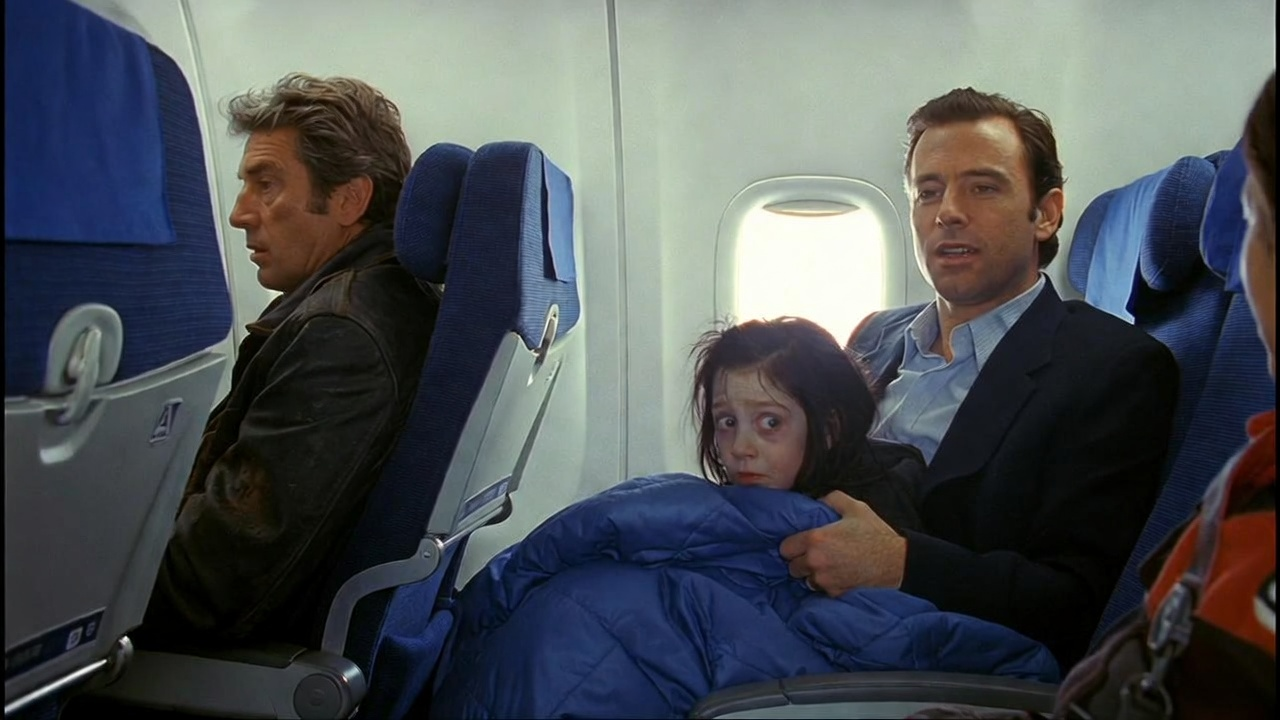
MY FLIGHT WAS 30000 FEET IN THE AIR WHEN I NOTICED THE 6-YEAR-OLD GIRL IN 2B DESPERATELY FOLDING HER THUMB INTO HER PALM OVER AND OVER. THE MAN NEXT TO HER SMILED AND TOLD THE FLIGHT ATTENDANT “SHE HAS SEVERE FLIGHT ANXIETY,” BUT AS A RETIRED DETECTIVE, I KNEW THAT SPECIFIC HAND SIGN WAS A CRY FOR HELP. THAT WAS THE EXACT MOMENT I REALIZED EVERY PASSENGER ON THIS PLANE WAS IN DEADLY DANGER.
I had been sitting in seat 2A on United Flight 1482 from Chicago to Los Angeles, looking forward to a quiet retirement after 25 years with the CPD. The terminal had been absolute chaos, packed with the usual Memorial Day weekend travelers screaming at gate agents. I just wanted to close my eyes, listen to the hum of the jet engines, and completely forget about the dark side of humanity.
Then, a tall man in a sharp navy blazer and a little girl with a frayed pink backpack sat down right next to me in the first-class cabin.
The man introduced himself as Arthur, giving me a firm, practiced handshake that felt a little too calculated. The little girl, whom he called Lily, didn’t say a word, keeping her eyes glued entirely to her scuffed light-up sneakers. She looked about 6 years old, wearing a faded denim jacket that seemed a couple of sizes too big for her small frame.
I nodded, gave them a polite smile, and leaned back against my headrest, trying to mind my own business.

But 10 minutes after takeoff, as the seatbelt sign clicked off, I noticed Lily’s right hand resting flat against her knee. Slowly, deliberately, she tucked her thumb deep into her palm and wrapped her 4 tiny fingers tightly over it, holding it there for 3 seconds.
She released it, paused, and then did it again, her knuckles turning completely white.
My chest went tight as my old law enforcement instincts kicked into overdrive. That wasn’t a nervous tic, and it definitely wasn’t a game; that was the universal signal for help, the covert hand gesture used by domestic violence and human trafficking victims when they cannot speak aloud.
Just as I leaned forward to get a better look at her face, Arthur suddenly grabbed a heavy blue blanket from the overhead bin.
“She has terrible flight anxiety, you see,” Arthur announced loudly to the passing flight attendant, his voice dropping into a deep, comforting baritone that resonated through the front cabin. He aggressively draped the thick fabric over Lily’s lap, completely covering both of her hands and cutting off her only way to communicate. “She gets these awful panic attacks during ascent, so it is best if we just let her rest quietly under here.”
The flight attendant smiled sympathetically, offered him an extra bottle of water, and walked away down the narrow aisle.
But I caught the brief glimpse of absolute terror in Lily’s wide brown eyes right before the blanket covered her chin. Her skin was incredibly pale, and she was sweating so profusely that thin strands of her dark hair were stuck flat against her forehead.
“Are you doing okay there, sweetheart?” I asked softly, leaning over the shared armrest to catch her eye.
Before Lily could even blink, Arthur’s arm shot out like a steel bar, placing his hand firmly on her shoulder. His face maintained a bright, customer-service smile, but his eyes were completely dead, cold, and calculating as they locked onto mine.
“She’s fine, sir, really,” Arthur said, his voice dropping an octave, carrying a subtle, dangerous edge that made the hairs on the back of my neck stand up. “She just needs to sleep, and I would highly appreciate it if you didn’t disturb her.”
I looked down and noticed something that made my stomach drop completely into my shoes.
Arthur’s left sleeve had pulled back just an inch, revealing a thick, jagged scar running across his wrist—and right below it, a highly specialized, military-grade encrypted communication device strapped to his forearm, flashing a tiny, silent red light.
— CHAPTER 2 —
The low, rhythmic hum of the twin jet engines vibrated directly through the floorboards of the cabin, rattling the ice cubes in my plastic cup and sending a cold chill straight down my spine. For twenty-five years with the Chicago Police Department, I had trained my mind to ignore white noise and focus entirely on the anomalies, the tiny cracks in a person’s facade that signaled immediate danger. Right now, every single instinct that had kept me alive on the streets of the South Side was screaming that the man in seat 2C was an imminent, lethal threat.
I kept my gaze fixed straight ahead, staring blankly at the small screen embedded in the seatback in front of me, but my peripheral vision was locked entirely on his left forearm. The heavy fabric of his tailored navy blazer had shifted just enough to expose a thick, dark band of matte-black composite material strapped tightly against his flesh. It wasn’t a standard smartwatch, a fitness tracker, or anything a regular civilian could buy at an electronics store.
The device featured three distinct, low-profile toggle switches and a narrow, rectangular glass display that flashed a sequence of encrypted alphanumeric codes in a dull, faint crimson hue. My chest tightened as I recognized the basic design profile of a military-grade, localized radio frequency jammer and burst-transmitter, the exact kind of tactical gear used by high-tier private security contractors and covert government operators to disrupt local cellular towers and communicate on closed, untraceable channels.
“You like the watch, friend?” Arthur’s voice cut through the cabin noise like a razor blade, his tone dripping with a terrifyingly smooth, artificial warmth.
I didn’t flinch, deliberately slowing my breathing down to a steady, relaxed rhythm before turning my head to face him with the lazy, uninterested smile of a tired vacationer. “Just admiring the craftsmanship, partner. Looks heavy duty. I used to be a bit of a timepiece collector myself back in the day, mostly old mechanical dive watches.”
“It’s a specialized piece of hardware for international logistics management,” Arthur replied smoothly, his lips stretching into a flawless, empty smile that completely failed to reach his dead, unblinking eyes. He pulled his left sleeve down with a swift, aggressive jerk of his wrist, completely concealing the blinking red light and the thick, jagged scar beneath the crisp white cuff of his shirt. “The corporate office likes us to stay constantly connected, no matter where we are in the world, though I prefer to disconnect when I’m traveling with my family.”
He reached over and gently patted the heavy blue airline blanket draped across the little girl’s lap, his fingers pressing down with just enough force to make the fabric taut against her small knees. Lily didn’t move a single muscle, remaining completely paralyzed beneath the weight of his hand, her face still buried deep in the shadow of the oversized denim jacket.
“Family is everything,” I murmured, keeping my voice casual, though my mind was racing through a dozen different tactical scenarios at lightning speed. “She’s a quiet little thing, isn’t she? My granddaughters usually don’t stop talking from the moment we hit the terminal until the wheels touch down.”
“She’s exhausted from the long drive to O’Hare,” Arthur said, his tone final, a subtle but distinct warning for me to back off and drop the conversation entirely. “She’ll sleep for the rest of the flight, which is exactly what she needs right now.”
He turned his head away, effectively ending the interaction, and pulled a sleek, high-end tablet from the seat pocket in front of him, immediately immersing himself in a complex spreadsheet filled with strings of random numbers and coordinates.
I leaned back against my headrest, closing my eyes to make him think I was taking a nap, but behind my closed eyelids, my brain was mapping out the layout of the first-class cabin. We were cruising at thirty thousand feet somewhere over the flat, cornfield-covered expanse of Iowa, moving at over five hundred miles per hour inside a pressurized aluminum tube with absolutely no help from the outside world.
If this man was an international child trafficker or a high-value operative carrying military-grade hardware, I couldn’t just stand up and yell for the flight attendants without risking the lives of every innocent passenger on board. I needed concrete evidence, a secure line of communication to the ground, and a clear understanding of what, exactly, was happening beneath that blue blanket.
Five minutes later, the gentle ding of the overhead PA system echoed through the cabin, followed by the smooth, professional voice of the captain announcing that we had reached our final cruising altitude. I opened my eyes slightly, watching the two first-class flight attendants move into the forward galley to begin prepping the mid-morning beverage service.
Arthur remained completely engrossed in his tablet, his fingers tapping rhythmically against the glass screen, seemingly convinced that he had successfully intimidated the old man sitting next to him.
I waited until he reached into his jacket pocket to retrieve a pair of wireless earbuds, his attention entirely diverted for a brief fraction of a second.
With a slow, deliberate movement, I unbuckled my seatbelt, making a show of groaning loudly and rubbing my lower back to sell the performance of an aging man suffering from a long flight. I stood up, stretching my arms over my head, and stepped out into the narrow aisle, carefully positioning my body to block Arthur’s view of the little girl for a brief, fleeting moment.
As I stepped past their seats toward the forward restroom, I purposely dropped my cheap plastic pen, letting it roll directly under the edge of Lily’s seat.
I bent down quickly to retrieve it, my eyes sweeping beneath the lower edge of the heavy blue blanket that hung down toward the carpeted floor.
My heart completely stopped.
Lily’s small light-up sneakers weren’t resting naturally on the floorboards; her ankles were tightly bound together with thick, industrial-grade black zip ties that cut deeply into the soft fabric of her socks.
Even worse, a thin, flexible black wire extended from beneath the waistband of her oversized jeans, running directly up under her denim jacket and connecting to a small, heavy metallic box tucked securely into the side pocket of her pink backpack.
I straightened up immediately, my face a mask of absolute calm despite the adrenaline surging through my veins like liquid fire, and stepped into the cramped lavatory, locking the door securely behind me.
I stared at my own reflection in the harsh, flickering fluorescent mirror, my hands gripping the edges of the small stainless-steel sink until my knuckles turned white. This wasn’t a standard kidnapping or a domestic human trafficking case; the little girl was being used as a walking mule, or worse, a human shield wired with a localized tactical device that could threaten the entire aircraft.
I needed to contact the cockpit immediately, but with Arthur’s military-grade jammer active in row two, my cell phone was completely useless, showing a mocking “No Service” icon in the top corner of the screen.
I took a deep, steadying breath, splashing cold water onto my face to sharp-focus my senses, knowing that the next move I made would determine whether the two hundred souls on this plane lived or died.
I unlocked the door and stepped back out into the forward galley, where a senior flight attendant with a sharp bob and a kind face was currently setting up a tray of coffee cups.
“Excuse me, miss,” I said softly, leaning over the small counter and lowering my voice to a barely audible whisper that was entirely masked by the roar of the galley ventilation system. “I need you to listen to me very carefully, and I need you to absolutely not look over toward row two while I speak.”
The flight attendant paused, a polite, standard customer-service smile freezing instantly on her face as she noticed the intense, deadly seriousness in my eyes. “Is there a problem with your seat, sir?”
“My name is Thomas Vance, and I am a retired homicide detective with the Chicago Police Department,” I whispered, holding up my old leather wallet just high enough for her to see the tarnished silver star pinned to the interior flap. “The little girl in seat 2B is in extreme danger. Her ankles are zip-tied together beneath that blanket, and she is wired to some kind of electronic device. I need you to go into the cockpit right now, notify the captain, and tell him we have a code-critical security breach in the first-class cabin.”
The flight attendant’s face drained of color so fast I thought she was going to faint right there on the galley floor, her hands trembling violently as she dropped a metal stirring spoon onto the tray with a loud, metallic clatter.
Before she could even open her mouth to reply, the heavy privacy curtain separating the forward galley from the main cabin was violently ripped open.
Arthur stood there in the opening, his tall frame completely filling the narrow space, his dead eyes locking directly onto my silver badge before I could slide it back into my pocket.
“Is there a problem here, Officer?” Arthur asked, his voice no longer warm or polite, but completely cold, flat, and dripping with an overt, lethal promise of violence.
— CHAPTER 3 —
The heavy privacy curtain swung shut behind Arthur, sealing the three of us inside the narrow forward galley. The sound of the aircraft engines seemed to drop to a dull, pressurized thud as the tension in the tiny space spiked to a suffocating level. The senior flight attendant, whose name tag read Sarah, stood completely frozen against the beverage cart, her fingers locked around a metal coffee pot like a makeshift shield. I could see the pulse jumping frantically in her throat, her eyes darting between my hand and the massive, imposing figure blocking our only exit back to the cabin.
“I asked you a question, old man,” Arthur said, his voice dropping into a low, gravelly register that didn’t carry past the curtain but felt like a physical weight in the small space. He didn’t look at Sarah; his eyes were fixed entirely on the slight bulge in my right jacket pocket where my retired CPD badge had just disappeared. “I don’t like people poking their noses into my family’s private business, especially people who think a piece of tarnished silver gives them the right to play hero at thirty thousand feet.”
I kept my hands completely visible, palms open and facing forward at chest level in a classic de-escalation posture, though every muscle in my body was coiled tight. My mind flashed back to a dozen high-stakes standoffs in dark alleys and cramped tenement hallways during my years on the force. The golden rule of surviving those encounters was always the same: keep the suspect talking, control your breathing, and never let them see the exact moment you decide to strike.
“No problem at all, Arthur,” I said, keeping my tone perfectly smooth, casual, and completely devoid of fear. I even managed a small, self-deprecating chuckle to try and take some of the electrical charge out of the air. “Just stretching my legs and asking the lady here for a cup of black coffee to help me stay awake until we hit Los Angeles. At my age, sitting in those first-class seats for more than an hour turns my lower back into a solid block of concrete.”
Arthur didn’t buy the friendly grandpa routine for a single second, his gaze remaining completely flat and analytical as he took a slow step forward into the galley. The sheer size of the man became immediately apparent in the cramped quarters; he was at least six feet four inches tall, with broad, muscular shoulders that completely filled the frame of his tailored navy blazer. There was a military precision to the way he shifted his weight, his boots planting firmly on the non-slip galley flooring in a stance that allowed for immediate, explosive movement in any direction.
“You’re a terrible liar, Detective Vance,” Arthur whispered, pronouncing my name with a chilling, deliberate slowness that sent a fresh spike of adrenaline through my veins. He had clearly read the name on my credentials in the split second before I hid them, and he was using it now to show me exactly how little power I actually held in this situation. “I saw you drop the pen. I saw you looking under the blanket. You think you’re the first washed-up street cop who thought they could spot something out of the ordinary?”
He reached up with his left hand, slowly loosening the silk tie at his throat with a calm, methodical casualness that was far more terrifying than an open gesture of aggression. As his cuff slid back again, the rectangular display of the military-grade device on his wrist flashed another rapid sequence of red numbers, the silent light reflecting off the stainless steel surfaces of the galley.
“Let’s establish some very simple ground rules for the remainder of this flight, Thomas,” Arthur continued, his eyes drilling into mine with a terrifying intensity. “You are going to turn around, walk back to your seat in 2A, and you are going to put on your headphones and stare out the window until the tires touch the tarmac at LAX. If you so much as glance toward the aisle, if you attempt to speak to another member of this crew, or if you try to use any electronic device, the situation on this aircraft will become permanently complicated.”
Out of the corner of my eye, I saw Sarah take a tiny, trembling step backward, her heel clicking softly against the aluminum base of the storage units. She was terrified, but she was also listening intently, her eyes wide as she tried to process the reality of a federal security breach happening right in front of her. I knew I couldn’t let her panic; if she screamed or ran toward the main cabin, it would trigger an immediate reaction from Arthur that we might not survive.
“Arthur, look at me,” I said, lowering my voice even further, adopting the firm, commanding tone I used to control chaotic crime scenes back in Chicago. “I don’t know who you are, and I don’t know who you’re working for, but you need to understand something very clearly. You are on a commercial airliner packed with two hundred completely innocent people. There is nowhere for you to run, and there is no version of this night where you walk off that plane without a dozen federal agents waiting for you at the gate.”
A faint, mocking smile touched the corners of Arthur’s mouth, a cold expression that contained absolutely no human warmth whatsoever. “You’re thinking like a local cop, Thomas. You’re thinking about arrests, warrants, and courtrooms. You completely fail to grasp the scale of the operation you’ve accidentally stumbled into. The people I answer to don’t care about airport security, and they certainly don’t care about the local police department.”
He leaned in closer, the scent of expensive cologne and cold metallic sweat hitting my nose as he spoke directly into my ear. “The little girl in 2B is a very specific type of insurance policy. The device strapped to her waist isn’t a bomb, if that’s what your archaic training is leading you to believe. It’s a localized, high-frequency remote detonation receiver connected directly to a network that can alter the flight controls of this exact aircraft from the ground. If my pulse spikes past a certain threshold, or if that device loses connection with my wrist monitor for more than sixty seconds, the autopilot will initiate a catastrophic nose-dive that no pilot in that cockpit can override.”
My stomach turned completely over, a cold, heavy weight settling deep into my gut as the full, terrifying scope of the nightmare hit me. He wasn’t just a child trafficker; he was a highly sophisticated operative holding the entire plane hostage using the little girl as a human antenna for a remote hijacking system. The zip ties on her ankles weren’t just to keep her from running away; they were to ensure she stayed perfectly positioned within the transmission radius of the hardware hidden inside her backpack.
“You’re bluffing,” I whispered, though my voice sounded hollow even to my own ears as I stared at the highly specialized electronics on his forearm.
“Do you really want to gamble two hundred lives on that assumption, Detective?” Arthur asked smoothly, his dead eyes reflecting absolutely no doubt whatsoever. “Go back to your seat. Sit down. Let us do what we came here to do, and everybody on this plane gets to go home to their families at the end of the day. It’s a very simple equation, even for a retired cop.”
He stepped back, pulling the privacy curtain aside with a sharp, dramatic snap that broke the tense silence of the galley. The bright, warm lights of the first-class cabin flooded back into the space, along with the soft sound of a movie playing from a passenger’s tablet a few rows back. The sudden transition back to the mundane reality of a normal commercial flight was jarring, a stark contrast to the life-or-death struggle playing out in the shadows of the forward galley.
Arthur turned his back on me with complete confidence, entirely certain that he had broken my resolve, and began walking slowly back down the aisle toward row two. He walked with a smooth, unhurried stride, the picture of a relaxed, upper-class businessman returning to his seat after a brief stretch.
I stood in the galley for three long seconds, my breath coming in short, controlled bursts as my mind worked furiously to find a flaw in his armor. Sarah was staring at me, her face completely pale, her lips moving silently as she tried to form a question that her terrified brain couldn’t quite articulate.
“What do we do?” she finally managed to whisper, her hands shaking so violently that the coffee pot clattered loudly against the cart. “Oh my god, what do we do?”
“Listen to me,” I said, grabbing her gently but firmly by the upper arms to force her to lock eyes with me. “I need you to stay completely calm. Do exactly what you were doing. Keep prepping the beverage service. Do not look at him, do not look at the girl, and do not make any sudden movements. I need you to trust me, Sarah. Can you do that?”
She nodded slowly, a single tear spilling over her lower eyelid and tracking down her cheek, but she swallowed hard and gripped the handle of the coffee pot with renewed determination. “Yes. Yes, I can do that.”
“Good,” I said, squeezing her arms once before releasing her. “I’m going back to my seat. I need to observe the girl’s device more closely from across the aisle. Keep an eye on the cockpit door. If the pilots try to come out for any reason, you find a way to delay them without making it look suspicious. We cannot let him think we’re making a move.”
I turned and stepped through the curtain, walking back into the first-class cabin with my head held high, forcing my facial muscles into a mask of completely relaxed indifference. The cabin was quiet, most of the passengers in the front rows either sleeping or buried deep in their laptops, completely oblivious to the fact that they were sitting inside a flying hostage situation.
As I approached row two, I looked down at Lily. She was still sitting perfectly still beneath the heavy blue blanket, her eyes wide and fixed on the seatback in front of her. But as my foot touched the carpet next to her seat, her small right hand slid out from beneath the edge of the fabric for a fraction of a second.
She didn’t make the hand sign this time. Instead, her tiny fingers tapped out a rapid, rhythmic sequence against the side of her denim jacket—three short taps, three long taps, three short taps.
The universal Morse code for SOS.
She was highly trained, far more than a normal six-year-old girl should ever be, and she was actively trying to tell me something about the device hidden in her backpack.
I slid back into seat 2A, buckling my seatbelt with a loud click to let Arthur know I was complying with his demands. He didn’t even look up from his tablet, his fingers continuing their steady, rhythmic tapping against the glass screen, a smug, arrogant smirk settled deep onto his features.
I leaned back against the headrest, closing my eyes and pretending to drift off to sleep, but my mind was operating at absolute maximum capacity. I needed to figure out a way to disable that wrist transmitter without triggering the automated safety threshold he had warned me about. If his pulse spiked, the plane would go down. If the distance between them grew too large, the plane would go down.
I needed to get closer to the girl’s backpack, but Arthur was sitting directly between us, his massive frame acting as an impenetrable physical barrier.
Suddenly, the aircraft shuddered violently as we hit a massive pocket of clear-air turbulence over the midwestern plains. The overhead bins creaked loudly, the floorboards groaned under the sudden gravitational strain, and the captain’s voice crackled instantly over the PA system, ordering the flight attendants to take their seats immediately.
The sudden lurch threw Arthur slightly off balance, his tablet slipping from his fingers and sliding across the carpeted floor straight toward my feet.
As he bent down to reach for it, the fabric of his blazer pulled tight across his back, and I noticed a tiny, metallic glint protruding from the interior pocket of his jacket—the unmistakable outline of a secondary manual override key.
At that exact instant, a sharp, high-pitched electronic whine began to emanate from beneath Lily’s blue blanket, and the red light on Arthur’s wrist device began to flash in a frantic, erratic pattern that I hadn’t seen before.
Arthur froze, his face turning an ashen shade of gray as he stared at his wrist, his arrogance vanishing instantly to be replaced by a look of sheer, unadulterated panic.
— CHAPTER 4 —
The high-pitched electronic whine from beneath the blue blanket grew rapidly in volume, a piercing, metallic frequency that seemed to vibrate directly inside my skull. It wasn’t an alarm meant to attract attention; it was the sound of a highly specialized electrical component overloading, a localized capacitor struggling to maintain its frequency under the sudden atmospheric pressure shift of the heavy turbulence.
Arthur scrambled backward into his seat, his massive frame slamming against the leather cushions as his fingers tore frantically at the buttons of his navy blazer. The smug, calculated mask he had worn just seconds ago was completely shattered, replaced by the raw, frantic desperation of a man who realized his control over the situation was slipping away at thirty thousand feet.
“Shut it down,” Arthur hissed under his breath, his voice laced with a panicked urgency that he could no longer conceal. He wasn’t looking at me; his eyes were glued to the rectangular glass display on his left wrist, which was now flashing a sequence of violent, jagged crimson lines instead of the steady alphanumeric codes from before. “Disconnect the primary relay. Now!”
He was tapping furiously at the tiny toggle switches on the side of the device, his knuckles white, his breath coming in ragged, shallow gasps. I watched his chest rise and fall with increasing speed, and my mind instantly flashed back to his warning in the galley: If my pulse spikes past a certain threshold, the autopilot will initiate a catastrophic nose-dive.
He was panicking himself into a heart attack, and if his heart rate triggered the automated safety protocol of the tactical network, we were all going to die before I could even attempt a physical intervention.
“Arthur, breathe,” I said, my voice dropping into a low, steady, authoritative tone that I had used a thousand times before when negotiating with armed suspects on the brink of a nervous breakdown. I leaned across the shared armrest, deliberately placing myself within his field of vision but keeping my movements slow, predictable, and completely unthreatening. “Look at me. In and out, nice and slow. You’re hyperventilating, partner. If you pass out or your heart rate blows past the limit, that device is going to think you’re dead. Control your breathing right now.”
He locked his dead, terrified eyes onto mine, the pupils dilated so wide that the dark irises were almost entirely swallowed up. For a brief, surreal second, the predator had become the prey, trapped inside the very cage of technology he had constructed to hold the rest of us hostage. He took a long, shaky breath, holding it in his lungs for three seconds before exhaling with a shuddering groan that rattled deep in his chest.
“The turbulence,” Arthur muttered, his fingers still trembling against the toggle switches as the red lines on the display began to stabilize slightly, though the high-pitched whine from Lily’s backpack continued to vibrate through the row. “The sudden altitude drop created a localized static discharge. It’s interfering with the proximity handshake between the wrist monitor and the main receiver in the backpack. The signal strength is dropping below the safety margin.”
“Then you need to clear the interference,” I said, my mind working at absolute warp speed as I analyzed the physical layout of the devices. “The blanket. The heavy blue fabric has metallic anti-static threads woven into it for airline safety. It’s acting like a partial Faraday cage, dampening the low-frequency radio signal between your wrist and her backpack. Pull the blanket off her, Arthur. Do it now before the connection drops completely.”
He hesitated for a fraction of a second, his tactical training screaming at him not to expose the little girl’s bound ankles and the wired device to the rest of the cabin. But the frantic, high-pitched whine from the backpack was growing sharper, and the crimson display on his wrist began to emit a steady, rhythmic beep that sounded dangerously like a countdown timer.
With a cursed muttered under his breath, Arthur reached over and violently ripped the heavy blue blanket away from Lily’s lap, throwing it carelessly into the aisle.
The full reality of the horror was now completely exposed to the open cabin, though the high seatbacks of the first-class section still shielded us from the immediate view of the passengers sitting further back in economy. Lily sat perfectly rigid, her tiny ankles bound tightly with the thick black zip ties, her skin so pale it looked almost translucent under the harsh overhead reading lights.
The thin, flexible black wire I had spotted earlier was now clearly visible, protruding from beneath her denim jacket and running directly into a small, modified tactical housing unit that had been crudely bolted to the side structure of her pink backpack. A small, circular LED light on the face of the housing unit was flashing a bright, angry amber color, pulsing in perfect synchronization with the high-pitched whine.
“Lily, stay completely still,” I murmured softly, keeping my eyes fixed on the device while Arthur continued to manipulate his wrist monitor, trying to force a manual reset of the encrypted connection.
The little girl didn’t blink, her wide brown eyes locked onto mine with an intelligence and a level of absolute trust that broke my heart. She didn’t cry, she didn’t whimper; she simply shifted her right hand slightly, her tiny fingers tapping against the denim of her jeans again in that rapid, rhythmic sequence: three short, three long, three short.
But this time, she didn’t stop at the SOS signal. She paused for a brief second, and then tapped out two more distinct characters: B and 1.
B1.
My mind raced through my old military manuals and the specialized briefings I had attended during my brief stint with the federal counter-terrorism task force in the late nineties. B1 wasn’t a random combination of letters and numbers; it was the standard technical designation for a primary bypass circuit on early-generation tactical hardware manufactured by a specific defense contractor.
The little girl wasn’t just a victim; she had been forced to memorize the technical specifications of the device she was carrying, or perhaps someone on the inside had given her the key to disabling it before she was forced onto this flight.
“Arthur,” I said, keeping my tone completely neutral to prevent another spike in his heart rate. “The amber light is still pulsing. The manual reset on your wrist isn’t working because the receiver in the backpack has entered a localized loop. You need to input the bypass code directly into the secondary terminal, or the connection is going to drop permanently in less than thirty seconds.”
Arthur’s head snapped toward me, a look of profound suspicion clouding his features despite his obvious panic. “How do you know about the bypass loop, old man?”
“I spent twenty-five years dealing with tactical hardware on the streets of Chicago, Arthur,” I lied smoothly, leaning over the armrest to get a closer look at the flashing amber light. “I’ve seen this exact type of encrypted relay used by high-end cartel operations for remote secure communications. If the receiver enters a loop due to static interference, you can’t clear it from the transmitter end. You have to use the physical bypass key on the housing unit itself.”
I pointed toward the small, metallic glint protruding from his interior jacket pocket—the outline of the secondary manual override key I had spotted during the turbulence. “Use the key, Arthur. Insert it into the primary bypass port on the side of the backpack housing and input the code B1 to force a hard reset of the local receiver. Do it now, or we’re all going down over Nebraska.”
The countdown beep on his wrist device was growing faster now, the intervals between the high-pitched tones dropping to less than half a second. The red display was flashing a single, terrifying word over and over: WARN… WARN… WARN.
Arthur’s face was slick with sweat, his breathing completely erratic as the sheer pressure of the situation overwhelmed his calculated defenses. He reached into his interior jacket pocket with a trembling hand, his fingers wrapping around a small, heavy silver key with a complex, cylindrical barrel design.
He lunged forward across the small space between our seats, leaning his entire upper body over Lily’s lap as he reached for the tactical housing unit bolted to her pink backpack. His focus was entirely consumed by the flashing amber light, his eyes narrowed as he tried to align the complex barrel of the key with the tiny, recessed lock cylinder on the side of the device.
This was my moment. The one fraction of a second where his guard was completely down, his physical posture compromised, and his attention entirely diverted from me.
I didn’t hesitate. Twenty-five years of muscle memory took over my body in a single, explosive burst of movement.
I reached out with my left hand, wrapping my fingers tightly around his thick right wrist to pin his arm against the backpack, preventing him from inserting the key. At the same time, my right hand shot forward, my fingers driving hard into the soft tissue of his throat in a brutal, precise trachea strike designed to incapacitate him instantly without stopping his heart.
Arthur let out a choked, wet gasp, his eyes widening in absolute shock as his airway collapsed slightly under the force of the blow. He tried to pull back, his massive strength kicking in as he attempted to throw his weight against me, but I used his own momentum against him, twisting his right wrist sharply downward to force him toward the carpeted floor of the aisle.
The silver key slipped from his paralyzed fingers, bouncing softly against the carpet before rolling directly into the shadow beneath my seat.
But as Arthur fell forward, his left arm flailed wildly in the air, the heavy matte-black wrist device slamming hard against the solid metal frame of the first-class armrest with a sickening, metallic crunch.
The rectangular glass display shattered instantly into a dozen tiny fragments, and the steady, rhythmic countdown beep suddenly transformed into a single, continuous, ear-piercing scream of pure electronic static.
Across the aisle, the small LED light on Lily’s backpack shifted instantly from a pulsing amber to a solid, brilliant, unblinking red.
At that exact second, the floorboards beneath our feet tilted sharply downward at a terrifying, unnatural angle, and the entire aircraft entered a violent, uncontrolled nose-dive that sent the unsecured beverage carts in the forward galley slamming into the cabin walls with a deafening explosion of breaking glass.
— CHAPTER 4 —
The deafening scream of pure electronic static from the shattered wrist monitor cut through the cabin, sounding like the death rattle of a dying machine. My stomach completely bottomed out as the nose of the massive Boeing 737 pitched downward with a violent, sickening lurch that defied every law of aviation physics. The sudden, extreme negative G-forces lifted my feet completely off the carpeted floor, pinning my shoulders hard against the upper frame of my leather seat.
Across the narrow aisle, the small LED light on Lily’s pink backpack shifted from a pulsing amber to a brilliant, unblinking crimson. It looked like an angry, glowing eye in the dim cabin lighting, a silent confirmation that the automated failsafe had just been triggered. The rhythmic hum of the twin jet engines instantly morphed into a terrifying, high-pitched roar as the aircraft began tearing through the sky at an impossible angle.
In the forward galley, the heavy metal beverage carts that Sarah had been prepping were instantly transformed into deadly, unguided projectiles. They smashed into the bulkheads with a deafening explosion of breaking glass, plastic cups, and pressurized soda cans that rained down across the first-class cabin. I heard a chorus of sharp, terrified screams erupt from the passengers in the rows behind me as their bodies were thrown violently against their seatbelts.
Arthur was flat on his back in the middle of the aisle, his massive frame sliding forward toward the cockpit door due to the steep angle of the descent. He was clutching his throat, his face a dark, suffocating shade of purple as he struggled to draw air past his bruised trachea. Even in his semi-paralyzed state, his eyes were wide with a frantic, primitive terror as he watched the shattered remains of his wrist monitor spark against the floor.
“The key!” I roared, my voice barely audible over the deafening rush of wind and the screaming static of the broken transmitter.
I strained against the crushing force of the seatbelt, my muscles burning as I forced my right arm downward into the narrow gap beneath my seat. The plane shuddered violently, hitting another massive pocket of clear-air turbulence that threatened to rip the wings straight off the fuselage. My fingers brushed against the cold, smooth metal of the cylindrical barrel key that had slipped from Arthur’s hand just seconds before.
I gripped it tightly, my knuckles turning white as I pulled my arm back up, fighting the immense gravitational pressure pulling me forward. I unbuckled my seatbelt with a sharp, metallic click, instantly causing my body to lift off the seat and float unsteadily in the zero-gravity environment of the dive. I lunged across the aisle, grabbing the armrest of seat 2B to anchor myself as the world spun chaotically around me.
Lily was staring straight at me, her small body pinned back deep into the cushions by the extreme force of the descent. Despite the absolute madness breaking loose in the cabin, she didn’t scream; her tiny jaw was locked tight, her wide brown eyes filled with an unspoken plea for survival. The black wire running from her denim jacket to the backpack housing unit was vibrating violently, hummed with a dangerous, overloading current.
“Hold on, sweetheart!” I shouted, my left hand gripping the top of her seatback while my right hand fought to align the silver key with the tiny, recessed lock cylinder on the side of the device.
The angle of the plane was getting steeper by the second, the nose pointed almost directly toward the flat farmlands of Nebraska miles below us. Through the small cabin window, I could see the horizon tilting at a horrific, unnatural angle, the blue sky rapidly disappearing to be replaced by a spinning expanse of green and brown earth.
My hand was shaking violently from the adrenaline and the intense vibrations of the airframe. The first time I tried to insert the key, the tip scraped harmlessly against the matte-black composite casing, leaving a jagged white scratch. The continuous electronic scream from the shattered wrist monitor was growing sharper, reaching a crescendo that suggested the automated system was about to finalize the catastrophic control override.
“B1,” I whispered to myself, remembering the cryptic Morse code characters Lily had tapped out against her jeans just moments before. “Bypass circuit one.”
I took a fraction of a second to steady my breathing, locking my eyes entirely onto the tiny keyhole, ignoring the screams of the passengers and the deafening roar of the engines. I jammed the silver key forward, feeling a distinct, mechanical click as the cylindrical teeth finally aligned perfectly with the internal pins of the lock.
I twisted the key ninety degrees to the right with every ounce of strength left in my fingers.
The solid red light on the face of the housing unit instantly blinked out, replaced by a dull, unblinking green. The piercing electronic whine from the backpack died instantly, cutting off the continuous scream of static from the broken wrist monitor like a severed wire.
For a terrifying, heart-stopping second, nothing happened. The plane remained locked in its lethal, vertical trajectory, the wind howling outside the thick acrylic windows with a sound like tearing metal.
Then, with a massive, shuddering groan that vibrated through every single rivet in the fuselage, the aircraft’s automated flight computer registered the manual bypass. The primary flight controls suddenly snapped back into a neutral position, the fly-by-wire system relinquishing command back to the human hands waiting in the cockpit.
I could feel the distinct, heavy pull of the elevator flaps engaging as the pilots in the front cabin fought with everything they had to pull the nose up. The gravitational forces instantly reversed, shifting from a weightless dive to a crushing, suffocating positive-G pull that slammed my body violently down onto the carpeted floor of the aisle.
My shoulder hit the metal track of the seats with a dull, sickening thud, a sharp spike of pain exploding across my collarbone as the aircraft slowly, agonizingly leveled out. The roar of the engines began to stabilize, dropping back down to a deep, pressurized hum as the plane finally found its footing in the thin air at twenty-four thousand feet.
I lay flat on my back in the aisle, my chest heaving as I stared up at the overhead oxygen mask compartments, which had all popped open during the dive, the yellow plastic masks dangling like strange, mechanical fruit.
A few feet away from me, Arthur was groaning softly, his massive body curled into a defensive fetal position on the floor. The blow to his trachea combined with the extreme physical stress of the high-G recovery had completely broken his will to fight. He was coughing weakly, his hands wrapped around his throat as he tried to clear his airway, his lethal arrogance entirely gone.
I pushed myself up onto my hands and knees, my body aching from the impact, and looked up at Lily.
The little girl was looking down at me from her seat, a single, silent tear finally escaping her eye and tracking through the layer of cold sweat on her cheek. She extended her small right hand toward me, her fingers completely relaxed, no longer forming the covert signal for help, no longer tapping out desperate messages in Morse code.
“It’s over, Lily,” I breathed, reaching up to gently pat her small hand, my voice trembling with a mixture of exhaustion and profound relief. “You’re safe now. I promise you, you’re safe.”
The privacy curtain to the forward galley was slowly pushed aside, and Sarah, the flight attendant, peered out. Her hair was completely disheveled, and a small cut on her forehead was bleeding slightly from where she had been thrown against the beverage cart, but her eyes were clear and focused.
“Detective Vance?” she called out, her voice shaking as she looked at the absolute chaos in the first-class cabin. “The captain just radioed the cabin crew. He said the flight controls suddenly unlocked. We’re diverting to Omaha for an emergency landing. Federal authorities are already mobilizing on the ground.”
“Good,” I said, pushing myself up to a standing position and leaning heavily against the armrest of seat 2A. I reached down and picked up the thick blue airline blanket from the floor, carefully draping it back over Lily’s legs to keep her warm, though this time, her bound ankles were no longer a hidden secret. “Tell the captain to have an ambulance and a tactical team ready at the gate. We have a lot of clearing up to do when we hit the ground.”
I sat back down in my seat, my eyes locked onto Arthur’s shivering form on the floor, knowing that while we had survived the nightmare at thirty thousand feet, the true conspiracy behind the little girl in 2B was only just beginning to unravel.
— CHAPTER 5 —
The violent transition from a near-vertical terminal dive to sudden, crushing level flight felt like slamming flat into a brick wall at five hundred miles per hour. My body was pinned ruthlessly against the rigid metal tracking of the first-class cabin floor, every square inch of my skeleton absorbing the brutal, shuddering vibrations of the airframe as the pilots fought the controls. A sharp, white-hot spike of agony flared across my right collarbone, a clear sign that my old bones hadn’t taken kindly to being tossed around like a rag doll inside a pressurized aluminum tube.
Above us, the cabin was a surreal landscape of absolute, unfiltered panic. The overhead oxygen mask compartments had all snapped open during the violent descent, sending hundreds of bright yellow plastic cups dangling down on thin plastic tubes, swaying rhythmically like mechanical jellyfish. The air was thick with the pungent, metallic odor of burnt electrical wiring, scorched insulation, and the sharp scent of spilled hot coffee pouring out from the forward galley.
Through the chaos, my eyes locked instantly onto the little girl in seat 2B. Lily was still trapped in the center of her seat, her small shoulders jammed deep into the leather cushions by the immense positive G-forces of our recovery. Her face was entirely bloodless, her skin a ghostly, translucent shade of white that made her wide brown eyes look impossibly large and filled with terror. The pink backpack was wedged sideways between her hip and the armrest, the modified tactical housing unit still glowing with that ominous, solid green light I had forced with the manual bypass key.
A few feet to my left, Arthur was letting out a series of ragged, wet wheezes as he lay curled in a tight fetal position in the center of the aisle. The crushing force of the pull-out had slammed his massive frame directly onto the hard floor, and the trachea strike I had delivered earlier was still preventing his lungs from drawing a clean, full breath of air. His hands were clutched tightly around his throat, his expensive navy blazer torn at the shoulder, completely stripped of the cold, untouchable arrogance that he had used to terrorize us just minutes ago.
“Lily!” I choked out, my voice sounding incredibly raspy and hollow as I fought against the lingering gravitational pressure to push myself up onto my knees. Every single muscle in my lower back screamed in protest, a grim reminder of my twenty-five years on the concrete streets of Chicago, but I ignored the pain and crawled the remaining two feet across the aisle. “Lily, can you hear me? Look at my face, sweetheart. Are you hurt?”
She didn’t answer with words, but her small head moved in a tiny, fractional nod, her eyes locked onto mine with a level of absolute intensity that I had never seen in a child her age. She slowly slid her right hand out from the side of her denim jacket, her fingers trembling so violently she could barely keep them straight. She didn’t make the universal sign for anxiety, and she didn’t tap out Morse code; she simply reached out and gripped the rough leather sleeve of my jacket with a desperate, crushing strength.
“I’ve got you,” I whispered, my left hand wrapping gently around her tiny fingers to let her know she wasn’t alone in the dark. “I’ve got you, Lily. The plane is level. We’re going to be okay. I promise you, I am not letting anyone take you anywhere.”
I looked down at her ankles, where the thick, industrial-grade black zip ties were still biting deeply into the soft denim of her jeans and the fabric of her light-up sneakers. The skin around the plastic bands was already beginning to swell, turning a angry, bruised shade of purple from the lack of circulation. I reached into my pocket, searching for my old pocket knife, but realized with a sudden jolt of frustration that it had been left behind in my luggage due to TSA regulations.
“Sarah!” I shouted, turning my head toward the forward galley privacy curtain, which was currently hanging by a few ripped plastic rings, swaying violently with the movement of the aircraft. “Sarah, I need a pair of heavy shears from the medical kit! Right now!”
The curtain was pushed aside, and the senior flight attendant stumbled out into the cabin, her hands gripping the edges of the overhead bins to maintain her balance as the plane continued to shudder through the choppy air. Her neat, professional appearance was completely gone; her hair was a disheveled mess, her uniform shirt was stained with spilled dark liquid, and a thin line of bright red blood was tracking down from a small laceration on her forehead. But her eyes were completely clear, filled with the fierce, protective determination of a crew member who had just looked death in the face and refused to blink.
“I’m here, Detective,” Sarah said, her voice shaking but completely functional as she dropped to her knees next to me, sliding a heavy pair of stainless-steel trauma shears across the carpet. She looked past my shoulder, her breath catching sharply in her throat as she saw the complex electronic housing unit bolted to Lily’s backpack and the thick wire running beneath her jacket. “Oh my god… is it… is it deactivated?”
“The bypass loop is holding for now,” I said, grabbing the shears and immediately positioning the blunt tip beneath the thick plastic of the zip ties around Lily’s ankles. “The indicator light is green, which means the flight control override has been completely severed from the ground network. But we don’t know how much time we have before the secondary system tries to re-establish a handshake with Arthur’s broken wrist monitor.”
With two swift, powerful snaps of the heavy blades, I cut through the thick plastic bands, releasing the pressure on the little girl’s legs. Lily let out a soft, involuntary sigh of relief, immediately pulling her knees up toward her chest and rubbing her bruised ankles with her tiny hands. The sheer resilience of the child was staggering; she wasn’t crying, she wasn’t hysterical, she was simply adapting to the survival situation with the cold precision of a trained operator.
“Sarah, I need you to listen to me very carefully,” I said, leaning closer to the flight attendant so my words wouldn’t carry back into the main cabin where the passengers were still recovering from the panic. “The man on the floor is a highly sophisticated operational asset. He told me his people have the ability to hijack this aircraft’s fly-by-wire system remotely from the ground using this girl’s backpack as a localized antenna. We need to completely isolate this hardware from any incoming radio frequencies.”
Sarah nodded rapidly, her face pale but completely focused. “What do you need me to do? Tell me what to do, Detective.”
“The galley,” I replied, pointing toward the forward storage area. “You have large, heavy-duty aluminum storage containers for the catering supplies, right? The thick foil-lined boxes?”
“Yes, the standard metal meal carriers,” she said, her eyes widening as she caught onto my train of thought. “They’re solid aluminum plating with heavy steel latches.”
“Perfect,” I said, a grim smile touching my lips. “A solid aluminum container will act as a perfect, improvised Faraday cage. If we place that backpack inside one of those boxes and seal the latch, it will completely block any high-frequency radio waves or satellite signals from reaching the internal receiver. It will isolate the device entirely until we can get a federal bomb squad on board.”
“I’ll get it right now,” Sarah whispered, pushing herself up from the floor and scrambling back into the chaotic wreckage of the forward galley, her shoes crunching loudly on the fragments of broken glass.
I turned my attention back to Arthur, who was now attempting to push his massive upper body off the floor, his elbows trembling under his immense weight. He let out a ragged, bloody cough, spitting a small spray of crimson onto the carpet before locking his dead, venomous eyes onto my face. The sheer hatred radiating from the man was palpable, a dark, toxic energy that filled the narrow aisle.
“You… you stupid, arrogant old bastard,” Arthur wheezed, his voice a broken, raspy whisper that sounded like tearing sandpaper. He glared at the green light on the backpack housing unit, his fingers twitching toward the shattered remnants of the transmitter on his wrist. “You think you’ve saved them? You think putting a band-aid on a localized system changes anything? You have absolutely no idea what you’ve just set in motion.”
“Save your breath, Arthur,” I said cold, stepping forward and placing the heavy heel of my leather boot directly onto the center of his chest, forcing him back down onto the floor with a firm, unyielding pressure. “You’re done. Your device is broken, your payload is offline, and your airway is currently half-collapsed. The only thing you need to worry about right now is whether you’re going to survive the trip to the hospital before the FBI gets their hands on you.”
“The FBI?” Arthur let out a bitter, choking laugh that quickly degenerated into another violent coughing fit. “You think the Bureau can protect you? You think they can protect her? This flight wasn’t a kidnapping, Vance. It was an extraction. And the people we are running from have eyes in every single federal agency in the United States.”
He leaned his head back against the floor, a dark, terrifying smile spreading across his bloody lips as he stared up at the dangling yellow oxygen masks. “The moment this aircraft touches the ground in Omaha, a automated beacon will trigger. They will know exactly where she is. They will know the payload has been compromised. And they will burn that entire airport to the ground to keep her from talking.”
Before I could reply, Sarah emerged from the galley, dragging a heavy, rectangular aluminum storage box with a reinforced steel handle. She set it down in the aisle with a loud, metallic thud, quickly flipping open the dual heavy latches on the front of the container.
“It’s empty,” she said, her breath coming in short gasps. “Get the backpack inside.”
I turned back to Lily, gently reaching around her shoulders to unclip the straps of the pink backpack from her small frame. She didn’t resist, allowing me to carefully lift the heavy bag away from her seat. The thin black wire running beneath her jacket resisted slightly, and I realized with a sudden jolt of adrenaline that it wasn’t just a simple connection cable; it was woven directly into the fabric of an inner lining she was wearing.
“Lily, I need to take your jacket off,” I said softly, my fingers quickly working the large denim buttons of her oversized coat. “I need to see where that wire goes, okay? I need you to trust me.”
She nodded again, her small arms sliding out of the heavy denim sleeves as I pulled the jacket away.
What I saw beneath the fabric made the blood in my veins turn completely to ice.
Lily wasn’t wearing a normal shirt. Tied tightly around her small, fragile torso was a specialized, medical-grade compression vest made of thick, black nylon material. Woven into the center of the vest, directly over her breastbone, was a flat, rectangular electronic matrix covered in small, pulsing fiber-optic cables that lit up with a faint, iridescent blue hue. The black wire from the backpack didn’t just connect to a battery; it was hard-wired into a specialized, subcutaneous sensor array that was physically taped to her bare skin, measuring her internal biometric data in real-time.
“Oh my god,” Sarah gasped, covering her mouth with her hand as she stared at the high-tech harness wrapped around the six-year-old child. “What is that? What did they do to her?”
“It’s a biometric lock,” Arthur’s broken voice cut through the silence from the floor, his terrifying smile widening as he watched my expression. “The device in the backpack doesn’t just read my pulse, Vance. It reads hers. The extraction network required a living, breathing genetic match to maintain the decryption key for the ground data servers. If you remove that vest, or if her heart stops beating for even three seconds, the entire global database deletes itself permanently.”
He leaned his head forward, his eyes boring into mine with a sudden, vicious triumph. “And guess what happens to the flight control system of any aircraft within a fifty-mile radius when that encryption key is wiped? The ground network initiates a localized electromagnetic pulse to erase the evidence. Look out the window, Detective. Look at the navigation screen.”
My head snapped toward the small screen on the seatback in front of me. The digital map, which had previously shown our position over Nebraska, was suddenly flickering wildly, the lines dissolving into a chaotic mass of green static.
Suddenly, the overhead cabin lights flickered twice and died completely, plunging the entire aircraft into a dim, terrifying twilight as the backup emergency floor strips clicked on with a low, ominous hum. From the cockpit door, a sharp, continuous warning horn began to blare, a sound that signaled a total, catastrophic loss of primary electrical generation.
— CHAPTER 6 —
The rhythmic, automated flashing of the floor-level emergency lights cast a sickly amber glow across the cabin, slicing through the sudden, suffocating darkness like a beacon in a shipwreck. The high-pitched warning horn from the flight deck was deafening, a continuous, mechanical shriek that told me the aircraft’s primary electrical generators had just been completely fried. I could feel the sudden, terrifying drag on the airframe as the digital flight control displays blinked out, forcing the heavy commercial airliner to rely on its mechanical backup systems at twenty-four thousand feet.
My heart hammered against my ribs like a trapped bird, the adrenaline in my veins burning cold as the true horror of Arthur’s words began to register. This wasn’t just a localized kidnapping or an isolated tactical extraction; the little girl sitting in seat 2B was a living, breathing component of an incredibly sophisticated, weaponized data network. The complex electronic compression vest wrapped tightly around her small torso wasn’t designed to explode with fire and shrapnel; it was designed to trigger an localized electromagnetic pulse that would drop every aircraft within a fifty-mile radius straight out of the sky.
“Sarah, keep her completely still!” I roared, my voice raw and strained as I fought to maintain my footing on the tilting floorboards of the aisle. I lunged forward, my hands gripping the reinforced aluminum edges of the storage container we had just pulled from the forward galley. “We don’t have time to dismantle the vest! We need to get the backpack into the box and seal the latches before the primary ground relay attempts to broadcast the hard-wipe command!”
The senior flight attendant didn’t hesitate, her maternal instincts completely overriding the paralyzing terror that had frozen the rest of the passengers in the rows behind us. She reached over the armrest, her trembling fingers gently but firmly guiding Lily’s small, fragile arms out of the remaining straps of the heavy pink backpack. The child didn’t make a sound, her wide brown eyes locked onto my face with a profound, terrifying level of trust that made my jaw set in determination.
With a sharp, aggressive jerk, I ripped the heavy nylon bag away from her seat, the thin black wire connecting it to her compression vest straining until the rubber insulation began to tear. The small LED light on the face of the tactical housing unit was now flashing a violent, erratic purple, a clear indication that the system was actively attempting to re-establish its encrypted satellite handshake.
I slammed the backpack down into the hollow center of the aluminum meal carrier, the heavy canvas fabric crumpling against the cold metal walls with a dull, hollow thud. I grabbed the solid aluminum lid, forcing it down against the rubber seals with all the weight of my upper body, my muscles burning from the intense physical exertion.
“Help me with the latches!” I shouted to Sarah, my breath coming in short, ragged gasps as the aircraft took another violent, unsteadily lurch through the darkened sky.
Sarah dropped to her knees beside me, her fingernails tearing against the heavy-duty steel clasps on the front of the container as she fought to force them into the locked position. Together, we threw our combined weight against the metal fasteners, feeling a distinct, heavy snap vibrate through the box as the dual latches clicked into place.
The moment the aluminum seal was finalized, the high-pitched electronic whine that had been vibrating through the floorboards since the dive died instantly, cut off by the improvised Faraday cage.
I slumped back against the base of seat 2A, my chest heaving as I stared at the sealed metal box, waiting to see if our desperate gamble had been enough to save the aircraft’s systems. For three agonizing seconds, the cabin remained plunged in the amber twilight of the emergency lights, the continuous warning horn from the cockpit continuing to wail its message of impending disaster.
Then, with a sudden, loud clunk from the overhead electrical panels, the primary cabin lights flickered back to life, flooding the first-class section with bright, fluorescent white light. The digital navigation screen on the seatback in front of me blinked twice, the chaotic green static disappearing to reveal our flight path once again, showing our position rapidly approaching the eastern border of Nebraska.
“We did it,” Sarah whispered, a single, broken sob escaping her lips as she buried her face in her stained hands, her shoulders shaking violently from the release of pure, unadulterated terror. “Oh my god, Detective… the lights are back on. The engines are stabilizing.”
“Don’t celebrate just yet, Sarah,” I muttered, my voice tight as I pushed myself back up to a standing position, using the headrest of my seat to stabilize my aching body. I looked down into the aisle, where Arthur was still lying flat on his back, his dead, venomous eyes staring up at me with a mixture of shock and cold, calculation. “We’re still flying a giant target through the middle of the country, and the people this man answers to still know exactly what flight we’re on.”
Arthur let out a wet, raspy chuckle, a thin line of dark blood bubbling at the corner of his lips as he struggled to sit up against the base of the opposite seat row. “You think… you think an aluminum box is going to stop a satellite-directed tactical intercept, Vance? You’ve delayed the deployment sequence by a few minutes, nothing more.”
He raised his left arm, pointing the shattered, sparking remains of his wrist monitor directly at my face like a weapon. “The primary server array in Virginia already registered the initial connection drop. The automated protocol doesn’t require a continuous signal to initiate the final cleanup phase. It just requires a lack of confirmation from my end.”
He leaned his head back against the leather cushions, his chest rising and falling in shallow, irregular movements that told me his heart rate was still dangerously close to the safety threshold. “The moment we drop below ten thousand feet on our approach to Omaha, the automated ground units will deploy. They don’t need the aircraft to crash, Detective. They just need to make sure that little girl never leaves the tarmac alive.”
I stepped forward, my heavy boot planting firmly onto his left wrist, crushing the remaining electronic components of his monitor into the carpet until the sparks died out completely. “Then we’ll just have to make sure the welcome wagon is bigger than anything your people can handle, Arthur.”
I turned back to Lily, who was now sitting quietly in her seat, her small fingers reaching down to touch the flat electronic matrix woven into the center of her black compression vest. The iridescent blue lights on the fabric were still pulsing in a slow, steady rhythm, tracking her heartbeat with a terrifying precision that reminded me we were still sitting next to a ticking clock.
“Lily,” I said, dropping my voice to a gentle, reassuring whisper as I sat down on the edge of the armrest next to her. “I need you to tell me something, sweetheart. The people who put that vest on you… did they give you a code? A number? Anything to turn the lights off?”
The little girl looked up at me, her lower lip trembling slightly for the first time since the nightmare had begun. She slowly raised her right hand, her fingers moving in a small, hesitant motion before she began to tap against the leather of the armrest.
Three short taps. Three long taps. Three short taps.
She was repeating the SOS signal, but as I watched her hand, I realized she wasn’t just repeating what she had done before. She was waiting for a response. She was looking for a specific pattern that would confirm I knew the next step in the sequence.
Before I could decipher her meaning, the forward privacy curtain was violently thrown open again, and a tall, broad-shouldered man in a pilot’s uniform burst into the first-class cabin. It wasn’t the captain; it was the first officer, his face completely pale, his shirt soaked through with sweat, a heavy iron crash axe clutched tightly in his right hand.
“Who is the law enforcement officer in here?” the first officer shouted, his eyes darting wildly across the chaotic wreckage of the cabin before locking onto my silver badge pinned to my belt. “The captain just received an encrypted tactical warning over the primary ACARS system from North American Aerospace Defense Command. We have two unidentified military-grade aircraft tracking our position from the south, and they’ve just ignored three direct orders to identify themselves.”
The air in the cabin turned instantly to ice once again as the roar of the engines seemed to intensify, the heavy commercial jet beginning a steep, banking turn to the left that sent the aluminum storage box sliding across the floor.
“They’re not here to intercept us, Officer,” I said, my voice dropping into a deadly, focused register as I looked out the cabin window at the vast, darkening sky over the midwestern plains. “They’re here to shoot us down.”
The roar of the engines changed from a stable hum to a desperate, high-frequency whine as the first officer fought the controls. Air Traffic Control was screaming through his headset, but the primary radio channel was fading fast, breaking up into a wash of electronic static that made my teeth ache. I looked out the scratched window, my eyes straining against the encroaching twilight, searching the empty Iowa sky for the two dark shapes stalking us.
“They aren’t answering on any civilian or military hail,” the first officer barked, his knuckles turning dead white on the handle of the crash axe. “Omaha is completely off the air. The entire regional radar grid just went dark, and the captain is flying us blind on a manual standby compass.”
I stood up, gripping the edge of the first-class privacy bulkhead as another heavy wave of turbulence slammed the floorboards upward. “Arthur’s people didn’t just target this plane, son. They initiated a high-tier infrastructure blackout across the entire tri-state sector to make sure nobody can see what happens to us.”
On the floor, Arthur let out a wet, bubbling cough, his face twisted into a grotesque, triumphant smirk despite the bruising on his throat. “You crossed the line, Detective. You broke the handshake protocol, and now the automated retrieval system is going to sanitize the entire sky to protect the data payload.”
“Shut your mouth,” I growled, stepping past his shivering form and moving directly toward Lily’s seat.
The little girl was looking up at me, her tiny fingers still frozen against the leather of her armrest, her chest heaving beneath the black nylon compression vest. The iridescent blue lights woven into the fabric were pulsing faster now, flashing in a frantic rhythm that mirrored the accelerating spike in her heart rate.
“Lily, look at me,” I said, my voice dropping into the calmest, most reassuring tone I could muster while the cabin around us vibrated like a tuning fork. “You tapped out a sequence before. You were looking for a response. What did they tell you to do if the lights turned red?”
Her lower lip trembled, a single tear cutting a clean path through the film of cold sweat and cabin dust on her pale cheek. She didn’t speak—I knew now that she had likely been conditioned to remain entirely mute during the operation—but her small hand lifted.
She reached into the collar of her oversized denim jacket and pulled out a small, heavy silver medallion hanging from a thick nylon cord around her neck. On the face of the metal was a deeply engraved, five-digit alphanumeric sequence: 7-4-K-9-Delta.
“It’s a terminal frequency release,” I muttered, my mind instantly locking onto the realization that the encryption matrix wasn’t fully automated. It required a physical, manual confirmation from the target herself to validate her identity before the ground server would accept the bypass command.
“Sarah!” I shouted, turning back toward the forward galley where the flight attendant was holding the aluminum storage container steady against the wall. “Bring the box back out. We have to open the lid and expose the primary terminal housing one more time.”
“Are you insane, Vance?” Arthur wheezed from the floor, his fingers clawing weakly at my boot as he tried to drag himself upward. “The moment you open that aluminum shielding, the satellite network will lock back onto the signal and trigger the remote detonation sequence on the flight controls!”
“It’s a risk we have to take,” I said, kicking his hand away with a sharp, uncompromising jerk of my heel. “Because if we stay in this blind dive without restoring the primary avionics, those two unmarked interceptors are going to blow us out of the sky before we even see the runway.”
Sarah dragged the heavy metal box forward, her face a mask of sweat and smeared blood, her hands shaking violently as she popped the heavy steel latches.
The moment the aluminum lid swung open, the high-pitched electronic scream from the backpack burst back into the cabin with a deafening, ear-piercing intensity. The small LED light on the face of the tactical housing unit began to cycle frantically between a brilliant crimson and a blinding, warning orange.
I grabbed the silver medallion from Lily’s neck, holding it up to the dim light of the emergency strips as the floorboards tilted sharply into a violent, banking turn to the right.
“Lily, I need you to punch these numbers into the keypad on the side of the compression vest,” I told her, my fingers steadying her small, trembling hand as I guided her toward the small, rubberized interface hidden beneath the lining of her shirt. “Do it exactly the way they practiced with you. Don’t look at the sky, don’t listen to the alarms. Just type the code.”
Her tiny index finger hovered over the rubber keys, her breathing coming in short, ragged gasps as the shadows of the two military interceptors suddenly crossed directly over our cabin ceiling, their twin jet engines roaring like thunder outside the thick acrylic glass.
She pressed the first key. 7.
A sharp, low-frequency hum vibrated through the floorboards, and the iridescent blue lights on her vest flared to a brilliant, blinding white.
She pressed the second key. 4.
The cockpit door flew open, and the captain’s panicked voice echoed through the cabin over the blaring warning horn. “We’ve lost secondary hydraulics! The elevators are locking up again! We’re losing altitude at four thousand feet per minute!”
“Type it, Lily!” I roared, my hands clamping down on her shoulders to stabilize her as the entire aircraft entered a violent, uncontrolled buffet that threatened to tear the cabin bulkheads apart.
Her finger slammed down on the third key, K, and then the fourth, 9.
The amber warning light on the backpack housing unit stopped cycling, freezing into a solid, unblinking purple that began to pulse in perfect synchronization with her rapidly accelerating heartbeat.
Only one digit remained. The Delta key.
But before Lily’s finger could press the final button, Arthur’s massive frame suddenly launched upward from the floor with a desperate, animalistic burst of strength. His heavy shoulder slammed directly into my midsection, throwing my body backward against the opposite armrest and sending the silver medallion flying from my grip.
He lunged across the aisle, his blood-soaked fingers clawing frantically for the little girl’s vest, his face twisted into the manic, unhinged grin of a man who would rather die in a ball of fire than let his objective be compromised.
“If I’m going down, she goes with me!” Arthur screamed, his hand locking onto the main power wire connecting the vest to the backpack array.
I scrambled forward, ignoring the white-hot pain in my broken collarbone, my fingers reaching for the iron crash axe that the first officer had dropped onto the carpeted floor during the initial struggle. My hand wrapped around the cold rubber grip, and I swung the heavy tool forward with every remaining ounce of strength in my body, aiming directly for the thick composite structure of the armrest between them.
The heavy steel blade bit deep into the metal frame with a deafening, explosive crunch, the impact sending a massive shower of white electrical sparks flying directly into Arthur’s face.
He let out a piercing, agonized shriek as the high-voltage current from the cabin’s auxiliary power line arced straight through his wet shirt, throwing his massive body violently backward into the center aisle where he lay completely still, his eyes rolling back into his head.
But the force of the blast had thrown Lily backward into her seat, her small hand slipping completely away from the rubberized keypad before she could strike the final key.
Through the cabin window, the flat, dark expanse of the Nebraska landscape was rushing upward at a terrifying speed, the twinkling lights of a small rural town visible just a few hundred feet below our dropping belly.
“Lily, the last key!” I choked out, my vision swimming with black spots as I crawled back toward her through the smoke and the smell of ozone.
She looked at me, her small face filled with a sudden, beautiful clarity, and then she turned her head toward the keypad. With a slow, deliberate movement, her tiny finger came down hard on the Delta key.
The solid purple light on the backpack didn’t turn green. It didn’t turn red.
Instead, the entire housing unit let out a low, dull electronic click, and a thick column of dark, acrid black smoke began to pour out from the cooling vents on the side of the device as the internal circuit boards completely melted into a solid lump of plastic.
At that exact microsecond, the deafening warning horn from the cockpit snapped off, replaced by the deep, smooth roar of the twin jet engines as full power was instantaneously restored to the primary flight deck. The heavy nose of the Boeing 737 groaned loudly as the captain pulled back on the manual yokes, the belly of the plane clearing the tree lines of the empty fields below by less than fifty feet before soaring back up into the dark sky.
I slumped against the base of the seat, my breath coming in short, shivering gasps as the aircraft began a steady, controlled climb back toward a safe altitude. Sarah was sitting on the floor next to the aluminum container, her face covered in soot, a small, breathless laugh escaping her lips as she realized the airframe was no longer vibrating.
“We’re clear,” the first officer called out from the cockpit doorway, his voice shaking with awe as he looked at the navigation screen. “The radar grid just flashed back online. The two unidentified targets just broke formation and are heading south at Mach two. They’re retreating.”
I reached out and pulled Lily into a tight, protective embrace, her small head resting against my shoulder as she finally let out a soft, shuddering sob, her long ordeal finally coming to an end.
But as I looked down at Arthur’s unconscious body in the aisle, I noticed something that made my blood run completely cold once again.
The small, rectangular display on his shattered wrist monitor wasn’t entirely dead. Through the cracked glass, a tiny, faint green text block was scrolling across the corner of the screen, a message that had been sent from the ground network just seconds before the connection was severed.
PHASE TWO INITIATED. CLEANUP CREW ARRIVED AT OMAHA GATE 4.
— CHAPTER 8 —
The tires of Flight 1482 hit the tarmac at Eppley Airfield with a violent, screeching thud that sent a sharp jolt of agony straight through my fractured collarbone. The captain slammed the thrust reversers into position, the deafening, mechanical roar of the engines filling the darkened cabin as the heavy aircraft decelerated rapidly down the emergency runway. Outside the window, the flat Nebraska landscape was a chaotic blur of flashing red and blue emergency lights, with dozens of tactical vehicles, ambulances, and federal fire trucks racing alongside our landing gear.
“Keep your heads down!” I shouted to Sarah and Lily, my hand tightly gripping the seatback in front of me as the plane taxied off the main runway toward a isolated, darkened hangar on the western edge of the airfield.
The normal terminal gates were completely bypassed; the local air traffic controllers had steered us away from the civilian crowds, a clear sign that the federal authorities on the ground were already treating this flight as a high-tier national security crisis.
Arthur remained completely motionless in the center aisle, his hands securely bound behind his back with three sets of heavy nylon zip ties that Sarah had retrieved from the aircraft’s security kit. His breathing was shallow and uneven, his face bruised and pale from the electrical shock, but I knew the threat he represented wasn’t gone—not as long as that green text block remained burned into the display of his broken wrist monitor.
CLEANUP CREW ARRIVED AT OMAHA GATE 4.
The plane came to a sudden, grinding halt inside the massive, industrial hangar, the heavy steel doors of the facility sliding shut behind us with a deep, echoing boom that sealed us off from the outside world. The primary engines whined down into a low, dying hiss, leaving the cabin wrapped in a tense, suffocating silence that was broken only by the rhythmic clicking of the cooling metal beneath the floorboards.
“Detective Vance,” the captain’s voice called out from the cockpit door, his face grim as he stepped into the first-class cabin. “Federal authorities just patched through on a secure military line. They’re deploying a tactical team to breach the forward cabin door and secure the package. They want everyone to remain exactly where they are.”
“Tell them to hurry, Captain,” I said, my eyes tracking the shadow of the forward entry door. “The man on the floor told me his people have operational assets embedded inside the local agencies. We don’t know who is actually coming through that door.”
I turned to Lily, gently helping her slide her small arms back into the sleeves of her faded denim jacket, carefully concealing the black compression vest and the deactivated biometric sensors beneath the heavy fabric. She looked up at me, her wide brown eyes completely clear of tears now, replaced by a quiet, ancient resilience that told me she had been running from these shadows for a very long time.
“You stay right behind me, Lily,” I whispered, my fingers tightening around the heavy iron crash axe I had kept tucked under my seat. “No matter what happens when that door opens, you don’t step away from my side. Do you understand?”
She nodded once, her small hand reaching out to grip the belt loop of my jeans with a fierce, unyielding strength.
A sudden, heavy metallic clang echoed through the front of the aircraft as the external jetway staircase locked onto the fuselage. The heavy electronic seals of the main cabin door groaned loudly, the pressure releasing with a sharp, pneumatic hiss before the massive door swung slowly outward into the brightly lit interior of the hangar.
A team of six heavily armed operators flooded into the forward entry galley, their black tactical gear, helmets, and assault rifles completely devoid of any official agency markings or patches. They moved with a terrifying, synchronized speed, their weapons raised and scanning the first-class cabin with a cold, professional lethalness that made my old CPD instincts instantly flare with warning.
“Federal security detail! Nobody move!” the lead operator barked, his voice muffled behind a heavy black ballistic mask as he stepped past the privacy curtain.
His weapon swept over Sarah, over the captain, and then locked directly onto my chest, the red laser sight of his rifle burning like a hot coal against my leather jacket. He didn’t look at Arthur’s bound body on the floor; his eyes were fixed entirely on Lily, who was standing tucked tightly behind my right leg.
“Identify yourself, sir,” the leader demanded, his tone flat, empty, and completely lacking the standard protocol of a real federal agent.
“Thomas Vance, retired homicide, Chicago Police,” I said, keeping my left hand completely visible while my right hand remained hidden behind the edge of the seat, my fingers wrapped tightly around the rubber grip of the crash axe. “I have the target secured. Where is your field supervisor? I was told an FBI tactical unit would be handling the extraction.”
“The situation has been reclassified,” the operator replied smoothly, taking a slow, measured step forward into the aisle, his weapon never wavering from my chest. “We are a specialized detachment under direct corporate authority. Step away from the child, Detective. We will take custody of the asset and the hardware container from this point forward.”
Out of the corner of my eye, I noticed a tiny, subtle detail that confirmed my worst fears. The lead operator’s left sleeve had pulled back slightly as he raised his rifle, exposing a thick, dark band of matte-black composite material strapped tightly against his wrist—the exact same encrypted communication device that Arthur had been wearing in seat 2C.
These weren’t federal agents. The cleanup crew had already arrived, and they had hijacked the security response before the real authorities could even enter the hangar.
“Sarah, get down!” I roared.
In a single, fluid motion, I threw my weight forward, swinging the heavy iron crash axe upward from behind the seat with every ounce of momentum I could muster. The sharp steel blade sliced through the air, striking the barrel of the lead operator’s assault rifle with a deafening, metallic clang that sent the weapon flying from his grip and discharging a wild volley of rounds into the reinforced ceiling of the cabin.
The first-class section erupted into a chaotic explosion of gunfire and screaming as the remaining five operators opened fire into the aisle. Sarah lunged backward into the forward galley, dragging the heavy aluminum storage box with her to use as a makeshift shield against the incoming rounds.
I grabbed Lily by the collar of her jacket, throwing her small body flat onto the carpeted floor beneath the seats just as a tight cluster of high-velocity bullets tore through the leather headrest of seat 2A, sending a cloud of white foam and shredded vinyl raining down across my back.
The first officer popped out from the cockpit door, his face twisted in rage as he swung a heavy steel fire extinguisher directly into the side of the second operator’s helmet, the massive impact sending the man crashing sideways into the rows of seats.
I scrambled forward through the smoke and the deafening noise, my fingers finding the dropped assault rifle on the floorboards. I rolled onto my back, bringing the weapon up and firing a short, precise burst into the chest plate of the third operator who was advancing down the aisle, the heavy kinetic impact throwing him backward out of the open cabin door onto the metal platform of the jetway outside.
“The cockpit!” I screamed to the captain, who was currently dragging the wounded first officer back behind the reinforced security door. “Lock the flight deck! Don’t let them get control of the primary communications!”
The heavy steel cockpit door snapped shut with a resounding, automated click, leaving me, Lily, and Sarah trapped in the first-class cabin with the remaining three tactical operators.
The hangar outside was suddenly filled with the deep, echoing wail of sirens as the real federal authorities—the actual FBI tactical teams and Omaha police—finally breached the secondary hangar doors, their searchlights cutting through the smoky interior of the facility.
The lead operator looked back over his shoulder at the approaching flashing lights outside, realizing their window of opportunity was rapidly closing. He locked his venomous eyes onto me through his ballistic mask, his hand reaching down to his belt to pull a heavy fragmentation grenade from his tactical web gear.
“If we can’t secure the asset, nobody does,” he hissed, his thumb catching the safety pin of the explosive device.
I didn’t have a clear shot through the tangled wreckage of the seats, and my ammunition counter was flashing red. I looked down at Lily, who was looking back up at me from beneath the safety of the row, her eyes filled with an unspoken bravery that gave me the strength to make one final, desperate move.
I lunged forward across the aisle, my body completely exposed to the incoming fire, my arms reaching out to tackle the lead operator before he could release the safety lever of the grenade.
We hit the metal floor of the entry galley with a bone-crushing impact, the heavy explosive device slipping from his fingers and rolling slowly toward the open cabin door, its metallic ring clicking softly against the aluminum threshold as the sirens outside grew deafeningly loud.
END