Fresh Produce and Kidney Complications: What the Real Food-Safety Risks Are
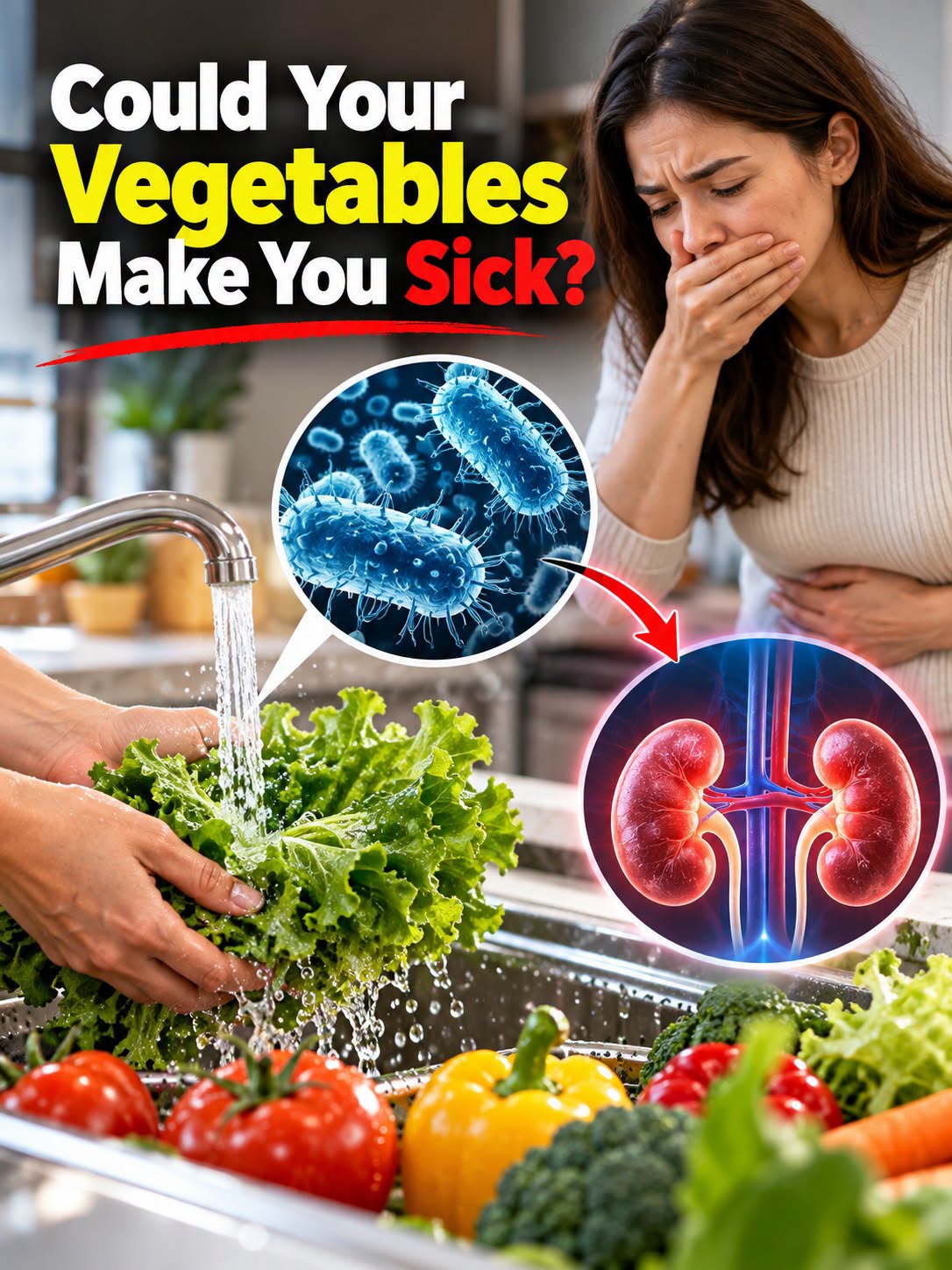
Vegetables are an important part of a healthy diet. They provide fiber, vitamins, minerals, antioxidants, and other compounds that support overall health. But like almost any food, fresh produce is not completely free of food-safety risks.
Vegetables can occasionally become contaminated with harmful microorganisms during growing, harvesting, processing, transportation, storage, or preparation. In most cases, foodborne illness causes temporary gastrointestinal symptoms. Rarely, however, certain infections or severe dehydration can lead to more serious complications—including problems involving the kidneys.
Understanding that distinction is important.
Eating vegetables does not normally damage the kidneys. The concern is primarily contaminated or improperly handled food, not vegetables themselves.
How Can Fresh Produce Become Unsafe?
Fresh fruits and vegetables often travel through several stages before reaching the kitchen.
Contamination can occur through soil, irrigation water, animals, agricultural equipment, processing facilities, food handlers, transportation, or contact with contaminated surfaces in the kitchen.

FDA guidance notes that contamination can happen during growing and harvesting as well as after produce has been purchased. Washing produce can reduce microorganisms on its surface, although it cannot necessarily remove all of them.
Several food-safety issues deserve particular attention.
1. Harmful Bacteria
Fresh produce, including leafy greens, has occasionally been associated with outbreaks involving organisms such as E. coli, Salmonella, and Listeria monocytogenes.
Leafy vegetables are particularly important from a food-safety perspective because many are eaten raw, meaning there is no cooking step to kill microorganisms that may be present.
CDC data have repeatedly linked vegetable row crops such as leafy greens with foodborne E. coli O157 illnesses. Leafy greens have also been implicated in documented Listeria outbreaks.
This does not mean leafy vegetables are inherently unsafe. It means careful handling remains important.
2. Improper Temperature Control
Cut or packaged leafy greens require refrigeration.
Once vegetables are cut, their internal moisture and nutrients become more accessible, creating conditions that can support microbial growth if the food is kept too warm.
For home storage, the FDA recommends keeping perishable fresh produce in a clean refrigerator at 40°F (4°C) or below and refrigerating pre-cut or packaged produce.
CDC also recommends refrigerating leafy greens promptly rather than allowing them to remain at room temperature for prolonged periods.
3. Natural Plant Toxins
Some plants naturally contain compounds that can become problematic when present at unusually high concentrations.
A well-known example involves potatoes.
Potatoes naturally contain glycoalkaloids, including solanine and chaconine. Concentrations can increase when potatoes are exposed to light, turn green, or develop extensive sprouts.
Large amounts can cause nausea, vomiting, abdominal pain, diarrhea, and sometimes neurological symptoms. Cooking does not reliably eliminate these compounds.
For that reason, potatoes that are extensively green, bitter, damaged, or heavily sprouted are best discarded.
This risk should not be generalized to vegetables as a whole.
4. Nitrates and Nitrites
Leafy vegetables naturally contain nitrates, which are not automatically harmful and are a normal part of the diet.
Under certain conditions, however, microorganisms can convert nitrate into nitrite. Inappropriate prolonged storage of cooked leafy vegetables—particularly at room temperature—can increase this conversion.
The issue is most relevant to infants and young children because excessive nitrite exposure can contribute to methemoglobinemia, a condition that interferes with the blood’s ability to transport oxygen.
This should not be interpreted to mean that normally cooked spinach or other leafy greens become dangerous simply because they are reheated.
The practical solution is straightforward: cool cooked vegetables promptly, refrigerate them properly, and follow ordinary leftover safety rules.
5. Pesticide Residues
Fresh produce can sometimes contain pesticide residues.
Washing produce under running water can help remove dirt, microorganisms, and some pesticide residues from the surface, although washing cannot remove every type of residue.
It is also important not to equate a detectable pesticide residue with poisoning.
In the United States, pesticide residues are monitored against regulatory limits. FDA’s fiscal-year 2024 monitoring report concluded that residue levels in the food supply it tested were generally well below established safety standards.
For consumers, ordinary washing and appropriate preparation remain sensible precautions.
How Can Foodborne Illness Affect the Kidneys?
This is where the relationship between contaminated produce and kidney complications needs careful explanation.
Kidney injury is not the usual consequence of eating vegetables.
However, severe foodborne illness can sometimes affect kidney function through two important pathways.
The first is dehydration.
Repeated vomiting and diarrhea can cause substantial fluid and electrolyte losses. NIDDK identifies dehydration as the most common complication of food poisoning and notes that severe dehydration can lead to serious organ problems.
The second is a rare but important complication of certain E. coli infections called hemolytic uremic syndrome, or HUS.
Shiga toxin-producing E. coli can cause HUS, in which damage to blood cells and small blood vessels can interfere with the kidneys’ filtering system.
CDC warns that HUS can cause kidney failure, permanent health problems, and, in severe cases, death.
Although anyone can develop HUS, it occurs particularly often in young children who develop this complication following diarrheal illness.
Warning Signs That Should Not Be Ignored
Most cases of foodborne illness improve without serious complications.
However, certain symptoms deserve medical attention.
CDC recommends contacting a healthcare professional for symptoms such as:
Bloody diarrhea
Diarrhea lasting more than three days
Fever above 102°F (about 39°C)
Vomiting so frequently that fluids cannot be kept down
Signs of dehydration, including very little urination, dry mouth, or dizziness when standing
People with diarrheal illness should seek urgent medical care if they develop possible signs of HUS, including markedly reduced or absent urination, blood in the urine, unusual bruising, extreme tiredness, or reduced alertness.
A noticeable decrease in urine output can also occur with acute kidney injury.
Practical Ways to Handle Vegetables Safely
Fortunately, reducing food-safety risks does not require complicated procedures.
Wash Produce Correctly
Wash fresh produce thoroughly under plain running water before preparing or eating it.
For firm produce such as melons and cucumbers, the FDA recommends scrubbing the surface with a clean produce brush.
Do not wash fruits or vegetables with dish soap, detergent, bleach, or household cleaners. FDA warns that produce is porous and may absorb soap or detergent residues. Commercial produce washes are also unnecessary.
Remember that washing reduces contamination but cannot guarantee that every microorganism has been removed.
Prevent Cross-Contamination
Keep produce that will be eaten raw away from raw meat, poultry, seafood, and their juices.
Use separate cutting boards when practical, or thoroughly wash cutting boards, knives, utensils, countertops, and dishes between uses.
Wash your hands with soap and warm water for at least 20 seconds before and after preparing food.
Refrigerate Perishable Produce
Keep perishable fruits and vegetables at 40°F (4°C) or below.
Pre-cut and packaged vegetables should be refrigerated, and produce showing obvious signs of rot should be discarded.
Handle Leftovers Safely
Cooked vegetables should be treated like other cooked leftovers.
Refrigerate them within two hours of cooking—within one hour if they have been exposed to temperatures above 90°F (32°C).
Most cooked leftovers should be consumed within three to four days. When reheating leftovers, USDA recommends heating them to 165°F (74°C).
The Bottom Line
Vegetables remain an important part of a nutritious diet, and rare foodborne illnesses are not a reason to avoid them.
The important distinction is that fresh vegetables themselves do not normally cause acute kidney injury.
In unusual circumstances, contaminated produce can transmit foodborne pathogens. Severe vomiting and diarrhea may cause dangerous dehydration, while certain Shiga toxin-producing E. coli infections can lead to hemolytic uremic syndrome and kidney failure.
Fortunately, simple precautions—washing produce under running water, preventing cross-contamination, refrigerating perishable foods promptly, discarding spoiled produce, and handling leftovers correctly—can substantially reduce food-safety risks.
The goal is therefore not to fear fresh produce.
It is to enjoy its nutritional benefits while applying the same basic principles of safe food handling that should be used throughout the kitchen.