Hard Bumps on Finger Joints: What They May Mean
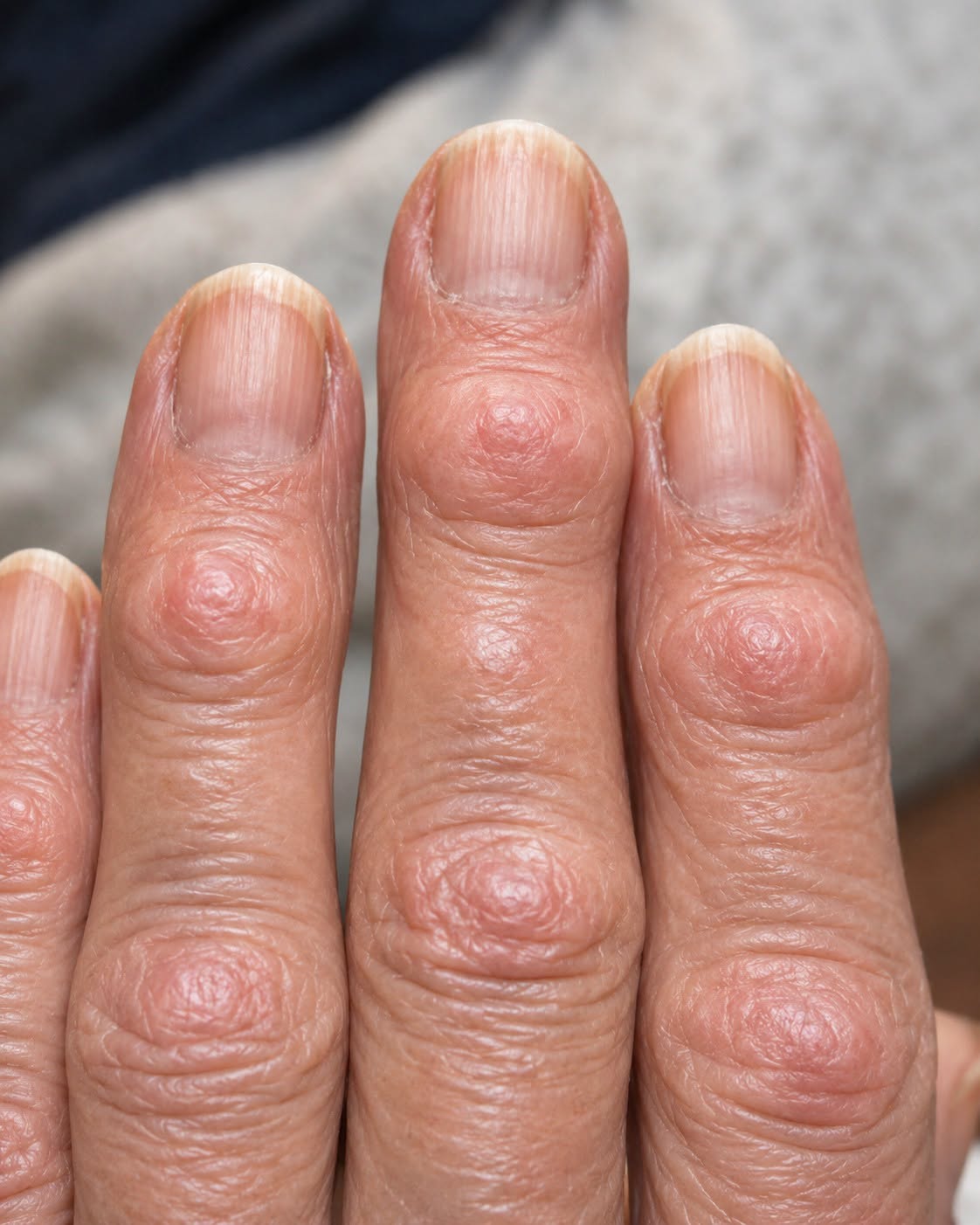
As we grow older, the body experiences many changes, and some can feel unexpected or worrying. One fairly common change is the development of firm, hard lumps around the finger joints, particularly those near the fingertips.
These bumps can look unusual and may sometimes be accompanied by pain or stiffness, causing people to wonder what they are and whether they could indicate a serious health condition.
In many situations, these lumps are bony enlargements linked to osteoarthritis, a common type of arthritis that occurs as the cartilage protecting and cushioning the joints gradually becomes thinner and less effective.
When these bumps appear on the joints nearest the fingernails—the distal interphalangeal, or DIP, joints—they are generally known as Heberden’s nodes. Similar bony growths that form on the middle joints of the fingers are called Bouchard’s nodes.
Why Do These Bumps Develop?
Healthy cartilage helps the bones within a joint glide smoothly past each other. With osteoarthritis, this protective layer of cartilage slowly deteriorates. As changes occur within the joint, the body may form extra bone along its edges, creating small growths called bone spurs.

As time passes, these changes can result in the firm, visible bumps that appear around the finger joints. The skin surrounding them may also look mildly swollen, stretched, or shiny.
Heberden’s and Bouchard’s nodes are increasingly common with advancing age and occur more often in women. Genetics may also have a significant influence, meaning that individuals with a family history of hand osteoarthritis may have a greater chance of developing them.
Repeated strain on the hands, earlier joint injuries, and many years of frequent hand use may also contribute to joint deterioration in certain people.
Why Do the Bumps Appear to Spread?
Some people first notice a bump on one finger and later see similar bumps developing on several others. This may create the impression that the bumps are “spreading.”
However, these bumps do not actually travel from one finger to another. Rather, osteoarthritis can gradually involve more joints as time goes on.
These changes may progress slowly over the course of many years, and their severity can differ greatly from one person to another.
For illustrative purposes only
Other Symptoms to Look Out For
Some individuals develop visible nodes with minimal or no discomfort. Others may experience symptoms including:
Pain or tenderness around the affected joints
Stiffness, especially following periods of inactivity
Swelling around the fingers
Decreased range of motion
Difficulty bending or straightening the fingers
Reduced grip strength or trouble performing precise hand movements
Routine tasks such as fastening buttons, opening jars, turning keys, writing, or handling small items can become more challenging when multiple joints are involved.
Some people also find that stiffness or discomfort becomes more noticeable in cold weather or after their hands have stayed still for an extended period.
How Are These Nodes Diagnosed?
Doctors can often identify Heberden’s or Bouchard’s nodes by examining the hands and discussing the symptoms a person is experiencing.
In certain situations, an X-ray may be advised. Imaging can show changes related to osteoarthritis, including reduced joint space, bone spurs, and other structural abnormalities.
However, osteoarthritis is not responsible for every bump or swollen finger joint.
Other types of arthritis, cysts, injuries, inflammation, and additional medical problems may sometimes cause changes that look similar. Because of this, new or unexplained changes in the joints should not automatically be considered Heberden’s nodes.
When Should You See a Doctor?
Consider getting medical advice if a finger joint suddenly becomes very painful, significantly swollen, red, or warm, or if symptoms worsen quickly.
Persistent joint problems that substantially restrict hand movement or interfere with ordinary daily activities should also be assessed by a healthcare professional.
Receiving an accurate diagnosis is particularly important because different forms of arthritis and other joint disorders may require different approaches to treatment.
For illustrative purposes only
Can Heberden’s Nodes Be Treated?
At present, there is no treatment that can completely reverse the structural joint damage caused by osteoarthritis. However, many people are able to manage their symptoms effectively and preserve good function in their hands.
Depending on how severe the condition is, treatment may involve pain-relieving or anti-inflammatory medications when medically appropriate, splints or other supportive devices, warm or cold compresses, and gentle exercises intended to preserve flexibility and strength.
A doctor, physical therapist, or occupational therapist may also suggest particular exercises and strategies to help protect painful joints.
Simple Ways to Protect Your Hands
Minor adjustments to everyday habits may help limit unnecessary stress on affected joints. Choosing larger or ergonomically designed handles, reducing repetitive gripping when possible, taking regular breaks during activities that heavily involve the hands, and using tools that require less force may all be beneficial.
Staying physically active, following a healthy lifestyle, and maintaining a balanced diet may also help support overall joint and bone health.
Most importantly, ongoing finger pain or visible changes in the joints should not simply be written off as “part of getting older.” Although bony finger nodes are commonly associated with osteoarthritis and are generally not dangerous on their own, proper medical evaluation can help identify the cause, reduce discomfort, and maintain hand function for as long as possible.