Why Your Avocado Has Those Stringy Fibers — And What They Actually Mean
There’s a very particular kind of disappointment that only avocado lovers truly understand—especially if you don’t live somewhere they’re grown locally.
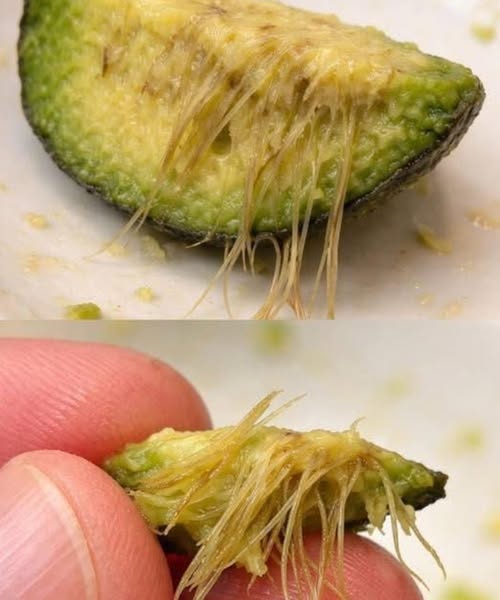
You wait days for that rock-hard avocado on your counter to finally soften to the perfect point. You check it carefully, feel that slight give, and get excited. But when you cut it open, instead of smooth, creamy green flesh, you’re met with a network of brown, stringy fibers running through it.
It’s frustrating and not very appealing, and for many people, it’s enough to throw the whole fruit away. But before you give up on your avocado toast, it’s worth asking: what exactly are those strings? Do they mean the fruit has gone bad? Understanding the science behind them can help you decide whether your avocado is still good to eat.
10 người ăn bơ thì 9 người vứt bỏ thứ này mà không hay là …
The Botanical Background: More Than Just a Trendy Food
To understand why this happens, it helps to know what an avocado really is. Botanically, the avocado (Persea americana) is actually a large berry with a single seed. Even though we often treat it like a vegetable—adding it to salads, mashing it into guacamole, or putting it on sandwiches—it is technically a fruit.
Avocado trees belong to the Lauraceae family, the same group as cinnamon and bay leaves. They originated in South-Central Mexico and have been part of the human diet for thousands of years. The Aztecs even had a name for it—āhuacatl—which referred to both the fruit and its shape.
One interesting thing about avocados is that they don’t ripen while still on the tree. They can hang there for months without softening. Ripening only begins after they are picked, when natural hormones like ethylene start the process. This is why avocados can be shipped long distances while still firm—but also why you sometimes get unexpected results when you finally cut one open.