I Married an Old Millionaire Everyone Thought I Was Using — But What He Left Me Was Worth More Than His Fortune
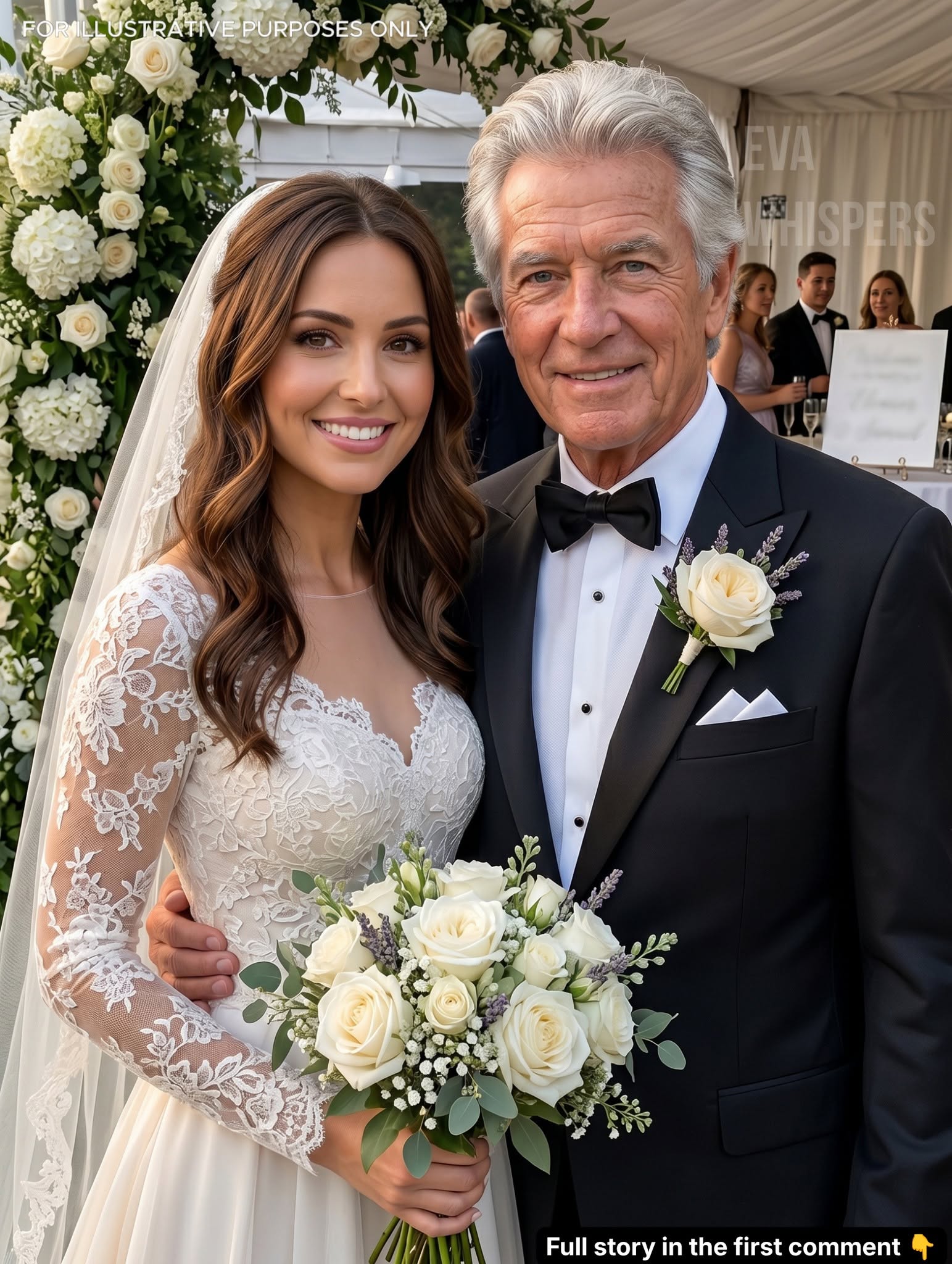
I married Arthur despite others believing I only wanted his fortune. He didn’t care about their judgment, but on his deathbed, he gave me a cardboard box and said I wouldn’t inherit his money. After the funeral, I opened it and discovered what he thought I truly wanted.
Everyone Thought They Knew My Story
When I married Arthur, people assumed they already knew exactly who I was.
I was thirty-two years old.
Arthur was eighty-four.
To everyone looking from the outside, that was the only detail that mattered.
They saw a young woman and an elderly millionaire. They saw his wealth, his age, and the expensive ring on my finger. Then they filled in the rest of the story themselves.
Gold digger.
Opportunist.
Fortune hunter.
No one bothered to ask what really brought us together.
Not Arthur’s friends.
Not strangers at charity events.
And certainly not his children.
His daughter Deborah made her opinion clear from the very beginning.
His son Alfred watched me as if I might steal the silverware.
And Norman, the youngest, hid his resentment behind polite smiles.
At our wedding reception, Deborah leaned toward me and quietly said:
“I hope whatever number you have in your head is worth this.”
“Worth what?” I asked.
“The way everyone is looking at you.”
Before I could respond, Arthur placed his hand gently over mine.
“Deborah,” he said calmly, “don’t confuse cruelty with loyalty.”
She stiffened.
“I’m protecting Mom’s place.”
Arthur’s expression never changed.
“Sophia was my wife. Camille is my wife now. One does not erase the other.”
The conversation ended there, but the judgment never did.
Everywhere I went, people looked at me and saw a woman waiting for an inheritance.
What they never saw was the truth.
I didn’t marry Arthur because he was rich.
I married him because he was the first person who ever made me feel like I belonged somewhere.
The Thing I Wanted Most Wasn’t Money
One evening, shortly after our wedding, Arthur found me sitting alone in the kitchen.
A mug of chamomile tea sat untouched in front of me.
“You only make chamomile when you’re overwhelmed,” he said.
I laughed softly.
“You notice too much.”
“I’m eighty-four,” he replied. “I don’t have time to pretend I don’t.”
For a moment neither of us spoke.
Then words I’d carried for years finally escaped.
“My ex-fiancé threw me out two weeks before our wedding.”
Arthur quietly took a seat across from me.
“The man before him constantly reminded me that my name wasn’t on the lease.”
I stared into my tea.
“After my mother died, I spent most of my childhood living with relatives. They were kind, but every room belonged to someone else.”
Arthur listened without interrupting.
“I learned not to spread out,” I continued. “I learned not to get comfortable.”
His eyes softened.
“What do you want, Camille?”
The answer came immediately.
“I want a place where nobody can tell me to pack my things and leave.”
The silence that followed felt heavy.
Finally, Arthur said quietly:
“That is a very lonely thing to want.”
But he understood.
Maybe because he had known loneliness too.
A Marriage Built on Peace
Our marriage wasn’t some grand romantic fairy tale.
It was simpler than that.
It was rainy evenings spent sharing bowls of stew.
It was old movies Arthur always fell asleep halfway through.
It was crossword puzzles he mysteriously “remembered” impossible answers to.
It was hospital appointments.
Doctor visits.
Morning coffee.
Comfortable silence.
The kind of love that grows slowly and settles deep.
The kind built on peace.
Arthur often introduced me to nurses by saying:
“This is Camille. She keeps me alive… and respectable.”
Every time, I laughed.
Every time, he smiled.
And every time, I loved him a little more.
About six months before he died, Arthur took me on a drive.
We eventually arrived at a small lakeside cottage.
It wasn’t impressive.
The blue shutters were peeling.
The porch leaned slightly to one side.
Weeds pushed through the stone path.
Yet the moment I stepped onto the property, something inside me relaxed.
“It feels peaceful here,” I said.
Arthur stood beside me, gazing across the water.
“Yes,” he replied. “It does.”
The cottage had belonged to Sophia, his late wife.
The woman his children worshipped.
The woman I had never tried to replace.
As I stood there overlooking the lake, I felt something strange.
For the first time in years, I wasn’t waiting for someone to tell me I didn’t belong.
Arthur watched me carefully.
Though I didn’t realize it then, he was paying attention.
As always.
The Final Days
Arthur’s health declined quickly.
First he stopped using the stairs.
Then he stopped arguing with doctors.
Soon nurses began speaking around him in softer voices.
His children suddenly appeared more often.
Not to care for him.
Not to comfort him.
But to count things.
Paintings.
Accounts.
Investments.
Watches.
Everything except moments.
One afternoon I arrived at the hospital carrying fresh pajamas and his crossword book.
Deborah blocked the doorway.
“Family only.”
I stared at her.
“I’m his wife.”
“On paper.”
For a moment, old habits almost won.
The familiar urge to apologize.
To back away.
To make myself smaller.
Instead, I stepped forward.
“Move, Deborah.”
Alfred laughed.
“You forgot your role.”
“No,” I replied. “You forgot mine.”
Before the argument could continue, Arthur’s voice emerged from inside the room.
“Let her in.”
Deborah reluctantly stepped aside.
When I entered, Arthur smiled.
A tired smile.
A fragile smile.
But a smile all the same.
“They drain me,” he whispered after they left.
“And you?”
I squeezed his hand.
“What about me?”
“You bring me peace.”
That night, after everyone else had gone home, Arthur handed me a cardboard box.
My name was written across the top.
“Arthur, what’s this?”
He looked at me with tired eyes.
“You won’t get my money, darling.”
My heart dropped despite myself.
Not because I’d married him for it.
But because some frightened part of me had always hoped financial security might finally make me feel safe.
Arthur saw the emotion flash across my face.
He always saw too much.
Then he smiled.
“But I’m giving you exactly what you wanted.”
Confused, I looked at the box.
“What does that mean?”
“Open it after my funeral.”
“Arthur—”
“Promise me.”
So I promised.
Two days later, he was gone.
The Reading of the Will
After the funeral, Arthur’s family gathered at his lawyer’s office.
The cardboard box sat unopened in my lap.
The lawyer began reading.
The mansion.
The businesses.
The investments.
The cars.
The artwork.
Everything went to Arthur’s children.
Then came the sentence everyone had been waiting for.
“The estate leaves no monetary assets to Camille.”
Deborah looked delighted.
“Nothing?” she asked.
“No money.”
She turned toward me.
“You wasted two years.”
The words stung.
Not because they were true.
But because she wanted them to be.
I stood to leave.
Then the lawyer stopped me.
“We’re not finished.”
The room fell silent.
The lawyer opened a second envelope.
“This concerns a separate property.”
Deborah immediately straightened.
“What property?”
“The lakeside cottage.”
Arthur’s children exchanged confused looks.
The lawyer continued.
“The cottage originally belonged to Sophia.”
Deborah smiled.
“Then it’s ours.”
The lawyer shook his head.
“No.”
The smile vanished.
He unfolded a letter.
“Sophia left written instructions.”
Then he read aloud.
“If Arthur ever finds another woman who brings peace back into his life, give her the cottage. Not as payment. Not as charity. But as shelter. As a home should belong to the person who understands why it matters.”
The room went completely silent.
I couldn’t speak.
I hadn’t known.
Arthur had never told me.
Neither had Sophia.
Yet somehow they both understood me.
Perhaps better than I understood myself.
The lawyer continued.
“The transfer was completed before Arthur’s death. Camille is now the legal owner.”
Deborah exploded.
“You manipulated him!”
I finally met her eyes.
“No.”
My voice remained calm.
“I sat with him.”
“I cared for him.”
“I listened to him.”
“I loved him.”
For the first time in two years, she had nothing to say.
What Was Inside the Box
That evening I finally opened the box.
Inside was a photograph.
Arthur had taken it at the cottage.
I was standing on the porch, looking out over the lake.
On the back he had written:
“This was the first place I saw you stop looking ready to leave.”
Tears filled my eyes.
Beneath the photo sat a brass key.
A copy of the deed.
A gold ring.
And two letters.
The first was from Sophia.
It read:
“If another woman ever sits beside you and makes the silence less cruel, don’t give her jewels.
Give her the cottage.
Give her a key.
Let her have one door in this world that opens because she belongs there.”
By the time I finished reading, I was crying.
Then I opened Arthur’s letter.
“Camille,
You once told me you hated living anywhere your name wasn’t on the door.
I remembered.
My children understand money.
But you understand loneliness.
So did Sophia.
So did I.
You gave me peace.
The cottage is yours because you stayed.
Welcome home, darling.
— Arthur”
I pressed the letter against my chest and cried until sunset.
Not because I’d lost him.
But because he had loved me enough to truly see me.
The First Door That Was Mine
Three months later, I unlocked the cottage for the first time as its owner.
The old key stuck slightly.
But it worked.
And that mattered.
Because it was mine.
One afternoon, Deborah unexpectedly arrived carrying several boxes of Arthur’s books.
She set them down on the porch.
“We don’t want these.”
As she turned to leave, her eyes landed on a framed photograph inside.
A picture of Arthur and Sophia.
“You kept Mom’s photo.”
I nodded.
“She belongs here too.”
For a long moment, Deborah said nothing.
Then she looked at me differently.
Not warmly.
Not quite kindly.
But differently.
“You really weren’t trying to replace her.”
“No,” I said softly.
“I was just trying not to disappear myself.”
Deborah nodded once and walked away.
That evening I sat on the porch with a cup of chamomile tea.
The lake shimmered silver beneath the setting sun.
Arthur hadn’t left me his fortune.
He hadn’t left me his mansion.
He hadn’t left me millions.
Instead, he gave me something far more valuable.
A place where I belonged.
A door I never had to ask permission to open.
And for the first time in my life, I was finally home.