Despite causing hundreds of de.aths yearly, this food is still eaten by nearly 500 million people
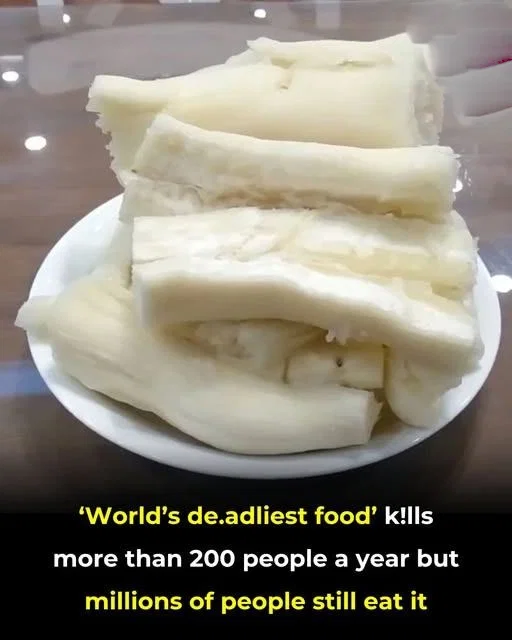
It sounds shocking: a food responsible for hundreds of deaths each year is still consumed by nearly half a billion people worldwide. Yet this is the reality of cassava—a starchy root vegetable that sits at the intersection of nutrition, culture, and survival. Often called the “world’s deadliest food” when improperly prepared, cassava is both a lifeline and a lesson in how knowledge, tradition, and necessity shape what ends up on our plates.
So why do people continue to rely on it? And what makes it dangerous in the first place? This article isn’t meant to alarm you. It’s here to inform, contextualize, and empower you with clarity about a food that sustains millions while demanding respect in its preparation.
Cultural Context
Cassava has been a cornerstone of tropical agriculture for thousands of years. Indigenous peoples across South America first domesticated it, and over centuries, it traveled to Africa, Asia, and the Caribbean through trade, colonization, and migration. In regions where soil is poor, rainfall is unpredictable, and food insecurity is a daily reality, cassava became more than a crop—it became a promise. It grows where other staples fail. It stores well underground. It feeds families through drought and hardship.
Traditional preparation methods—peeling, soaking, fermenting, drying, and thorough cooking—were developed not by accident, but through generations of lived experience. These techniques aren’t just culinary steps; they’re acts of cultural wisdom, passed down to transform a potentially toxic root into a safe, nourishing staple. Understanding cassava means honoring that legacy: not as a “dangerous” food, but as a testament to human adaptation and resilience.
Why This Matters
Context over fear: Knowing why cassava is risky—and how that risk is managed—replaces sensationalism with understanding.
Food security awareness: For millions, cassava isn’t a choice; it’s a necessity. Recognizing this fosters empathy and informed advocacy.
Safety through education: Proper preparation eliminates danger. Sharing that knowledge saves lives.
Cultural respect: Traditional methods are sophisticated, effective, and worthy of preservation—not dismissal.
Global perspective: Cassava’s story reflects broader truths about agriculture, equity, and how communities thrive amid constraint.
What Is Cassava, and Why Is It So Important?
Cassava (also called yuca or manioc) is a starchy root vegetable grown widely across tropical regions of Africa, Asia, and Latin America. It’s a major source of carbohydrates and serves as the foundation for countless traditional dishes—from gari and fufu in West Africa to tapioca pearls and cassava flour worldwide.
For many communities, cassava is not just food—it’s a lifeline. It:
Thrives in poor, acidic soils where other crops struggle
Withstands drought and erratic rainfall
Provides reliable calories year-round
Requires minimal inputs, making it accessible to smallholder farmers
In regions facing climate volatility, economic instability, or limited agricultural infrastructure, cassava isn’t a luxury. It’s a pillar of survival.
Why Is Cassava Considered “Deadly”?
Cassava naturally contains compounds called cyanogenic glycosides, which can release cyanide when the plant is eaten raw or improperly processed. This isn’t a flaw—it’s a natural defense mechanism the plant evolved to deter pests.
In its safe, edible form, cassava must undergo careful preparation to remove these compounds. Traditional methods include:
Peeling the thick outer skin, where toxins concentrate
Soaking in water to leach out cyanide precursors
Fermenting to break down toxic compounds through microbial action
Drying in the sun to further reduce moisture and toxins
Thorough cooking (boiling, roasting, or frying) to eliminate residual traces
When these steps are followed correctly, cassava is completely safe to eat. Danger arises only when preparation is rushed, incomplete, or done without knowledge of the process.
The Health Risks: What Happens When Preparation Goes Wrong?
Consuming improperly prepared cassava can lead to acute cyanide poisoning, with symptoms that may include:
Dizziness or headache
Nausea and vomiting
Rapid breathing or difficulty breathing
Confusion, weakness, or loss of consciousness
In severe cases, respiratory failure and death
Long-term exposure to low levels of cyanide—often in communities where cassava is a dietary staple and preparation resources are limited—has also been linked to:
Neurological conditions, such as konzo (a paralytic disease)
Developmental delays in children
Thyroid dysfunction and goiter, especially in areas with low iodine intake
These risks are real, but they are not inevitable. They reflect gaps in knowledge, resources, or access—not an inherent flaw in the food itself.
Why Do So Many People Still Eat Cassava?
Despite the risks, cassava remains widely consumed—and for deeply practical, culturally rooted reasons:
Accessibility and affordability
Cassava is inexpensive to grow and purchase, making it essential in low-income regions where other staples may be cost-prohibitive.
Climate resilience
It thrives in harsh conditions—drought, poor soil, high heat—where maize, rice, or wheat might fail. In an era of climate uncertainty, that resilience is invaluable.
Cultural importance
Many traditional cuisines are built around cassava-based foods that have been safely prepared for generations. These dishes carry identity, heritage, and community.
Food security
For millions, cassava isn’t a preference—it’s a necessity. When other crops fail or markets are inaccessible, cassava provides a reliable source of calories and energy.
The Role of Proper Preparation: Knowledge Is the Key
The difference between safe and dangerous cassava isn’t the plant itself—it’s the process. When prepared correctly using time-tested methods, cassava poses no health risk and serves as a vital energy source.
Traditional techniques are highly effective at removing toxins. Problems typically arise when:
Preparation steps are rushed due to time or resource constraints
Knowledge of safe methods isn’t passed down or accessible
Food shortages force communities to take shortcuts
This is why food safety experts emphasize education over elimination. Removing cassava from diets isn’t the solution; ensuring people have the knowledge, tools, and support to prepare it safely is.
You Must Know: Risk vs. Reality
Labeling cassava as the “world’s deadliest food” is misleading—and potentially harmful. The food itself is not inherently deadly. It becomes dangerous only when handled incorrectly.
In fact, when properly prepared, cassava supports the diets of hundreds of millions of people without incident. The annual death toll, while tragic, represents a tiny fraction of those who consume it safely every day. Context matters: risk is not the same as inevitability.
Serving Suggestions: How Experts Approach Cassava Safety
Food safety and development organizations focus on practical, empowering strategies:
Promote safe preparation techniques: Support community education on peeling, soaking, fermenting, and cooking methods that reduce cyanide levels.
Improve access to diverse foods: Encourage crop diversification so communities aren’t solely dependent on one staple.
Raise awareness without stigma: Share information about cassava safety in culturally respectful, non-alarmist ways.
Support agricultural development: Invest in drought-resistant cassava varieties with lower cyanide potential and better nutrition profiles.
Strengthen local knowledge: Partner with elders, farmers, and food preparers to preserve and share traditional wisdom.
These measures help reduce risk while honoring cassava’s vital role in global food systems.