My husband is limping from this hard raised yellowish bump on the side of his pinky toe. We are hours from urgent care and he can barely walk. Need a fast fix!
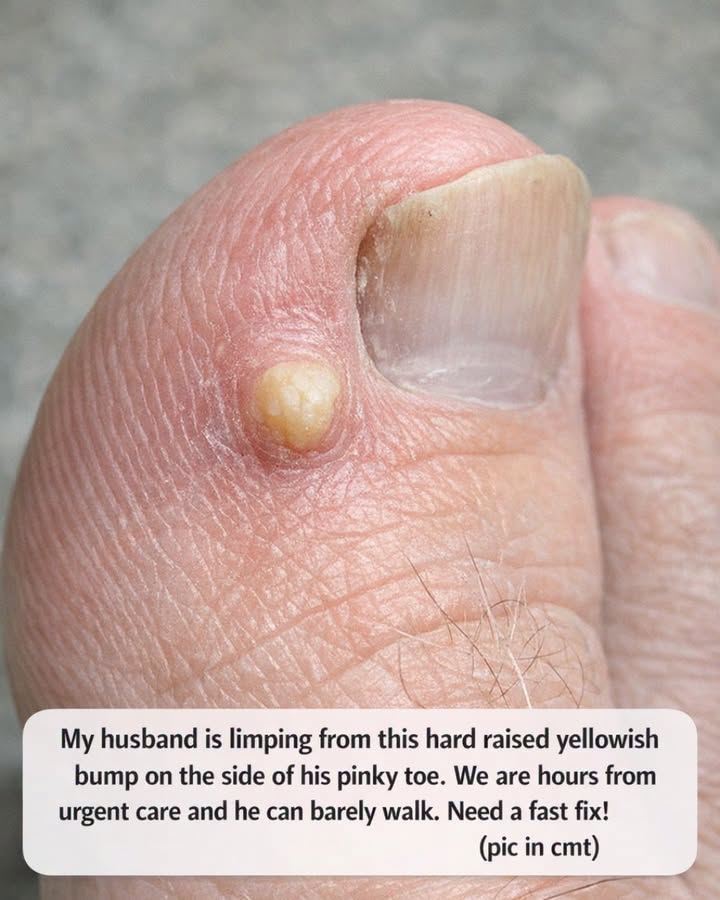
If your husband has a hard, raised, yellowish bump on the side of his pinky toe and every step is making him wince, a corn is very high on the list of likely causes. I’ve dealt with these in my own house after long workdays in tight boots and too many county-fair weekends on our feet, and I know how urgent it feels when you’re far from care and just need enough relief to get through the next few hours. The good news is that a corn often can be calmed down quickly at home by taking pressure off it, softening the thick skin, and protecting the spot from more rubbing.
I’m going to walk you through the fastest practical steps first, then how to tell whether it really sounds like a corn, what supplies to grab from a basic bathroom cabinet or small-town pharmacy, what not to do, and when a “wait and watch” situation turns into a “get medical help now” situation. If he has diabetes, poor circulation, numb feet, or signs of infection, skip the home trimming and medicated pads and move straight to medical advice, even if that means telehealth or calling the nearest clinic.
1. What a corn usually looks and feels like
A corn is a small area of thickened skin caused by repeated pressure or friction. On the side of the pinky toe, it often shows up as a firm, round or oval bump that looks yellow, off-white, or slightly translucent, usually about 3 to 10 millimeters across. The center may feel extra hard, almost like a pebble under the skin.
The pain is usually worst when shoes press directly on it. Many people say it feels sharp, like stepping on a tack, even though the problem is on the side of the toe. That happens because the thick plug of skin presses inward on the tender tissue underneath.
2. The fastest at-home relief in the next 15 minutes
First, get his shoe and sock off and keep weight off that foot for 10 to 15 minutes. If he has been walking in snug work boots, narrow sneakers, or dress shoes, simply removing the pressure may lower the pain quite a bit.
Next, soak the foot in warm water for 10 minutes. The water should feel comfortably warm, not hot, around the temperature you’d use for dishwater your hands can tolerate. If you have Epsom salt, 1 to 2 tablespoons in a small basin is fine, but plain water works too. Pat the toe dry very well, especially between the toes.
Then pad around the bump, not directly on top of it. A donut shape made from moleskin, felt, foam, or even folded gauze can offload pressure. Cut a hole slightly bigger than the corn so the sore spot sits in the center without touching the pad. Tape it gently in place. This one step can make walking dramatically easier.
3. How to make a quick pressure-relief pad from common supplies
If you don’t have store-bought corn cushions, you can improvise. Use moleskin if available, or soft medical foam, a makeup sponge, or folded gauze. Aim for a ring about 1/8 to 1/4 inch thick. The hole in the middle should be just wide enough so the hard bump does not rub.
One method I’ve used in a pinch is to fold gauze into a rectangle, then cut a small notch or hole where the corn will sit. Another is layering two pieces of moleskin for extra depth. If the corn is on the outer side of the pinky toe, place the pad so the shoe presses on the pad instead of the sore center. Recheck after 20 to 30 minutes of walking to make sure the pad isn’t sliding and creating new rubbing.
4. The shoe change that helps more than almost anything
The side of the pinky toe is a classic spot for pressure from a narrow toe box. Switch him into the roomiest shoe available right now. Look for a wide toe area, soft upper material, and no stiff seam hitting that spot. A sandal with adjustable straps can help for a short period if the terrain is safe and clean.
If all you have are closed shoes, try a thinner sock and loosen the laces across the forefoot. If the pinky toe is being pinched inward, even a few extra millimeters of space can matter. I’ve seen people get more relief from changing shoes than from any cream or medicine.
5. What not to do, even if you’re desperate
Do not cut it with nail clippers, scissors, a pocketknife, or a razor. I know it’s tempting when that hard center looks like it could just be “popped out,” but cutting corns at home can lead to bleeding, deeper pain, and infection. That risk is much higher if he has diabetes, numbness, poor circulation, or takes blood thinners.
Also do not use strong medicated corn remover pads right away if the skin around it is irritated, cracked, or if you are not completely sure it’s a corn. Many of those pads contain salicylic acid, often around 40%, and while they can work, they can also burn healthy skin if placed poorly.
6. How to tell a corn from a blister, wart, or infection
A corn is usually hard, dry, and thick, with pain from direct pressure. A blister is more often soft or fluid-filled and can look clear or red if it has been rubbed recently. A wart may interrupt the normal skin lines and sometimes has tiny dark dots inside, and it may hurt more when pinched from the sides than when pressed straight down.
Infection is a different concern. Watch for spreading redness, warmth, swelling beyond the immediate bump, drainage, fever, or throbbing pain that keeps getting worse. If the toe looks red and puffy all around, or the pain seems out of proportion to the size of the bump, that is not something I would treat like a simple corn