Biker Thought a Frightened Little Girl Was Just Lost at a Busy Rally — Until Her Whisper Made Him Question the Story Behind Her Mother’s Disappearance
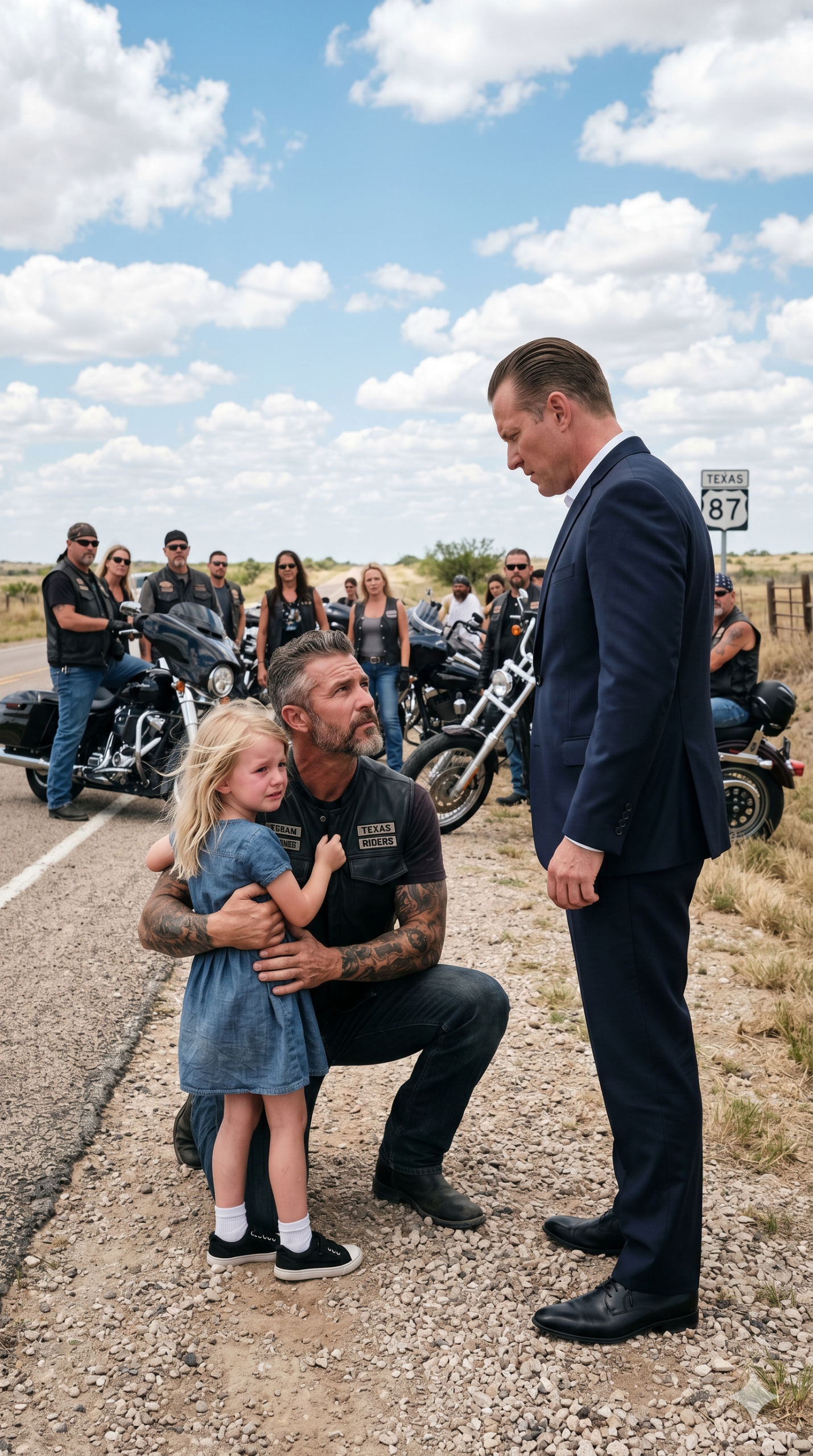
The Little Girl Who Ran Into the Rally
By noon, the town of Brimwell, Tennessee, sounded like thunder had rolled down from the hills and decided to stay.
Motorcycles lined both sides of Jefferson Street, chrome shining under the clean summer sun. Vendors sold lemonade, barbecue, patches, and old vinyl records from folding tables. Music drifted from a small stage near the courthouse lawn. Families walked between rows of parked bikes, pointing at polished gas tanks and custom paint jobs.
It was the kind of day Brimwell waited for all year.
The Copper Valley Ride brought bikers from three states into town, and most people saw it as noise, business, and harmless fun.
But Dawson Vale saw more than that.

Dawson stood beside his black cruiser with his leather vest hanging open over a gray T-shirt. He was broad-shouldered, weathered, and quiet, the kind of man people noticed without knowing why. His beard was trimmed short. His hands were scarred from years of work, miles, and choices he rarely explained.
He had spent eighteen years as a deputy before walking away from the badge. But some instincts never left a man.
That was why, even with engines rumbling and music playing, Dawson noticed the little girl before anyone else did.
She came running through the crowd in a faded yellow dress, one shoe missing, blonde hair tangled around her face. She was small, maybe seven years old, and moving with the desperate speed of a child who believed stopping meant being taken back.
She bumped into a man carrying a paper plate, stumbled, then kept running.
Her eyes found Dawson’s vest.
Then she ran straight into him.
Her small hands grabbed the leather like it was the only solid thing left in the world.
Dawson looked down, and the crowd noise seemed to fall away.
The child was shaking.
“Please,” she whispered, barely able to breathe. “Don’t let him take me.”
Dawson lowered himself slowly so he would not scare her more.
“What’s your name, sweetheart?”
She swallowed hard.
“Harper.”
“Harper, who’s trying to take you?”
She looked over her shoulder.
Across the street, a black sedan rolled slowly past the barricades. It did not belong there. It was too clean, too quiet, too controlled among the dust and noise of the rally.
A man stepped out wearing a navy suit, polished shoes, and a calm expression that did not match the situation.
Dawson felt something cold move through his chest.
The man was not worried.
He was annoyed.
The Man With the Papers
The suited man crossed the street carefully, as if the rally crowd were an inconvenience placed in his path.
Dawson kept one hand lightly on Harper’s shoulder. Not gripping. Just steadying.
The little girl pressed closer to him.
The man stopped ten feet away and gave Dawson a polite smile.
“That child is with me,” he said. “I need you to release her.”
Dawson did not move.
“Who are you?”
“Grant Sutter. Her legal guardian.”
The words were smooth. Prepared.
Grant reached into the inside pocket of his jacket and pulled out folded documents.
“There has been a misunderstanding. Harper has had a difficult few weeks. She ran from a supervised transfer this morning.”
Several people nearby had gone quiet. A few bikers turned their heads. A mother pulled her own child a little closer.
Harper began shaking harder.
“No,” she whispered. “No, no, no.”
Dawson looked at the papers but did not take them.
“Why is she this afraid of you?”
Grant’s smile tightened.
“Children often react strongly during family changes. I’m sure you understand this is a private matter.”
Dawson had heard that kind of sentence before.
Private matter.
Family issue.
Misunderstanding.
Words people used when they wanted everyone else to look away.
Dawson glanced down at Harper.
“You can talk to me,” he said softly. “You’re not in trouble.”
Harper looked up at him with wet eyes.
Then she said the sentence that changed the whole day.
“He knows where my mom is.”
Grant’s face did not change.
But Dawson saw it.
A flicker.
Small enough that most people would miss it. Fast enough that Grant probably believed no one had seen.
Dawson saw it.
“What do you mean?” Dawson asked.
Harper’s fingers twisted into his vest.
“My mom didn’t leave me. Everybody keeps saying she left, but she didn’t. She promised she would come back for me.”
Grant stepped forward.
“That’s enough.”
Dawson stood.
He did not raise his voice.
“Stay where you are.”
The words were quiet, but every biker within earshot heard them.
Grant stopped.
A Girl Nobody Wanted to Hear
A deputy named Cole Harbin arrived minutes later with two officers behind him.
He looked uncomfortable before he even reached them.
Dawson knew that look too.
The look of a man walking into a situation where paperwork said one thing and his gut said another.
Grant handed over the documents immediately.
“Deputy, I appreciate your help. This child ran from an authorized transfer. I have guardianship approval from the county.”
Cole scanned the papers.
Dawson watched him carefully.
“These look official,” Cole said.
Harper let out a small sound, almost like the air had been pushed from her chest.
Dawson crouched again.
“Harper, listen to me. Official doesn’t always mean final. Tell us what happened this morning.”
She wiped her cheek with the back of her hand.
“A lady from the center put me in a car. She said I had to go with him because the judge said so.”
Grant sighed.
“This is exactly what I mean. She is confused.”
Harper shook her head fiercely.
“I’m not confused.”
Her voice cracked, but she kept going.
“The lady was crying. She said she was sorry before she closed the door. Then at the gas station, she went inside, and I ran.”
Cole looked up from the papers.
Dawson saw the shift in his eyes.
That detail mattered.
A crying caseworker did not fit Grant’s clean version.
Dawson asked, “Why were you afraid to go with him?”
Harper stared at the ground.
“Because after Mom disappeared, he came to our house and told me I had to stop asking questions.”
Grant’s jaw tightened.
“This is inappropriate. You are leading a child in public.”
Dawson turned his head slowly.
“No. I’m listening to one.”
The street went still.
Even the engines seemed quieter now.
The Last Promise From Her Mother
Cole guided everyone toward a quieter area behind the rally information tent, away from the main crowd.
Dawson did not let Harper out of his sight.
Grant complained twice. Cole ignored him the second time.
A woman from a nearby booth brought Harper a bottle of water and a clean towel. Harper held the water with both hands but barely drank.
Dawson sat on an overturned crate a few feet away, making himself smaller, less intimidating.
“Tell me about your mom,” he said.
Harper looked at him cautiously.
“Her name is Maren.”
“Maren what?”
“Maren Quinlan.”
Dawson nodded.
“And when did you last see her?”
Harper looked toward the street, as if the answer might be hiding in the sunlight.
“Three Fridays ago. She packed my purple backpack and told me we were going to stay with Aunt Jo for a while.”
Grant, standing near Cole, looked away.
Dawson noticed.
Harper continued.
“She was scared, but she tried to smile. She told me if anything felt wrong, I should find someone who looked like they wouldn’t turn away.”
Dawson felt the words settle heavily in his chest.
“And then?”
“Then he came.”
Grant’s face hardened.
“I came because Maren was unstable and needed help.”
Harper flinched at the sound of his voice.
Dawson looked at Cole.
“Keep him back.”
Cole hesitated, then stepped between Grant and the girl.
Harper whispered, “Mom told him she wasn’t signing anything. She said he couldn’t take the house, and he couldn’t take me.”
Dawson’s eyes narrowed.
This was not just guardianship.
This was money. Property. Control.
And a missing mother.
The Envelope in the Backpack
Dawson asked Harper if she still had her backpack.
She nodded.
“It’s in the lady’s car. The one I ran from.”
Cole radioed it in.
Grant immediately objected.
“Her belongings are not relevant.”
Dawson looked at him.
“Then you shouldn’t mind anyone checking.”
Grant said nothing.
Twenty minutes later, another deputy arrived with a small purple backpack. One strap was frayed. A cartoon keychain hung from the zipper.
Harper reached for it like it was part of her mother.
Inside were clothes, a stuffed rabbit, a library card, and a sealed envelope tucked into the lining.
On the front, written in blue ink, were four words:
For someone who listens.
Harper started crying as soon as she saw it.
“Mom wrote that.”
Cole opened the envelope carefully.
Inside was a short letter, a copy of a bank statement, and a printed photo of Grant standing beside another man outside a county office.
Cole’s face changed as he read.
Dawson did not ask what it said. Not yet.
He watched Grant.
For the first time, Grant looked unsettled.
Not frightened.
Not broken.
But exposed.
Cole folded the paper and looked at him.
“Mr. Sutter, we’re going to need you to come with us and answer some questions.”
Grant laughed once, softly.
“You cannot be serious.”
Dawson stood between him and Harper.
“I think he is.”
A Truth Hidden Behind Official Words
The next hours unfolded carefully.
Not with shouting.
Not with chaos.
But with phone calls, records, and people suddenly trying to explain why things had moved so quickly.
The court order Grant carried was real enough to fool someone in a hurry, but not clean enough to survive attention. A date had been altered. A signature did not match the clerk’s record. The transfer request had been pushed through by someone who should not have touched the file.
And Maren Quinlan had not abandoned her daughter.
She had gone missing after trying to report Grant for financial pressure, document manipulation, and threats involving her home and custody of Harper.
Dawson stayed at the station while Harper gave her statement to a trained child advocate. He waited in the hallway with his hands folded and his vest resting over the back of a chair.
He had no legal right to stay.
But Harper kept asking if the biker was still there.
So Cole let him remain.
Near sunset, Cole stepped into the hallway.
“We found her car.”
Dawson stood.
“Maren’s?”
Cole nodded.
“Outside an old rental cabin twenty miles north. No sign of her yet, but there are indications she may have left in a hurry.”
Dawson absorbed that.
No final answer.
But hope.
Real hope.
When Harper heard, she did not smile. She was too tired for that.
But she breathed differently.
Like the world had opened one small window.
“So she didn’t leave me?” Harper asked.
Dawson knelt in front of her.
“No, sweetheart. I don’t believe she left you.”
Her chin trembled.
“You promise?”
Dawson took a slow breath.
He did not make promises he could not keep.
“I promise we’re going to keep looking, and we’re not going to stop just because someone wants us to.”
The Biker Who Would Not Walk Away
By morning, Grant Sutter’s polished story had begun to fall apart.
Investigators found messages he had sent to Maren, pressuring her to sign over partial control of the property her late father had left her. They found a second phone tied to calls made near the rental cabin. They found the caseworker who had cried in the car, a young woman who admitted she had been pressured into moving Harper before a full review.
No one said the system had failed out loud.
They did not need to.
Harper sat in a small office wrapped in a donated blue blanket, holding her stuffed rabbit. Dawson sat across from her, drinking burnt coffee from a paper cup.
“Do all bikers help kids?” she asked.
Dawson almost smiled.
“Not all. But the good ones try.”
“My mom said loud people aren’t always scary.”
“Your mom sounds smart.”
Harper nodded.
“She is.”
Not was.
Is.
Dawson held on to that word.
Later that afternoon, a call came in from a rural clinic near the Kentucky line. A woman matching Maren’s description had been seen two nights earlier, disoriented, using a different name, frightened of being followed.
It was not a rescue yet.
It was not an ending.
But it was proof that Maren’s story was not over.
Cole came to tell Harper himself.
The little girl stood very still as he spoke.
Then she turned to Dawson.
“She’s alive?”
Cole answered gently.
“We have reason to believe she is.”
Harper covered her mouth with both hands.
Dawson looked away for a moment because some emotions deserved privacy.
When the Rally Became a Shelter
The Copper Valley Ride did not end the way anyone expected.
People still rode. Engines still roared through Brimwell. But by the next day, everyone knew about the little girl in the yellow dress and the biker who had refused to hand her over just because a man had papers.
Vendors donated money for Harper’s care. Riders organized a quiet search route through back roads and cabin areas, working only under the direction of law enforcement. No one wanted a spectacle. No one wanted trouble.
They wanted a mother found.
Dawson stood near his motorcycle as riders gathered before leaving.
Harper watched from the station steps beside a child advocate and Deputy Cole.
Dawson walked over to her before he rode out.
“I’ll be back before dark,” he said.
“Are you looking for my mom?”
“Yes.”
“What if she’s scared?”
Dawson looked toward the road, then back at Harper.
“Then we’ll make sure she knows she doesn’t have to be scared alone anymore.”
Harper nodded, holding the rabbit tighter.
For the first time since she had run into the rally, her face softened.
Not happy.
Not healed.
But safer.
And sometimes safer was the first step back to everything else.
The Road North
They found Maren Quinlan two days later.
She was in a small church basement outside Mill Creek, Kentucky, where a volunteer had let her sleep after finding her walking near the road at dawn.
She was weak, frightened, and confused from days of hiding, but she was alive.
When Cole called Dawson, Dawson was parked outside a gas station with three other riders, studying a county map.
He closed his eyes when he heard the words.
Then he said, “Does Harper know?”
“Not yet,” Cole said. “We wanted to tell her in person.”
Dawson rode back to Brimwell slower than usual.
Some news should not be carried like thunder.
It should arrive gently.
Harper was sitting in the station break room when Cole came in. Dawson stood near the doorway, unsure if he belonged in the moment.
Cole knelt.
“Harper, we found your mom.”
The little girl blinked.
“Found her?”
“Yes.”
Her voice became tiny.
“Can I see her?”
Cole smiled for the first time in two days.
“Soon.”
Harper looked at Dawson.
“You said you wouldn’t stop.”
Dawson swallowed hard.
“I meant it.”
She crossed the room and wrapped both arms around his waist.
Dawson stood frozen for one second, then gently rested one hand on her back.
He had spent most of his life trying to be strong.
But that small hug nearly broke him.
What the Papers Could Not Hide
Grant Sutter did not look calm when the full truth came forward.
The official language was careful. The investigation was still moving. There were statements, hearings, reviews, and consequences that would take time.
But the important truth was simple enough for anyone to understand.
Maren had not abandoned Harper.
Harper had not imagined the danger.
And Dawson had not been wrong to listen.
Grant had used influence, pressure, and altered documents to isolate a child and silence a mother. He had counted on people being too busy, too polite, or too afraid of official-looking paperwork to ask one more question.
But a little girl ran into the one crowd he had underestimated.
A crowd of loud motorcycles, rough hands, leather vests, and people who knew what it felt like to be judged before being heard.
Weeks later, Maren and Harper returned to Brimwell together.
Maren was thinner than she had been in old photos, but her eyes were clear when she saw Dawson outside the diner.
Harper ran ahead of her.
“Mom, that’s him.”
Maren walked up slowly.
For a moment, she seemed unable to speak.
Then she took Dawson’s hand with both of hers.
“Thank you for believing my daughter.”
Dawson looked down, uncomfortable with praise.
“She made it easy. She told the truth.”
Maren’s eyes filled.
“A lot of people heard her. You listened.”
Dawson had no answer to that.
So he simply nodded.
The Day Brimwell Remembered
The town moved on, because towns always do.
The banners came down. The vendors packed up. Jefferson Street returned to traffic, errands, and ordinary afternoons.
But people still talked about the day a seven-year-old girl ran barefoot through a biker rally and changed the way a whole town looked at courage.
Dawson kept riding.
Harper kept healing.
Maren slowly rebuilt a life that someone had tried to take apart piece by piece.
And every year after that, when the Copper Valley Ride returned to Brimwell, Dawson parked his black cruiser near the same corner where Harper had found him.
Not because he expected the past to repeat itself.
But because he had learned something that day.
Sometimes the person who needs help does not arrive with proof, perfect words, or a story that makes sense right away.
Sometimes they arrive shaking, breathless, and holding on to the only stranger who looks willing to stay.
And sometimes, the most important thing a person can do is not fix everything at once.
It is to stop.
Listen.
And refuse to look away.
Closing Messages
A child’s fear should never be dismissed simply because an adult arrives with a calm voice and official-looking papers.
Sometimes the truth does not come out loudly at first; it comes in broken sentences, shaking hands, and one small request for someone to please listen.
Real protection is not about looking powerful in a crowd, but about staying gentle enough for the frightened person beside you to feel safe.
The most dangerous lies are often wrapped in polite language, perfect clothing, and documents that discourage ordinary people from asking one more question.
A good person does not need to know the whole story before choosing to keep a vulnerable child safe for one more minute.
When a mother disappears but her promise remains alive in her child’s heart, that promise can become the thread that leads everyone back to the truth.
Some heroes do not arrive with speeches or dramatic gestures; they simply stand in the gap when everyone else hesitates.
Listening carefully can be the beginning of justice, especially when the person speaking has been ignored by everyone with more power.
The world becomes safer when people learn to question control disguised as concern and fear disguised as confusion.
Sometimes one act of courage in a crowded street can give a lost family the first real chance to find their way back to each other.